
Recursos
Exploren una amplia gama de recursos valiosos en GCED para profundizar su comprensión y promover su búsqueda, incidencia, enseñanza y aprendizaje.
2,275 resultados encontrados
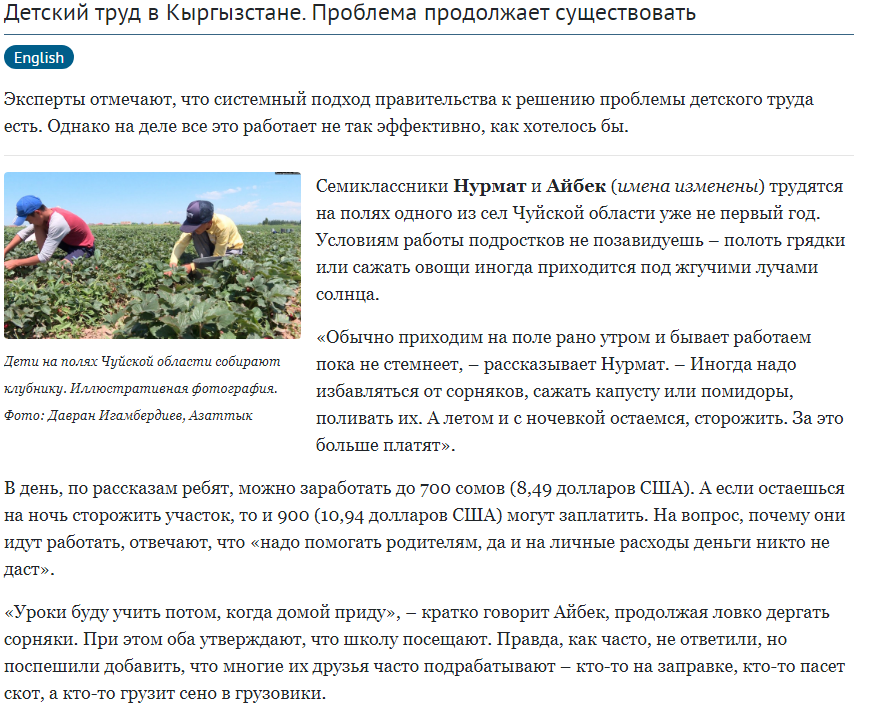 Детский труд в Кыргызстане: Проблема продолжает существовать Año de publicación: 2022 Autor corporativo: Central Asian Bureau for Analytical Reporting (CABAR) Эксперты отмечают, что при наличии системного подхода правительства Кыргызстана к решению проблемы детского труда на практике сохраняется ряд вызовов. Данная статья рассматривает некоторые причины вовлечения детей в рынок труда, среди которых экономическая нестабильность, массовая миграция населения, рост уровня бедности, влияние местных обычаев и традиций. В статье также приведен обзор релевантных статистических данных и некоторых национальных инициатив, направленных на искоренение детского труда.
  Let's Build a Fairer and More United World, with Young People from Here and Elsewhere Año de publicación: 2021 Autor corporativo: Quebec Association of International Cooperation Organizations (AQOCI) Discussion panel organized as part of the Quebec Days of International Solidarity (JQSI) by the Regional Committee for Education for International Development of Lanaudière (CRÉDIL) and the Table de concertation jeunesse en solidarité Internationale (TCJSI) of AQOCI. The event took place on November 25, 2021, and presented the engagement projects of young people from here and elsewhere to highlight the importance of youth involvement for the construction of a fairer and more united world. Construisons un monde plus juste et solidaire, avec les jeunes d’ici et d’ailleurs Año de publicación: 2021 Autor corporativo: Association québécoise des organismes de coopération internationale (AQOCI) Panel de discussion organisé dans le cadre des Journées québécoises de la solidarité internationale (JQSI) par le Comité régional d’éducation pour le développement international de Lanaudière (CRÉDIL) et la Table de concertation jeunesse en solidarité internationale (TCJSI) de l’AQOCI. L'événement avait lieu le 25 novembre 2021 et présentait les projets d’engagement de jeunes d'ici et d'ailleurs afin de mettre en valeur l’importance de l’implication jeunesse pour la construction d’un monde plus juste et solidaire.
 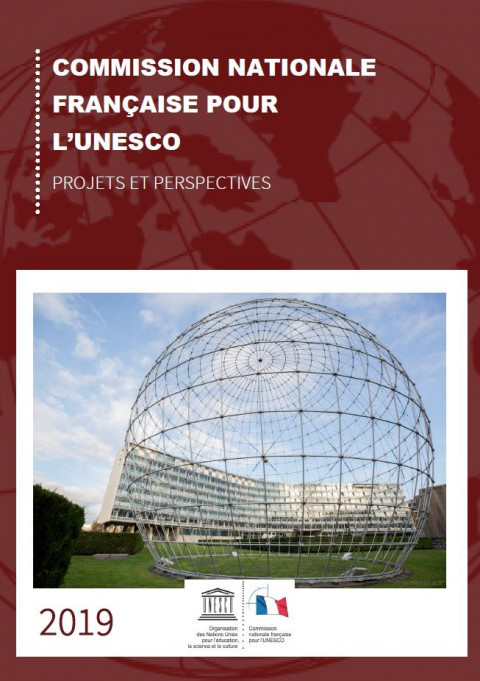 Commission nationale française pour l’unesco: Projets et perspectives Año de publicación: 2019 Autor corporativo: Commission nationale française pour l’UNESCO La Commission nationale française pour l’UNESCO relie les français et l’UNESCO. La Commission nationale place au cœur de sa stratégie et de ses activités, la coopération avec la société civile. Pour y parvenir, la Commission nationale française favorise la réflexion collective et l’action concertée dans les domaines de l’éducation, des sciences, de la culture, de la communication et de l’information. Les partenariats et les réseaux sont au cœur de notre mandat : nous construisons nos projets avec des partenaires gouvernementaux, de la société civile, des autres commissions nationales. Cette année encore, le développement de partenariats nous permettra d’étendre l’impact de nos projets. En plus de ces partenariats, nous utilisons Internet et les réseaux sociaux pour sensibiliser la société civile à nos actions. Au cours de la période 2018-2020 , la priorité est donnée au développement et au renforcement de la coopération avec les secteurs de l’UNESCO, les réseaux français: Ecoles associées, Clubs pour l’UNESCO, Chaires UNESCO, et les partenaires de la société civile et du secteur privé, en reconnaissance du rôle de la coopération dans le domaine de l’éducation, des sciences et de la culture pour la promotion de transformations sociales positives, de l’inclusion sociale et du dialogue interculturel. La diversification des partenaires auprès de la société civile, du secteur privé et la signature de partenariats avec des institutions scientifiques et académiques sont au cœur ces avancées afin de replacer la société civile dans l’action de la Commission française.Projet et Perspectives de la Commission nationale française pour l’UNESCO 2019
 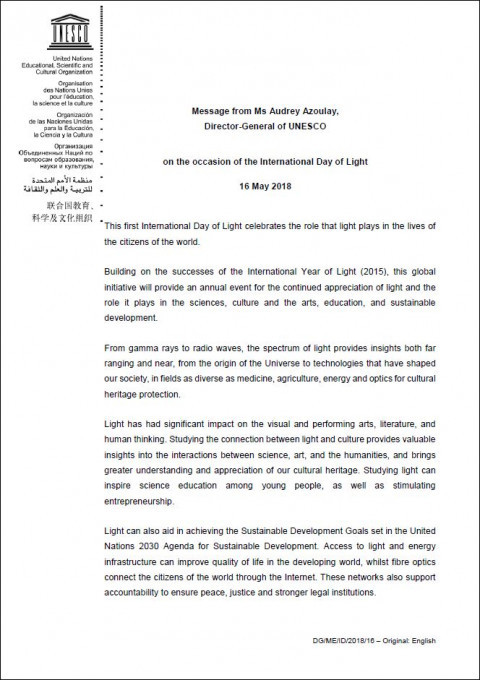 Message from Ms Audrey Azoulay, Director-General of UNESCO, on the occasion of the International Day of Light, 16 May 2018 Año de publicación: 2018 Autor corporativo: UNESCO. Director-General, 2017-2025 (Azoulay, A.) This message was delivered by Audrey Azoulay, Director-General of UNESCO, on the occasion of the International Day of Light, on 16 May 2018.
  12 Claves para fortalecer la educación ciudadana en Chile Año de publicación: 2021 Autor corporativo: Programa de las Naciones Unidas para el Desarrollo (PNUD) Conjunto de claves dirigidas a responsables de generar políticas, directivos escolares, docentes, estudiantes, padres y apoderados para implementar la educación ciudadana en sus comunidades educativas. Esta guía está pensada para promover la reflexión crítica entre los generadores de políticas y en las distintas comunidades educacionales a partir de una visión integral que enfatiza el protagonismo de las comunidades educativas en la toma de decisión relativa a los procesos de enseñanza, aprendizaje y gobernanza escolar.
  SDG4 관점에서 한국의 COVID-19 대응 진단 및 Post COVID-19를 위한 제언 Año de publicación: 2020 Autor: 장상현 | 계보경 | 김민 | 박기웅 | 백송이 | 김명량 | 김동진 | 장경숙 | 김정희 | 황정원 | 김철희 | 최현식 | 박민선 | 엄정민 Autor corporativo: 한국교육학술정보원 본 연구는 UN의 지속가능개발목표(SDGs)의 네 번째인 SDG4의 관점에서 한국의 COVID-19에 대한 교육정책 분야의 대응 방안과 사례를 진단하고, COVID-19 이후에 맞이하게 될 시대의 SDG4 세부목표를 제안하기 위해 수행되었다. 모든 이를 위한 포용적이고 공평한 양질의 교육 보장과 평생학습의 증진을 위한 ‘교육2030 인천 선언(Education 2030: Incheon Declaration and Framework for Action)’이 채택된 이후, SDG4 교육목표를 달성하기 위한 범 정부와 민간 차원의 지원이 계속되었으나, COVID-19 팬데믹으로 인해 학생들 간의 학습 격차가 발생하고, 학습 기회가 약화되는 등 적극적인 대응책이 필요해지고 있는 상황이다. 이에 본 연구에서는 COVID-19 상황 하에서 한국의 교육 현황을 점검하고 포용성, 형평성, 양질의 교육을 실현할 수 있는 대응 방안을 탐색하며, 이를 바탕으로 글로벌 의제와 한국적 대응 방안을 융합한 포스트 COVID-19를 위한 SDG4 세부목표별 제언을 도출하고자 하였다. 본 저작물은 한국교육학술정보원에서 2020년 작성하여 공공누리 제 4유형으로 개방한 ‘SDG4 관점에서 한국의 COVID-19 대응 진단 및 Post COVID-19를 위한 제언(장상현 외)’을 이용하였으며 해당 저작물은 한국교육학술정보원(www.keris.or.kr)에서 무료로 다운받으실 수 있습니다.
  한국사회와 지속가능발전목표 4: 지속가능한 사회를 꿈꾸는 교육 Año de publicación: 2018 Autor: 임현묵 | 박환보 Autor corporativo: 유네스코한국위원회 지속가능발전목표에 대한 시민의 이해를 돕고자 유네스코한국위원회가 발간하는 ‘한국사회와 지속가능발전목표’ 시리즈 중 4번째로, 세계시민교육과 지속가능발전교육을 포함한 지속가능발전목표 4번을 집중적으로 다루고 있다. 유네스코한국위원회는 2017년 <<한국사회와 지속가능발전목표 7: 우리의 지속가능한 에너지>>와 <<한국사회와 지속가능발전목표 11: 우리의 지속가능한 도시>>를 펴낸 데 이어, 2018년에는 <<한국사회와 지속가능발전목표 15: 우리의 지속가능한 생물다양성>>과 이 책을 발간했다.
 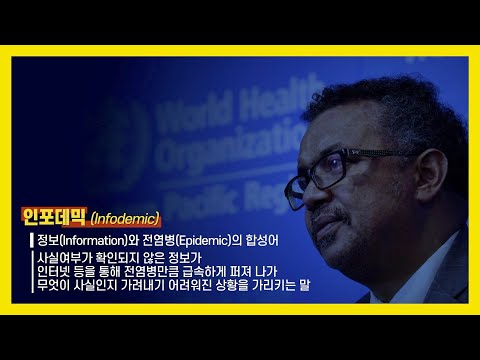 인포데믹을 이기는 미디어 리터러시 Año de publicación: 2020 Autor corporativo: 서울특별시교육청 교육연구정보원 본 영상은 코로나19시대에 우리가 고민해야 할 중요한 이슈인 미디어리터러시를 강조하면서, 팩트체크 사이트 및 가짜뉴스 판별법 10가지 적용하기 등을 통해 비판적 사고력을 길러 인포데믹을 이기는 방법을 소개한다.
 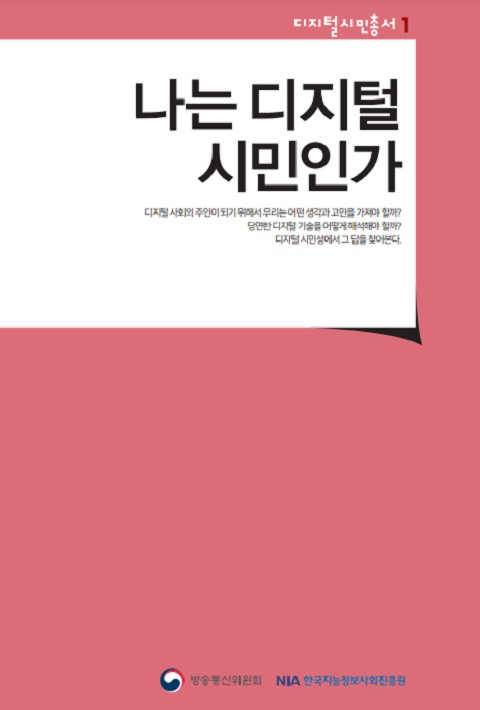 나는 디지털 시민인가 (디지털 시민총서; 1) Año de publicación: 2020 Autor: 김양은 Autor corporativo: 방송통신위원회 | 한국지능정보사회진흥원 본 자료는 디지털 시대가 요구하는 디지털 시민성, 그리고 디지털 시민이 알아야 할 디지털 사회의 다양한 모습을 살펴보도록 구성하였다.