
Recursos
Exploren una amplia gama de recursos valiosos en GCED para profundizar su comprensión y promover su búsqueda, incidencia, enseñanza y aprendizaje.
2,275 resultados encontrados
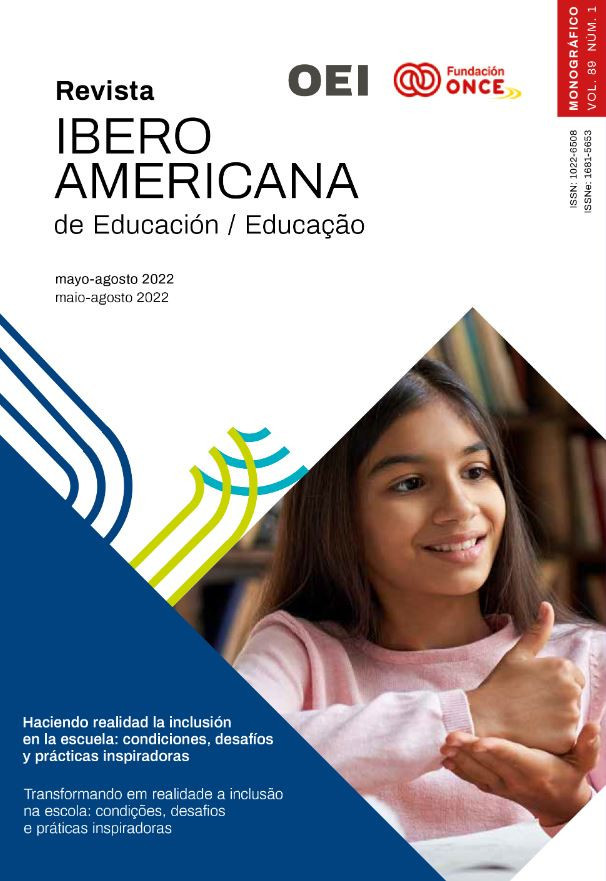 Educational Contexts, Feminism and Gender identities of Adolescents from a Rural Mayan Town in Yucatan (Iberoamerican Journal of Education; vol. 89, no. 1) Año de publicación: 2022 Autor: Silvia Montejo Murillo Autor corporativo: Organization of Ibero-American States for Education, Science and Culture (OEI) The purpose of this article is to compare and explore the gender identity of adolescent women from a rural Mayan locality, from two of their educational contexts: the telesecundaria school and daily life in the community. Interviews and participant observation were used to obtain qualitative primary data. Among the main findings, it stands out that the institutional structure and rigidity of the school limits adolescents from being able to act at certain times from social attributes different from those offered by their locality. Likewise, the school contributed to the individualization of the participants and trained them to have foreign values as a desirable representation of “development”, aspects that do not necessarily contribute to the idea of “community”. Contextos educativos, educación e identidades de género de adolescentes de una localidad rural maya en Yucatán (Revista Ibero-americana de Educação; vol. 89, núm. 1) Año de publicación: 2022 Autor: Silvia Montejo Murillo Autor corporativo: Organización de Estados Iberoamericanos para la Educación, la Ciencia y la Cultura (OEI) El propósito de este artículo es comparar y explorar la identidad de género de mujeres adolescentes de una localidad rural maya, desde dos de sus contextos educativos: la escuela telesecundaria y la vida cotidiana en la comunidad. Se utilizaron entrevistas y observación participante para obtener los datos primarios cualitativos. Entre los principales hallazgos se destaca, que la estructura y rigidez institucional de la escuela, limita a las adolescentes poder actuar en ciertos momentos desde atributos sociales distintos a los que les ofrece su localidad. Asimismo, la escuela contribuyó a la individualización de las participantes y las formó para tener como representación deseable del “desarrollo” los valores del exterior, aspectos que no contribuyen necesariamente a la idea de “comunidad”.
  10 questions pour mieux comprendre la peine de mort pour les personnes LGBTQIA+ Año de publicación: 2022 Autor: Céline Martin Autor corporativo: Ensemble contre la Peine de Mort (ECPM) Ensemble Contre la Peine de Mort (ECPM) présente dans ce rapport l’état de la peine de mort dans le monde pour les LGBTQUIA+. Le rapport interroge les liens entre le genre, l’orientation sexuelle et la peine de mort pour explorer les discriminations subies par les personnes faisant partie de minorités sexuelles sous un angle juridique.Ce dossier permet au grand public d’analyser les législations complexes des pays appliquant la peine de mort suite à des relations sexuelles consenties entre personnes de même sexe, qui revêtent des particularités historiques, religieuses ou fondées sur la moralité imposée par le gouvernement au pouvoir. Ensemble Contre la Peine de Mort (ECPM) presents in this report the state of the death penalty worldwide for LGBTQIA+ people. The report questions the links between gender, sexual orientation and the death penalty, exploring the discrimination suffered by people belonging to sexual minorities from a legal angle.This publication enables the general public to analyze the complex legislation of countries applying the death penalty for consented sexual relations between people of the same sex, which take on historical, religious or morality-based particularities imposed by the government in power.
  Discrimination, Mobbing and Equality Autor corporativo: Amnesty International. Swiss Section These 7 education sheets(Stereotypes and Discrimination, Occupational Inequalities, Discrimination in Job Searching, Let’s Talk about Mobbing!, Conflict or Mobbing?, Declaration against Mobbing at School, Freedom from Discrimination) cover the themes of discrimination, equality and mobbing(conflictual relations in the workplace, both between colleagues and between superiors and subordinates), in relation to article 2 of the Universal Declaration of Human Rights. Discrimination, mobbing et égalité Autor corporativo: Amnesty International. Swiss Section Ces 7 fiches pédagogiques(Stéréotypes et discrimination, Inégalités professionnelles, Discrimination dans la recherche d'emploi, Parlons mobbing!, Conflit ou mobbing? Déclaration contre le mobbing à l'école, Freedom from discrimination) portent sur les thématiques de la discrimination, de l'égalité et du mobbing (relation conflictuelle sur le lieu de travail, aussi bien entre collègues qu'entre supérieurs et subordonnés), en lien avec l'article 2 de la Déclaration universelle des droits de l’homme.
  SDG 4 Midterm Review: Monitoring Implementation of SDG 4 Target 4.1. ~ 4.c. in Rep. of Korea Año de publicación: 2023 Autor: Hunwoo Joo | Mikyung Kim | Mugyeong Moon | Jeongwon Hwang | Kirak Ryu | Hyeseung Cho | Yunjeong Choi | Hyosook Shin | Kyungsook Kang | Minseon Park | Eunju Lee | Nayoung Kim | Hwanbo Park | Hannah Kim | Jonghun Kim Autor corporativo: National Consultative Group on Education 2030 | Korean National Commission for UNESCO This report presents the compiled work from the National Consultative Group and Working Groups on Education 2030 of the Republic of Korea regarding the midterm review on the implementation of SDG 4.
  Developing Global Guidance for Child Rights Impact Assessments in Relation to the Digital Environment: Summary of Initial Project Findings Año de publicación: 2024 Autor corporativo: United Nations Development Programme (UNDP) | German Institute of Development and Sustainability (IDOS) The age of technology and the Internet have brought tremendous benefits, including for children. However, the spread of digital technologies also comes with a broad spectrum of risks and harms to which children can be particularly vulnerable. Under the UN Guiding Principles on Business and Human Rights and the Children’s Rights and Business Principles, businesses have a responsibility to identify, assess, and address relevant human rights risks, including risks to children’s rights. With respect to the digital environment, a rapidly evolving landscape and the emergence of new technologies has changed the nature and severity of actual and potential child rights risks relating to business activities. In response, UNICEF has initiated a project to assess the current child rights impact assessment (CRIA) landscape in relation to digital business activities and develop new guidance to support robust implementation going forward. A summary of initial project findings is now available here. Further project outputs including the updated guidance (currently under development) are anticipated in late 2024.
 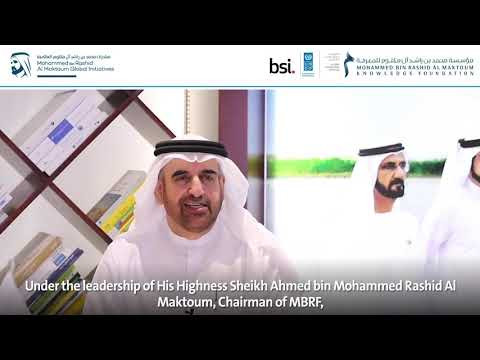 The Role of Knowledge in Achieving Sustainable Development Goals Año de publicación: 2020 Autor corporativo: Mohammed Bin Rashid Al Maktoum Knowledge Foundation (MBRF) This video discusses the role of knowledge in achieving the sustainable development goals. In which the interlocutors host a group of specialists to talk about the efforts made in achieving the goals of sustainable development, and how the Arab nation can achieve the goals. دور المعرفة في تحقيق أهداف التنمية المستدامة Año de publicación: 2020 Autor corporativo: Mohammed Bin Rashid Al Maktoum Knowledge Foundation (MBRF) الفديو يناقش دور المعرفة في تحقيق أهداف التنمية المستدامة. ويستضيف فيه المحاور مجموعة من المتخصصين للحديث حول الجهود المبذولة في تحقيق أهداف التمية المستدامة، وكيف يمكن للوطن العربي تحقيق الأهداف.
  Progress on the Sustainable Development Goals: The Gender Snapshot 2021 Año de publicación: 2021 Autor corporativo: United Nations Entity for Gender Equality and the Empowerment of Women (UN Women) | UN. Department of Economic and Social Affairs (UN. DESA) The pandemic has tested and even reversed progress in expanding women’s rights and opportunities. Women have not recovered lost jobs and income, hunger is on the rise, and school closures threaten girls’ educational gains. Women’s participation in government, research and resource management remains far from equal. Vulnerable groups of women, including migrants, those with disabilities and those affected by conflict, are frequently left behind. Disparities between rich and poor countries are preventing equal access to lifesaving COVID-19 vaccines and treatments, putting women in poorer countries at disproportionate risk. Moreover, despite women’s central roles in responding to COVID-19, including as front-line health workers, they do not have the leadership positions they deserve. Building forward differently and better will require placing women and girls at the centre of all aspects of response and recovery, including through gender- responsive laws, policies and budgeting.Progress on the Sustainable Development Goals: The Gender Snapshot 2021 presents the latest evidence on gender equality across all 17 Sustainable Development Goals, highlighting the progress made since 2015 but also the continued alarm over the COVID-19 pandemic, its immediate effect on women’s well-being and the threat it poses to future generations.