
Recursos
Exploren una amplia gama de recursos valiosos en GCED para profundizar su comprensión y promover su búsqueda, incidencia, enseñanza y aprendizaje.
2,255 resultados encontrados
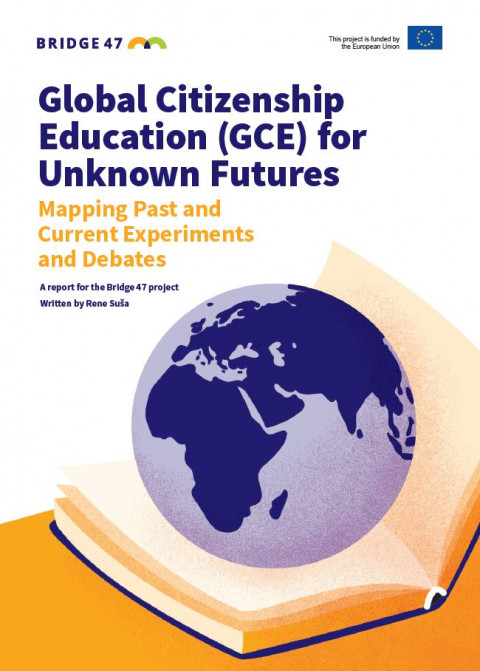 Global Citizenship Education (GCE) for Unknown Futures: Mapping Past and Current Experiments and Debates Año de publicación: 2019 Autor: Rene Suša Autor corporativo: Bridge 47 This Bridge 47-commissioned report by Rene Suša provides a thorough overview of current debates and opportunities within the field of Global Citizenship Education (GCE). The report addresses the following questions: 1) What is the benefit of GCE to our societies? 2) What is the impact of GCE to our societies? and 3) Why do we believe that GCE is the answer to global challenges?The publication also maps GCE-related or GCE-inspired initiatives, projects and partnerships, and offers key findings from a comparative study of these cases. Additionally, Susa also further builds on the recent work of Vanessa Andreotti by elucidating her taxonomy of soft, radical and beyond reform spaces for GCE, as well as relates these to current (international) policy developments in the field.
 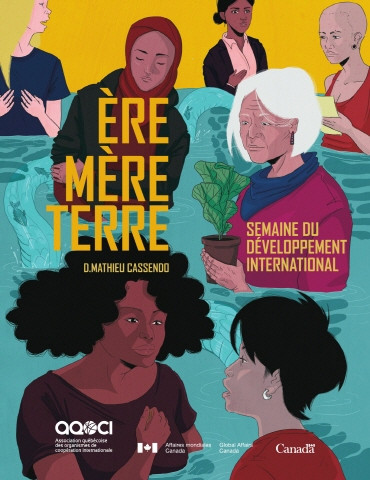 Age, Earth, Sea: International Development Week Año de publicación: 2020 Autor: Dimani Mathieu Cassendo Autor corporativo: Quebec Association of International Cooperation Organizations (AQOCI) Each year, International Development Week (IDW) highlights an international issue of concern to society. In Quebec, the Association québécoise des organismes de coopération internationale (AQOCI) organizes this public awareness week. CRÉDIL plays an active role in this campaign, and has participated in the production of comic strips as educational tools, such as "Ère, Terre, Mer" in 2021, which deals with the impact of the climate change on peoples. Ère, Terre, Mer: Semaine du développement international Año de publicación: 2020 Autor: Dimani Mathieu Cassendo Autor corporativo: Association québécoise des organismes de coopération internationale (AQOCI) La Semaine du développement international (SDI) permet chaque année de souligner un enjeu international qui interpelle les sociétés. Au Québec, c’est l’Association québécoise des organismes de coopération internationale (AQOCI) qui organise cette semaine de sensibilisation auprès du public. Le CRÉDIL participe activement à cette campagne et a participé à la production de bandes dessinées comme outil pédagogique comme “Ère, Terre, Mer” en 2021 qui traite de l'impact de la crise de l'environnement sur les différentes populations.
  Quiz climat: êtes-vous chaud pour démêler le vrai du faux? Año de publicación: 2023 Autor corporativo: Le Monde Quelle est la source d’énergie la plus polluante au monde ? De quand date la première conférence sur le climat ? Avec ce test, Le Monde vous invite à faire le point sur le réchauffement climatique et son impact sur la planète. Vous pourrez en savoir plus sur les grands enjeux environnementaux grâce à l'application de culture générale «Mémorable», conçue par les journalistes du Monde pour développer vos savoirs et pour stimuler votre mémoire de manière agréable et efficace. Chaque leçon, consacrée à un thème donné, propose des extraits d’articles tirés de nos archives depuis 1944, des infographies ou des vidéos, suivis de questions. A vous d’y répondre, avant de profiter de corrections immédiates et personnalisées, d’articles d’approfondissement, puis de révisions. what is the world's most polluting energy source? When was the first climate conference held? With this test, Le Monde invites you to take stock of global warming and its impact on the planet. Learn more about major environmental issues with the "Mémorable" general knowledge application, designed by Le Monde's journalists to develop your knowledge and stimulate your memory in a pleasant and effective way. Each lesson, devoted to a given theme, features excerpts from articles in our archives dating back to 1944, infographics or videos, followed by questions. It's up to you to answer them, before benefiting from immediate, personalized corrections, in-depth articles and revision.
 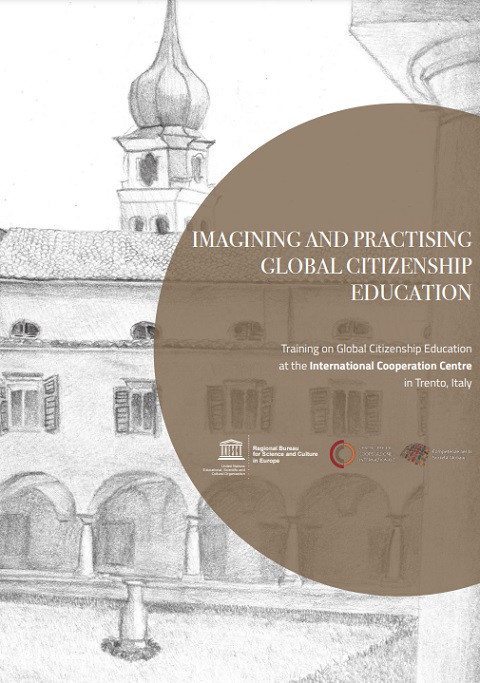 Imagining and Practising Global Citizenship Education Año de publicación: 2020 Autor corporativo: UNESCO Venice This methodological guide illustrates the ways in which the International Cooperation Centre (ICC) has been promoting and practicing Global Citizenship Education in Italy for more than ten years. The training work developed by the ICC in the field of GCED, presented here in its theoretical articulation and in its practical outlining in some concrete experiences, may offer some reflections in the form of useful recommendations for continuing and strengthening the promotion of GCED.
 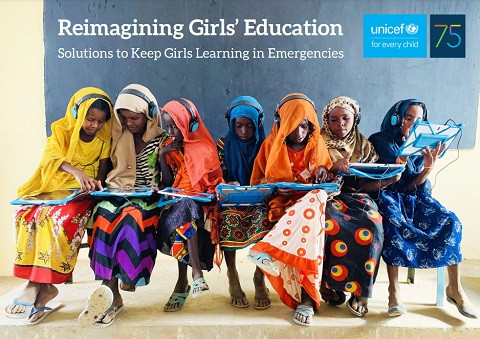 Reimagining Girls’ Education: Solutions to Keep Girls Learning in Emergencies Año de publicación: 2021 Autor corporativo: United Nations Children's Fund (UNICEF) Reimagining Girls’ Education: Solutions to Keep Girls Learning in Emergencies presents an empirical overview of what works to support learning outcomes for girls in emergencies. Research shows that girls in emergencies are disadvantaged at all stages of education and are more likely to be out-of-school than in non-emergency settings. Girls are also struggling to learn.This solutions book seeks to highlight promising evidence-based actions in education for decision makers who are designing and implementing interventions to support girls’ education in low and middle-income country humanitarian settings and settings where education has been interrupted by the COVID‑19 pandemic. It documents practical examples of approaches that have been or are being tested, and from which lessons can be drawn.The overarching aim is that this evidence be used to inform programming in crises and support diverse stakeholders in mitigating the impact of emergencies on girls’ education.
  EiE-GenKit: A Core Resource Package on Gender in Education in Emergencies Año de publicación: 2021 Autor corporativo: Education Cannot Wait (ECW) | Inter-agency Network for Education in Emergencies (INEE) | United Nations Girls' Education Initiative (UNGEI) When gender-responsive, quality education is available to all it has the potential to transform societies and build sustainable peace. A joint initiative from the Inter-agency Network for Education in Emergencies (INEE), Education Cannot Wait (ECW) and the UN Girls’ Education Initiative (UNGEI), the EiE-GenKit is a core resource package for gender in education in emergencies. The EiE-GenKit is the first resource of its kind, providing education practitioners with practical tools to promote gender-responsive programming from crisis to peace and sustainable development.The EiE-GenKit is based on extensive research and consultation with the latest resources, evidence, new tools and good practice available in one easy-to-use package. The EiE-GenKit builds on existing humanitarian processes for a streamlined approach to gender-responsive EiE. The EiE-GenKit offers tools for practical and immediate use including checklists, tipsheets and assessment templates supporting practitioners to ensure that each phase of an EiE intervention is gender-responsive. Bridging the gap between what we know about gender-responsive EiE and the tools we need to make it happen, the EiE-GenKit aims to promote improved gender and education outcomes of learners living in crises.
  A Greener, Fairer Future: Why Leaders Need to Invest in Climate and Girls’ Education Año de publicación: 2021 Autor: Lucia Fry | Philippa Lei Autor corporativo: Malala Fund The world is on the brink of a climate catastrophe — and girls are disproportionately bearing the impact. Climate-related events like flooding, droughts and increased exposure to zoonotic diseases amplify the inequalities girls face and further limit their ability to access and complete their education. Malala Fund’s new report, A greener, fairer future: Why leaders need to invest in climate and girls' education, estimates that in 2021 climate-related events will prevent at least four million girls in low- and lower-middle-income countries from completing their education. If current trends continue, by 2025 climate change will be a contributing factor in preventing at least 12.5 million girls from completing their education each year.Yet evidence shows that closing gender gaps in education can help countries better adapt to the effects of climate change and decrease the rate and impact of global warming.“Girls in lower-income countries are the least responsible for the climate crisis, so it’s a travesty that it now threatens their very lifeline to a brighter future: quality education,” said Lucia Fry, Director of Research and Policy at Malala Fund. “Malala Fund wants leaders at COP26 to hear young people’s demands around education. They know that climate action helps girls stay in school, which in turn helps countries tackle the climate crisis. Young people are demanding an education that will prepare them to adapt to the effects of climate change and challenge the root causes of the crisis.”A greener, fairer future outlines the origins of the climate emergency and explains how confronting issues like the legacy of colonialism, racial discrimination and gender inequality through education is key to finding a sustainable solution to the crisis. The paper introduces the Gender-Equal Green Learning Agenda, a new framework to help leaders address the climate crisis through education.In this report, Malala Fund recommends how leaders can take urgent climate action at meetings this year, like COP26. This includes reducing carbon emissions, improving girls’ access to education, helping communities adapt to the realities of climate change and transforming education systems to provide all students with the knowledge, skills and values needed to challenge the social and economic inequalities fuelling the climate crisis.For more about the links between climate change and girls’ education, read the full paper below.
  Raise Your Voice With Malala: A Guide to Taking Action for Girls’ Education Año de publicación: 2018 Autor: Emily Laurie | Eleanor Gall Autor corporativo: Malala Fund This guide gives young activists the tools to raise their voices and make change happen. Girls around the world are standing up in support of their out-of-school sisters and fighting to see every girl complete 12 years of free, safe, quality education. By taking action in their communities, girls can contribute to the peace and prosperity of our entire world. The guide includes real stories about girls around the world working to make sure all girls have the opportunity to go to school.
  Regional handbook on life skills programmes for non-formal education Año de publicación: 2012 Autor corporativo: UNESCO Bangkok The Regional Handbook on Life Skills Programme for Non-formal Education (NFE) was developed for education policy makers, experts in curriculum development, materials development and trainers of personnel in the field of NFE, NFE practitioners such as Community Learning Centres (CLCs) personnel, teachers and facilitators, and researchers. It aims to provide information about life skills programmes and to serve as a practical guide to implement educational programmes to enhance life skills. It is expected to help NFE personnel with adopting, adapting and integrating life skills programmes in NFE. This Handbook consists of two parts as follows: Part one- overview of Life Skills Programme for Non-formal Education (NFE), Part Two- Practical Guide on Integrating Life Skills Programme in NFE. Part One provides answers to various questions related to life skills and life skills progrmmes. Part Two intends to provide practical information about the systematic planning and implementation of life skills programmes for NFE. It offers suggested steps for curriculum development, development of teaching and learning materials, delivery of life skills programmes and monitoring and evaluation strategies. Details of this process are elaborated for NFE practitioners at various levels, but in particular at the community level. This Handbook was developed based on the project outputs of UNESCO Bangkok's 'Life Skills Learning through Non-formal Education" carried out in Asia and the Pacific region from 2003-2006 within the framework of Asia-Pacific Programme of Education for All (APPEAL). The project consisted of country studies, regional meetings, pilot projects and action research in selected countries in the region. A group of experts from the region consolidated the main outputs of the project and developed this Handbook through a series of workshops in 2006-2007 in coordination with UNESCO Bangkok and the office of Non-formal and Informal Education (ONIE) of Thailand Ministry of Education. In addition, resource materials of various organizations including United Nations agencies, government institutions, universities and NGOs were also collected and used for developing this Handbook.