
Recursos
Exploren una amplia gama de recursos valiosos en GCED para profundizar su comprensión y promover su búsqueda, incidencia, enseñanza y aprendizaje.
2,255 resultados encontrados
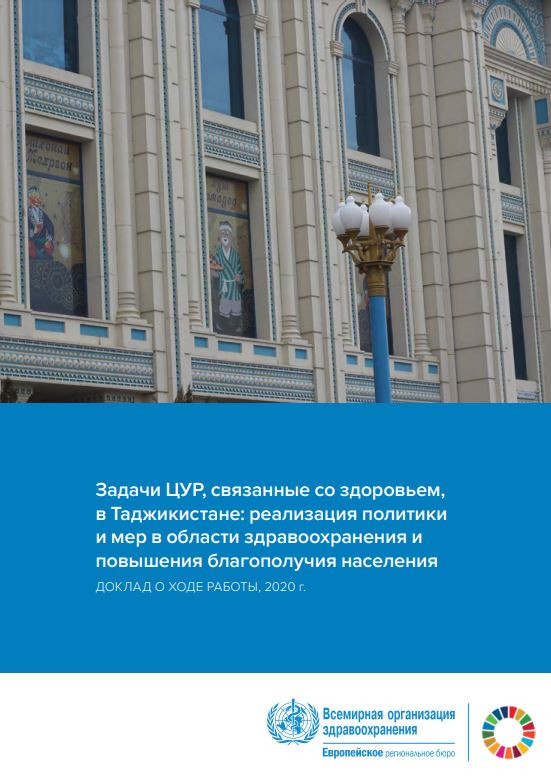 Health-related SDG Targets in Tajikistan: Implementation of Policies and Measures for Health and Well-being Año de publicación: 2020 Autor corporativo: World Health Organization (WHO) This report reviews and assesses the achievements towards SDG 3 and its targets as well as health-related targets of other SDGs to date in Tajikistan. This is the first step of the GAP process (engage, assess, align, accelerate and account) and will clarify priorities for action to accelerate the achievement of SDG 3 in Tajikistan and alignment of development partners’ support. Задачи ЦУР, связанные со здоровьем, в Таджикистане: реализация политики и мер в области здравоохранения и повышения благополучия населения Año de publicación: 2020 Autor corporativo: World Health Organization (WHO) В этом отчете проводится обзор и оценка достижений в достижении ЦУР 3 и связанных с ней задач, а также связанных со здоровьем задач других ЦУР на сегодняшний день в Таджикистане. Это первый шаг процесса ГПД (вовлечение, оценка, согласование, ускорение и учет), который прояснит приоритеты действий для ускорения достижения ЦУР 3 в Таджикистане и согласования поддержки партнеров по развитию.
  Leveraging Artificial Intelligence to Enhance Early Action towards the Kunming-Montreal Global Biodiversity Framework Año de publicación: 2024 Autor: Nicole DeSantis | Lea Phillips | Christina Supples | Julien Pigot | Jamison Ervin | Doley Tshering | Juan Calles Lopez | Dharshani Seneviratne | Enrique Paniagua | Monica Mora Autor corporativo: United Nations Development Programme (UNDP) This publication releases the methodology behind the National Biodiversity Strategies and Action Plans (NBSAP) Target Similarity Assessments and identifies key lessons learned and opportunities for future applications.
  Guidance Note on Uzbekistan Green Taxonomy Año de publicación: 2023 Autor corporativo: World Bank This Guidance Note serves to support the government of Uzbekistan in the design of a national Green Taxonomy. A green taxonomy sets out rules for classifying environmentally sustainable activities and can be instrumental inthe transition to a Green Economy by guiding policies and public resource flows, and influencing the private sector’s investment response. The Guidance Note discusses methodological choices for the taxonomy and their policy implications, reviews existing international practices, and recommends a model taxonomy and roadmap for further development of the taxonomy. A key message in the note is the importance of setting clear strategic goals that will inform the selection of the taxonomy’s environmental objectives and its other features. Also discussed are theinstitutional arrangements to coordinate the actions and inputs of multiple stakeholders during the development process of the taxonomy, and the importance of strong oversight and consistent enforcement of taxonomy rules by a competent regulatory body. Методические рекомендации по «зеленой» таксономии для Узбекистана Año de publicación: 2023 Autor corporativo: World Bank Настоящие Методические рекомендации призваны оказать содействие правительству Узбекистана в разработке национальной «зеленой» таксономии. «Зеленая» таксономия устанавливает правила классификации экологически устойчивых видов деятельности и может сыграть важную роль в переходе к «зеленой» экономике, определяя политику и потоки государственных ресурсов, а также влияя на инвестиционную активность частного сектора. В Методических рекомендациях обсуждаются методологические варианты таксономии и их политические последствия, рассматривается существующая международная практика, а также даются рекомендации по модельной таксономии и «дорожной карте» ее дальнейшей разработки. Одним из ключевыхтезисов Рекомендаций является важность постановки четких стратегических целей, на основе которых будут определяться экологические цели таксономии и другие ее характеристики. Кроме того, рассматриваются институциональные механизмы координации действий и участия многочисленных заинтересованных сторон в процессе разработки таксономии, а также отмечается важность обеспечения компетентным регулирующиморганом надежного надзора и последовательного соблюдения правил таксономии.
  Основные направления воздействия изменения климата в Центральной Азии (Oriental Renaissance; № 4(2) Año de publicación: 2024 Autor: Нарзуллаев Комилжон Собиржонович В настоящей статье анализируется глобальная проблема - изменения климата в Центрально-Азиатском регионе. В перспективе данная глобальная проблема найдет свое отражение в повышении температуры, экстремальных погодных явлениях, опустынивании, оползнях и нехватке водных ресурсов. Наряду с этим, в статье указываются основные направления воздействия изменения климата в регионе в целом.
 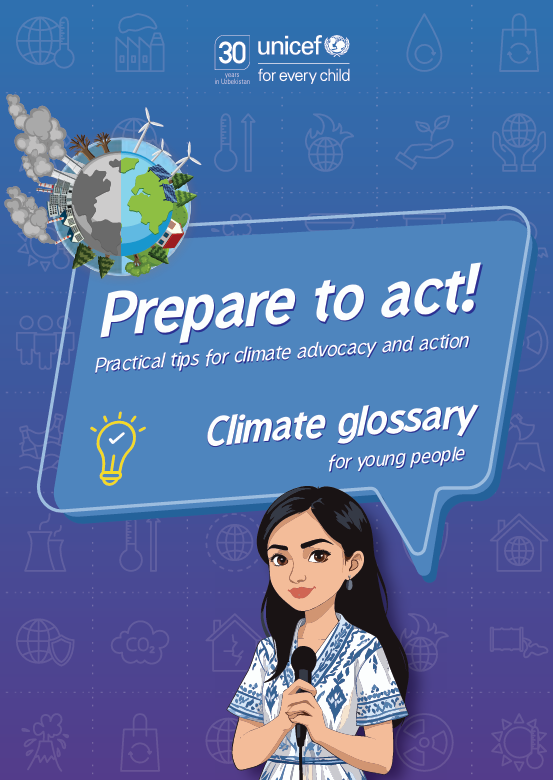 Prepare to Act!: Practical Tips for Climate Advocacy and Action; Climate Glossary for Young People Año de publicación: 2024 Autor corporativo: UNICEF Uzbekistan The Toolkit for Young Climate Activists in Uzbekistan was created by young people who, like you, are concerned about our planet's situation and who, as activists, have faced many challenges when advocating and taking action. Main goal is to share clear, concise, easily understandable information that describes the course of global, regional and national climate action, in order to prepare you for full and informed participation. Приготовьтесь действовать!: Практические советы по защите окружающей среды и борьбе с изменением климата; Климатический глоссарий для молодёжи Año de publicación: 2024 Autor corporativo: UNICEF Uzbekistan Инструментарий для молодых активистов в области изменения климата в регионе Латинской Америки и Карибского бассейна был создан молодыми людьми, обеспокоены ситуацией, сложившейся на нашей планете и которые, будучи активистами, столкнулись со многими проблемами при отстаивании интересов и принятии мер по борьбе с изменением климата. Цель - поделиться четкой, краткой и понятной информацией, описывающей ход глобальных, региональных и национальных действий в области изменения климата с тем, чтобы подготовить вас к активному и осознанному участию в них.
  L'enseignement supérieur face au défi de la transition écologique Año de publicación: 2023 Autor corporativo: Cour des Comptes Les établissements d’enseignement supérieur occupent une place spécifique dans la transition écologique. Représentant près de la moitié des opérateurs de l’État et accueillant un large public, ils ont un impact environnemental substantiel. De nombreuses initiatives ont été prises ces dernières années en la matière et les politiques menées dans les établissements commencent à se mettre en place. Elles sont cependant encore insuffisantes pour atteindre les objectifs affichés, manquant en particulier de nombreux outils pour développer une démarche rigoureuse, cohérente et efficace. L’enseignement supérieur a pourtant un rôle majeur à jouer, non seulement pour réduire sa propre empreinte écologique, mais aussi pour produire, adapter et diffuser les connaissances nécessaires à la réussite de la transition écologique.Higher education institution occupy a specific place in the ecological transition. Representing nearly half of the state operators and catering to a diverse audience, they have a substantial environmental impact. Numerous initiatives have been undertaken in recent years, and policies within these institutions are beginning to take shae. However, they are still insufficient to achieve the stated objectives, notably lacking many tools to develop a rigorous, coherent and effective approach. Higher education has a crucial role to play, not only in reducing its own ecological footprint but also in generating, adapting, and disseminating th knowledge necessary for the success of the ecological transition.
  Food Sovereignty Año de publicación: 2023 Autor corporativo: Quebec Association of International Cooperation Organizations (AQOCI) In 2023-2024, AQOCI and its members have chosen food sovereignty as the theme for their global citizenship education campaigns. These campaigns include videos explaining food sovereignty and related issues.