
Recursos
Exploren una amplia gama de recursos valiosos en GCED para profundizar su comprensión y promover su búsqueda, incidencia, enseñanza y aprendizaje.
2,255 resultados encontrados
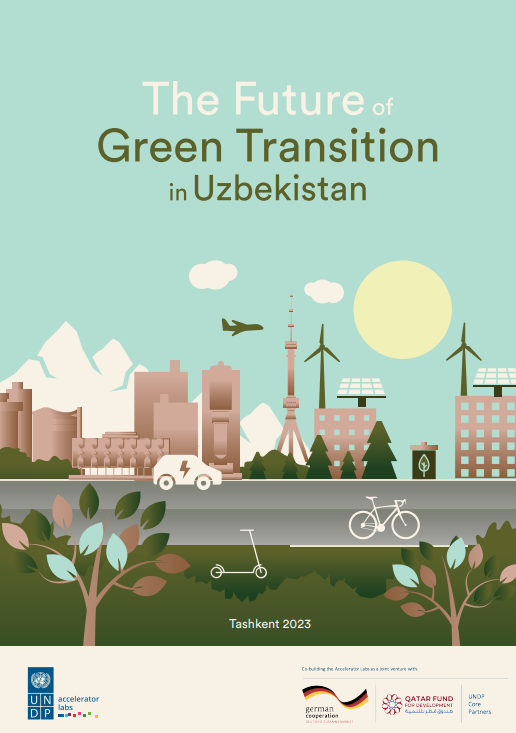 The Future of Green Transition in Uzbekistan Año de publicación: 2023 Autor corporativo: UNDP Kazakhstan In support of the government, UNDP Uzbekistan applied participatory futures and foresight tools to explore possibilities for a Green Transition in Uzbekistan. The process produced a range of outputs, including a signals database, drivers, narrative scenarios, and a custom scenario exploration system. They were used to develop policy ideas, which outline innovative approaches.
  2030 지속가능개발목표(SDGs)실천 방안 연구: 교육 분야를 중심으로 Año de publicación: 2016 Autor: 안혜정 | 서예원 | 윤종혁 | 김은영 | 염후남 | 박환보 | 최동주 | 김명진 | 이정화 Autor corporativo: 한국교육개발원 이 연구는 새천년개발목표(MDGs)의 이행종료와 더불어 향후 2030년까지 국제사회가 함께 성취해야 할 개발목표로 채택된 지속가능개발목표(SDGs) 중 네 번째 목표인 교육 목표(SDG 4)의 전략적 실천방안을 마련하기 위하여 수행되었다. 현 정부는 “ODA 지속 확대 및 모범적・통합적 개발협력 추진”을 국정과제로 삼고, 개도국 소녀교육 및 아프리카 직업/ICT 교육을 포함한 4대 구상을 선정하는 등 교육 분야 개발협력의 중요성과 필요성을 강조한 바 있다. 이에 본 연구에서는 우리나라 교육개발협력 사업의 현황과 수행주체별 참여 실태 및 인식 조사를 토대로 실효성 있는 정책방안을 도출하고 SDG 4의 실천 방안을 제시하였다.
  A Study on Education Indicator Development and Statistical Capacity Building focused on New Southern and Northern Policy (V) Año de publicación: 2020 Autor: Changhwan Kim | Kijun Lee | Geunyoung Park | Sungho Park | Hoonam Lim | Hyojung Han | Nayoung Kim | Yewon Seo | Joo Heo | Hanseung Lee | Yoseop Oh | Jihye Son | Sangtae Noh | Hyojung Kim Autor corporativo: Korean Educational Development Institute (KEDI) This study has a purpose to be carried out to develop education statistics capacity of developing countries through establishment a comprehensive consulting plan according to determine current status of education statistics of three Asian countries and conduct a demand survey and statistics survey. 개도국 교육지표 개발·협력 사업(V): 신남·북방국가를 중심으로 Año de publicación: 2020 Autor: 김창환 | 이기준 | 박근영 | 박성호 | 임후남 | 한효정 | 김나영 | 서예원 | 허주 | 이한승 | 오요섭 | 손지혜 | 노상태 | 김효정 Autor corporativo: 한국교육개발원 본 연구사업은 정부가 추진 중인 신남ㆍ북방 정책과 밀접한 관련을 맺고 있다. 그동안 한국의 발전은 선진국과 교역하면서 부를 창출하는 방식으로 이루어졌다. 그러나 선진국 시장의 성장이 한계에 도달하면서 새로운 시장 개척이 필요한 상황을 맞고 있다. 더욱이 미ㆍ중 무역전쟁 여파로 탈중국이 현실화 되면서 글로벌 밸류체인이 변하고 있다. 이러한 상황에서 대체시장으로 신남ㆍ북방 국가의 중요성이 부각되고 있는 상황이다. 즉, 미래 한국의 지속가능한 성장을 위해서는 신남ㆍ북방 국가와의 협력이 매우 중요한 것이다.본 연구사업은 정부의 정책에 적극 부응하기 위해 2주기에서 신남ㆍ북방 국가를 중점 협력 국가로 선정하고 사업을 추진하고 있다. 2주기 연구사업이 추진되는 과정 속에서, 연구사업이 종료되었을 때 신남ㆍ북방 국가와의 협력이 더욱 증가하게 될 것으로 전망되고, 이를 통해 국익에도 기여할 것으로 기대되고 있다.본 저작물은 한국교육개발원에서 2020년 작성하여 공공누리 제4유형으로 개방한 ‘개도국 교육지표 개발·협력 사업(V): 신남·북방국가를 중심으로(김창환)’ 를 이용하였으며 해당 저작물은 한국교육개발원 홈페이지(www.kedi.re.kr)에서 무료로 다운받으실 수 있습니다.
  지속가능개발목표(SDGs) 달성을 위한 교육개발협력 연구(Ⅵ): 지속가능발전교육과 세계시민교육을 통한 SDGs 범분야 실천 전략 Año de publicación: 2022 Autor: 윤종혁 | 김소아 | 김현진 | 서예원 | 안해정 | 김신애 | 박환보 | 유성상 Autor corporativo: 한국교육개발원 한국교육개발원은 개발도상국의 SDGs 달성을 지원하기 위한 교육개발협력의 실천전략 을 모색하고자 2017년부터 총 6개년 동안 「지속가능개발목표(SDGs) 달성을 위한 교육개발협력연구」를 수행하였습니다. 올해 연구는 최종 마무리하는 연구로서 SDG 4.7에서 강조하고 있는 세계시민교육과 지속가능발전교육을 포함한 환경교육, 평화・비폭력, 국제이해, 문화적 다양성 존중, 젠더 평등, 난민 및 이주민 등 소수집단 인권, 민주주의 등을 촉진시키기 위한 교육개발협력 전략을 마련하였습니다. 본 저작물은 한국교육개발원에서 2022년 작성하여 공공누리 제4유형으로 개방한 ‘지속가능개발목표(SDGs) 달성을 위한 교육개발협력 연구(Ⅵ)(윤종혁 외)’를 이용하였으며 해당 저작물은 한국교육개발원 홈페이지 (www.kedi.re.kr)에서 무료로 다운받으실 수 있습니다.
  2022년 평생교육통계 자료집 Año de publicación: 2022 Autor corporativo: 대한민국 교육부 | 한국교육개발원 「2022 평생교육통계 자료집」은 17개 시도, 4,869개의 평생교육기관을 조사하여 우리나라의 평생교육시설을 진단할 수 있는 기초자료를 종합하였습니다.본 저작물은 교육부에서 2022년 작성하여 공공누리 제3유형으로 개방한 '2022년 평생교육통계 자료집'을 이용하였으며, 해당 저작물은 교육부 누리집(https://www.moe.go.kr/)과 교육통계 서비스 누리집(https://kess.kedi.re.kr/index) 에서 무료로 내려받으실 수 있습니다.
  2022 한국 성인의 평생학습실태 Año de publicación: 2022 Autor: 최성부 | 이혜진 | 배효진 | 김별라 | 임소현 | 강성국 | 정동철 | 박미현 | 김경남 | 김나정 | 안윤정 | 라다애 | 장훈민 | 박초아 Autor corporativo: 대한민국 교육부 | 한국교육개발원 「2022년 한국 성인의 평생학습 실태」자료집은 평생학습개인실태조사 결과를 평생학습 전문가 뿐 아니라 일반독자들이 이해할수 있도록 지표 중심으로 구성한 자료집입니다. 본 자료집은 정책 담당자뿐만 아니라 연구자 및 일반 독자들이 쉽게 이해할 수 있도록 만25~79세 우리나라 성인의 전 생애단계별 평생학습 참여 실태를 지표 중심으로 구성하였습니다.본 저작물은 교육부에서 2022년 작성하여 공공누리 제3유형으로 개방한 '2022 한국 성인의 평생학습실태'를 이용하였으며, 해당 저작물은 교육부 누리집(https://www.moe.go.kr/)과 교육통계 서비스 누리집(https://kess.kedi.re.kr/index) 에서 무료로 내려받으실 수 있습니다.
 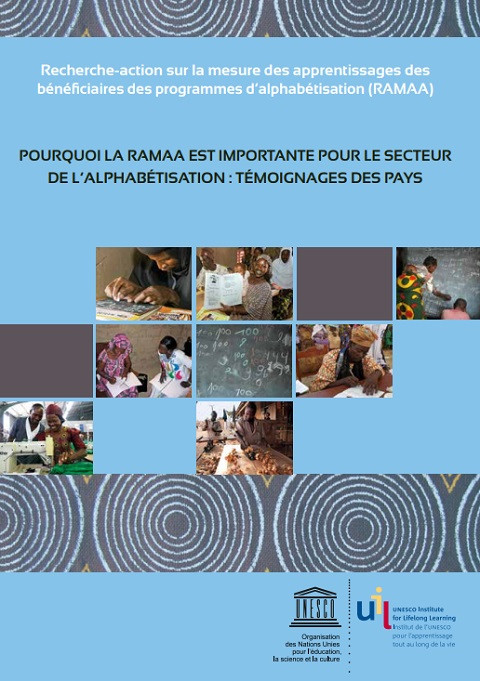 Why RAMAA Is Important for Literacy: Testimonies From Participating Countries; Action Research on Measuring Literacy Programme Participants’ Learning Outcomes (RAMAA) Año de publicación: 2016 Autor corporativo: UNESCO Institute for Lifelong Learning (UIL) The RAMAA action research, launched at the initiative of the UNESCO Institute for Lifelong Learning (UIL), and piloted in partnership with local UNESCO offices, responds to this vital need to assess the quality of literacy programmes by taking the learning effectively acquired by the beneficiaries at the end of their training as an objective variable.The first phase of RAMAA involved five countries, now twelve countries are participating in the second phase of RAMAA – Benin, Burkina Faso, Cameroon, Côte d'Ivoire, Central African Republic, Democratic Republic of Congo, Morocco, Mali, Niger, Senegal, Chad and Togo. The countries’ commitment throughout the implementation of the second phase of RAMAA and the integration of the results into the national systems are key to the project. Pourquoi la RAMAA est importante pour le secteur de l'alphabétisation: Témoignages des pays; Recherche-action sur la mesure des apprentissages des bénéficiaires des programmes d'alphabétisation (RAMAA) Año de publicación: 2016 Autor corporativo: UNESCO Institute for Lifelong Learning (UIL) La Recherche-action RAMAA, lancée à l’initiative de l’Institut de l’UNESCO pour l’apprentissage tout au long de la vie (UIL), et pilotée en partenariat avec les bureaux UNESCO répond à ce besoin vital d’évaluer la qualité des programmes d’alphabétisation en prenant comme variable objective les apprentissages réellement acquis par les bénéficiaires à la sortie de leur formation.La première phase de la RAMAA comptait cinq pays, douze pays sont désormais engagés dans la deuxième phase de la RAMAA - Bénin, Burkina Faso, Cameroun, Côte d’Ivoire, République centrafricaine, République démocratique du Congo, Maroc, Mali, Niger, Sénégal, Tchad et Togo. L’engagement des pays tout au long de la mise en œuvre de la deuxième phase de la RAMAA et l’intégration des résultats dans les dispositifs nationaux deviennent impératifs.
 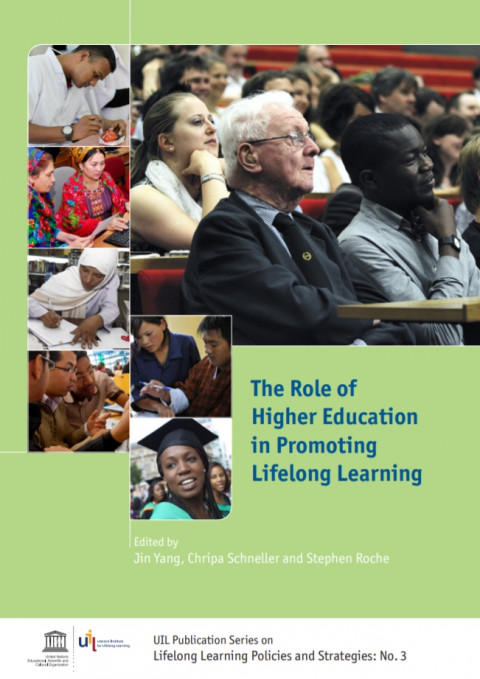 The Role of Higher Education in Promoting Lifelong Learning Año de publicación: 2015 Autor: Yang Jin, Schneller.Chripa, Roche.Stephen Autor corporativo: UNESCO Institute for Lifelong Learning (UIL) UNESCO’s vision of lifelong learning encompasses all contexts (formal, non-formal and informal) and ages (‘from cradle to grave’) of learning. The UNESCO Institute for Lifelong Learning and its predecessor, the UNESCO Institute for Education, have promoted policy and practice in this field for more than four decades. The decision to produce this volume was prompted by an observation that lifelong learning – both as a concept and in its many practical manifestations – is becoming a staple of education policy discourse around the globe. At the same time, we noted that understandings of lifelong learning differ widely, not only between countries, but also across the sub-sectors of education systems.This book, which emerged from a seminar held in 2012 to mark the 60th anniversary of the UNESCO Institute for Lifelong Learning, addresses various ways that higher education can promote lifelong learning, paying due consideration to regional disparities and specificities. These include responses to the learning needs of senior citizens in China, the challenge of implementing recurrent education in Japan, European efforts to develop a common approach to life-long learning at university, and how a lifelong learning approach is put into practice in higher education in Australia. It is hoped that this book will help the reader gain a better understanding of the theoretical frameworks and practical implementation of lifelong learning in higher education, both within their own region and globally.