
Recursos
Exploren una amplia gama de recursos valiosos en GCED para profundizar su comprensión y promover su búsqueda, incidencia, enseñanza y aprendizaje.
2,255 resultados encontrados
 International Day of Education 2025: Artificial Intelligence and Education: Preserving Human Agency in a World of Automation Año de publicación: 2025 Autor corporativo: UNESCO International Day for Education 2025 aims to: Examine new possibilities offered by AI, especially for teaching, learning, assessment and educational administration. Promote the development of critical AI literacies by equipping educators and learners with the competencies needed to understand, use and influence AI technologies, in line with the UNESCO AI competency frameworks for teachers and students. Ensure that AI complements, rather than replaces, the essential human elements of learning, including the cultivation of in-person relationships and emotional intelligence. Día Internacional de la Educación 2025: Inteligencia Artificial y educación: preservar la autonomía humana en un mundo de automatización Año de publicación: 2025 Autor corporativo: UNESCO El Día Internacional de la Educación 2025 tiene por objeto: Examinar las nuevas posibilidades que ofrece la inteligencia artificial, especialmente en la enseñanza, el aprendizaje, la evaluación y la gestión educativa. Promover el desarrollo de alfabetizaciones críticas en IA, dotando a educadores y estudiantes de las competencias necesarias para comprender, utilizar e influir en las tecnologías de IA, en línea con los marcos de competencias en IA de la UNESCO para docentes y alumnos. Garantizar que la IA complemente, y no reemplace, los elementos humanos esenciales del aprendizaje, incluyendo la construcción de relaciones interpersonales y el desarrollo de la inteligencia emocional. Journée internationale de l’éducation 2025 : L’intelligence artificielle et l’éducation : préserver l’autonomie dans un monde automatisé Año de publicación: 2025 Autor corporativo: UNESCO La Journée internationale de l’éducation 2025 vise à : Examiner les nouvelles possibilités offertes par l’IA, en particulier pour l’enseignement, l’apprentissage, l’évaluation et l’administration éducative. Promouvoir le développement de compétences critiques en matière d’IA en dotant les éducateurs et les apprenants des aptitudes nécessaires pour comprendre, utiliser et influencer les technologies d’IA, conformément aux cadres de compétences en IA de l’UNESCO pour les enseignants et les élèves. Veiller à ce que l’IA complète, plutôt qu’elle ne remplace, les éléments humains essentiels de l’apprentissage, notamment le développement des relations en présentiel et de l’intelligence émotionnelle.
 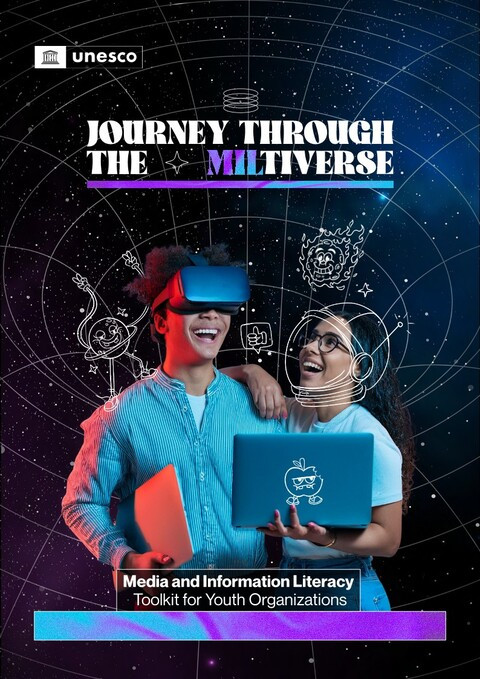 Journey through the MILtiverse: Media and Information Literacy Toolkit for Youth Organizations Año de publicación: 2024 Autor: Sandra Acero Pulgarin | Natalia González-Gil | Alejandro Santamaría Virviescas Autor corporativo: UNESCO Empowering Youth Organizations with and for Media and Information LiteracyIn an era where digital interactions dominate, young people must be equipped with more than just basic digital literacy skills. Media and Information Literacy (MIL) has become an essential competency, enabling them to critically navigate the overwhelming ow of information in our fast-paced and complex information ecosystem. \With the Internet user base getting younger every day — data shows that one in three internet users is a child — countries worldwide are increasingly working on integrating MIL into their education systems. Despite these advancements, many young people still grapple with challenges such as disinformation, hate speech, and other harmful online content. Additionally, new technologies continue to emerge, creating challenges with unknown impacts. For example, 80% of young people aged 10 to 24 use AI multiple times a day for education, entertainment, and other purposes. Global youth organizations are at the forefront of UNESCO’s eorts to promote MIL among young people through informal education. This toolkit serves as a primary resource to help these organizations incorporate MIL into their strategies, policies, and operations, aiming to make MIL a lasting component of their practices and peer-to-peer educational programs. Join us on this journey through the MILtiverse and empower the next generation by making MIL a fundamental life competence for their futures.
  Mainstreaming Social and Emotional Learning in Education Systems: Policy Guide Año de publicación: 2024 Autor corporativo: UNESCO Why social and emotional learning is key to transform education Since 2015, there has been significant progress towards reimagining education for wider societal transformation in support of peace, justice, inclusion, equality and sustainability. Yet, the existing challenges have intensified, and new ones have emerged. The world is witnessing a resurgence of multiple forms of conflict and violence, from racism and discrimination, to hate speech and armed conflict. Our efforts to build sustainable peace through education are falling short. Some 250 million children are still out of school, and those in school are not acquiring the necessary knowledge and skills they need. This guide makes the case for integrating Social and Emotional Learning (SEL) in collective efforts to transform education. It highlights the impact of SEL in improving academic achievement, reducing drop- out rates, and improving overall mental health and well-being, and importantly, in strengthening emotional and relational dynamics of classrooms, schools, communities, and societies. The guide synthesizes the latest research and practice from the world, including case studies of concrete SEL implementation. It provides policy-makers with preliminary guidance to facilitate their conceptualization and integration of SEL in all facets of their education systems to build long-lasting peace and sustainable development.
  Mapping Cultural Policies in Small Island Developing States: Amplifying SIDS Voices in the Global Policy Dialogue on Culture and Sustainable Development Año de publicación: 2025 Autor corporativo: UNESCO Mapping Cultural Policies in Small Island Developing StatesSpanning three sub-regions – the Atlantic, Indian Ocean and South China Sea (AIS), the Caribbean, and the Pacific – the Small Island Developing States (SIDS) represent 39 UNESCO Member States and 9 Associate Members. Countries and regional organizations have increasingly demonstrated their commitment in the context of fast-evolving policy landscape and cultural ecosystems, encompassing the different dimensions of culture through its diversity and a wide spectrum of concerned stakeholders. Today, a SIDS-specific, culture-led development vision is on the rise.Culture has a multifaceted impact on sustainable development pathways of the SIDS, from climate action, biodiversity protection and food security to economic diversification, social inclusion, gender equality or urban sustainability. The voices and aspirations of SIDS must be heard in the global policy dialogue, in acknowledgement of their priorities, opportunities and insights. International cooperation efforts by UNESCO and other organizations are also essential in identifying areas for future policy investment and adaptation at the national and regional levels.Following the UNESCO World Conference on Cultural Policies and Sustainable Development – MONDIACULT 2022, SIDS are championing culture for sustainable development towards the adoption of a new Programme of Action, the Antigua and Barbuda Agenda for SIDS 2024-2034. Cartografía de las políticas culturales en los Pequeños Estados Insulares en desarrollo: amplificando las voces de los PEID en el diálogo mundial en materia de políticas sobre cultura y desarrollo sostenible Año de publicación: 2025 Autor corporativo: Organización de las Naciones Unidas para la Educación, la Ciencia y la Cultura (UNESCO) Cartografía de las políticas culturales en los Pequeños Estados Insulares en Desarrollo Abarcando tres subregiones – el Atlántico, el océano Índico y el mar de China meridional, el Caribe y el Pacífico – los Pequeños Estados Insulares en Desarrollo (PEID) representan 39 Estados miembros de la UNESCO y 9 Miembros Asociados. Los países y las organizaciones regionales han demostrado cada vez más su compromiso en el contexto de un panorama de políticas y unos ecosistemas culturales en rápida evolución, que abarcan las distintas dimensiones de la cultura a través de su diversidad y de un amplio espectro de partes interesadas. Actualmente, está en auge la visión del desarrollo específica para los PEID, basada en la cultura. La cultura tiene un impacto multidimensional en las vías de desarrollo sostenible de los PEID, desde la acción por el clima, la protección de la diversidad biológica y la seguridad alimentaria hasta la diversificación económica, la inclusión social, la igualdad de género o la sostenibilidad urbana. En el diálogo mundial en materia de políticas deben escucharse las voces y aspiraciones de los PEID, en reconocimiento de sus prioridades, oportunidades y puntos de vista. Las iniciativas de cooperación internacional de la UNESCO y otras organizaciones también son esenciales para determinar los ámbitos de inversión y adaptación de las políticas futuras a escala nacional y regional. Tras la Conferencia Mundial de la UNESCO sobre Políticas Culturales y el Desarrollo Sostenible – MONDIACULT 2022, los PEID defienden la cultura para el desarrollo sostenible con vistas a la adopción de un nuevo Programa de Acción, la Agenda de Antigua y Barbuda para los PEID 2024-2034 Cartographie des politiques culturelles dans les Petits États Insulaires en développement : faire émerger la voix des PEID dans le dialogue politique mondial sur la culture et le développement durable Año de publicación: 2025 Autor corporativo: UNESCO Cartographie des politiques culturelles dans les Petits États insulaires en développement Répartis dans trois sous-régions - l’Atlantique, l’océan Indien et la mer de Chine méridionale (AIS), les Caraïbes et le Pacifique - les petits États insulaires en développement (PEID) représentent 39 États membres de et 9 membres associés de l’UNESCO. Les pays et les organisations régionales ont progressivement démontré leur engagement dans un paysage politique et des écosystèmes culturels en évolution rapide, englobant les différentes dimensions de la culture, à travers sa diversité et son large éventail de parties prenantes. Aujourd’hui, une vision du développement spécifique aux PEID et axée sur la culture est en plein essor. La culture a un impact multiforme sur les voies du développement durable des PEID - qu’il s’agisse de la lutte contre le changement climatique, de la protection de la biodiversité, de la sécurité alimentaire, de la diversification économique, de l’inclusion sociale, de l’égalité entre les genres ou de la durabilité urbaine. Leurs voix et leurs aspirations doivent être entendues dans le dialogue politique mondial, en reconnaissance de leurs priorités, de leurs opportunités et de leurs idées innovantes. Les efforts de coopération internationale portés par l’UNESCO et d’autres organisations sont également essentiels pour identifier les domaines d’investissement et d’adaptation des politiques futures aux niveaux national et régional. Dans la continuité de la Conférence mondiale de l’UNESCO sur les politiques culturelles et le développement durable - MONDIACULT 2022, les PEID œuvrent en faveur de la culture pour le développement durable en vue de l’adoption d’un nouveau programme d’action, l’Agenda d’Antigua-et-Barbuda pour les PEID 2024-2034.
 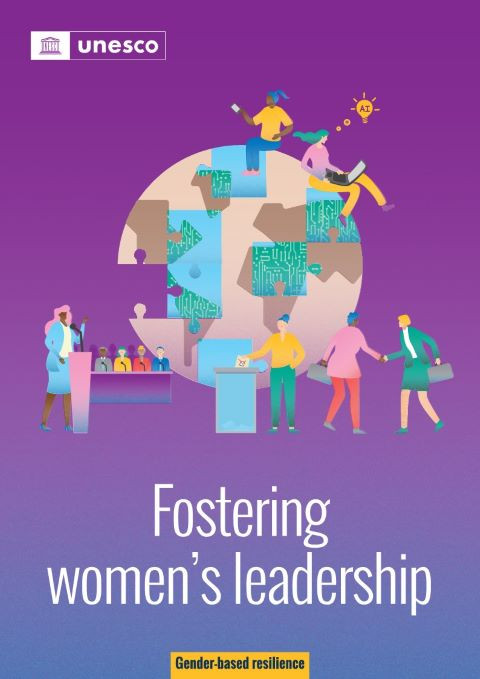 Fostering Women's Leadership Año de publicación: 2024 Autor: Mariagrazia Squicciarini | Anna Rita Manca | Garance Sarlat Autor corporativo: UNESCO No (leadership) share no gain (for societies and economies)! Leveraging UNESCO’s unique Gender-Based Resilience Framework, this report explores the role of women in leadership positions in both decision-making and high-tech, including in artificial intelligence-related innovations. It further highlights progress towards the G20 Brisbane Target, aimed to accelerate progress on gender equality by reducing the gender gap in labour market participation rates by 25% by 2025. Women remain underrepresented in decision-making, holding only about 26% of seats in national parliaments worldwide on average. In the world of work, female labour participation continues to lag behind men’s, at 47% for women against 72% for men on average. Despite progress by G20 members towards the Brisbane Target, a 2% average gap in absolute terms remained to be filled in 2022. In the high-tech world, women make up only 30% of AI professionals, and even less of leaders. Female inventors in AI account for about 37% of patents filed in 2022-23.
  Asia-Pacific Migration Report 2024: Assessing Implementation of the Global Compact for Migration Año de publicación: 2024 Autor corporativo: UN. Economic and Social Commission for Asia and the Pacific (UN. ESCAP) | International Labour Organization (ILO) | International Organization for Migration (IOM) | UN. Office of the United Nations High Commissioner for Human Rights (UN. OHCHR) | United Nations Centre for Human Settlement Programme (UN Habitat) | United Nations Entity for Gender Equality and the Empowerment of Women (UN Women) | United Nations Development Programme (UNDP) | UNESCO | UN. Office of the United Nations High Commissioner for Refugees (UNHCR) | UN. Office on Drugs and Crime (UNODC) | World Bank This report aims to assess the state of GCM implementation in the region, its progress and its challenges since the first Asia-Pacific Regional Review of Implementation of the Global Compact for Migration in 2021, in which a Chair’s summary was adopted. Chapters 2 to 5 each consider clusters of GCM objectives, as presented in General Assembly resolution 73/326 and following the same groupings as in the Asia-Pacific Migration Report (APMR) 2020. These chapters open with a summary of the discussions from the first regional review of the GCM, held in 2021, drawing from the Chair’s summary. Chapter 6 provides overarching recommendations to support and accelerate GCM implementation in Asia and the Pacific. At the end of the report are annexes with information on the GCM objectives and guiding principles, references to migration in Voluntary National Reviews to the High-Level Political Forum on Sustainable Development, and GCM pledges at the level of the State or City, Municipality and Local Authority.