
Recursos
Exploren una amplia gama de recursos valiosos en GCED para profundizar su comprensión y promover su búsqueda, incidencia, enseñanza y aprendizaje.
2,255 resultados encontrados
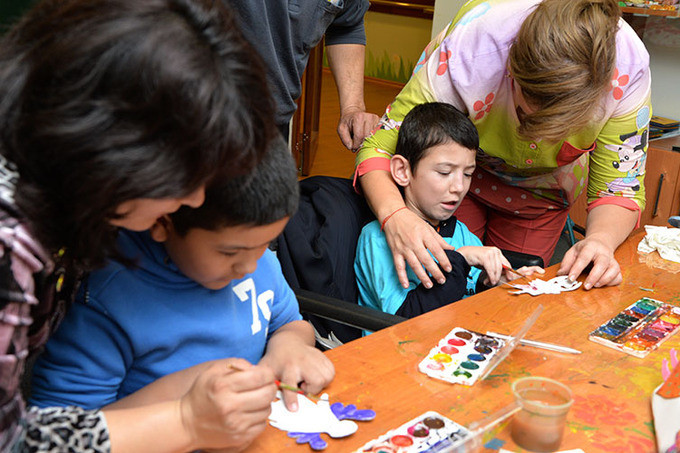 Новый закон «Об образовании» и инклюзия: как должно быть Año de publicación: 2020 Autor: Дильмурад Юсупов 19 мая 2020 года Законодательная палата Олий Мажлиса приняла закон «Об образовании» в новой редакции, в который впервые было внесено понятие инклюзивного образования. Ассоциация инвалидов Узбекистана совместно с экспертами провела анализ документа на его соответствие принципам инклюзивного образования. Анализ документа показал, что несмотря на включение инклюзивного образования как одной из форм получения образования, исключающего дискриминацию детей с инвалидностью, законопроект не соответствует принципам инклюзии.
  Stepping Forward: Parliaments in the Fight Against Hate Speech Año de publicación: 2023 Autor: Kevin Deveaux | Tim Baker | Mary O’Hagan | David Ennis Autor corporativo: United Nations Development Programme (UNDP) This brief provides an overview of the background, drivers, enablers and the impact of hate speech and identifies strategies to counter it, with a focus on the role of parliaments as a positive force for change. Of particular relevance are the concrete actions parliaments can take to address and mitigate the prevalence and impact of hate speech on those who are most vulnerable in society, including women, minorities and other underrepresented groups. The objective of this brief is to provide meaningful and practical guidance for parliaments and parliamentarians, as well as those who programmatically support them, on steps they can take to reduce and counter hate speech while fostering peace, constructive dialogue and trust.
  AntiClash Año de publicación: 2023 Autor: Rafael Tyszblat | Olivier Fournout Autor corporativo: AntiClash AntiClash est un concept d’émission qui va contre la culture du c"lash" en mettant en avant l’esprit et la méthode du dialogue. Lors des émissions thématiques, facilitées par des professionnels du dialogue, les intervenants – connus ou non, experts ou pas, mais en désaccord sur un sujet à potentiel polémique – sont invités à aller au fond de leurs divergences, avec authenticité et respect.Il ne s’agit pas d’une émission d’information. Les animateurs ne sont ni journalistes, ni experts dans les domaines abordés par les personnes invitées. Ainsi, ils ne font pas de « fact checking », ni de « debunking » mais invitent leurs auditeurs à vérifier eux-mêmes les faits avancés par les intervenants.L’objectif d’AntiClash est de montrer de quoi a l’air un véritable dialogue en permettant une meilleure compréhension des discours antagonistes, que la culture du clash dans les médias et les réseaux ne permet pas.Il ne s’agit pas de créer une société où tout le monde est d’accord, mais nos différences, si elles font l’objet d’une conversation constructive, doivent enrichir notre compréhension des lignes de fracture politique et nous permettre de nous rapprocher d’une vérité partagée en rétablissant des liens de confiance et une communication éthique entre citoyens.AntiClash, c’est la tentative de montrer une alternative à l’affrontement sur les sujets qui comptent. AntiClash is a program concept that goes against the culture of c "lash" by emphasizing the spirit and method of dialogue. During themed programs, facilitated by dialogue professionals, speakers - well-known or not, experts or not, but disagreeing on a potentially controversial subject - are invited to get to the bottom of their differences, with authenticity and respect.This is not a news program. The hosts are neither journalists nor experts in the fields covered by the guests. As such, they do not engage in "fact checking" or "debunking", but invite their listeners to verify for themselves the facts put forward by the speakers. The aim of AntiClash is to show what real dialogue looks like, by enabling a better understanding of antagonistic discourses, which the culture of clash in the media and networks does not allow. It's not about creating a society where everyone agrees, but our differences, if the subject of constructive conversation, should enrich our understanding of political fault lines and enable us to move closer to a shared truth by re-establishing bonds of trust and ethical communication between citizens. AntiClash is an attempt to show an alternative to confrontation on the issues that matter.
  Asia and the Pacific SDG Progress Report 2025: Engaging Communities to Close the Evidence Gap Año de publicación: 2025 Autor corporativo: UN. Economic and Social Commission for Asia and the Pacific (UN. ESCAP) The SDG progress report 2025 presents the latest data and insights on progress toward the Sustainable Development Goals (SDGs) in the Asia-Pacific region. While celebrating regional achievements, it also highlights persistent challenges—such as climate change, natural disasters, and critical data gaps—that risk leaving marginalized communities behind. By showcasing innovative community-level partnerships, the report explores how local efforts can help bridge the evidence gap, ensuring that progress toward the SDGs is inclusive and leaves no one behind.
 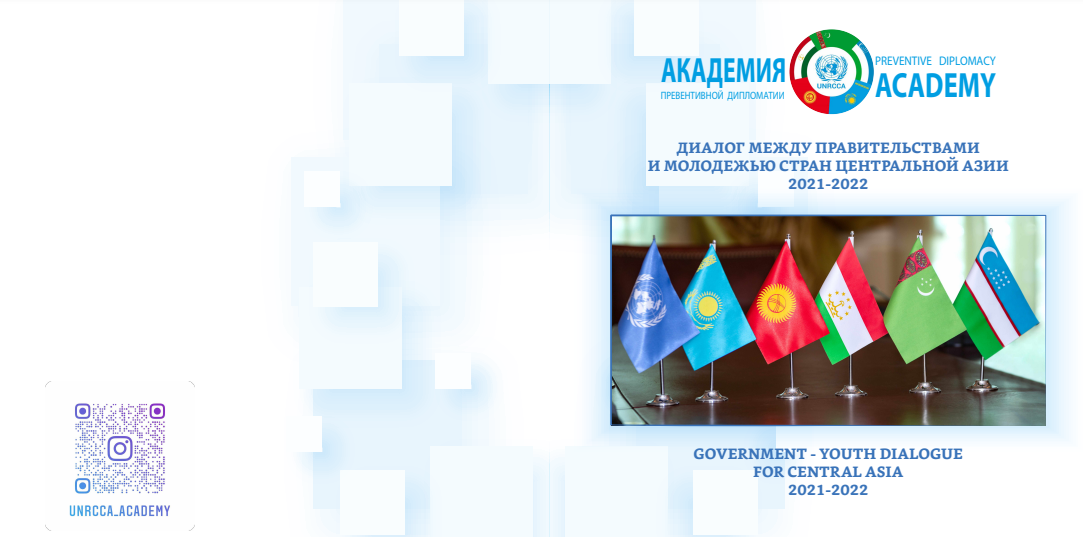 Диалог между правительствами и молодежью стран Центральной Азии 2021-2022 Año de publicación: 2023 Autor corporativo: РЦПДЦА Данная публикация представляет собой сборник посланий молодых в ходе третьего (8 декабря 2021 года, г. Душанбе, Республика Таджикистан) и четвертого (11 декабря 2022 года, г. Ашхабад, Туркменистан) Диалогов между правительствами и молодежью стран Центральной Азии, а также сборник истории успехов участников программы «Академия превентивной дипломатии» Регионального Центра ООН по превентивной дипломатии для Центральной Азии (РЦПДЦА).
 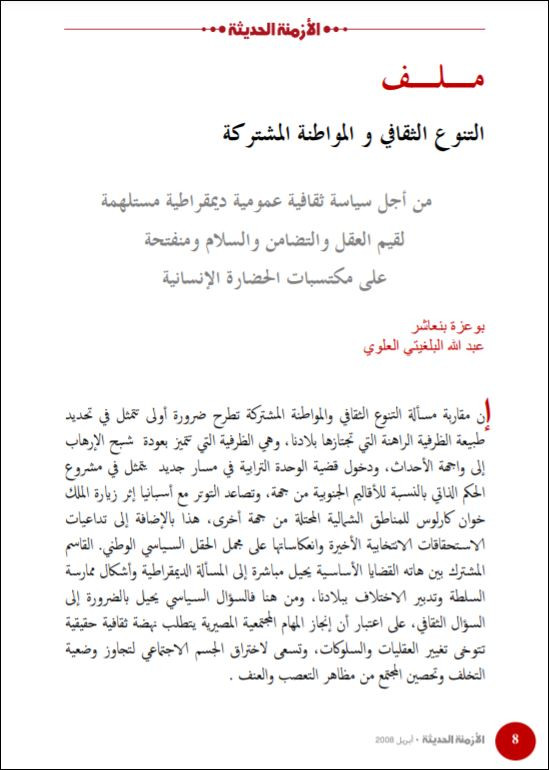 Cultural Diversity and Shared Citizenship Año de publicación: 2008 Autor: BoAzza Binasher | Abdullah Alalawai Autor corporativo: Modern Times Magazine This integrated file from the Journal of Modern Times reviews the issue of citizenship and cultural diversity. The file reviews many reflective questions on the subject of shared citizenship. The file contributes in general to setting a democratic cultural policy that guarantees the values of solidarity and peace in order to preserve human civilization. ملف التنوع الثقافي و المواطنة المشتركة Año de publicación: 2008 Autor: BoAzza Binasher | Abdullah Alalawai Autor corporativo: Modern Times Magazine يستعرض هذا الملف المتكامل من مجلة الأزمنة الحديثة قضية المواطنة والتنوع الثقافي. حيث يستعرض الملف تساؤلات كثيرة حول موضوع المواطنة المشتركة. ويسهم الملف عموما في وضع سياسة ثقافية ديموقراطية تضمن قيم التضامن والسلام من أجل الحفاظ على المكتسبات الإنسانية.
  Declaration on a Culture of Peace Año de publicación: 1999 Autor corporativo: United Nations (UN) Solemnly proclaims the present Declaration on a Culture of Peace to the end that Governments, international organizations and civil society may be guided in their activity by its provisions to promote and strengthen a culture of peace in the new millennium.
  Toolbox in Education for Peace Año de publicación: 2013 Autor: Luz Marfa Chapela Autor corporativo: UNESCO Mexico The components of this box form a system in which each element has its own ends and all the elements, gathered and linked, seek the same shared goal: offer recreational materials that encourage introspective reflection, the best knowledge of the other and the environment, the collaborative study, the participation of different agents of the community in support of teachers, the use of mother tongues and the identification of resources, knowledge, talents and skills in local communities. This box is addressed in a special way to teachers and students of basic education, as well as to different agents of the civil society that support them. Its purpose is to favor the development of school communities that make the school a center of study, play, advice and work for all. Because the materials of the Toolbox can also be interesting to young people and adults of all ages. In this sense, the box invites the different agents of the communities to think and produce new playful-educational materials that collect and put into action some priority local contents, which, surely, will enrich the life and educational possibilities of school communities. Caja de Herramientas en Educación para la Paz Año de publicación: 2013 Autor: Luz Marfa Chapela Autor corporativo: UNESCO Mexico Los componentes de esta caja forman un sistema en el que cada elemento tiene sus propios fines y todos los elementos, reunidos y vinculados, buscan un mismo fin compartido: ofrecer materiales lúdicoeducativos que propicien la reflexión introspectiva, el mejor conocimiento del otro y del entorno, el estudio colaborativo, la participación de distintos agentes de la comunidad en apoyo a los maestros, el uso de las lenguas maternas y la identificación de recursos, saberes, talentos y habilidades en las comunidades locales. Esta caja se dirige de manera especial a maestros y estudiantes de educación básica, así como a distintos agentes de la sociedad civil que los apoyan. Tiene entre sus propósitos favorecer el desarrollo de comunidades escolares que hagan de la escuela un centro de estudio, juego, asesoría y trabajo para todos. Porque los materiales de la Caja de Herramientas también pueden resultar interesantes a jóvenes y adultos de todas las edades. En este sentido, la caja invita a los distintos agentes de las comunidades a pensar y producir nuevos materiales lúdico-educativos que recojan y pongan en acción algunos contenidos locales prioritarios, mismos que, seguramente, enriquecerán la vida y las posibilidades educativas de las comunidades escolares.