
Recursos
Exploren una amplia gama de recursos valiosos en GCED para profundizar su comprensión y promover su búsqueda, incidencia, enseñanza y aprendizaje.
2,275 resultados encontrados
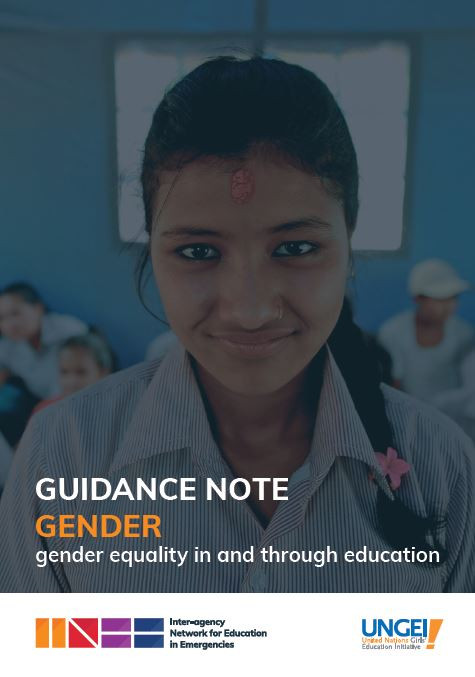 INEE Guidance Note on Gender: Equality in and Through Education Año de publicación: 2019 Autor corporativo: Inter-agency Network for Education in Emergencies (INEE) With the launch of the Global Goals for Sustainable Development (SDGs) in 2015, the international community committed to providing inclusive and equitable quality education for all (SDG4) as well as achieving gender equality and the empowerment of all women and girls (SDG5). The Global Goals also emphasize the need to “leave no one behind” by focusing on those furthest behind first, such as those affected by crisis. In line with this, the Education 2030 Framework for Action stresses the importance of providing education in “safe, supportive and secure learning environments free from violence” and recommends a stronger, better coordinated response to ensure the protective space of education is maintained during crises and subsequent recovery efforts.In response to these global commitments, the INEE Guidance Note on Gender provides strategies to ensure that girls, boys, women, and men in contexts of conflict and crisis equally enjoy the protection and learning outcomes that quality education can provide. It also outlines principles for gender-responsive programming, in alignment with the INEE Minimum Standards for Education in Emergencies. The Guidance Note on Gender shows how attention to gender dynamics and social constraints will result in better education for all crisis-affected populations and help build inclusive, equitable education systems for the future. This guidance note also responds to recent developments in the humanitarian context, including the historic commitment made by G7 partners to quality education for girls in crisis situations. The ensuing Charlevoix Declaration on Quality Education for Girls, Adolescent Girls, and Women in Developing Countries recognizes that quality education can contribute to peace and stability as well as positive health and life outcomes for all. It is critical that the development community now harnesses this global momentum by working together to break the particular barriers that prevent too many girls and boys in situations of crisis and conflict from accessing the education they need. It is our hope that this Guidance Note on Gender will help better equip those at the frontlines of this work to do just that.
 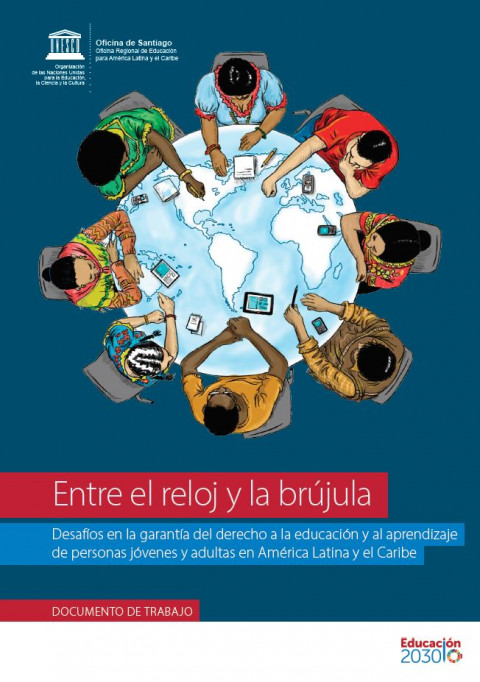 Entre el reloj y la brújula: desafíos en la garantía del derecho a la educación y al aprendizajede personas jóvenes y adultas en América Latina y el Caribe; documento de trabajo Año de publicación: 2019 Autor: Henry Renna Autor corporativo: UNESCO Santiago Este documento tiene por objetivo proporcionar una visión general de la educación y del aprendizaje de personas jóvenes y adultas como derecho humano y social. Los instrumentos de derecho vinculante y no vinculante que la sustentan son históricos y de larga data, como también contingentes, amplios y extensos en su alcance, con presencia regional e internacional. El documento muestra —sobre la base de los Indicadores del Objetivo de Desarrollo Sostenible 4 (ODS 4 Agenda 2030)— que los principales desafíos para los países de América Latina y el Caribe tienen relación con la lentitud de los progresos (el desafío del reloj) dejando a muchas y muchos jóvenes y adultos al margen de oportunidades educativas, de conocimientos, habilidades y aptitudes, y privados de alcanzar el bienestar integral. Este informe también sostiene —basado en los informes nacionales del Tercer Reporte Global de Educación y Aprendizaje de Adultos— que muchos desafíos están vinculados con la dirección de las políticas (el desafío de la brújula), con sentidos reduccionistas y homogeneizadores detrás de las instituciones y de la acción pública, lo que precariza y fragiliza la garantía del derecho a la educación y al aprendizaje de las personas jóvenes y adultas. Este documento es consistente con el llamado de la UNESCO a «repensar la educación» e invita a reconstruir en el siglo XXI un mundo y una educación sin muros, donde se difuminen las fronteras mentales e institucionales que reducen, dividen y aislan los sistemas educativos, con el fin de liberar su poder transformador para todos y todas.
 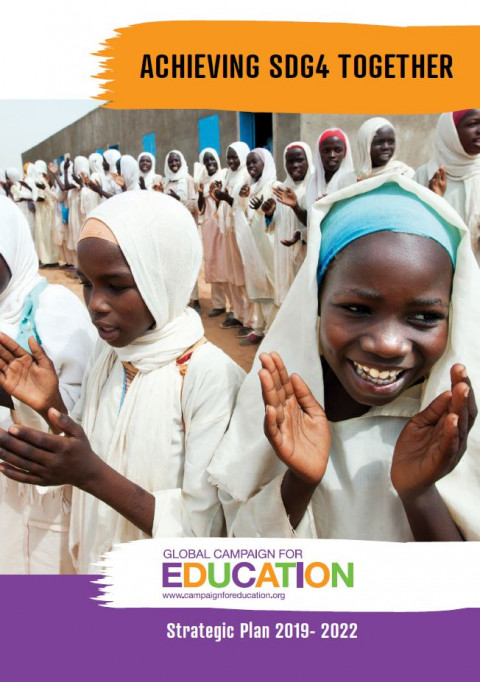 Achieving SDG 4 Together: Strategic Plan 2019 - 2022 Año de publicación: 2018 Autor corporativo: Global Campaign for Education (GCE) The 2019-2022 strategic plan of the Global Campaign for Education was adopted during the 6th World Assembly of the movement in November 2018, Kathmandu. The plan identifies 4 priority strategic areas: Inclusivity and non-discrimination, Transformative education, Education in emergencies and Financing education. The plan also focus on strengthening the global movement and integrating youth voices.On the eve of celebrating its 20th anniversary, the Global Campaign for Education (GCE) is the largest civil society organisation movement working to promote the human right to education and to put pressure on governments and the international community to fulfil their commitments to provide free, inclusive, quality public education and lifelong learning for all, particularly for children. Our regional and national coalitions encompass many thousands of civil society organisations and represent millions of individuals across the world. Each is independent, and all are united by the commitment to the human right to education, and to achieving change through the mobilisation of citizens and civil society.
  Transforming Systems in Times of Adversity: Education and Resilience; White Paper Año de publicación: 2019 Autor: Ritesh Shah Autor corporativo: United States Agency for International Development (USAID) This white paper was commissioned to provide USAID, including Missions, Regional Bureaus, Pillar Bureaus, and the Office of U.S. Foreign Disaster Assistance (OFDA), with an overview of global and Agency thinking and practice on education and resilience and a foundation and justification for positioning USAID education efforts more concretely within a resilience frame.The white paper is organized into three key sections. The first section outlines the business case for resilience, explaining how and why resilience is an important consideration for education programs to consider in contexts of crisis and conflict and how education is well poised as a sector to contribute to strengthening resilience. The second section presents a conceptual framework for understanding how resilience operates through and within the education sector and program interventions. The third section provides a series of key considerations for developing and supporting USAID education programs with a resilience lens or focus.
  Shoah Memorial, Museum, Contemporary Jewish Documentation Centre The Shoah Memorial provides access to various resources on the Holocaust, mostly in French. Mémorial de la Shoah - Musée, Centre de documentation juive contemporaine Le Mémorial de la Shoah donne accès à diverses ressources sur l'Holocauste, la plupart du temps en français. Enseigner l'histoire de la Shoah This website, hosted by the Mémorial de la Shoah and the French Ministry of Education is a perfect guide for primary or secondary teachers in their work on the Holocaust. With a collection of literature and film reviews, and an inventory of the different museums or memorials to visit, this platform encourages the educational staff to approach this issuein an interactive way such as the organization of thematic exhibitions or class-participation in national contests. Le grenier de Sarah Sarah’s attic is a website introducing Shoah History that addresses specifically children from age 8 to 12 with full respect of their sensitivity. This website invites them to watch and hear tales and expressions testifying of the diversity of Jewish cultures transmitted before, during and after the Second World War. In addition, nine personal itineraries bear witness to the daily life of Jews during the war, based on archive documents kept at the Mémorial de la Shoah in Paris. Teaching Guidelines of the International Holocaust Remembrance Alliance The website of the International Holocaust Remembrance Alliance, an intergovernmental body dedicated to Holocaust education, remembrance and research, contains much practical information on all aspects of Holocaust education. The Holocaust and the United Nations Outreach Programme Detailed information on the Holocaust and the United Nations Outreach Programme can be found at this website. Educational materials as well as professional development opportunities are presented.