
Recursos
Exploren una amplia gama de recursos valiosos en GCED para profundizar su comprensión y promover su búsqueda, incidencia, enseñanza y aprendizaje.
1,852 resultados encontrados
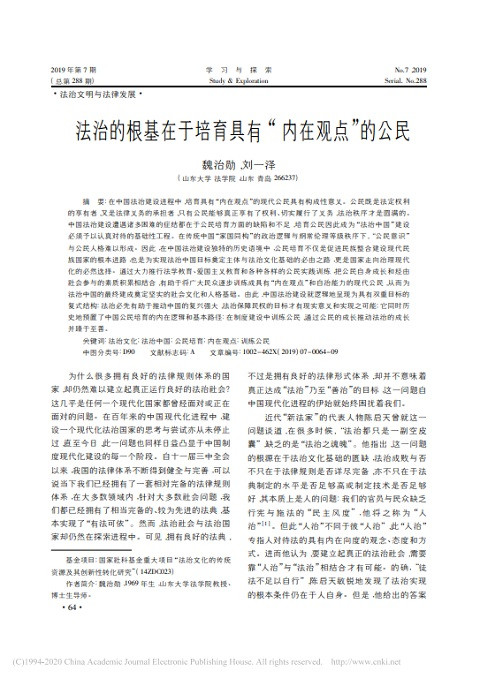 The Foundation of the Rule of Law Consisting in Cultivating Citizens with ‘Inner Views’ (Study & Exploration; No. 7) Año de publicación: 2019 Autor: Wei Zhixun | Lliu Yize Autor corporativo: Heilongjiang Academy of Social Sciences In the process of building the rule of law in China, it is of constitutive significance to cultivate modern citizens with “inner views”. Citizens are both the beneficiaries of legal rights and the bearers of legal obligations. Only when citizens truly enjoy their rights and fulfill their obligations can the rule of law be complete. Some of the difficulties encountered in the construction of China’s rule of law lie in the defects and deficiencies in the cultivation of citizens. Under the traditional Chinese political logic and ethical hierarchy order of family-country isomorphism, civic consciousness and civic personality must be difficult to develop. Therefore, in the unique historical context of China’s rule of law construction, citizen cultivation is not only the fundamental way to promote ethnic integration and build a modern nation state, but also the only way to lay the main body and cultural foundation for the realization of the goal of rule of law, and also the inevitable choice for the country to move towards system modernization. Carrying out legal education, patriotism education and all kinds of civil practice training vigorously, with the growth of citizen’s spirits and the accumulation of social participation will contribute to training the general public gradually to be modern citizens with internal points of view and autonomy ability so as to lay a solid social cultural foundations for the rule of law in China. Therefore, the construction of the rule of law in China is logically presented as a dual structure with dual goals: the rule of law must first help to promote the revival and strength of China, and then the goal to protect civil rights earns its meaning and possibility. At the same time, it presets the inherent logic and basic path of Chinese citizens’ cultivation: training citizens in the process of system construction promotes the growth of the rule of law through citizens’ growth so as to achieve perfection. 法治的根基在于培育具有‘内在观点’的公民 (学习与探索; No. 7) Año de publicación: 2019 Autor: Wei Zhixun | Lliu Yize Autor corporativo: Heilongjiang Academy of Social Sciences 在中国法治建设进程中,培育具有“内在观点”的现代公民具有构成性意义。公民既是法定权利 的享有者,又是法律义务的承担者,只有公民能够真正享有了权利、切实履行了义务,法治秩序才是圆满的。 中国法治建设遭遇诸多困难的症结都在于公民培育方面的缺陷和不足,培育公民因此成为“法治中国”建设 必须予以认真对待的基础性工程。在传统中国“家国同构”的政治逻辑与纲常伦理等级秩序下,“公民意识” 与公民人格难以形成。因此,在中国法治建设独特的历史语境中,公民培育不仅是促进民族整合建设现代民 族国家的根本进路,也是为实现法治中国目标奠定主体与法治文化基础的必由之路,更是国家走向治理现代化的必然选择。通过大力推行法学教育、爱国主义教育和各种各样的公民实践训练,把公民自身成长和经由社会参与的素质积累相结合,有助于将广大民众逐步训练成具有“内在观点”和自治能力的现代公民,从而为法治中国的最终建成奠定坚实的社会文化和人格基础。由此,中国法治建设就逻辑地呈现为具有双重目标的复式结构: 法治必先有助于推动中国的复兴强大,法治保障民权的目标才有现实意义和实现之可能; 它同时历 史地预置了中国公民培育的内在逻辑和基本路径: 在制度建设中训练公民,通过公民的成长推动法治的成长 并臻于至善。
 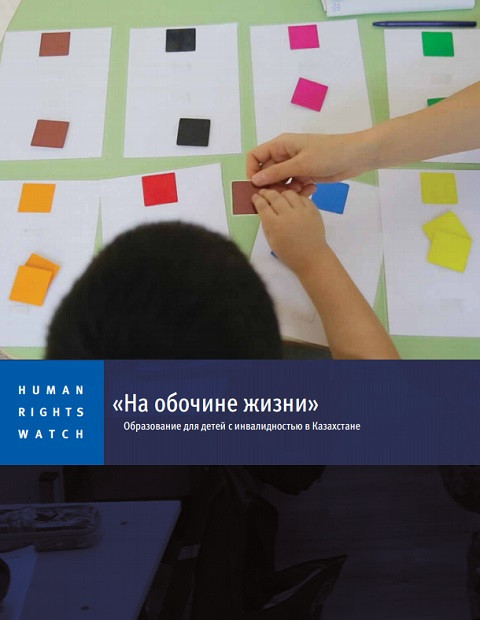 On the Margins: Education for Children With Disabilities in Kazakhstan Año de publicación: 2019 Autor corporativo: Human Rights Watch This report is intended to analyze the situation with inclusive education in Kazakhstan for children with disabilities, government initiatives in this area, the reasons and factors of insufficient implementation of inclusive education. It also contains recommendations to the government of the Republic of Kazakhstan and international partners and proposals for improving the situation. На обочине жизни: Образование для детей с инвалидностью в Казахстане Año de publicación: 2019 Autor corporativo: Human Rights Watch Данный отчет призван проанализировать ситуацию с инклюзивном образованием в Казахстане для детей с инвалидностью, государственные инициативы в данной сфере, причины и факторы недостаточного внедрения инклюзивного образования. В нем также содержатся рекомендации правительству Республики Казахстан и международным партнерам и предложения по улучшению ситуации.
  The Status and Issues of Peace Education: Focussing on Its Interactions with Unification Education Año de publicación: 2019 Autor: Jeongah Cho | Ellie Kim | Ahyoung Moon | Boyoung Yoon Autor corporativo: Korea Institute for National Unification To lay the groundwork to explore the accessibility of peace education and unification education in an era of peace cooperation on the Korean Peninsula, this study takes a look at the history of peace education and the current situation and issues of both peace education and unification education. Against the backdrop of the division on the Korean Peninsula, unification education and peace education have been established as educational sectors of conflict resolution between the North and the South and of means of mediation for violence caused by the division. The two sectors have developed commonalities along the way. The origin of peace education and unification education is rooted on the division of the Korean Peninsula and the subsequent unification issues. In the current educational practices, there are different characteristics and emphasis in terms of the direction, contents, and subject of education between peace education and unification education. Efforts of creating “peace·unification education” are recently being made which focuses more on issues of peace than existing unification education. Peace education and unification education exhibit differences when it comes to the relationship between peace and unification in realizing a peaceful Korean Peninsula, whether unification is justified as an ultimate goal, how issues of ‘positive peace’ and security are handled, and how much initiatives the learners have. This study asserts that the issues between peace education and unification education should be clarified and that the two sectors should expand the overlapping areas under the principal of dealing with unification issues on the basis of value of peace. 평화교육의 실태와 쟁점: 통일교육과의 접점을 중심으로 Año de publicación: 2019 Autor: 조정아 | 김엘리 | 문아영 | 윤보영 Autor corporativo: 통일연구원 이 연구는 한반도 평화협력의 시대에 평화교육과 통일교육의 접근 가능성을 모색하기 위한 기초작업이다. 평화교육의 역사를 고찰하고 평화 교육과 통일교육 실태와 쟁점을 살펴보았으며, 이에 기초하여 평화교육과 통일교육의 과제를 도출하였다. 통일교육과 평화교육은 분단의 역사 속에서 분단과 남북 간의 대립, 분단으로 인한 폭력과 비평화를 해소하기 위한 교육으로 자리매김하였고, 그 과정에서 접점을 형성하고 공동의 영역을 만들어왔다. 평화교육의 역사 고찰에서 나타난 바와 같이, 한국의 평화교육은 그 태생에서부터 분단의 극복과 민족화해라는 문제를 중심에 놓았다. 한국에서 평화교육은 우리 사회의 폭력의 주요한 원인 중 하나인 분단문제를 고민하지 않고 이루어질 수는 없는 것이었다. 그 점에서 평화교육과 통일교육은 태생에서부터 한반도의 분단과 통일이라는 출발점을 공유하고 있다. 그럼에도 불구하고, 평화교육이라는 이름으로 불리는 교육실천과 통일교육이라는 이름으로 불리는 교육실천의 현재 모습 속에는 교육의 방향성, 내용, 주체 등의 측면에서 서로 다른 특성과 강조점이 나타난다. 특히 통일교육 영역에서 최근 평화‧ 통일교육이라는 명칭으로 기존 통일교육과의 차별화를 시도하고 있지만, 한반도 평화에서 통일의 위상, 통일의 당위성 문제, 적극적 평화와 안보문제, 학습자의 주도성 등을 다루는 관점에서 평화교육과의 차이가 존재한다. 이에, 이 연구에서는 평화교육과 통일교육 중 어느 하나가 다른 쪽을 대체하거나 양자를 통합해야 한다고 주장하기보다는, 평화교육과 통일 교육이 양자의 문제의식을 공유하면서 한반도 분단과 통일문제를 평화의 관점과 가치에 입각해서 다루어야 한다고 보았다. 이를 위한 정책과 평화교육의 실태와 쟁점: 통일교육과의 접점을 중심으로 제로 ① 교육 방향성 정립과 이를 위한 사회적 논의, ② 역량중심으로 평화교육 및 통일교육 내용체계 개편, ③ 민간 영역의 자율성 확대와 거버넌스 구축, ④ 시대적 과제와 평화지향성을 반영한 통일교육 관계 법령 정비를 제시하였다.
  Manual for the Programme to Prevent and Respond to School Violence in East Kazakhstan Año de publicación: 2014 Autor: Robin Haarr Autor corporativo: United Nations Children's Fund (UNICEF) School violence can threaten a child’s sense of safety within school, negatively impacting on their ability to learn. The best way to address school violence is to step in promptly, with effective intervention in the first instance. Internationally, ‘best practice’ in preventing and responding to school violence is being used to develop school-wide systems of prevention and intervention.This publication was prepared under the co-operation between the Ministry of Education and Science of Kazakhstan, the Office of the Commissioner for Human Rights of the Republic of Kazakhstan, the Akimat of East Kazakhstan Oblast, the East Kazakhstan State University, and the UNICEF Office in Kazakhstan. It aims to facilitate the prevention of violence towards children in schools in Kazakhstan, with support from the Ministry of Foreign Affairs of Norway. Руководство по реализации программы: Профилактика и реагирование на насилие в школах в восточно-казахстанской области Año de publicación: 2014 Autor: Robin Haarr Autor corporativo: United Nations Children's Fund (UNICEF) Насилие в школе может угрожать ощущению безопасности детей в школе и отрицательно влиять на их способность к обучению. Наилучшим способом решения проблемы насилия в школе является профилактика и должное вмешательство при его проявлении.Данное пособие подготовлено в рамках сотрудничества между Министерством образования и науки РК, учреждением Уполномоченного по правам человека, акиматом Восточно-Казахстанской области, Восточно-Казахстанским государственным университетом им. Аманжолова и ЮНИСЕФ в целях реализации проекта по профилактике и реагированию на насилие в отношении детей в школах Казахстана, при поддержке Министерства иностранных дел Норвегии.
  Islam, Diversity and Peacebuilding Año de publicación: 2016 Autor: Ramy Atta | Ahmed Naji Autor corporativo: Roya TV An interesting dialogue between the speakers about diversity and the extent to which Islam deals with this term. The speakers discuss the wealth of the Islamic religion in the root of diversity and pluralism, and how that leads to peace.
  What Matters in Indigenous Education: Implementing a Vision Committed to Holism, Diversity and Engagement Año de publicación: 2016 Autor: Pamela R.Toulouse Autor corporativo: Measuring What Matters | People for Education This paper, What Matters In Indigenous Education: Implementing A Vision Committed To Holism, Diversity And Engagement, explores an Indigenous approach to quality learning environments and relevant competencies/skills. It focuses on select work from People for Education and draws out the research, concepts and themes that align with Indigenous determinants of educational success. This paper also expands on this work by offering perspectives and insights that are Indigenous and authentic in nature.