
Recursos
Exploren una amplia gama de recursos valiosos en GCED para profundizar su comprensión y promover su búsqueda, incidencia, enseñanza y aprendizaje.
1,852 resultados encontrados
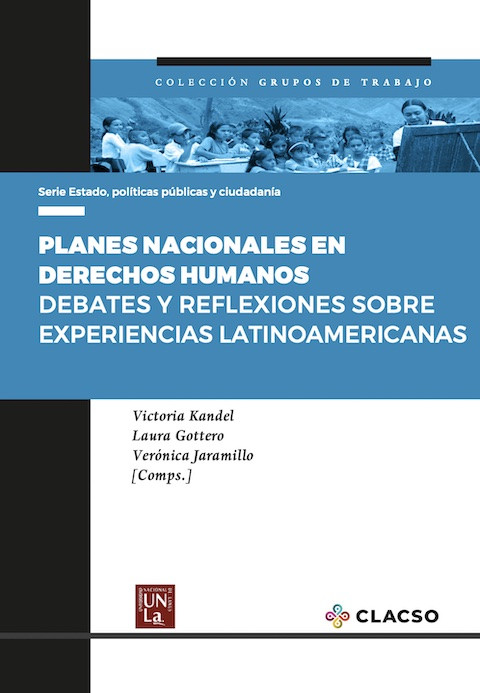 Planes nacionales en derechos humanos: Debates y reflexiones sobre experiencias latinoamericanas Año de publicación: 2021 Autor: Laura Pautassi | Mariela Alejandra Acevedo | Felicitas Acosta | Myriam Feldfeber | Pablo Imen | María Mercedes Palumbo | Fernanda Saforcada | Soledad Vercellino Autor corporativo: Consejo Latinoamericano de Ciencias Sociales (CLACSO) En este libro se presentan las experiencias en Chile, Colombia, Ecuador, Brasil, Uruguay, Perú y México, en cuanto a la elaboración e implementación de los Planes Nacionales de Derechos Humanos como herramienta de política pública recomendada en la Segunda Conferencia Mundial de Derechos Humanos, celebrada en Viena en 1993. Los textos reunidos en este libro dan cuenta de las tensiones y desafíos a la hora de generar políticas públicas en derechos humanos que sean inclusivas, que respondan a parámetros de participación ciudadana eficaces y con incidencia.
  Strengthening Democracy Is the Key to Preventing Far-Right Extremism Año de publicación: 2021 Autor: Cynthia Miller-Idriss This article emphasizes that Disinformation, misinformation and propaganda undermine democratic practices in ways that should be fought not only by trying to shrink or contain the extremist fringe, but also by strengthening democratic values and practices within the mainstream.And also highlights that It is critical to engage proactively and consistently in order to prevent further escalations in far-right extremism and interrupt violent radicalisation at early stages.
  Digital Skills Toolkit Año de publicación: 2018 Autor: Chris Coward Autor corporativo: International Telecommunication Union (ITU) This toolkit provides stakeholders with guidance on developing a digital skills strategy. It is intended for policymakers, along with partners in the private sector, non-governmental organizations, and academia. Its overarching aim is to facilitate the development of a comprehensive digital skills strategy at country level. It is also possible to use this guide to focus on selected priorities that require a fresh approach. Portada de Conjunto de herramientas para las habilidades digitales Año de publicación: 2018 Autor: Chris Coward Autor corporativo: International Telecommunication Union (ITU) Este conjunto de herramientas proporciona a las partes interesadas directrices para el desarrollo de una estrategia de habilidades digitales. Se dirige a las instancias decisorias, a los asociados del sector privado, las organizaciones no gubernamentales y los sectores académicos. Su propósito general es facilitar el desarrollo de una estrategia de habilidades digitales de amplio alcance a nivel de país. También puede utilizarse esta guía para centrarse en determinadas prioridades que exigen un reno- vado planteamiento. Kit pratique sur les compétences numériques Año de publicación: 2018 Autor: Chris Coward Autor corporativo: International Telecommunication Union (ITU) Ce kit pratique donne des indications aux parties prenantes sur l’élaboration d'une stratégie dans le domaine des compétences numériques. Il est destiné aux décideurs de même qu’aux partenaires du secteur privé, des organismes non-gouvernementaux et des milieux universitaires. Son objectif prio- ritaire consiste à promouvoir le développement d’une stratégie globale en matière de compétences numériques au niveau des pays. Il est également possible d’utiliser ce kit pratique pour se concentrer sur certaines priorités qui nécessitent une nouvelle approche. Комплект материалов по цифровым навыкам Año de publicación: 2018 Autor: Chris Coward Autor corporativo: International Telecommunication Union (ITU) Настоящий комплект материалов предоставляет заинтересованным сторонам руководящие указания по разработке стратегии в области цифровых навыков Он предназначен для директивных органов наряду с партнерами в частном секторе, неправительственными и академическими организациями. Его всеобъемлющая цель заключается в содействии разработке всесторонней стратегии в области цифровых навыков на уровне страны. Кроме того, данное руководство можно использовать для ориентации на избранные приоритеты, требующие свежего взгляда на вещи. 数字技能工具包 Año de publicación: 2018 Autor: Chris Coward Autor corporativo: International Telecommunication Union (ITU) 本工具包为利益相关方的数字技能战略制定提供指导,适用于政策制定者及私营部 门、非政府组织和学术界合作伙伴,其总目标是从国家层面上促进数字技能战略的全面 发展。该指南亦可用于关注选定的需要新方法的优先事项。
 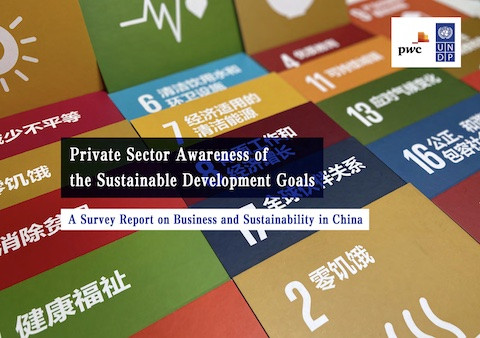 Private Sector Awareness of the Sustainable Development Goals: A Survey Report On Business and Sustainability in China Año de publicación: 2020 Autor corporativo: UNDP China This report serves as a baseline analysis of business awareness of the Sustainable Development Goals (SDGs). As a first of its kind in China, the report aims to provide business leaders a glimpse of how companies are engaging with the SDGs in China, which areas matter the most, the future trends and how – beyond normal business practices – companies can help societies to recover from shocks and crises, such as COVID-19.As a joint effort with PwC China and the China Chamber of International Commerce (CCOIC), the Report, entitled “Private Sector Awareness of the SDGs” utilized online questionnaires for self-reporting and in-depth interviews for case studies, drawing a comprehensive analysis on the current understanding and activities of sustainable development in selected enterprises including foreign-owned companies operating in China across different industries. Its findings provide insight on how best to gear businesses towards the SDGs and the challenges that must be overcome to do so.
  평화를 향한 유네스코의 역할 Año de publicación: 2019 Autor: 강인욱 | 김성해 | 김지현 | 성지은 | 유성상 | 조동준 | 최동주 | 한경구 Autor corporativo: 유네스코한국위원회 평화를 위한 유네스코의 국제적인 지적 협력 활동은 교육과 문화 분야에서는 상당한 가시적 성과를 거두었다. 이 과정에서 문제점도 발견되고 한계도 드러나고 정치화되었다는 비판도 받았지만, 교육과 문화의 영역에서 유네스코는 국제적 협력과 활동의 방향을 설정하거나 논의를 주도하고 이끌어가는 모습을 보이고 있다.유네스코가 평화를 위한 기구이면서도 평화와 관련하여 폭넓고 다양하며 깊이 있는 새로운 연구와 실천을 적극적으로 주도하지 못한 것은, 냉전이라는 국제정치적 요인을 감안하더라도 매우 안타까운 일이다. 유네스코는 평화를 위하여 만들어진 국제기구이면서도 전후에 평화와 관련된 학술적 논의와 이론의 발전을 주도하지 못했다. ‘평화의 문화’ 개념이 처음 언급된 것은 1989년 코트디브아르에서였고, 1997년이 되어서야 유네스코가 ‘Toward a Culture of Peace Program 을 시작하였으며, 유엔총회가 2000 년을 ‘평화의 문화의 해로 선언했다.유네스코의 이러한 상황은 한국이 보다 적극적인 역할을 할 기회를 제공한다. 한국은 과거 와 같이 기회가 있을 때마다 국위를 선양하는 수준의 상황추수적(狀況追隨的) 대응에 매몰되거나, 좁은 시야로 단기적 국익을 추구하는 소극적인 입장을 탈피할 필요가 있다. 오히려 대국적 견지에서 세계 평화와 인류의 행복이라는 지구 공동체(Global Community) 전체의 이익을 중시하고, 이틀 장기적 국가이익과 동일시하며, 이에 상응하는 재정 부담을 감수함으로써 세계시민권력(Global Citizenship Power)을 추구하면서 국제적 지위의 향상과 도덕적 지도력을 증대 시킬 수 있을 것이다.
  COVID-19: How to Include Marginalized and Vulnerable People in Risk Communication and Community Engagement Año de publicación: 2020 Autor corporativo: United Nations Entity for Gender Equality and the Empowerment of Women (UN Women) | Regional Risk Communication and Community Engagement (RCCE) Women, the elderly, adolescents, youth, and children, persons with disabilities, indigenous populations, refugees, migrants, and minorities experience the highest degree of socio-economic marginalization. Marginalized people become even more vulnerable in emergencies. This is due to factors such as their lack of access to effective surveillance and early-warning systems, and health services. The COVID-19 outbreak is predicted to have significant impacts on various sectors. The development of this guide was led by UN Women and Translators without Borders on behalf of the Risk Communication and Community Engagement Working Group on COVID-19 Preparedness and Response in Asia and the Pacific, co-chaired by WHO, IFRC and OCHA.