
Recursos
Exploren una amplia gama de recursos valiosos en GCED para profundizar su comprensión y promover su búsqueda, incidencia, enseñanza y aprendizaje.
1,852 resultados encontrados
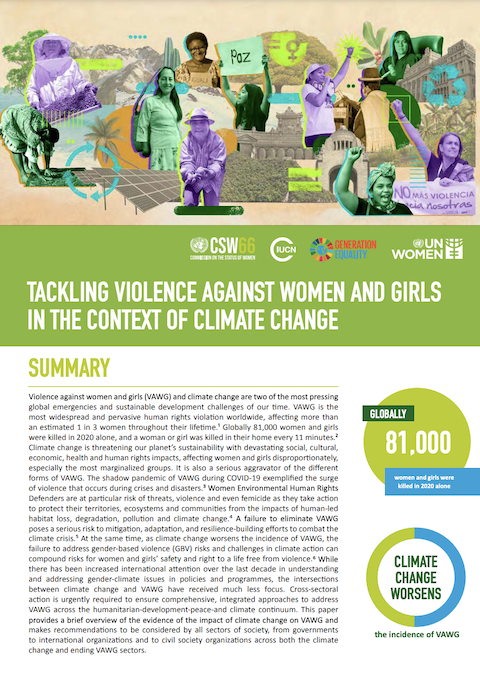 Tackling Violence Against Women and Girls in the Context of Climate Change Año de publicación: 2022 Autor corporativo: United Nations Entity for Gender Equality and the Empowerment of Women (UN Women) | International Union for Conservation of Nature (IUCN) Violence against women and girls (VAWG) and climate change are two of the most pressing global emergencies and sustainable development challenges of our time.This paper provides a brief overview of the evidence of the impact of climate change on VAWG and makes recommendations to be considered by all sectors of society, from governments to international organizations and to civil society organizations across both the climate change and ending VAWG sectors.
  A World History of Women’s Rights in 3 Minutes Año de publicación: 2020 Autor corporativo: United Nations Entity for Gender Equality and the Empowerment of Women (UN Women) How far have we advanced in the global fight for equal rights and how much remains to be done? From suffrage campaigns around the world to the rise of the #MeToo movement and digital activism, we've made little progress. However, the fight for gender equality is far from over. Meet remarkable women and discover the grassroots movements and historic milestones that have helped change the world for women and girls. Una historia mundial de los derechos de las mujeres en 3 munutos Año de publicación: 2020 Autor corporativo: United Nations Entity for Gender Equality and the Empowerment of Women (UN Women) ¿Cuánto hemos avanzado en la lucha mundial por lograr la igualdad de derechos y cuánto queda por hacer? Desde las campañas sufragistas en todo el mundo al surgimiento del movimiento #MeToo y el activismo digital, hemos progresado poco a poco. Sin embargo, la lucha por la igualdad de género está lejos de haber acabado. Conoce a mujeres notables y descubre los movimientos de base y los hitos históricos que han contribuido a cambiar el mundo para las mujeres y las niñas.
 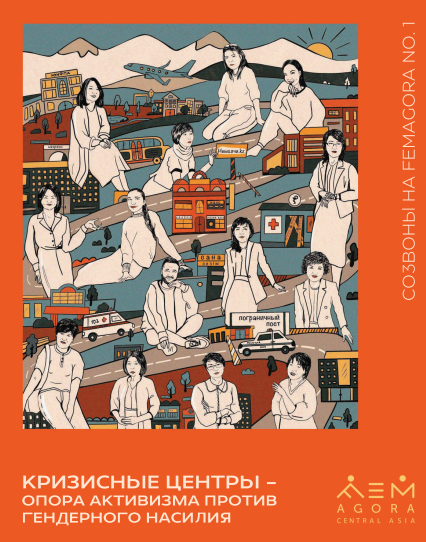 Crisis Centers - A Pillar of Activism Against Gender-Based Violence Año de publicación: 2021 Autor: Bermet Baryktabasova | Gaziya Moldakulova | Dina Smailova | Elena Tkacheva | Zulfia Baysakova | Margarita Uskembaeva | Nazgul Turdubekova | Oksana Ibragimova | Raushan Khudayishukurova | Sanzhar Kurmanov | Tatyana Musagalieva | Ukei Murataliyeva | Khurshida Ibragimova | Shakhnoza Khasanova Autor corporativo: United Nations Entity for Gender Equality and the Empowerment of Women (UN Women) The publication is based on the speeches of 14 experts from Kazakhstan, Kyrgyzstan, and Uzbekistan, who shared their approaches to responding to domestic violence and the experience of crisis centers and gave recommendations on facilitating the work of crisis centers and other services. Кризисные центры - опора активизма против гендерного насилия Año de publicación: 2021 Autor: Bermet Baryktabasova | Gaziya Moldakulova | Dina Smailova | Elena Tkacheva | Zulfia Baysakova | Margarita Uskembaeva | Nazgul Turdubekova | Oksana Ibragimova | Raushan Khudayishukurova | Sanzhar Kurmanov | Tatyana Musagalieva | Ukei Murataliyeva | Khurshida Ibragimova | Shakhnoza Khasanova Autor corporativo: United Nations Entity for Gender Equality and the Empowerment of Women (UN Women) Публикация составлена на основе выступлений 14 экспертов из Казахстана, Кыргызстана и Узбекистана, которые поделились своими подходами в реагировании на бытовое насилие и опытом кризисных центров, дали рекомендации по содействию работе кризисных центров и других услуг.
 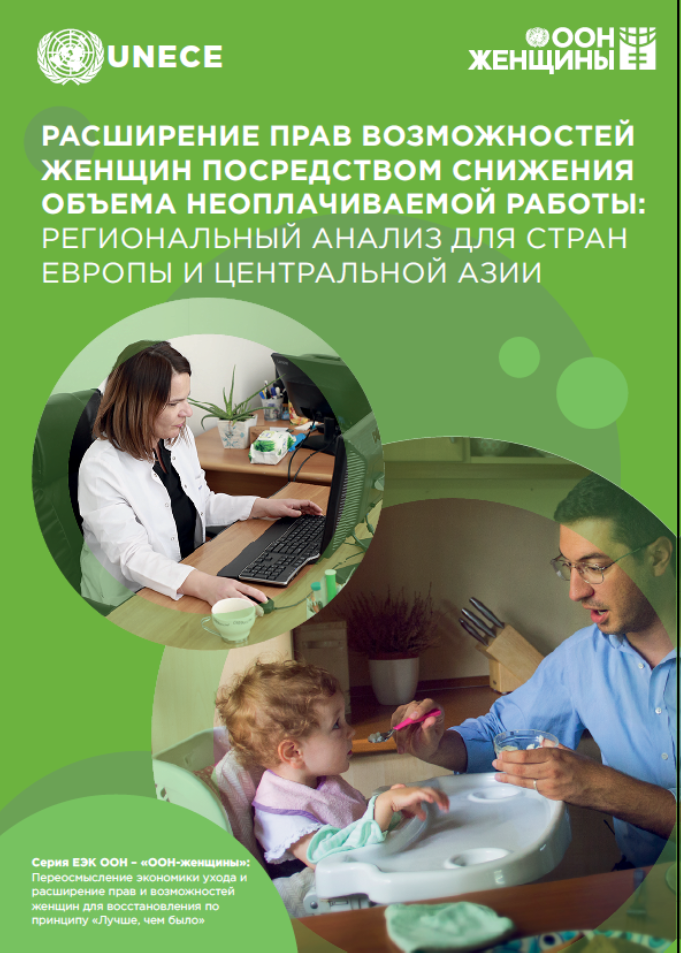 Empowering Women Through Reducing Unpaid Work: A Regional Analysis of Europe and Central Asia Año de publicación: 2021 Autor: Sara Cantillon | Nina Teasdale Autor corporativo: United Nations Economic Commission for Europe (UNECE) | United Nations Entity for Gender Equality and the Empowerment of Women (UN Women) This report is part of a series of information products designed to strengthen social protection in response to the pandemic. It focuses on rethinking the economics of nursing and women's empowerment. This report presents a thematic regional analysis of unpaid work in the countries of Eastern Europe and Central Asia and the empowerment of women due to the reduction of women's responsibility for such work. Расширение прав и возможностей женщин посредством снижения объема неоплачиваемой работы: Региональный анализ для стран Европы и Центральной Азии Año de publicación: 2021 Autor: Sara Cantillon | Nina Teasdale Autor corporativo: United Nations Economic Commission for Europe (UNECE) | United Nations Entity for Gender Equality and the Empowerment of Women (UN Women) Данный отчет является частью серии информационных продуктов, разработанных в целях укрепления социальной защиты в ответ на пандемию . Он фокусируется на вопросах переосмысления экономики ухода и расширения прав и возможностей женщин. В настоящем отчете представлен тематический региональный анализ неоплачиваемого труда в странах Восточной Европы и Центральной Азии и расширения прав и возможностей женщин, обусловленного уменьшением женской ответственности за выполнение такой работы.
  Gender mainstreaming principles, dimensions and priorities for PVE Año de publicación: 2019 Autor: Katherine Brown | Jayne Huckerby | Laura J. Shepherd Autor corporativo: United Nations Entity for Gender Equality and the Empowerment of Women (UN Women) This guidance note offers comprehensive background information and resources, along with guidelines and guidance for the UN system, in supporting Member States in their efforts to prevent and counter violent extremism and terrorism (P/CVE)—with a primary focus on preventing violent extremism (PVE). It proposes a model for gender mainstreaming across PVE efforts that is human rights–compliant.The objective of this document is not to provide a single template or one-size-fits-all approach for PVE—in part because a wide range of activities potentially falls under PVE—but more significantly because, to be successful, each context requires a human rights–compliant, gender-responsive, bespoke, and locally derived set of practices and policies.
  Violence Against Women and Girls: Kyrgyz Republic (Gender in Society Perception Study; Oct. 2018) Año de publicación: 2018 Autor: Elena Kim Autor corporativo: United Nations Entity for Gender Equality and the Empowerment of Women (UN Women) This report is part of the Gender in the Perception of Society (GSPS) study, funded by the UN Peacebuilding Fund, jointly run by UN Women, UNFPA and IOM in the Kyrgyz Republic. The report on the results of the study is dedicated to the topic of violence against women through the prism of two types of widespread practice of forced marriage in the Kyrgyz Republic. The report, which consists of two main sections, focuses on the practice of abducting brides and child marriages. The report attempts to explain the attitude and reaction of society to both phenomena, which deprive women of their rights and opportunities and require changes in opinions, attitudes and institutional priorities. Насилие в отношении женщин и девочек: Кыргызская Республика (Исследование – Гендер в восприятии общества; Октябрь 2018) Año de publicación: 2018 Autor: Elena Kim Autor corporativo: United Nations Entity for Gender Equality and the Empowerment of Women (UN Women) Данный оттчет является частью исследования "Гендер в восприятии общества" (GSPS), финансируемого Фондом ООН по миростроительству, совместно выполняемого ООН-Женщины, ЮНФПА и МОМ в Кыргызской Республики. Отчет по результатам исследования посвящен теме насилия в отношении женщин через призму двух видов широкораспространенной практики насильственных браков в Кыргызской Республике. Состоящий из двух основных разделов отчет сфокусирован на практике похищения невест и детских браков. В отчете предпринимается попытка объяснить отношение и реакцию общества на оба явления, которые лишают женщин их прав и возможностей и требуют изменений в суждениях, отношении и институциональных приоритетах.