
Recursos
Exploren una amplia gama de recursos valiosos en GCED para profundizar su comprensión y promover su búsqueda, incidencia, enseñanza y aprendizaje.
1,852 resultados encontrados
 The Role of UNESCO in the Search for Peace Año de publicación: 2019 Autor: Inuk Kang | Sunghae Kim | Jihon KIM | Jieun Seong | Seongsang YOO | Dongjoon Jo | Dongju Choi | Kyungkoo Han Autor corporativo: Korean National Commission for UNESCO UNESCO's international intellectual cooperation for peace has achieved substantive tangible results in education and culture. Though some problems have been politicized and have produced limitations along the way, UNESCO has played a leading role in education and culture while setting the direction of international cooperation and activities in this regard.UNESCO has regretfully not played an active role in fostering broader, more diverse, and more extensive new research and practices related to peace, even with the international Cold War realities. While UNESCO was an international organization created explicitly for peace, it has neither led to momentous peace-related academic discourse nor does it lead to theoretical development in this regard. The concept of a "Culture of Peace," for example, was first mentioned in the Ivory Coast (Cote d'Ivoire) in 1989. However, it was not until 1997 that UNESCO started its "Toward a Culture of Peace Program" and the U.N. General Assembly declaring 2000 as the "Year of Peace."UNESCO's situation provides an opportunity for South Korea to play a more active role. South Korea needs to break with its history of taking a passive stance focused on short-term national interests and its preoccupation with "situational tracking" responses aimed at fostering national prestige when such opportunities present themselves. Instead, while prioritizing a "global community" founded on world peace and the well-being of humanity-as long-term shared benefits to all nations-and by sharing the financial burdens involved, the country can increase its international status and become a moral leader raising a "global citizenship power."
 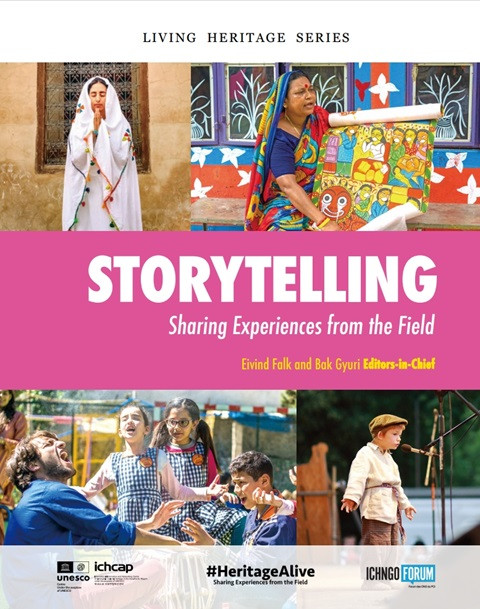 Storytelling: Sharing Experiences from the Field (Living Heritage Series VII, 2023) Año de publicación: 2023 Autor corporativo: International Information and Networking Centre for Intangible Cultural Heritage in the Asia-Pacific Region (ICHCAP) The International Information and Networking Centre for Intangible Cultural Heritage in the Asia-Pacific Region under the auspices of UNESCO (UNESCO ICHCAP) has published the 2023 edition of the Living Heritage series, titled “Story Telling,” which conveys stories from the field as NGOs and experts implement storytelling-related projects. “Story Telling” is the seventh publication in the Living Heritage series, and offers insight into achievements in terms of safeguarding extant heritage through storytelling activities in 12 cases.
 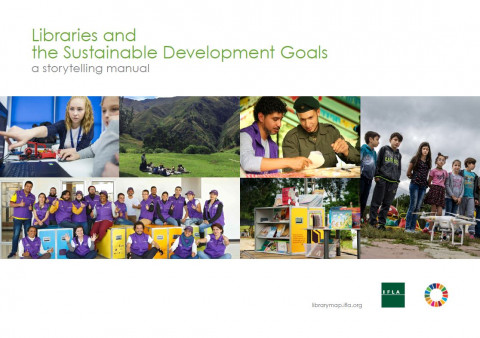 Libraries and the Sustainable Development Goals: A Storytelling Manual Año de publicación: 2018 Autor corporativo: International Federation of Library Associations and Institutions (IFLA) The Libraries and the Sustainable Development Goals (SDGs) – a storytelling manual is a guide for librarians and library advocates to support you in your advocacy efforts. The Library Map of the World (LMW) team have compiled some tips and useful information to help you write compelling stories about your library activities, projects and programmes, and their impact on communities. Consequently, we would like to share your story about your library’s contribution to the SDGs through the LMW website.International Federation of Library Associations and Institutions’s (IFLA) Library Map of the World (LMW) provides you with a unique digital space to share the story of your library’s activities, projects, and programmes as well as their impact on your community, and how that contributes to the United Nations (UN) Sustainable Development Goals (SDGs) . By sharing your story, you are engaging and empowering libraries all over the world.
  环境教育对提高城市居民环保意识的对策分析 (环境保护前沿 第12卷 第6期) Año de publicación: 2022 Autor: 滕威 | 王花 Autor corporativo: 汉斯出版社 随着社会经济的发展,环境问题愈发显现,环境保护工作刻不容缓。提高城市居民的环保意识,才能实 现我国可持续发展的生态文明。但环保意识是长期培养的,环境保护的路漫长而艰巨。本文通过分析我 国环境教育的发展现状影响城市居民环保意识的因素,探讨环境教育对提高城市居民环保意识的对策, 促进环保事业的发展。
 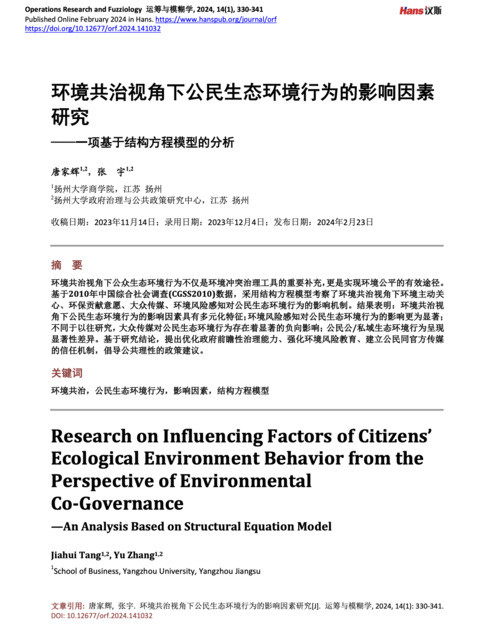 环境共治视角下公民生态环境行为的影响因素研究 : 一项基于结构方程模型的分析 (运筹与模糊学 第14卷 第1期) Año de publicación: 2024 Autor: 唐家辉 | 张宇 Autor corporativo: 汉斯出版社 环境共治视角下公众生态环境行为不仅是环境冲突治理工具的重要补充,更是实现环境公平的有效途径。 基于2010年中国综合社会调查(CGSS2010)数据,采用结构方程模型考察了环境共治视角下环境主动关 心、环保贡献意愿、大众传媒、环境风险感知对公民生态环境行为的影响机制。结果表明:环境共治视 角下公民生态环境行为的影响因素具有多元化特征;环境风险感知对公民生态环境行为的影响更为显著; 不同于以往研究,大众传媒对公民生态环境行为存在着显著的负向影响;公民公/私域生态环境行为呈现 显著性差异。基于研究结论,提出优化政府前瞻性治理能力、强化环境风险教育、建立公民同官方传媒 的信任机制,倡导公共理性的政策建议。
 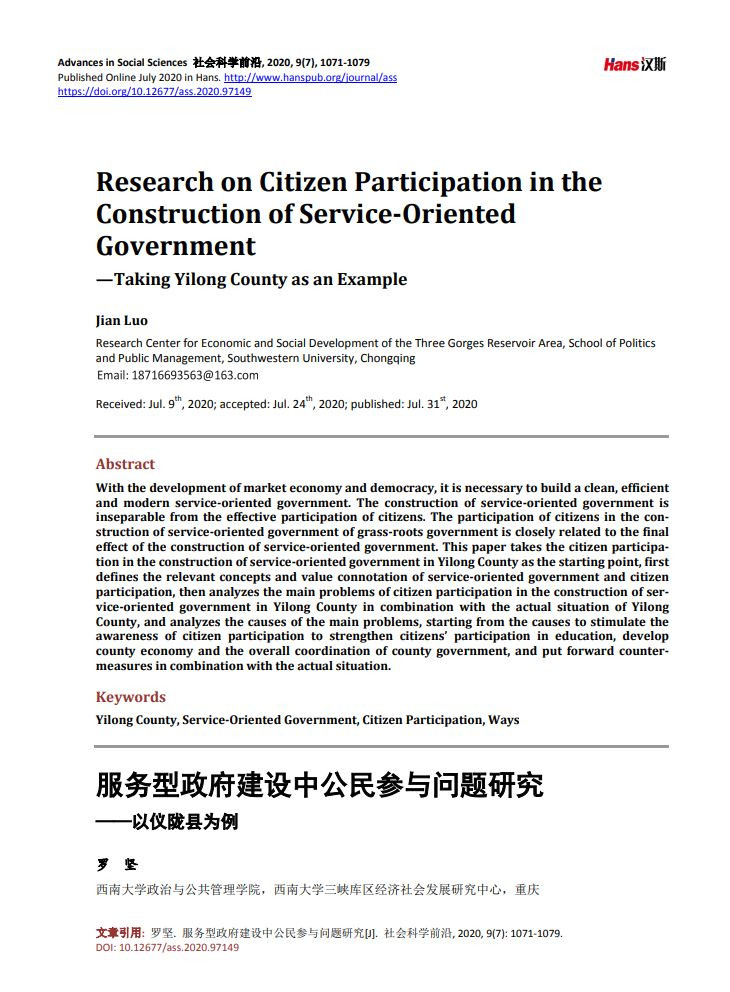 Research on Citizen Participation in the Construction of Service-Oriented Government—Taking Yilong County as an Example Año de publicación: 2020 Autor: Luo Jian Using a particular county as an exmple, this paper analyses the role of civic participation in transforming local government into service-oriented government, and provides suggestions for improvement. 服务型政府建设中公民参与问题研究——以仪陇县为例 Año de publicación: 2020 Autor: Luo Jian 本文以中国某县为案例,讨论中国地方政府转型过程中公民参与的作用以及存在问题,并提出了相应对策,尤其是需要加强公民参与教育。
 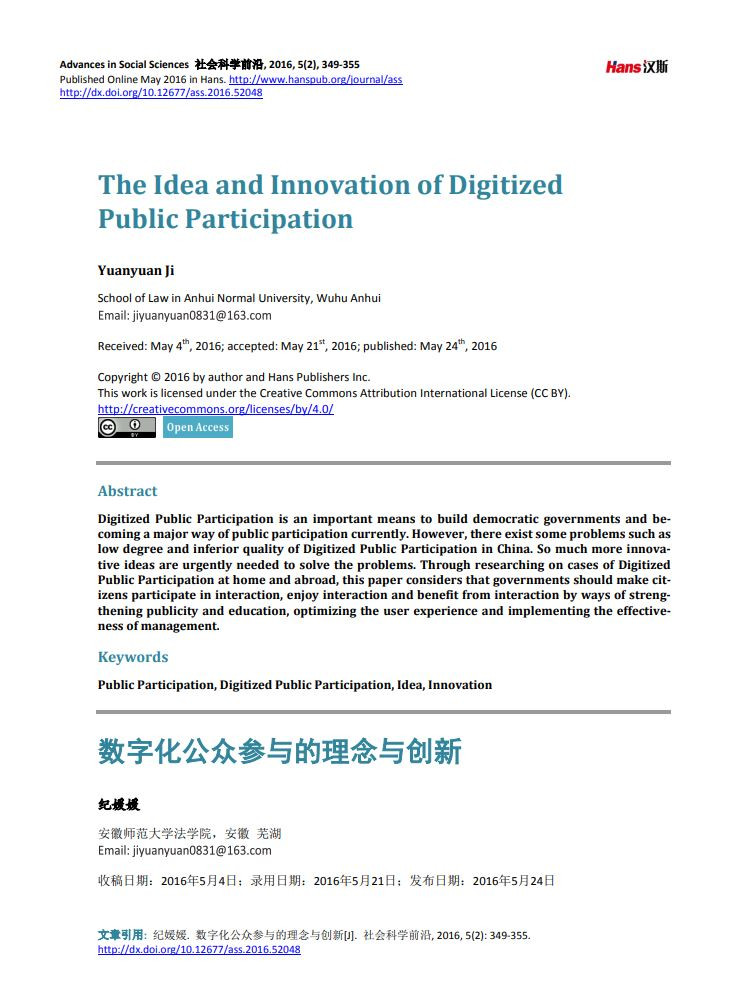 The Idea and Innovation of Digitized Public Participation Año de publicación: 2016 Autor: Ji Yuanyuan This paper analyses the existing problems of public participation in public affairs through digitial tools and provides suggestions for improvement. 数字化公众参与的理念与创新 Año de publicación: 2016 Autor: Ji Yuanyuan 本文分析了当前中国民众通过数字方式参与政务的现状,探讨了现存为题,并为民主型政府转型提出了相关改善建议。
 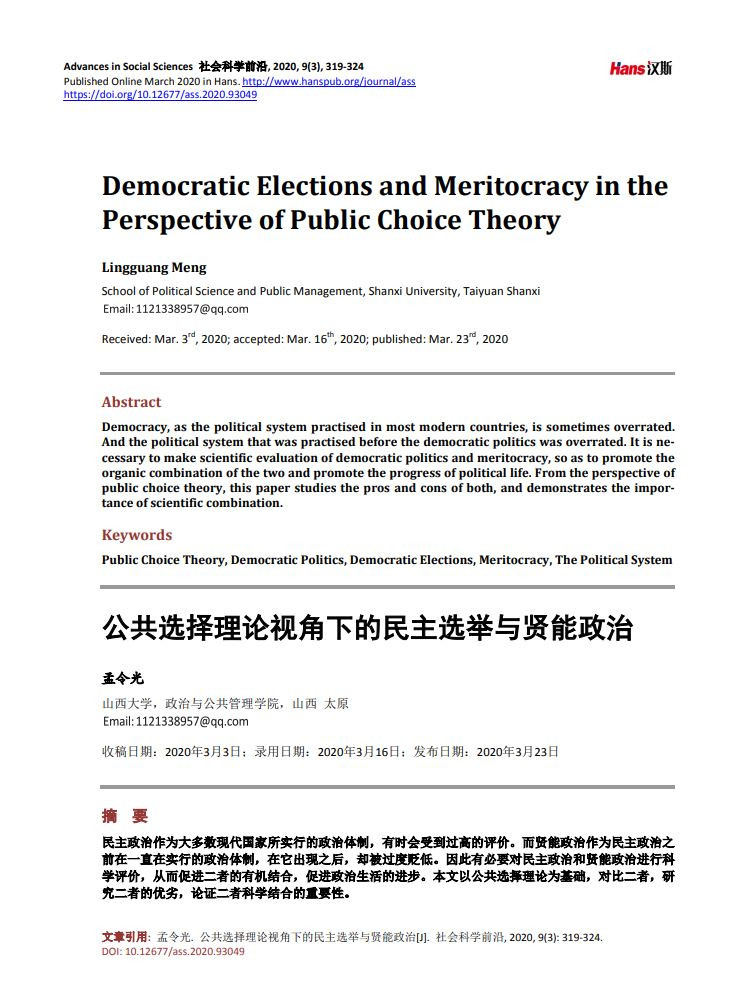 Democratic Elections and Meritocracy in the Perspective of Public Choice Theory Año de publicación: 2020 Autor: Meng Lingguang This paper analyses the the pros and cons of two political systems based on the idea of democracy and meritocracy respectivey, and discusses the possibility of combining the two.