
Recursos
Exploren una amplia gama de recursos valiosos en GCED para profundizar su comprensión y promover su búsqueda, incidencia, enseñanza y aprendizaje.
1,851 resultados encontrados
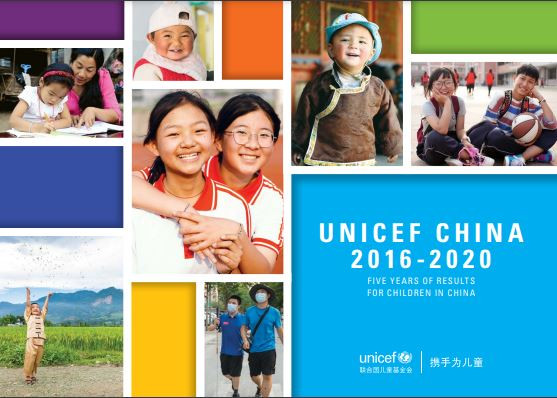 携手共进 造福儿童:联合国儿童基金会在华工作成果 (2016-2020年) Año de publicación: 2021 Autor corporativo: United Nations Children's Fund (UNICEF) 该报告介绍了联合国儿童基金会2016-2020期间在中国所进行的工作,包含儿童保护、教育、社会政策等方面内容。
 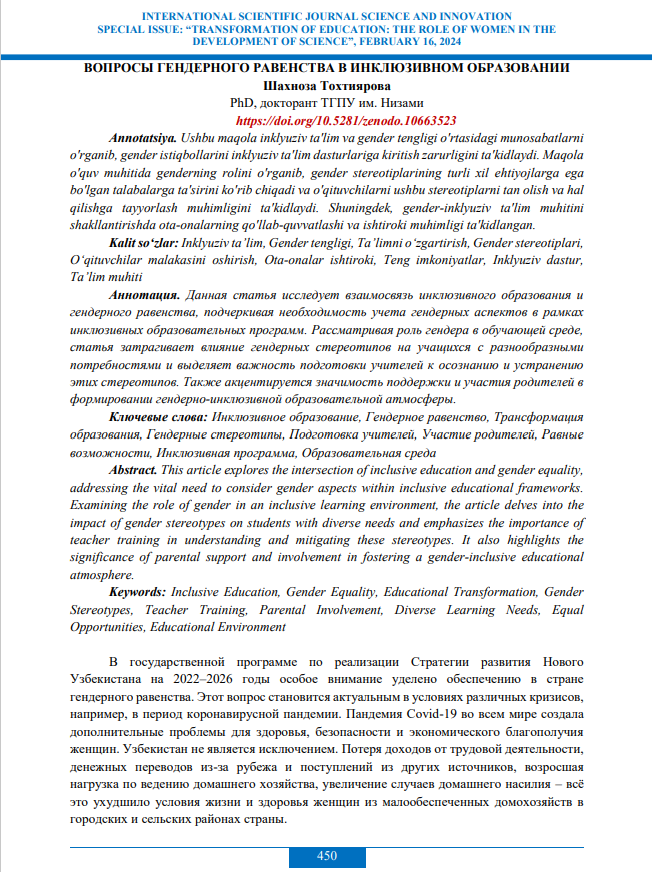 Gender Equality Issues in Inclusive Education Año de publicación: 2024 Autor: Шахноза Тохтиярова Autor corporativo: Наука и ииновации This article explores the intersection of inclusive education and gender equality, addressing the vital need to consider gender aspects within inclusive educational frameworks. Examining the role of gender in an inclusive learning environment, the article delves into the impact of gender stereotypes on students with diverse needs and emphasizes the importance of teacher training in understanding and mitigating these stereotypes. It also highlights the significance of parental support and involvement in fostering a gender-inclusive educational atmosphere. Вопросы гендерного равенства в инклюзивном образовании Año de publicación: 2024 Autor: Шахноза Тохтиярова Autor corporativo: Наука и ииновации Данная статья исследует взаимосвязь инклюзивного образования и гендерного равенства, подчеркивая необходимость учета гендерных аспектов в рамках инклюзивных образовательных программ. Рассматривая роль гендера в обучающей среде, статья затрагивает влияние гендерных стереотипов на учащихся с разнообразными потребностями и выделяет важность подготовки учителей к осознанию и устранению этих стереотипов. Также акцентируется значимость поддержки и участия родителей в формировании гендерно-инклюзивной образовательной атмосферы.
 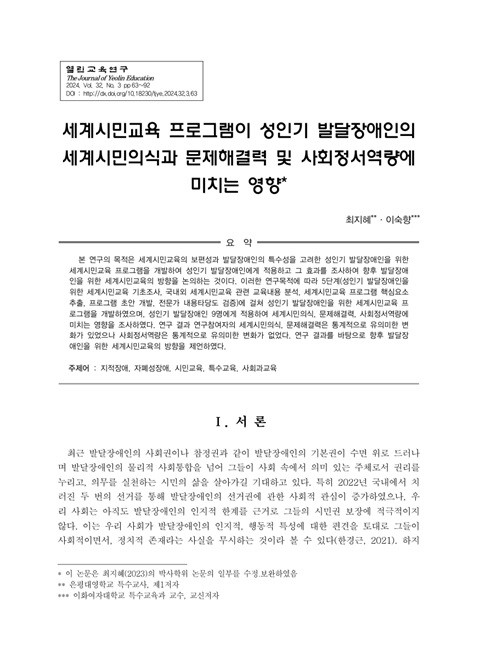 세계시민교육 프로그램이 성인기 발달장애인의 세계시민의식과 문제해결력 및 사회정서역량에 미치는 영향 (열린교육연구; Vol. 32, No. 3) Año de publicación: 2024 Autor: 최지혜 | 이숙향 Autor corporativo: 한국열린교육학회 본 연구의 목적은 세계시민교육의 보편성과 발달장애인의 특수성을 고려한 성인기 발달장애인을 위한 세계시민교육 프로그램을 개발하여 성인기 발달장애인에게 적용하고 그 효과를 조사하여 향후 발달장애인을 위한 세계시민교육의 방향을 논의하는 것이다. 이러한 연구목적에 따라 5단계(성인기 발달장애인을 위한 세계시민교육 기초조사, 국내외 세계시민교육 관련 교육내용 분석, 세계시민교육 프로그램 핵심요소 추출, 프로그램 초안 개발, 전문가 내용타당도 검증)에 걸쳐 성인기 발달장애인을 위한 세계시민교육 프로그램을 개발하였으며, 성인기 발달장애인 9명에게 적용하여 세계시민의식, 문제해결력, 사회정서역량에 미치는 영향을 조사하였다. 연구 결과 연구참여자의 세계시민의식, 문제해결력은 통계적으로 유의미한 변화가 있었으나 사회정서역량은 통계적으로 유의미한 변화가 없었다. 연구 결과를 바탕으로 향후 발달장애인을 위한 세계시민교육의 방향을 제언하였다.
 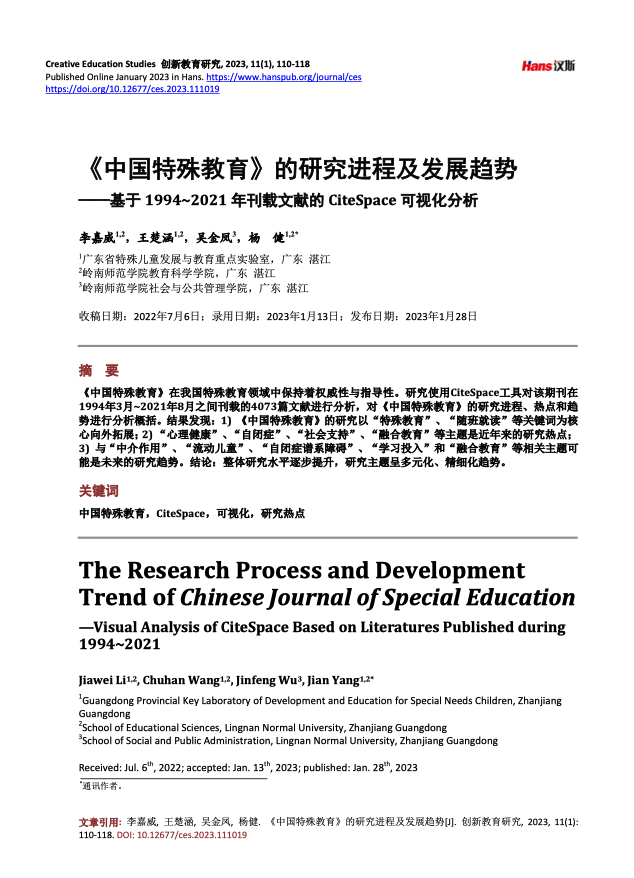 《中国特殊教育》的研究进程及发展趋势 : 基于1994~2021年刊载文献的CiteSpace可视化分析 (创新教育研究 第11卷 第1期) Año de publicación: 2023 Autor: 李嘉威 | 王楚涵 | 杨健 《中国特殊教育》在我国特殊教育领域中保持着权威性与指导性。研究使用CiteSpace工具对该期刊在1994年3月~2021年8月之间刊载的4073篇文献进行分析,对《中国特殊教育》的研究进程、热点和趋势进行分析概括。结果发现:1) 《中国特殊教育》的研究以“特殊教育”、“随班就读”等关键词为核心向外拓展;2) “心理健康”、“自闭症”、“社会支持”、“融合教育”等主题是近年来的研究热点;3) 与“中介作用”、“流动儿童”、“自闭症谱系障碍”、“学习投入”和“融合教育”等相关主题可能是未来的研究趋势。结论:整体研究水平逐步提升,研究主题呈多元化、精细化趋势。
 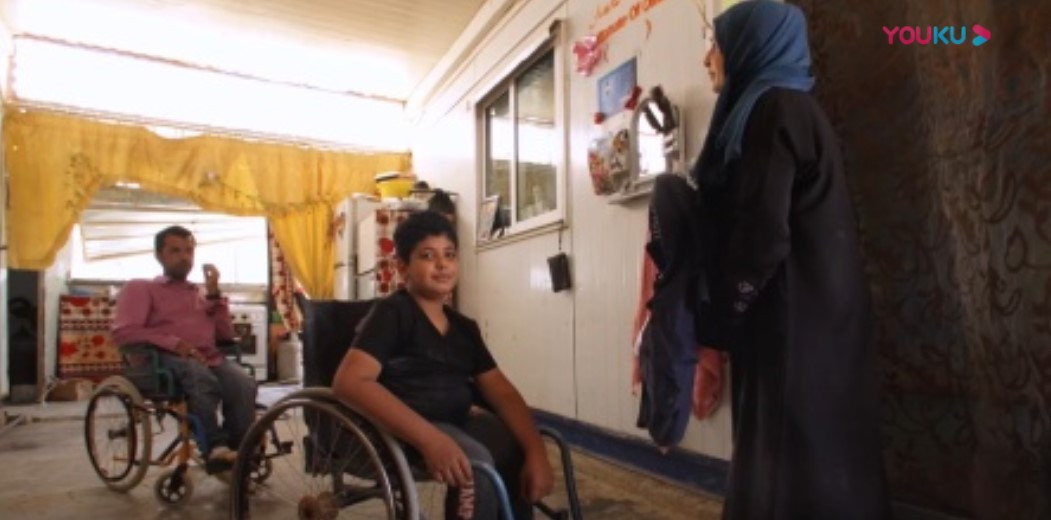 A Small Change That Makes Them Happy in the Refugee Camps! Año de publicación: 2021 Autor corporativo: 联合国儿童基金会 This video presents the difficulties and challenges faced by children with disabilities in a refugee camp in Syria, and UNICEF's efforts to address them. 一个小小改变,让难民营里的他们开心到飞起! Año de publicación: 2021 Autor corporativo: 联合国儿童基金会 本视频介绍了叙利亚难民营中残障儿童所面临的困难与挑战,以及联合国儿童基金会为此所作出的努力。
 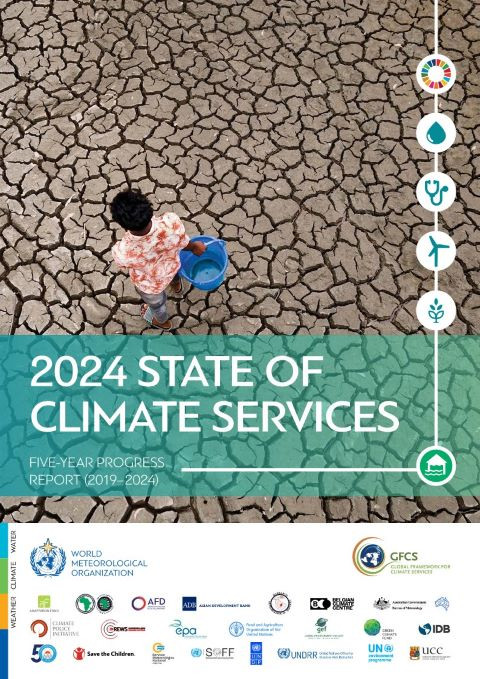 2024 State of Climate Services: Five-year Progress Report (2019–2024) Año de publicación: 2024 Autor corporativo: World Meteorological Organization (WMO) In 2018, the Conference of the Parties serving as the meeting of the Parties to the Paris Agreement at the 24th Conference of the Parties to the United Nations Framework Convention on Climate Change (UNFCCC) called on WMO, through its Global Framework for Climate Services (GFCS), to regularly report on the state of climate services. WMO has issued annual reports on the state of climate services since 2019 in response to this United Nations request for more information on the adaptation needs of countries. The information helps countries, funding agencies and development partners to identify steps needed to address climate services gaps and needs, to inform more effective investment and to enhance adaptation and development outcomes. The 2024 edition of the report describes the current state of climate services while also examining and assessing the progress that has been made during the last five years. The report explores the climate policy response to the climate challenge and advancements made by Members across numerous value chain components. This year’s edition also includes an in-depth look at how a selection of 13 countries have successfully leveraged climate services to deliver socioeconomic benefits at a national, regional or global level. The analysis draws on 113 case studies that were developed over the last five years across multiple sectors, and examines the key success factors, including showcasing the value being created by climate services. 2024기후서비스현황: 5년경과보고서 (2019–2024) Año de publicación: 2024 Autor corporativo: World Meteorological Organization (WMO) 2018년 유엔기후변화협약 (UNFCCC) 제24차 당사국 총회에서 파리협정 당사국 회의를 주재하는 총회 (COP)는 WMO가 기후서비스를 위한 글로벌 프레임워크 (GFCS)를 통해 기후 서비스 현황을 정기적으로 보고할 것을 촉구했습니다.WMO는 UNFCCC COP의 국가 적응 요구 사항에 대한 추가 정보 요청에 따라 2019년부터 기후 서비스 현황에 대한 연례 보고서를 발간했습니다.2 제공된 정보는 국가, 자금 기관 및 개발 파트너가 기후서비스 격차와 요구사항을 해결하는 데 필요한 단계를 식별하고, 보다 효과적인 투자를 알리고, 적응 및 개발 결과를 개선하는 데 도움이 됩니다. 2024년판 보고서는 기후 서비스의 현재 상태를 설명하는 동시에 지난 5년 동안 이루어진 진전을 조사하고 평가합니다. 이 보고서는 기후 문제에 대한 기후 정책 대응과 기후 서비스 가치 사슬 전반에 걸쳐 국가 기상 및 수문 서비스 (NMHSs)가 이룬 진전을 살펴봅니다. 올해의 에디션에는 13개국이 기후서비스를 성공적으로 사용하여 국가, 지역 또는 글로벌 수준에서 사회 경제적 혜택을 제공한 방법에 대한 심층적인 조사도 포함됩니다. 이 분석은 지난 5년 동안 여러 부문에 걸쳐 개발된 113개의 사례 연구를 기반으로 하며, 주요 지원 요소를 조사하고, 기후 서비스가 창출하는 가치를 보여줍니다.
 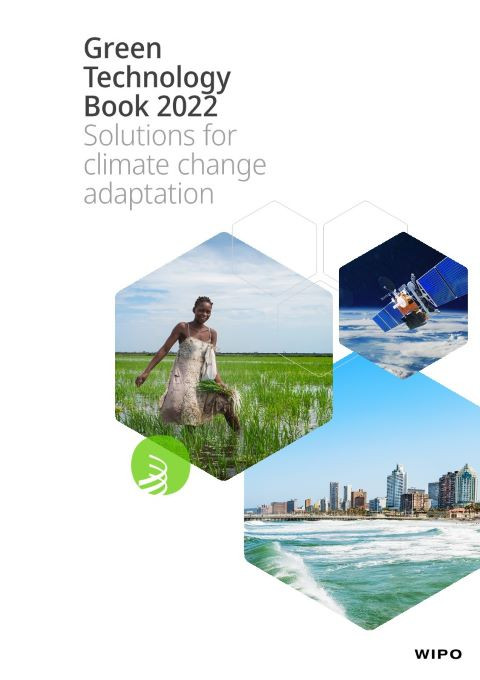 Green Technology Book 2022: Solutions for Climate Change Adaptation Año de publicación: 2022 Autor corporativo: World Intellectual Property Organization WIPO’s new Green Technology Book puts innovation, technology and intellectual property at the forefront in the fight against climate change. This inaugural edition focuses on available solutions for climate-change adaptation, which aim to reduce vulnerability and increase resilience to climate impacts. The Green Technology Book comes at a time when we are all experiencing the effects of climate change. It concentrates on three areas where climate impacts are important: agriculture and forestry, water and coastal regions, and cities. A practical guide for those struggling with climate change firsthand, the book showcases 200 solutions for climate-change adaptation that are readily available or in the making. The findings build on the WIPO GREEN Technology Database, which connects green technology providers from around the world with those seeking environmentally friendly solutions. The Green Technology Book is a source of encouragement and inspiration, demonstrating the diversity of solutions available and ready to be scaled up.1. Climate change adaptation and technology2. Innovation and transfer of solutions3. Agriculture and forestry4. Water and coastal regions5. Cities6. Conclusion and recommendations