
Recursos
Exploren una amplia gama de recursos valiosos en GCED para profundizar su comprensión y promover su búsqueda, incidencia, enseñanza y aprendizaje.
1,851 resultados encontrados
 Securitising Education to Prevent Terrorism or Losing Direction? Año de publicación: 2016 Autor: Bill Durodie Autor corporativo: Society for Educational Studies | Taylor & Francis This article examines the growing relationship between security and education, particularly in the light of the UK government’s Prevent Duty that seeks to tackle radicalization in a variety of milieus, including universities. However, rather than seeing this process as being merely one-way, through a so-called securitization of education, what is explored here is the dialectic between these two spheres. It is suggested that a heightened sensitivity to the supposed consequences of inflammatory rhetoric on the well-being of supposedly suggestible or vulnerable students has been in existence within education for quite some time. Securitising Education to Prevent Terrorism or Losing Direction? Año de publicación: 2016 Autor: Bill Durodie Autor corporativo: Society for Educational Studies | Taylor & Francis Cet article examine le lien grandissant entre la sécurité et l'éducation, à la lumière, en particulier, du programme « Prevent Duty » du gouvernement britannique, qui vise à lutter contre la radicalisation dans différents milieux, tels que les universités. Cependant, plutôt que de voir un simple processus de sécurisation de l'éducation, il s’agit ici d’explorer la dialectique entre ces deux éléments. On pose comme hypothèse qu'une sensibilité accrue aux soi-disant conséquences d’un discours enflammé sur le bien-être des élèves prétendus influençables ou vulnérables existe au sein de l'éducation depuis un certain temps.
  School knowlegde and curriculum standard Año de publicación: 2000 Autor: Zhong Qiquan Based on curriculum sociology, criticism towards school knowledge has been expanded. This article first discusses the problems of education in both Japan and China and then emphasizes the important relationship between quality value and curriculum standard. The four elements of school curriculum: curriculum objectives, curriculum content, curriculum implementation and curriculum evaluation are also clarified with regard to design curriculum standard. 学校知识与课程标准 Año de publicación: 2000 Autor: Zhong Qiquan 基于课程社会学,对于学校知识的批判增加。文章首先讨论了中国和日本的教育问题,并强调了“素质价值”与课程标准间的重要关系。文章讨论了课程构成的四要素:课程目标、课程内容、课程实施和课程评价,及其与课程标准编制的关系。
 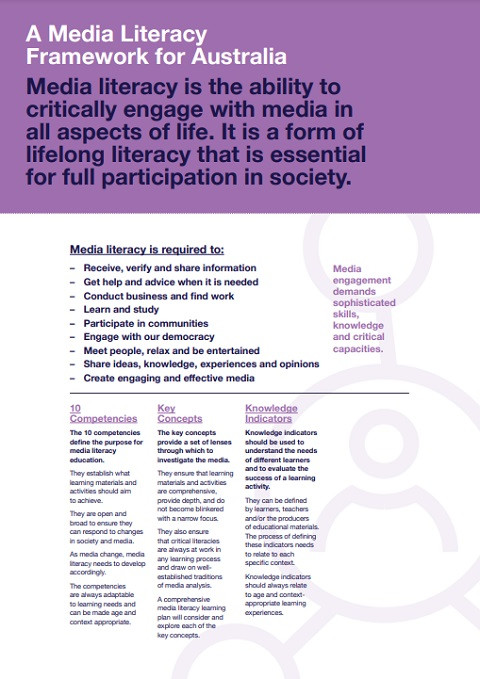 A Media Literacy Framework for Australia Año de publicación: 2020 Autor corporativo: Australian Media Literacy Alliance (AMLA) AMLA define media literacy as the ability to critically engage with media in all aspects of life.Media literacy complements Digital Literacy and Digital Safety – and all three are required to thrive in a digital world. Digital literacy focuses on the skills and knowledge required to access and use digital technologies. Digital Safety focuses on issues like online hate and abuse, bullying, the protection of personal information and online scams.Media Literacy encourages people to ask critical questions about the media and media technologies using a set of six key concepts. For any example of media (an advertisement, a news story, a film or television program, a YouTube video, video game or a social media post), we can ask the following questions:Institutions: who made this media and why did they make it?Audiences: who was this media made for and how are they likely to respond to it?Representations: how are people, places or ideas portrayed in this media, and what are the impacts of this?Technologies: what technology was used to produce, access and circulate this media? Does the technology gather personal data from users?Languages: how does this media communicate using image, sounds and written text?Relationships: what kind of relationships are being developed through the distribution and use of this media?These questions will have very different answers and follow-on questions depending on the media example, but the process of asking and answering these questions leads to critical understandings, and forms the basis for more successful media experiences. These questions can be asked during the process of consuming, sharing or creating media. They can be integrated as part of any Digital Literacy and Digital Safety learning program.
 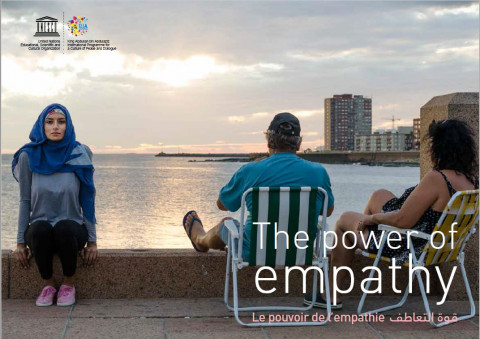 The Power of Empathy Año de publicación: 2017 Autor corporativo: UNESCO This photobook is a tribute to the power of empathy and solidarity felt and expressed by young people. Its photographs and stories were selected from the response to the global youth contest “If I were…”, launched by UNESCO on social media in Arabic, English, French and Spanish in early 2017. UNESCO received some 837 submissions, from 117 countries, covering a wide variety of issues and experiences.Despite the gravity of the themes addressed in these beautiful pictures, hope emerges from the testaments of the young photographers which demonstrate not only a sensitivity to the situations of “others”, but, moreover, a resolve to help people recover and protect their rights and dignity. Le Pouvoir de l'empathie Año de publicación: 2017 Autor corporativo: UNESCO This photobook is a tribute to the power of empathy and solidarity felt and expressed by young people. Its photographs and stories were selected from the response to the global youth contest “If I were…”, launched by UNESCO on social media in Arabic, English, French and Spanish in early 2017. UNESCO received some 837 submissions, from 117 countries, covering a wide variety of issues and experiences.Despite the gravity of the themes addressed in these beautiful pictures, hope emerges from the testaments of the young photographers which demonstrate not only a sensitivity to the situations of “others”, but, moreover, a resolve to help people recover and protect their rights and dignity. Cet ouvrage de photos rend hommage au pouvoir de l’empathie et aux sentiments de solidarité ressentis et exprimés par des jeunes. Les photographies et les textes qu’il contient ont été sélectionnés dans le cadre du concours mondial de la jeunesse « Et si j’étais… », lancé sur les réseaux sociaux de l’UNESCO en anglais, en arabe, en espagnol et en français, début 2017. L’UNESCO a reçu 837 candidatures de 117 pays, couvrant un large champ de questions et d’expériences. Malgré la gravité des thèmes abordés par chacune de ces superbes images, l’espoir se fait jour à mesure que les témoignages des jeunes photographes révèlent non seulement leur sensibilité à l’égard de la situation d’autrui, mais surtout une volonté d’aider les autres à recouvrer et à protéger leurs droits, leur dignité et la justice
 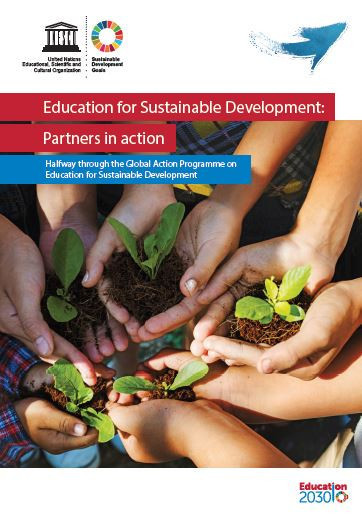 Education for Sustainable Development: Partners in Action Año de publicación: 2017 Autor corporativo: UNESCO This brochure illustrates key findings and achievements from a monitoring exercise conducted by UNESCO at the halfway point of the initial phase of the GAP. Key partners reported on their progress as of 2016 for 10 indicators -- two in each Priority Action Area -- and toward their target for 2019 which was set as part of their initial commitment.The data summarised here show remarkable progress and suggest that GAP Key Partners and other stakeholders are acting as catalysts for a wide range of ESD efforts. A clear learning agenda has emerged that will inform the second part of the programme and help ensure that ESD evolves, stays relevant and adds value to the full spectrum of Sustainable Development Goals. The Power of Empathy Año de publicación: 2017 Autor corporativo: 유네스코 This photobook is a tribute to the power of empathy and solidarity felt and expressed by young people. Its photographs and stories were selected from the response to the global youth contest “If I were…”, launched by UNESCO on social media in Arabic, English, French and Spanish in early 2017. UNESCO received some 837 submissions, from 117 countries, covering a wide variety of issues and experiences.Despite the gravity of the themes addressed in these beautiful pictures, hope emerges from the testaments of the young photographers which demonstrate not only a sensitivity to the situations of “others”, but, moreover, a resolve to help people recover and protect their rights and dignity.
 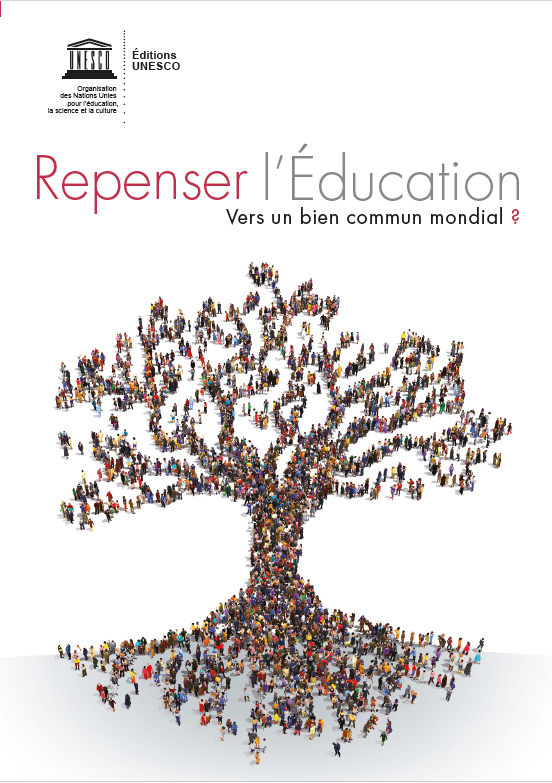 Repenser l'éducation: vers un bien commun mondial? Año de publicación: 2015 Autor corporativo: UNESCO Les changements dans le monde d'aujourd'hui sont caractérisés par de nouveaux niveaux de complexité et de contradiction. Ces changements génèrent des tensions pour lesquelles il est prévu l'éducation pour préparer les individus et les communautés en leur donnant la possibilité d'adaptation et de réponse. Cette publication contribue à repenser l'éducation et l'apprentissage dans ce contexte. Elle se fonde sur l'une des principales tâches de l'UNESCO comme un observatoire mondial de la transformation sociale dans le but de stimuler le débat sur les politiques publiques. Il est un appel au dialogue entre tous les intervenants. Il est inspiré par une vision humaniste de l'éducation et du développement, fondée sur le respect de la vie et la dignité humaine, l'égalité des droits, la justice sociale, la diversité culturelle, la solidarité internationale et la responsabilité partagée pour un avenir durable. Ce sont les fondements de notre humanité commune. Ce livre améliore la vision fournie par les deux publications de point de repère de l'UNESCO: Apprendre à être: Le monde de l'éducation aujourd'hui et demain (1972), le «Rapport Faure», et l'apprentissage: Le trésor est caché dedans (1996), le «Rapport Delors».