
Recursos
Exploren una amplia gama de recursos valiosos en GCED para profundizar su comprensión y promover su búsqueda, incidencia, enseñanza y aprendizaje.
1,851 resultados encontrados
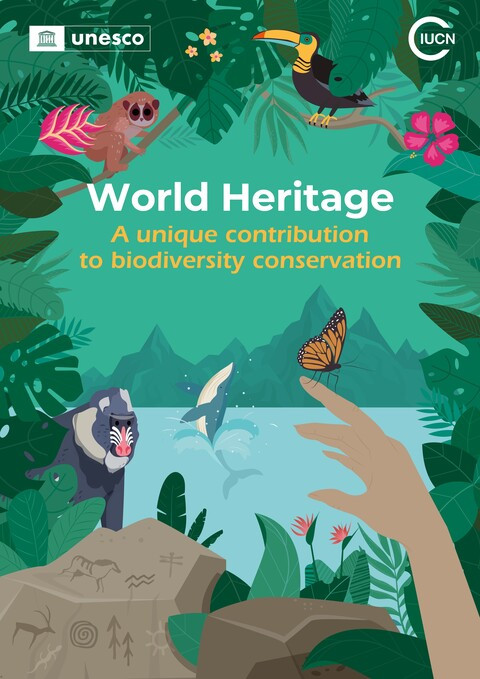 World Heritage: A Unique Contribution to Biodiversity Conservation Año de publicación: 2023 Autor corporativo: UNESCO | International Union for Conservation of Nature (IUCN) The UNESCO World Heritage Convention is unique among international agreements as it deals with both natural and cultural heritage. By conferring one of the highest levels of protection recognized by 195 countries, it ensures a truly global commitment to safeguarding exceptional places. UNESCO natural World Heritage sites are critical for the conservation of ecosystem integrity and biodiversity. While they make up less than 1% of the Earth’s surface, they harbor more than 1/5 of mapped global species richness. This includes over 75,000 species of plants, and over 30,000 species of mammals, birds, fishes, reptiles and amphibians. Cultural World Heritage sites in particular can be an important ally in biodiversity conservation since around 20% of them are located in Key Biodiversity Areas (KBAs). UNESCO World Heritage sites also represent a safe haven for some of the most threatened species on Earth. They are estimated to protect over 20,000 globally threatened species, and are home to some of the last individuals of many iconic species. Today, up to 1/3 of remaining elephants, tigers and pandas can be found in these sites, as well as at least 1 in 10 great apes, giraffes, lions and rhinos. However, even these highly protected sites are today threatened by global climate change and human pressures, including agricultural expansion, infrastructure development, poaching, overexploitation of resources and the proliferation of invasive species. Every 1°C increase in temperature could double the number of species exposed to dangerous climate conditions. Ensuring effective and sustained protection of UNESCO World Heritage sites and surrounding landscapes is crucial for maximizing their value as a solution to tackle the current biodiversity and climate crisis. One way of achieving this is by supporting countries to integrate World Heritage into their National Biodiversity Strategies and Action Plans (NBSAPs), as they are key to implementing the Kunming-Montreal Global Biodiversity Framework (GBF). Patrimonio mundial: Una contribución única a la conservación de la biodiversidad Año de publicación: 2023 Autor corporativo: UNESCO | International Union for Conservation of Nature (IUCN) La Convention du patrimoine mondial de l’UNESCO est un instrument unique parmi les accords internationaux, car elle traite à la fois du patrimoine naturel et culturel. En conférant l’un des plus hauts niveaux de protection reconnu par 195 pays, elle garantit un engagement véritablement mondial en faveur de la sauvegarde de lieux exceptionnels. Les sites naturels du patrimoine mondial de l’UNESCO sont essentiels à la conservation de l’intégrité des écosystèmes et de la biodiversité. Alors qu’ils représentent moins de 1 % de la surface terrestre, ils abritent plus d’un cinquième de la richesse mondiale des espèces cartographiées, soit plus de 75 000 espèces de plantes et plus de 30 000 espèces de mammifères, d’oiseaux, de poissons, de reptiles et d’amphibiens. Les sites culturels du patrimoine mondial, en particulier, peuvent être des alliés importants pour la conservation de la biodiversité, car près de 20 % d’entre eux sont situés dans des zones clés pour la biodiversité (ZCB). Les sites du patrimoine mondial de l’UNESCO représentent également un refuge pour certaines espèces parmi les plus menacées de la planète. On estime qu’ils protègent plus de 20 000 espèces menacées à l’échelle mondiale et qu’ils abritent certains des derniers individus de nombreuses espèces emblématiques. Aujourd’hui, jusqu’à un tiers des éléphants, tigres et pandas restants se trouvent dans ces sites, ainsi qu’au moins un grand singe, une girafe, un lion et un rhinocéros sur dix. Cependant, même ces sites hautement protégés sont aujourd’hui menacés par le dérèglement climatique mondial et les pressions humaines, notamment l’expansion de l’agriculture, le développement des infrastructures, le braconnage, la surexploitation des ressources et la prolifération d’espèces envahissantes. Chaque augmentation de température de 1°C pourrait doubler le nombre d’espèces exposées à des conditions climatiques dangereuses. Il est essentiel d’assurer une protection effcace et durable des sites du patrimoine mondial de l’UNESCO et des paysages environnants pour maximiser leur valeur en tant que solution à la crise actuelle de la biodiversité et du climat. L’un des moyens d’y parvenir est d’aider les pays à intégrer le patrimoine mondial dans leurs stratégies et plans d’action nationaux pour la biodiversité (SPANB), car ils sont essentiels à la mise en œuvre du Cadre mondial pour la biodiversité (CMB) de Kunming-Montréal. Patrimoine mondial: Une contribution unique à la conservation de la biodiversité Año de publicación: 2023 Autor corporativo: Organisation des Nations Unies pour l'éducation, la science et la culture (UNESCO) | International Union for Conservation of Nature (IUCN) La Convention du patrimoine mondial de l’UNESCO est un instrument unique parmi les accords internationaux, car elle traite à la fois du patrimoine naturel et culturel. En conférant l’un des plus hauts niveaux de protection reconnu par 195 pays, elle garantit un engagement véritablement mondial en faveur de la sauvegarde de lieux exceptionnels. Les sites naturels du patrimoine mondial de l’UNESCO sont essentiels à la conservation de l’intégrité des écosystèmes et de la biodiversité. Alors qu’ils représentent moins de 1 % de la surface terrestre, ils abritent plus d’un cinquième de la richesse mondiale des espèces cartographiées, soit plus de 75 000 espèces de plantes et plus de 30 000 espèces de mammifères, d’oiseaux, de poissons, de reptiles et d’amphibiens. Les sites culturels du patrimoine mondial, en particulier, peuvent être des alliés importants pour la conservation de la biodiversité, car près de 20 % d’entre eux sont situés dans des zones clés pour la biodiversité (ZCB). Les sites du patrimoine mondial de l’UNESCO représentent également un refuge pour certaines espèces parmi les plus menacées de la planète. On estime qu’ils protègent plus de 20 000 espèces menacées à l’échelle mondiale et qu’ils abritent certains des derniers individus de nombreuses espèces emblématiques. Aujourd’hui, jusqu’à un tiers des éléphants, tigres et pandas restants se trouvent dans ces sites, ainsi qu’au moins un grand singe, une girafe, un lion et un rhinocéros sur dix. Cependant, même ces sites hautement protégés sont aujourd’hui menacés par le dérèglement climatique mondial et les pressions humaines, notamment l’expansion de l’agriculture, le développement des infrastructures, le braconnage, la surexploitation des ressources et la prolifération d’espèces envahissantes. Chaque augmentation de température de 1°C pourrait doubler le nombre d’espèces exposées à des conditions climatiques dangereuses. Il est essentiel d’assurer une protection effcace et durable des sites du patrimoine mondial de l’UNESCO et des paysages environnants pour maximiser leur valeur en tant que solution à la crise actuelle de la biodiversité et du climat. L’un des moyens d’y parvenir est d’aider les pays à intégrer le patrimoine mondial dans leurs stratégies et plans d’action nationaux pour la biodiversité (SPANB), car ils sont essentiels à la mise en œuvre du Cadre mondial pour la biodiversité (CMB) de Kunming-Montréal.
 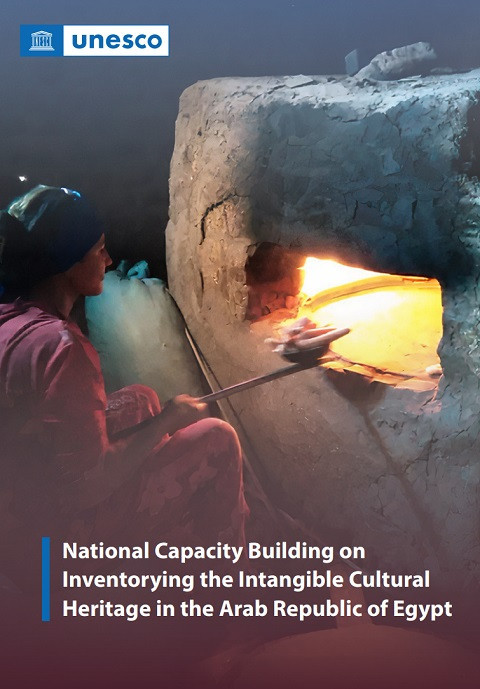 National Capacity Building on Inventorying the Intangible Cultural Heritage in the Arab Republic of Egypt Año de publicación: 2024 Autor: Ahmed Bahi El Din | Haitham Younes Autor corporativo: UNESCO | UNESCO Cairo Communities in Egypt are inventorying their living heritage Egypt is famed for its rich civilization and long history. Egyptian identity is presented not only through archaeological sites and Ancient Egyptian civilization, but also through Egypt’s diverse living heritage. More than simply showing who they are today, this living heritage tells the story of how the Egyptians arrived at this point over the generations.To celebrate this identity and strengthen national capacities to safeguard it, UNESCO, alongside the Egyptian government and civil society, implemented the project Strengthening National Capacities for Safeguarding Intangible Cultural Heritage in Egypt for Sustainable Development, which ran from June 2018 to June 2021.The project focused on community-based inventorying of living heritage. This involved training workshops and a pilot community-based inventorying exercise, which took place in six different locations throughout Egypt (Cairo, Fayoum, Gharbeya, Aswan, Assuit, and Marsa Matrouh). Thanks to the project, participating community practitioners and heritage bearers are now equipped to inventory their own living heritage. • This pilot was Egypt’s first step to establishing a national inventory of Intangible Cultural Heritage (ICH) under the Ministry of Culture, in collaboration with community practitioners. • This publication provides recommendations on how to further enhance national capabilities for ICH safeguarding and how to advance community engagement in the inventorying processes in Egypt.
 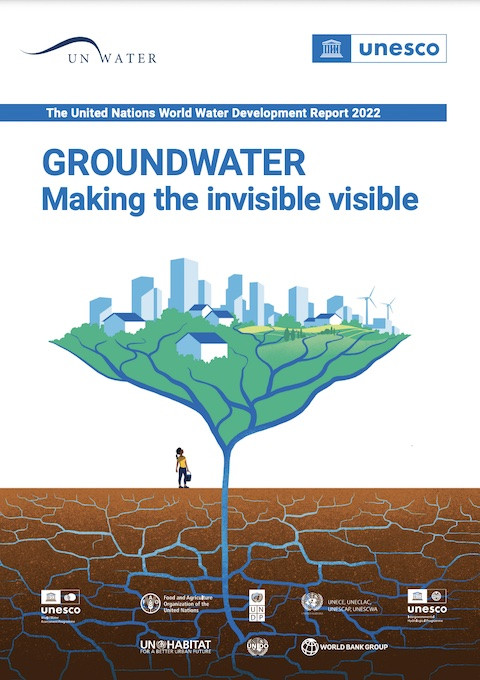 The United Nations World Water Development Report 2022: Groundwater; Making the Invisible Visible Año de publicación: 2022 Autor corporativo: UNESCO The 2022 edition of the United Nations World Water Development Report, titled “Groundwater: Making the invisible visible”, describes the challenges and opportunities associated with the development, management and governance of groundwater across the world. The report addresses groundwater-related issues from the perspective of the three main water use sectors (agriculture, human settlements and industry), as well as its interactions with ecosystems and its relation with climate change. It highlights different regional perspectives and presents a number of response options concerning data and information, policy and planning, management and governance, as well as financing.The United Nations World Water Development Report is UN-Water’s flagship report on water and sanitation issues, focusing on a different theme each year. The report is published by UNESCO, on behalf of UN-Water and its production is coordinated by the UNESCO World Water Assessment Programme. The report gives insight on main trends concerning the state, use and management of freshwater and sanitation, based on work done by the Members and Partners of UN-Water. Launched in conjunction with World Water Day, the report provides decision-makers with knowledge and tools to formulate and implement sustainable water policies. It also offers best practices and in-depth analyses to stimulate ideas and actions for better stewardship in the water sector and beyond. Rapport mondial des Nations Unies sur la mise en valeur des ressources en eau 2022: Eaux souterraines; Rendre visible l’invisible Año de publicación: 2022 Autor corporativo: UNESCO L’édition 2022 du Rapport mondial des Nations Unies sur la mise en valeur des ressources en eau, intitulée Eaux souterraines : rendre visible l’invisible, décrit les défis et les opportunités que présentent l’exploitation, la gestion et la gouvernance des eaux souterraines dans le monde. Le rapport examine les questions relatives aux eaux souterraines sous l’angle des trois principaux secteurs d’utilisation de l’eau (agriculture, établissements humains et industrie) ainsi que leurs interactions avec les écosystèmes et leur relation au changement climatique. Il met également en avant différentes perspectives régionales et présente un certain nombre de solutions possibles en matière de données et d’informations, de politiques et de planification, de gestion et de gouvernance ainsi que de financement.Abordant un thème différent chaque année, le Rapport mondial des Nations Unies sur la mise en valeur des ressources en eau est le rapport phare d’ONU-Eau sur les questions d’eau et d’assainissement. Le rapport est publié par l’UNESCO, au nom d’ONU-Eau, et sa production est coordonnée par le Programme mondial de l’UNESCO pour l’évaluation des ressources en eau. Le rapport expose les principales évolutions de l’état, de l’utilisation et de la gestion de l’eau douce et de l’assainissement sur la base des travaux réalisés par les membres et les partenaires d’ONU-Eau. Publié à l’occasion de la Journée mondiale de l’eau, le rapport met à disposition des décideurs des connaissances et des outils pour leur permettre de concevoir et de mettre en œuvre des politiques durables. Il présente aussi certaines des meilleures pratiques ainsi que des analyses approfondies, qui stimuleront les idées et galvaniseront les actions aux fins d’une meilleure gestion dans le secteur de l’eau et au-delà.
  دليل معلمي الصحافة: تقرير حول الذكاء الاصطناعي Año de publicación: 2023 Autor: Maarit Jaakkola Autor corporativo: UNESCO يؤثر تطور الذكاء االصطناعي والتحكم فيه على المجتمع بأثره، وبالتالي البد أن تتولى التغطية اإلعالمية القائمة على الذكاء االصطناعي توعية الجمهور بشأن اآلثار المترتبة على التكنولوجيا نفسها، بغض النظر عن الجانب الصحفي. فعلى سبيل المثال، إعداد تقارير بخصوص القوى الديناميكية في العالقة المتغيرة ما بين الشركات والسلطات والمواطنين والرقائق الحاسوبية، وبين البيانات والخوارزميات. على الرغم من أن العديد من تطبيقات الذكاء االصطناعي تخدم مصلحة الجمهور، إال أن الصحفيين بحاجة إلى بصيرة وخبرة بشأن جوانب مثل اإلقصاء، وعدم المساواة في المزايا والمنافع، وانتهاك حقوق اإلنسان . كجزء من سلسلة التعليم الصحفي، عمل برنامج اليونسكو الدولي لتنمية االتصاالت على دعم مجلس التعليم العالمي للصحافة في التكليف بإعداد هذا الدليل، وذلك بهدف تحفيز معلمو الصحافة وتمكينهم حتى تسنى يتسنى لهم مساعدة طلبة الصحافة والصحفيين العاملين على الوصول إلى العدالة في واحدة من أهم قضايا عصرنا. مشتمالت الدليل يغطي هذا الكتيب الجوانب التالية : • فهم آلية الذكاء االصطناعي والتعرف على أنواع الذكاء االصطناعي المختلفة• استكشاف إمكانيات الذكاء االصطناعي، باإلضافة إلى نقاط قوته وضعفه .• تخيل مستقبل يتسم بالتنوع باستخدام الذكاء االصطناعي من خالل التعرف على الخطابات الشائعة التي تشكل وعي الجمهور . • فهم دور الصحافة في توسيط وتشكيل الحوار حول الذكاء االصطناعي• لبحث عن وسائل لتقديم إلعداد تقارير حول الذكاء االصطناعي بطريقة متنوعة وواقعية ومسؤولة.• إقامة صالت عالقات مع أساليب أنواع الصحافة الموجودة بالفعل، من تقارير األخبار العامة إلى صحافة البيانات . يمثل تعزيز التعليم الصحفي أحد النتائج الرئيسية التي يسعى إليها البرنامج الدولي لتنمية االتصاالت، وهو برنامج حكومي دولي فريد ضمن نظام األمم المتحدة متخصص في تنمية وسائل اإلعالم . Reporting on Artificial Intelligence: A Handbook for Journalism Educators Año de publicación: 2023 Autor: Maarit Jaakkola Autor corporativo: UNESCO The rise and control of artificial intelligence (AI) is impacting society as a whole. It follows that AI coverage must inform audiences about the implication of the technology itself, beyond journalism. For instance, reporting on the power dynamics in the changing relationship between companies, authorities, citizens and computer chips, and between data and algorithms. While many AI deployments serve public interest, journalists also need insight and expertise to alert about aspects like exclusions, unequal benefits, and violations of human rights. As part of its journalism education series, UNESCO’s International Programme for the Development of Communication (IPDC) has supported the World Journalism Education Council in commissioning this handbook. The aim is to inspire and empower so that journalism educators can help both journalism students and working journalists do justice to one of the major issues of our times. The handbook covers:• Understanding machine intelligence and identifying different types of AI• Exploring AI’s potential, as well as its strengths and weaknesses• Imagining diverse futures with AI by recognising pervasive popular narratives that inform public consciousness• Understanding journalism’s role in mediating and shaping AI discourse• Finding ways of reporting about AI in a nuanced, realistic and accountable manner• Making connections to existing genres of journalism, ranging from general news reporting to data journalism. Strengthening journalism education is one of the key results sought by IPDC, a unique intergovernmental programme within the UN system that specializes in media development. Освещение тематики искусственного интеллекта: пособие для преподавателей журналистики Año de publicación: 2023 Autor: Maarit Jaakkola Autor corporativo: UNESCO Развитие искусственного интеллекта (ИИ) и задача осуществления кон троля над ним оказывают влияние на общество в целом. Это означает, что освещение темы ИИ должно информировать аудиторию о послед ствиях применения самой технологии, выходя за рамки журналистики. Например, освещение динамики сил в условиях меняющихся отноше ний между компаниями, властями, гражданами и компьютерными чипами, а также между данными и алгоритмами. Хотя многие разработки в области ИИ служат общественным интересам, журналистам также необходимы знания и компетентность, чтобы предупреждать общественность о таких аспектах, как риски социальной эксклюзии, неравное распределение благ и нарушения прав человека. Данная публикация является частью серии публика ций по журналистскому образованию, и подготовле на совместно Международной программой развития коммуникации ЮНЕСКО (МПРК) и Всемирным советом по образованию в области журналистики. Целью данного пособия является вдохновение и расширение возможностей преподавателей журналистики, чтобы они могли помочь начинающим и работающим журнали стам разобраться в одной из важнейших проблем современ ности. В пособии рассматриваются следующие темы:• выработка общего представления о машинном интеллекте и опре деление различных типов ИИ;• рассмотрение потенциала ИИ, а также его сильных и слабых сторон;• формулирование сценариев будущего в реалиях ИИ путём выявления распространённых популярных установок, формирующих общественное сознание;• понимание роли журналистики в опосредовании и формировании дискурса об ИИ;• поиск способов взвешенного, реалистичного и ответственного освещения проблематики ИИ;• увязка с существующими жанрами журналистики — от новостного репортажа до журналистики данных. Повышение уровня журналистского образования — один из ключевых результатов, к которым стремится МПРК, уникальная межправительственная программа в системе ООН, специализирующаяся на развитии СМИ
 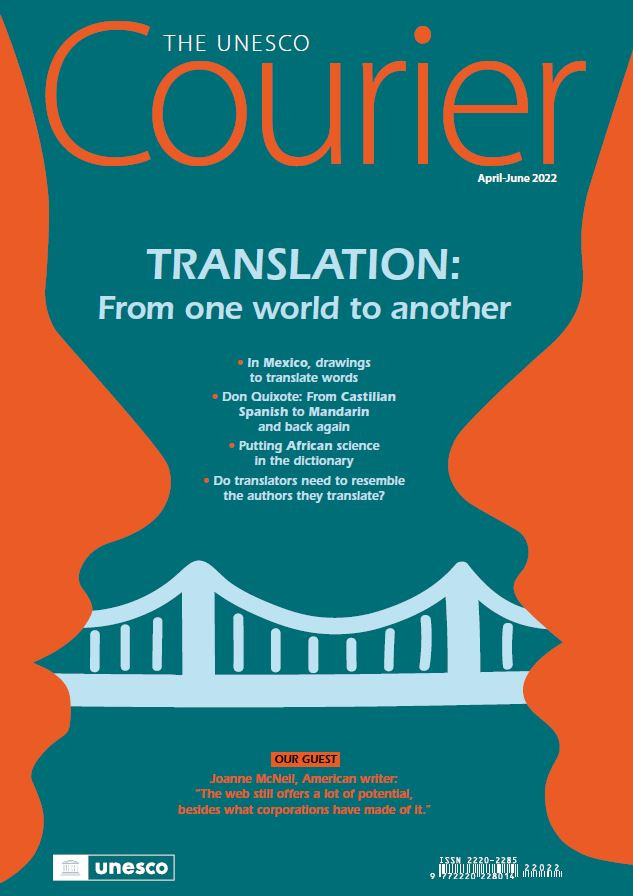 Translation: From One World to Another (The UNESCO Courier No. 2; April-June 2022) Año de publicación: 2022 Autor corporativo: UNESCO To translate is “to say almost the same thing”, in the words of the Italian writer Umberto Eco. A whole world is contained in this “almost”. To translate is to confront the other, the different, the unknown. It is often the essential prerequisite for those who want to access a universal, multiple, diverse culture. It is therefore no coincidence that the League of Nations took up the issue in the 1930s, envisaging the creation of an Index Translationum.Taken over by UNESCO in 1948, this Index allowed the first census of translated works in the world. Two years later, the Representative Works programme was launched to translate masterpieces of world literature. UNESCO’s support for the publication last year of a lexicon of words from indigenous languages of Mexico that are untranslatable into Spanish is a continuation of these efforts.Although their disappearance was predicted as early as the 1950s, translators – who are most often women – have never been as numerous as they are today. The machines developed in the aftermath of the war have not been able to outdo this behind-the-scenes profession. Nor have digital translation tools, which have become the standard feature of our globalized conversations, even if they have contributed to transforming the job.This is because language is more than just a means of communication. It is that, and much more. It is what written or oral works make of it, contributing to forge what is sometimes called the ‘genius of the language’, which the most powerful applications cannot restore.