
Recursos
Exploren una amplia gama de recursos valiosos en GCED para profundizar su comprensión y promover su búsqueda, incidencia, enseñanza y aprendizaje.
1,851 resultados encontrados
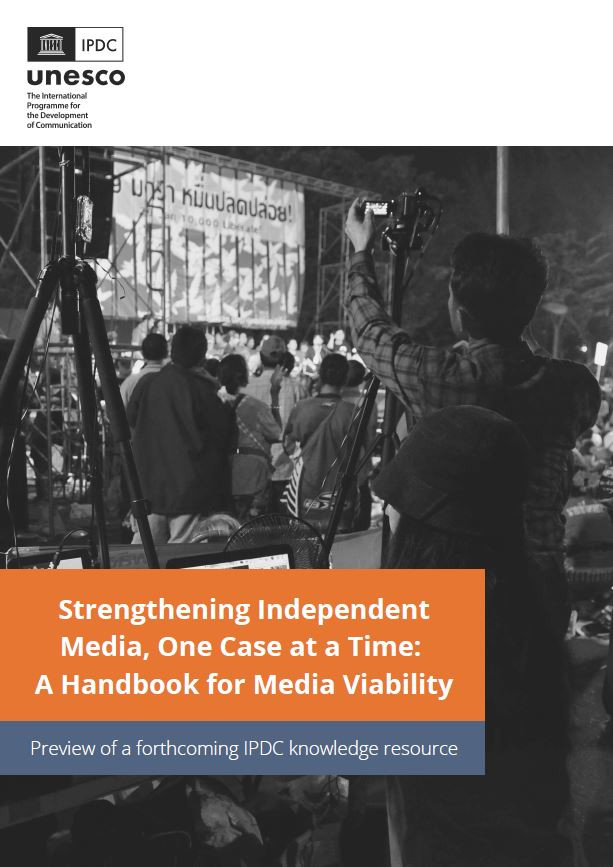 Strengthening Independent Media, One Case at a Time: A Handbook for Media Vability; Preview of a Forthcoming IPDC Knowledge Resource Año de publicación: 2021 Autor corporativo: UNESCO “Strengthening Independent Media, One Case at a Time: A Handbook for Media Viability” will include case studies of innovative ideas from a wide variety of news media companies, mostly in the developing world, that are succeeding in difficult times and have lessons to share with others who are struggling. The handbook project was announced during the 65th meeting of the Bureau of the Intergovernmental Council of the International Programme for the Development of Communication (IPDC).This brochure includes highlights of some of the cases to be included, from community media in South Africa to a pure-play digital success in Indonesia, to a fact-checking network in Brazil to a covid response in Pakistan, and much more. The Handbook will be published in September 2021 and will be available for free on the website of the IPDC.
  Juvenile Crime Rate Rises in Kyrgyzstan Año de publicación: 2023 Autor corporativo: CABAR.asia In Kyrgyzstan, the number of adolescents committing crimes is increasing. CABAR.asia explored possible reasons of it, what punishment children receive for offences, and whether the humanisation of legislation affected the situation. Преступность среди детей в Кыргызстане растет Año de publicación: 2023 Autor corporativo: CABAR.asia В Кыргызстане растет число подростков, совершивших преступления. CABAR.asia выясняло возможные причины происходящего, какое наказание получают дети за правонарушения и повлияла ли как-то на ситуацию гуманизация законодательства.
 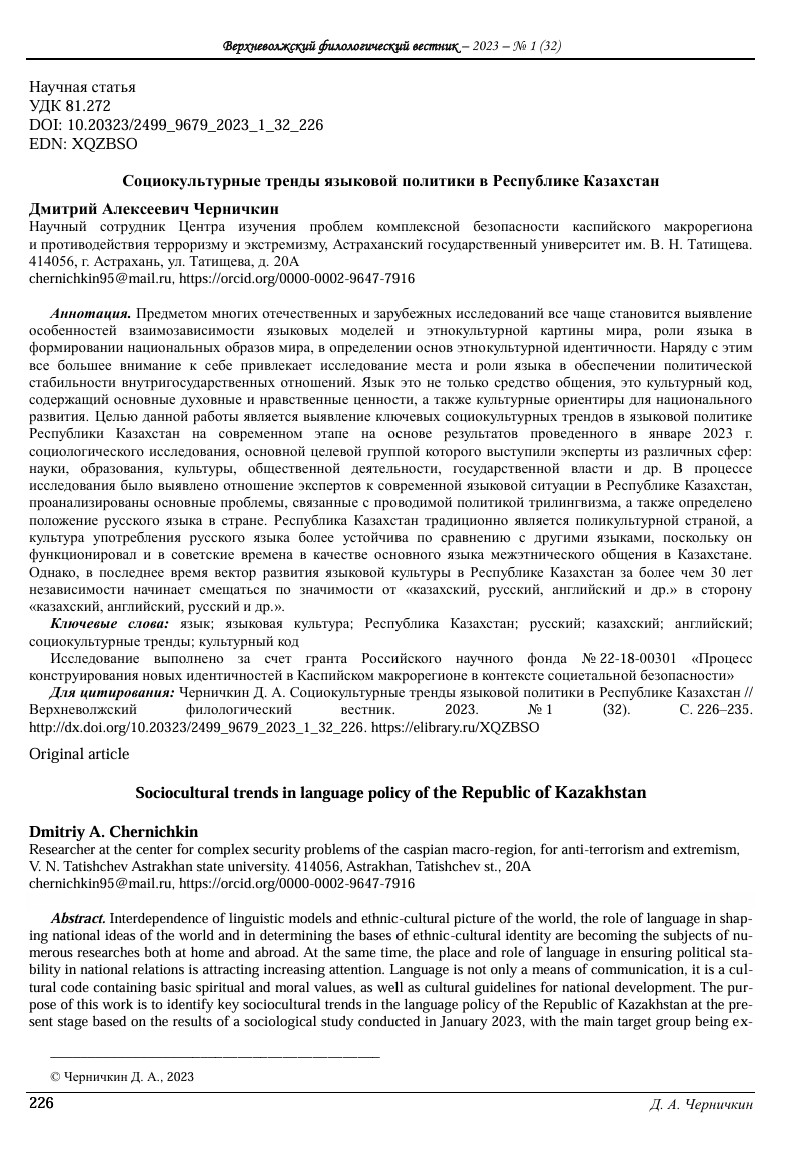 Социокультурные тренды языковой политики в Республике Казахстан Año de publicación: 2023 Autor: Дмитрий Алексеевич Черничкин Целью данной работы является выявление ключевых социокультурных трендов в языковой политике Республики Казахстан на современном этапе на основе результатов проведенного в январе 2023 г. социологического исследования, основной целевой группой которого выступили эксперты из различных сфер: науки, образования, культуры, общественной деятельности, государственной власти и др. В процессе исследования было выявлено отношение экспертов к современной языковой ситуации в Республике Казахстан, проанализированы основные проблемы, связанные с проводимой политикой трилингвизма, а также определено положение русского языка в стране.
 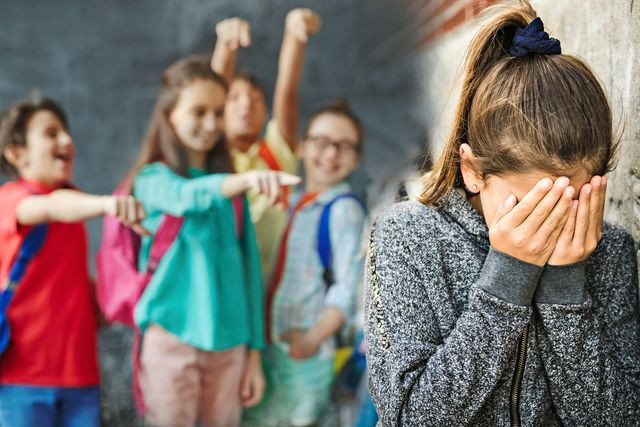 ОТЧЕТ по результатам проведенного исследования на тему «Мониторинг ситуации с профилактикой буллинга в средних образовательных школах Республики Казахстан» Año de publicación: 2023 Autor corporativo: Қадір-қасиет (Казахстан) Общественное объединение «КадірКасиет» организовало и провело исследование, посвященное мониторингу ситуации с профилактикой буллинга в средних образовательных школах Казахстана. Целью исследования выступало изучение шести школ, в которых планируется внедрить пилотную программу «Ынсап» по противодействию буллингу в школах. Настоящий доклад подготовлен в рамках проекта «Фокус прав человека: женщины и дети», реализуемого ОО «Қадір-қасиет» и Агентством США по международному развитию (USAID).
  Современная система дошкольного образования Узбекистана Año de publicación: 2023 Autor: Келдиёрова Зарина Рустам кизи Статья посвящена реформам в системе дошкольного образования Республики Узбекистан, правовым основам дошкольного образования: проблемам и решениям.
 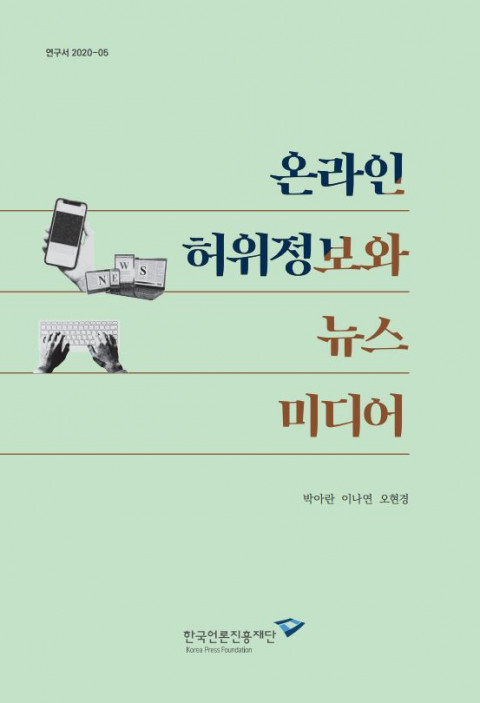 온라인 허위정보와 뉴스 미디어 Año de publicación: 2020 Autor: 박아란, 이나연, 오현경 Autor corporativo: 한국언론진흥재단 본 연구에서는 코로나19 사태 등 최근 국내외에서 발생한 주요 사안들과 관련하여 유포되고 있는 허위정보와 가짜뉴스의 사례와 개념 등을 정리하고 각국의 대응방안에 대해 조사하는 것을 목표로 한다. 특히 현재 진행 중인 코로나19 사태는 전 세계적으로 관심이 집중되고 있는 사안이니만큼 코로나19와 관련된 허위정보의 확산 및 피해 사례들을 중점적으로 살펴보고, 최근 선거를 치르거나 앞두고 있는 국가들의 사례를 통해 선거 관련 허위조작정보 문제에 대해서도 살펴봄으로써 사회적 혼란을 가져오고 불신을 양산하는 허위정보 문제에 효과적으로 대응할 수 있는 방안을 모색하고자 한다.
 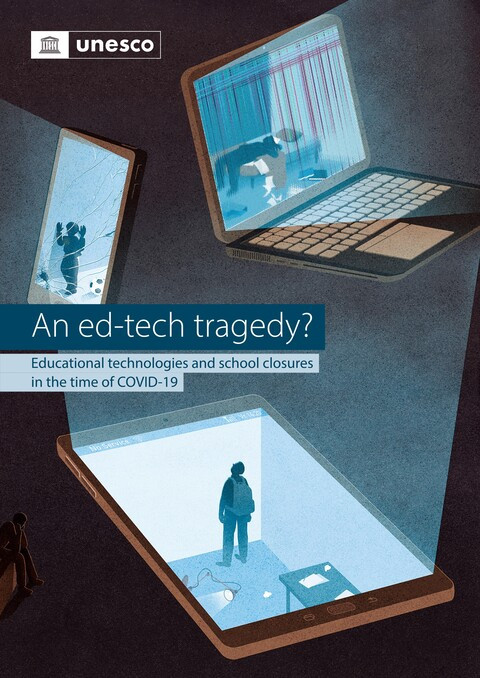 An Ed-Tech Tragedy? Educational Technologies and School Closures in the Time of COVID-19 Año de publicación: 2023 Autor corporativo: UNESCO Charting a new course for the transformation of education in a digital age An Ed-Tech Tragedy? is a detailed analysis of what happened when education became largely reliant on connected technology during school closures stemming from the COVID-19 pandemic, the largest global disruption to education in history.Many claim that this experience was chiefly one of forced progress and transformations that have, however haltingly, helped propel education into desirable digital futures. Others underline an experience of imperfect salvation – technology saving the day in an emergency and preserving learning continuity for significant numbers of students, even if not all students were helped. But the global evidence reveals a more sombre picture. It exposes the ways unprecedented educational dependence on technology often resulted in unchecked exclusion, staggering inequality, inadvertent harm and the elevation of learning models that place machines and profit before people. This publication examines the promises of educational technologies against the reality of what was delivered during periods of pandemic school closures, which stretched for various durations from early 2020 to the end of 2022. Dedicated sections consider alternate possibilities that had the potential to be more inclusive and equitable.The analysis extracts lessons and recommendations to chart new and more humanistic directions for the development, integration and use of technology in education.
  Arts Education: An Investment in Quality Learning Año de publicación: 2023 Autor: Vivek Venkatesh | Lydia Ruprecht | Martha K. Ferede Autor corporativo: UNESCO This paper reviews key research on the impact and outcomes of Arts Education (AE), with the objective of demonstrating how AE and its conceptualizations, methodological approaches, theoretical foundations and applications are closely aligned with the objectives and expectations of quality education as notably envisioned by Sustainable Development Goal 4 (SDG 4) on education. For UNESCO (2006), AE is understood to include two different approaches: o the teaching of art as an individual study subject and AE as developing learners’ artistic skills, abilities and sensibilities; o the mobilization of the arts, its tools, methods and stakeholders as a pedagogical approach, also referred to as 'arts in education' or 'learning through the arts.”The evidence gathered in this paper points to six main conclusions. • Arts education contributes to the humanistic outcomes associated with quality education as captured in Target 4.7 of SDG 4 on education, namely the promotion of values grounded in global peace, sustainability, justice and respect for cultural diversity and the development of social and emotional skills such as empathic concern and perspective-taking, all of which support personal and collective well-being and indices associated with increased societal happiness1 such as healthy life expectancy, freedom and generosity. • The evidence demonstrates that the “learning of the arts” positively impacts learning in ways that are relevant to broader academic and non-academic outcomes(see Tables 1 and 2).It has been associated with improvements in mathematics performance, writing skills, reading achievements, creativity, student engagement and attendance, as well as perseverance in pursuit of educational goals and classroom behaviours. • Arts education fosters teacher innovation and collaboration, positively impacting school culture and can help students gain a sense of mastery and accomplishment and engage with their communities. • By linking formal and non-formal learning settings, including both in-person and digital cultural spaces such as museums, festivals, performance venues and cultural centres, AE supports the capacity-building of artists and cultural bearers, while expanding the pedagogical role of cultural institutions and spaces. • Considering the nature of local and Indigenous knowledge in spanning language, cultural practices, land use practices, social interactions, ritual and spirituality, AE holds the potential to support knowledge revitalization for Indigenous peoples, which have been historically compromised or delegitimized within traditional education settings. • Last but not least, by building on the economic potential of the arts and creative industries, AE creates opportunities for employment and economic growth, which cannot be underestimated. • On a methodological note, the review of existing research highlights the limitations of quantitative methods and the absence of evaluation mechanisms to assess the contribution and impact of AE to learning.
  Draft Text of the Revised 1974 Recommendation Concerning Education for International Understanding, Co-Operation and Peace and Education Relating to Human Rights and Fundamental Freedoms Año de publicación: 2023 Autor corporativo: UNESCO In accordance with the UNESCO Constitution and the Rules of Procedure concerning Recommendations to Member States and international conventions covered by the terms of Article IV, paragraph 4, of the Constitution, the draft text of the revised Recommendation concerning education for international understanding, co-operation and peace and education relating to human rights and fundamental freedoms, and the related preliminary report, were sent to UNESCO Member States through the circular letter CL/4401 (September 2022) for their written commentsand observations. On the basis of their comments, a second draft of the text was prepared. In circular letter CL/4433 (April 2023), the second draft together with the Definitive Report were submitted to Member States. The Special Committee meeting of experts designated by Member States took place from 30 May to 2 June 2023, as per the circular letter CL/4417 (November 2022), and from 10 to 12 July 2023, as per circular letter CL/4442 (June 2023).