
Recursos
Exploren una amplia gama de recursos valiosos en GCED para profundizar su comprensión y promover su búsqueda, incidencia, enseñanza y aprendizaje.
1,851 resultados encontrados
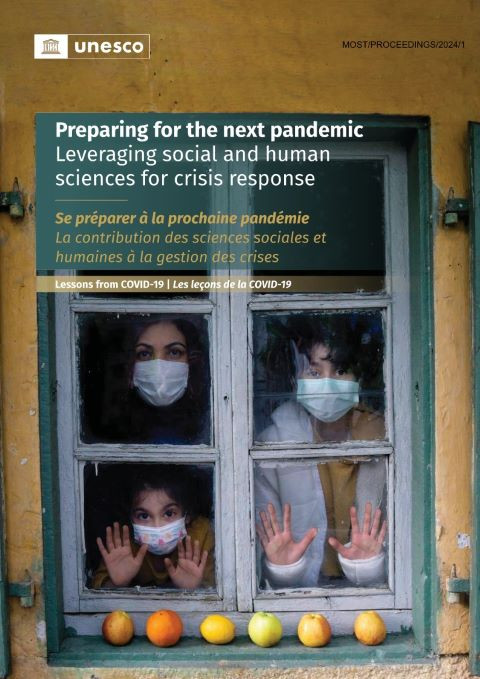 Preparing for the Next Pandemic Leveraging Social and Human Sciences for Crisis: Lessons from COVID-19 Año de publicación: 2024 Autor: Erwan Dianteill | N'Dri Thérèse Assié-Lumumba Autor corporativo: UNESCO The Social Sciences Response to COVID-19 Understanding the social impact of the COVID-19 pandemic is crucial for crafting effective and inclusive recovery policies. Prior to the pandemic, growing gaps in well-being were already undermining environmental sustainability, the social fabric, and progress worldwide. Fragile and unequal systems proved to be a pre-existing aggravating condition that fuelled the pandemic on a global scale. COVID-19 widened the gap between developed countries—which already had the financial means to respond to the crisis and had easy access to the vaccine—and the rest of humanity, resulting in devastating effects in the Global South, with more than 130 million people crossing the poverty line. Addressed to policymakers and scholars, this publication presents a comprehensive state of knowledge of the social science perspectives on the COVID-19 pandemic, covering a wide range of topics from its impact on mental health, education, climate change, economy, governance, migration, demography, digitalization, and more. The authors analyse the challenges faced by society during the pandemic and present actionable proposals for policymakers and practitioners. This publication is a reminder of the importance of Social Sciences and Humanities in addressing global challenges and provides a roadmap for future research and policy action to build more resilient societies.
  미디어․정보 리터러시 갖춘 시민 되기: 비판적으로 사고하고 현명하게 클릭하기! Año de publicación: 2022 Autor: Alton Grizzle | Carolyn Wilson | Ramon Tuazon | C.K. Cheung | Jesus Lau | Rachel Fischer | Dorothy Gordon | Kwame Akyempong | Jagtar Singh | Paul R. Carr | Kristine Stewart | Samy Tayie | Olunifesi Suraj | Maarit Jaakkola | Gina Thésée | Curmira Gulston Autor corporativo: 유네스코 현명한 클릭으로 우리 사회를 개선할 수 있을까? 도서관을 비롯한 아카이브, 박물관, 미디어와 디지털 통신 회사 같은 콘텐츠 제공자는 모든 이를 포용하고 지속 가능한 개발을 이루어내려는 역할을 지니고 있다. 하지만 콘텐츠 제공자가 그와 같은 이상에 근거해서만 움직이는 것은 아니기 때문에 서비스 사용자들은 어려움을 겪게 된다. 모든 콘텐츠 제공자는 평생학습의 기회를 열어 주기도 하지만 동시에 잘못된 정보나 허위정보, 혐오 표현, 온라인 프라이버시 침해 등과 같은 과제도 안겨 준다. 미디어·정보 리터러시란 사람들이 취할 수 있는 혜택은 최대로 얻고, 입을 수 있는 피해는 최소화할 수 있도록 하는 일련의 역량을 의미한다. 미디어·정보 리터러시는 커뮤니케이션 콘텐츠와 해당 콘텐츠를 제공하는 기관 및 디지털 기술을 비판적이고 효과적으로 이용할 수 있는 역량이다. 이는 나이, 배경과 관계없이 모든 시민이 필수적으로 갖추어야 하는 능력이다. 이 선구적인 커리큘럼은 미디어·정보 리터러시 역량의 종합적인 프레임워크를 제공하며, 교육자와 학습자가 활용할 수 있는 체계적인 교육적 방안을 제안한다. 또한 다양한 모듈을 제시하여 오늘날의 커뮤니케이션 생태계를 이해하는 데 필수적인 역량 범위를 상세하게 다루고 있다. 이 자료에서는 미디어·정보 리터러시를 지금 우리 사회에서 새롭게 부상하고 있는 문제들, 즉 인공지능을 비롯해 디지털 시민 교육, 지속가능 발전 교육, 문화 리터러시 및 허위정보와 잘못된 정보의 급증 등과 연계하여 다루고 있다. 본 커리큘럼을 효과적으로 활용한다면 누구나 미디어·정보 리터러시를 갖춘 시민은 물론, 미디어·정보 리터러시 동료 교육자도 될 수 있을 것이다.
 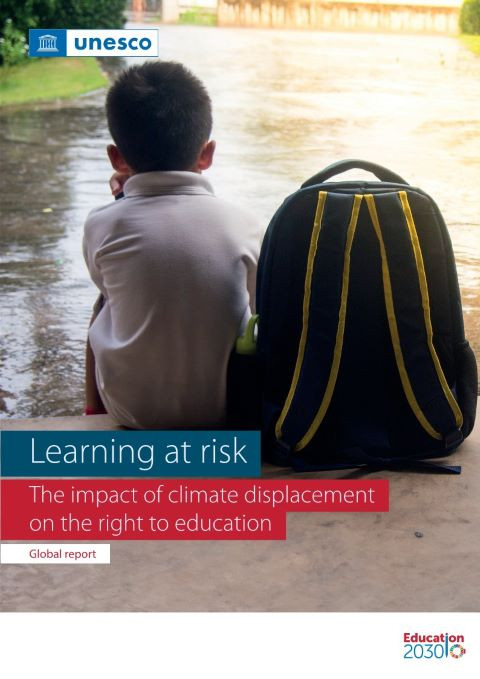 Learning at Risk: the Impact of Climate Displacement on the Right to Education; Global Report Año de publicación: 2023 Autor corporativo: UNESCO How climate displacement the impacts the right to education The growing impacts of climate change and displacement on education can no longer be ignored. The increasing number of people displaced due to climate change faces unique vulnerabilities, especially in terms of access to education. This challenge is not only attributed to the often limited political and legal recognition of these displaced persons, but also stems from the global community’s lack of awareness of the diverse obstacles they encounter in seeking access to education. This global report, which concludes the “Initiative on the impact of climate change and displacement on the right to education”, aims to provide guidance to policy-makers worldwide on how to better respect, protect and fulfil the right to education of climate-displaced people. It provides an overview of climate-induced barriers to education, and global policy guidance on how to ensure the protection of the right to education of these populations. The report will inform UNESCO’s Initiative on “The evolving right to education within a lifelong learning perspective” which is investigating how the right to education, as enshrined in international normative instruments, could be strengthened to meet modern needs in our rapidly changing societies.
 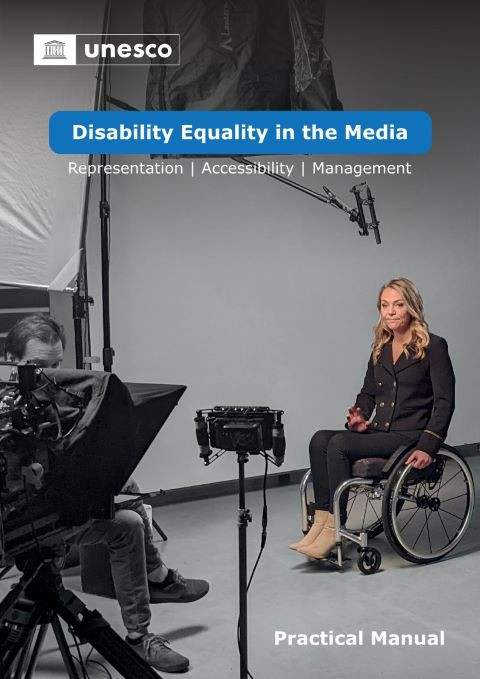 Disability Equality in the Media: Representation, Accessibility, Management; Practical Manual Año de publicación: 2025 Autor corporativo: UNESCO Promoting Disability Equality in the Media Despite all the positive changes happening in newsrooms and leadership roles, diversity in the media remains a challenge.When certain groups are left out, the media fails to present all angles of a story, missing diverse perspectives and innovative ideas. Consequently, audiences do not receive the full picture, and promises of fair and accurate representation often fall short, affecting our perceptions of each other in society. It is the case of persons with disabilities, who make up 16 percent of the global population but remain one of the most marginalized groups. Media coverage frequently overlooks them, and when their stories are told, they are often framed through stereotypes. This not only creates barriers but also denies them their rights. To address this, media organizations should enhance editorial policies and representation, improve employment conditions, and foster a more inclusive environment for professionals with disabilities.The Practical Manual and Master Class provide hands-on advice to editorial teams on how to ensure fair and unbiased coverage of disability. For content producers, it details how to make media content and services accessible. To managers and decision makers, the material inspires change, demonstrating how disability equality can contribute to media industry growth and create new revenue streams.This work contributes to the implementation of the United Nations Convention on the Rights of Persons with Disabilities (2006) and promotes freedom of expression, media development, and access to information for the meaningful participation of persons with disabilities in public debate. Igualdad para las personas con discapacidad en los medios: representación, accesibilidad, gestión : manual práctico Año de publicación: 2025 Autor corporativo: UNESCO Promover la igualdad para las personas con discapacidad en los mediosA pesar de todos los cambios positivos que suceden en las salas de prensa y con los roles de liderazgo, la diversidad en los medios continúa presentando un desafío. Cuando se excluyen ciertos grupos, los medios omiten mostrar todos los ángulos de una historia, las distintas perspectivas y las ideas innovadoras. Por lo tanto, la audiencia no recibe la información completa y las promesas de una representación certera, generalmente, no son suficientes, lo que afecta nuestra percepción del otro en la sociedad. Es el caso de las personas con discapacidad, que constituyen un dieciséis por ciento de la población global, pero aún es uno de los grupos más marginados. La cobertura de los medios con frecuencia los ignora y cuando se cuentan sus historias, por lo general, se enmarcan en un estereotipo. Esto no solo crea obstáculos, sino que además les niega el ejercicio de sus derechos. A fin de abordar esta situación, los medios deben ampliar las políticas editoriales y aumentar la representación, mejorar las condiciones de empleo y promover un entorno más inclusivo para profesionales con discapacidad.El Manual Práctico y la Master Class brindan consejos útiles para los equipos editoriales sobre el modo de asegurar que la cobertura de las personas con discapacidad sea justa y no esté sesgada. Para los generadores de contenido, se detalla de qué manera hacer que el contenido y los servicios mediáticos sean accesibles. Para gerentes y quienes estén a cargo de tomar decisiones, este material alienta a realizar cambios, demostrando cómo la igualdad de las personas con discapacidad puede contribuir al crecimiento de la industriaz mediática y generar nuevas fuentes de ingreso.Este trabajo contribuye a implementar la Convención Internacional de las Naciones Unidas sobre los Derechos de las Personas con Discapacidad de 2006 y promueve la libertad de expresión, el desarrollo de los medios y el acceso a la información, a fin de que las personas con discapacidad participen significativamente en el debate público. L’égalité des personnes handicapées dans les médias : représentation, accessibilité, gestion; manuel pratique Año de publicación: 2025 Autor corporativo: UNESCO Promouvoir l’égalité des personnes handicapées dans les médias Malgré tous les changements positifs qui se produisent dans les salles de rédaction et les postes de direction, la diversité dans les médias reste un défi. Lorsque certains groupes sont laissés de côté, les médias ne présentent pas tous les aspects d'une histoire, manquent de perspectives diverses et d'idées novatrices. Par conséquent, le public ne reçoit pas une image complète, et les promesses de représentation juste et précise ne sont souvent pas tenues, ce qui affecte la perception que nous avons les uns des autres dans la société. C'est le cas des personnes handicapées, qui représentent 16 % de la population mondiale mais demeurent l'un des groupes les plus marginalisés. La couverture médiatique les néglige souvent, et lorsque leurs histoires sont racontées, elles sont souvent encadrées par des stéréotypes. Cela crée non seulement des obstacles, mais les prive également de leurs droits. Pour remédier à cette situation, les organisations médiatiques devraient renforcer les politiques éditoriales et la représentation, améliorer les conditions d'emploi et favoriser un environnement plus inclusif pour les professionnels handicapés.Le manuel pratique et la master classe fournissent des conseils concrets aux équipes éditoriales sur la manière d’assurer un traitement équitable et impartial du handicap. Pour les producteurs de contenus, ils décrivent comment rendre les contenus et les services médiatiques accessibles. Pour les responsables et les décideurs, ils incitent au changement, en démontrant comment l’égalité des personnes handicapées peut contribuer à la croissance du secteur des médias et créer de nouvelles sources de revenus.Le présent travail contribue à la mise en œuvre de la Convention des Nations Unies relative aux droits des personnes handicapées (2006) et promeut la liberté d’expression, le développement des médias et l’accès à l’information pour une participation véritable des personnes handicapées au débat public.
  Artificial Intelligence and Gender Equality: Key Findings of UNESCO’s Global Dialogue Año de publicación: 2020 Autor corporativo: UNESCO The purpose of the UNESCO’s Dialogue on Gender Equality and AI was to identify issues, challenges, and good practices to help: Overcome the built-in gender biases found in AI devices, data sets and algorithms; Improve the global representation of women in technical roles and in boardrooms in the technology sector; and Create robust and gender-inclusive AI principles, guidelines and codes of ethics within the industry. This Summary Report sets forth proposed elements of a Framework on Gender Equality and AI for further consideration, discussion and elaboration amongst various stakeholders. It reflects experts’ inputs to the UNESCO Dialogue on Gender Equality and AI, as well as additional research and analysis. This is not a comprehensive exploration of the complexities of the AI ecosystem in all its manifestations and all its intersections with gender equality. Rather, this is a starting point for conversation and action and has a particular focus on the private sector. It argues for the need to 1. Establish a whole society view and mapping of the broader goals we seek to achieve in terms of gender equality;2. Generate an understanding of AI Ethics Principles and how to position gender equality within them; 3. Reflect on possible approaches for operationalizing AI and Gender Equality Principles; and4. Identify and develop a funded multi-stakeholder action plan and coalition as a critical next step.
  UNESCO Women for Ethical AI: Outlook Study on Artificial Intelligence and Gender Año de publicación: 2024 Autor corporativo: UNESCO The gender chapter of the UNESCO Recommendation on the Ethics of AI is a concrete commitment by 194 Member States to advance gender equality in the AI ecosystem. To track progress in the implementation of the gender provisions of UNESCO’s Recommendation, and to assess the impacts of AI on gender equality, the UNESCO Women for Ethical AI (W4EAI) Platform has been established. This report advances the workstream through evidence-based insights in three critical areas: women’s participation in AI development and deployment, the inclusion of gender equality concerns in AI governance and the impact of AI on gender equality. It highlights the significant underrepresentation of women in AI, the lack of gender-disaggregated data, and the compounded challenges women face in the field. The report also addresses the neglect of gender dimensions in AI policy, the risks posed by AI systems to women, and the need for responsible and ethical AI governance to promote gender equality. Finally, it outlines actionable recommendations to enhance gender equality through and in AI, emphasizing the importance of comprehensive data collection, targeted interventions, and inclusive policy-making.
  وضع تصورات جديدة لمستقبلنا معاً: عقد اجتماعي جديد للتربية والتعليم Año de publicación: 2022 Autor corporativo: International Commission on the Futures of Education | UNESCO تُستشف من أحوال العالم في الوضع الراهن أن البشرية وكوكب الأرض معرضان للخطر. وقد قدمت الجائحة التي حلت بنا في الفترة الأخيرة دليلاً دامغاً على أن العالم الذي نعيش فيه يتسم بالهشاشة وتترابط أجزاؤه ترابطاً وثيقاً. ولا بد لنا الآن من اتخاذ إجراءات عاجلة معاً لتغيير المسار ووضع تصورات جديدة لمستقبلنا. وينطوي هذا التقرير الصادر عن اللجنة الدولية المعنية بمستقبل التربية والتعليم على إقرار بقدرة التربية والتعليم على إحداث تغيير عميق في الأوضاع الراهنة. وثمة تحديان ماثلان أمامنا الآن، أولهما هو الوفاء بالوعد المتمثل في ضمان الحق في التعليم الجيد لجميع الأطفال والشباب والكبار، وهو وعد لم يتحقق بعد، وثانيهما هو تحقيق كامل الإمكانات الكفيلة بإحداث التغيير الجذري المنشود، التي ينطوي عليها التعليم بوصفه سبيلاً إلى بناء مستقبل جماعي مستدام. ولا سبيل إلى بلوغ هذه الغاية إلا بإبرام عقد اجتماعي جديد للتربية والتعليم يتيح إصلاح المظالم والاضطلاع في الوقت نفسه بتغيير المستقبل على النحو المنشود. ويجب أن يقوم هذا العقد الاجتماعي الجديد على حقوق الإنسان وأن يستند إلى مبادئ عدم التمييز، والعدالة الاجتماعية، واحترام الحياة، والكرامة الإنسانية، والتنوع الثقافي. ويجب أن يشتمل على أخلاقيات الرعاية والتبادل والتضامن. ويجب أن يعزز التعليم باعتباره عملاً ومنفعة مشتركة. وينطوي هذا التقرير، الذي استغرق إعداده عامين واسترشد معدوه بعملية تشاور عالمية شارك فيها نحو مليون شخص، على دعوة موجهة إلى الحكومات والمؤسسات والمنظمات والمواطنين في جميع أنحاء العالم لصياغة عقد اجتماعي جديد للتربية والتعليم يساعدنا في بناء مستقبل مستدام ينعم فيه الجميع بالسلام والعدل. وليست الرؤى والمبادئ والمقترحات المعروضة ههنا سوى منطلق لمزيد من العمل، إذ ينبغي بذل جهد جماعي لتجسيد هذه الرؤى والمبادئ والمقترحات بما يتماشى مع الظروف والبيئات التي تندرج فيها. وقد تحقق بالفعل العديد من المنجزات البارزة في هذا الشأن. ويسعى في هذا التقرير إلى استعراضها والارتكاز عليها لبناء صرح جديد. وليس هذا التقرير دليلاً إرشادياً ولا خطة لإيجاد حلول، بل هو فتح لباب التحاور في شأن يتسم بأهمية حيوية.
  Reimagining Our Futures Together: A New Social Contract for Education Año de publicación: 2021 Autor corporativo: International Commission on the Futures of Education | UNESCO Our humanity and planet Earth are under threat. The pandemic has only served to prove our fragility and our interconnectedness. Now urgent action, taken together, is needed to change course and reimagine our futures. This report by the International Commission on the Futures of Education acknowledges the power of education to bring about profound change. We face a dual challenge of making good on the unfulfilled promise to ensure the right to quality education for every child, youth and adult and fully realizing the transformational potential of education as a route for sustainable collective futures. To do this, we need a new social contract for education that can repair injustices while transforming the future.This new social contract must be grounded in human rights and based on principles of non-discrimination, social justice, respect for life, human dignity and cultural diversity. It must encompass an ethic of care, reciprocity, and solidarity. It must strengthen education as a public endeavour and a common good.This report, two years in the making and informed by a global consultation process engaging around one million people, invites governments, institutions, organizations and citizens around the world to forge a new social contract for education that will help us build peaceful, just, and sustainable futures for all.The visions, principles, and proposals presented here are merely a starting point. Translating and contextualizing them is a collective effort. Many bright spots already exist. This report attempts to capture and build on them. It is neither a manual nor a blueprint but the opening up of a vital conversation.