
Recursos
Exploren una amplia gama de recursos valiosos en GCED para profundizar su comprensión y promover su búsqueda, incidencia, enseñanza y aprendizaje.
1,851 resultados encontrados
 Some Aspects of Sustainable Development of the Kyrgyz Republic (International Journal of Humanities and Natural Sciences; Vol.1-1, No.76) Año de publicación: 2023 Autor: А.И. Абдиева | Сыдыкова Жылдыз The article reveals the modern position of the Kyrgyz Republic in the field of promoting the principles of sustainable development, in particular, it discloses what strategic documents have been adopted and are currently being implemented in this area, the article attempts to draw attention to the state of air pollution and its impact on the health of the population of the republic. Некоторые аспекты устойчивого развития Кыргызской республики (Международный журнал гуманитарных и естественных наук; Vol.1-1, No.76) Año de publicación: 2023 Autor: А.И. Абдиева | Сыдыкова Жылдыз В статье раскрывается современная позиция Кыргызской Республики в области продвижения принципов устойчивого развития, в частности, раскрыты какие стратегические документы приняты и реализовываются на настоящий момент по данному направлению, в статье делается попытка на обращение внимания о состоянии загрязнения атмосферного воздуха и его влиянии на здоровье населения республики.
 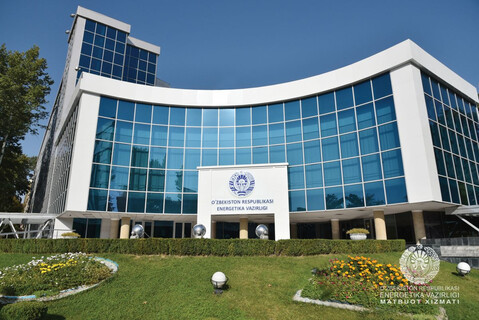 Transition to “Green Economy” in Uzbekistan: Opportunities and Challenges Año de publicación: 2023 Autor: Nodira Mukhammadkulova | Shakhrizoda Rakhimova Autor corporativo: Central Asian Bureau for Analytical Reporting (CABAR) Climate change issues and the crisis in the energy market have led to the development of technologies for the use of alternative, more environmentally friendly and possibly renewable resources, which are called “green” technologies. In Uzbekistan, the program of transition to a green economy and green growth until 2030 was adopted at the end of 2022. According to the program, by 2030, the share of renewable energy sources (RES) used will be about 30% of the country’s total electricity generation. The issue of awareness of the population as consumers about the relevance of diversification of energy consumption, advantages and disadvantages of alternative energy sources is relevant. Возможности и вызовы перехода на "зеленую экономику" в Узбекистане Año de publicación: 2023 Autor: Nodira Mukhammadkulova | Shakhrizoda Rakhimova Autor corporativo: Central Asian Bureau for Analytical Reporting (CABAR) Вопросы изменения климата и кризис на рынке энергоресурсов обусловили развитие технологий по использованию альтернативных, более экологичных и по возможности возобновляемых ресурсов, которые получили название «зеленые» технологии. В Узбекистане программу перехода к “зеленой” экономике и “зеленому” росту до 2030 года приняли в конце 2022 года. Согласно программе, к 2030 году доля используемых возобновляемых источников энергии (ВИЭ) будет составлять около 30% общей выработки электроэнергии в стране. Актуальным является вопрос осведомленности населения как потребителей об актуальности диверсификации энергопотребления, преимуществах и недостатках альтернативных видов источников энергии.
  中国山西潞安碳中和目标下的企业可持续发展方向研究 Año de publicación: 2022 Autor: 刘文奇 | 曾一洲 近几年来,社会经济迅猛发展。也对企业的发展模式以及改革创新提出了更高的要求。在碳中和背景下,积极引导企业优化低碳循环发展,从可持续战略落实等相关角度出发,结合山西潞安碳中和目标的设定,积极探寻企业未来可持续发展的方向和思路是十分重要的。因此,本文在探索过程中,主要结合碳中和双碳发展目标,进一步的优化企业改革模式分析。根据碳中和的基本思想以及应用的重要价值,研究走低碳绿色发展道路的重要思路。
  Восьмое Национальное Сообщение и Пятый Двухгодичный Доклад Республики Казахстан Рамочной конвенции ООН об изменении климата Año de publicación: 2023 Autor corporativo: UNDP Kazakhstan 8-е Национальное Сообщение и 5-й Двухгодичный Доклад Республики Казахстан Рамочной Конвенции ООН об Изменении Климата подготовлен группой национальных экспертов в рамках совместного проекта Министерства экологии, геологии и природных ресурсов Республики Казахстан и Программы развития ООН при финансовом содействии Глобального Экологического Фонда. В публикации содержится вся доступная информация о вопросах изменения климата в соответствии с международным доступным руководством. Для составления данного доклада использовалась информация из открытых источников, данные национальных и международных организаций, включая правительственные ведомства и агентства.
  Cerro Cuchillo: The Forest is Exhausted Año de publicación: 2022 Autor: David Buitrago Tello Autor corporativo: Centro de Investigación y Educación Popular (CINEP) This report presents different aspects around the "Cerro Cuchillo" territory and its inhabitants. The ecosystems and their relationships with the communities are described, the alterations they have suffered, the processes of change and damage and the protection and restoration measures of the strategic ecosystems. All this, through qualitative research tools, which allowed identifying the processes of change and abandonment of the territory. Cerro cuchillo: el bosque se agota Año de publicación: 2022 Autor: David Buitrago Tello Autor corporativo: Centro de Investigación y Educación Popular (CINEP) En este informe se presentan distintos aspectos que rodean al territorio Cerro Cuchillo y a sus habitantes. Se describe los ecosistemas y sus relaciones con las comunidades, las alteraciones que han sufrido, los procesos de cambio y daño y las medidas de protección y restauración de los ecosistemas estratégicos, con base en las opiniones de las comunidades más relacionadas con este lugar, todo esto por medio de herramientas de investigación cualitativa, que permitieron identificar los procesos de cambio y abandono del territorio.
 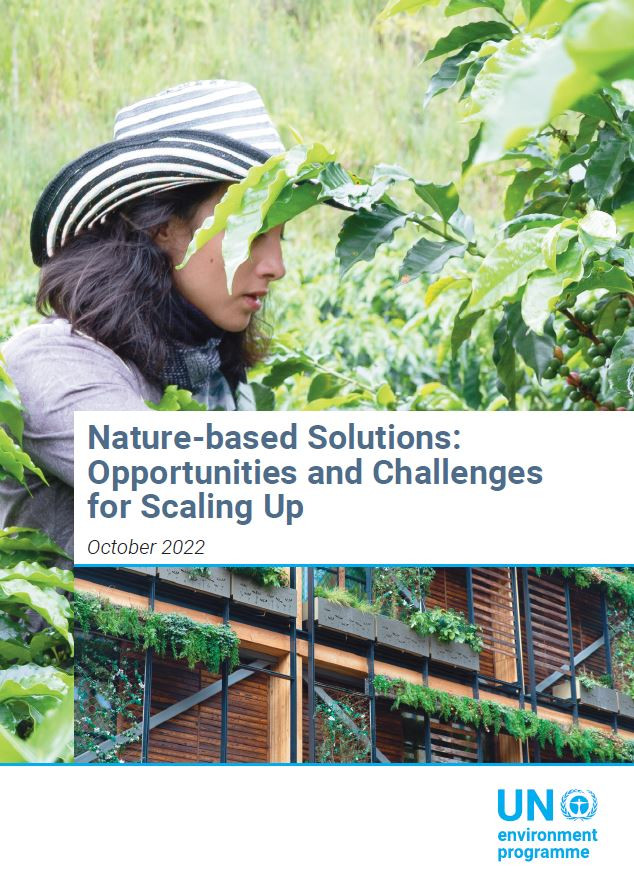 Nature-based Solutions: Opportunities and Challenges for Scaling Up Año de publicación: 2022 Autor: Charlotte Hicks | Carolina Chambi | Hemant Tripathi | Katie Dawkins | Tania Salvaterra | Kollie Tokpah | Valerie Kapos | Hashim Zaman Autor corporativo: United Nations Environment Programme (UNEP) Nature-based Solutions (NbS) are important for the global sustainable development agenda because they offer the potential to address, in an effective way, diverse challenges such as climate change, food and water insecurity, disaster impacts, and threats to human health and wellbeing, while reducing environmental degradation and biodiversity loss. Some of the challenges addressed by NbS, including biodiversity loss and climate action, cannot be fully tackled without this contribution. This does not mean that other actions, such as rapid decarbonization of our economies, are not also essential. This report: Outlines recent developments on NbS, with a focus on global, regional and national commitments, and key issues and concerns Builds on the new multilaterally agreed definition of NbS – agreed by the UN Environment Assembly in March 2022 – to set out key elements in the concept, provides examples of NbS, and discusses related approaches Provides recommendations for actions by governments, civil society and the private sector to substantially scale up the use of NbSThe report aims to inform NbS-related initiatives and discussions on NbS at global, regional, and national levels, with a focus on how NbS can be scaled up to more effectively address social, economic, and environmental challenges.
  Reviewing the Korean Sustainable Development Strategy and Policy in Response to COVID-19 Año de publicación: 2021 Autor: Soeun Ahn | Dokyun Kim | Hongrim Lee | Yoonseon Park | Jaehyuk Lee | Jungseok Lee | Hanwoom Hong | Woohyun Jung | Baeseok Jeon | Garim Jeon Autor corporativo: Korea Environment Institute (KEI) Through the ‘Sustainable Development Goals (SDGs)’, the United Nations (UN) has established tasks, including 17 policy goals and 169 targets, that civilization must resolve by 2030. It is recommended that each country build its own implementation mechanism, which sets its own policy goals and targets, tailored to its respective national context. South Korea established the ‘National Sustainable Development Goals (K-SDGs)’ in 2018, consisting of 17 policy goals and 122 targets. In 2020, the country prepared the Fourth Basic Plan for Sustainable Development (2021-2040). The K-SDGs were revised and supplemented in consideration of recent changes in conditions.This study aims to develop a national K-SDGs strategy by examining factors that threaten sustainable development, with a focus on the COVID-19 pandemic.