
Recursos
Exploren una amplia gama de recursos valiosos en GCED para profundizar su comprensión y promover su búsqueda, incidencia, enseñanza y aprendizaje.
1,828 resultados encontrados
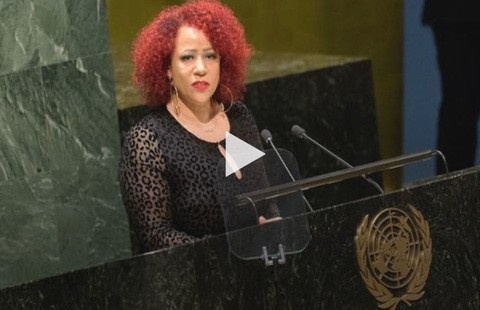 Remembering the Tragic History of Slavery in America is About Real Reconciliation - Interview with Hannah Jones, New York Times Año de publicación: 2022 Autor corporativo: United Nations (UN) This audio is a UN News interview with New York Times reporter Hannah Jones, looking back at the history of slavery in the United States and highlighting the need to reflect on this history in order to address social problems such as the issue of racism today. 铭记美国奴隶制惨痛历史是为了实现真正和解——专访《纽约时报》记者汉娜-琼斯 Año de publicación: 2022 Autor corporativo: United Nations (UN) 本音频是联合国新闻对《纽约时报》记者汉娜 · 琼斯的专访,回顾了美国奴隶制的历史,强调反思这段历史对解决当下种族主义等社会问题的必要性。
  The Digital Future of Teacher Training in Indonesia: What’s Next? Año de publicación: 2022 Autor: Noah Yarrow | Noviandri Khairina | Jacobus Cilliers | Indah Dini Autor corporativo: World Bank | Government of Australia This report reflects on the Indonesia’s online teacher training ecosystem based on unique data collected from both teachers and providers during the COVID-19 period. A detailed mapping of the eight largest providers of online teacher training in Indonesia was conducted, covering 25 programs. We find that the majority of programs are short in duration and focus on digital literacy skills and remote learning. Training programs were mostly provided using online lectures, few provided individual coaching, while none provided opportunities for personalized learning. Second, we conducted a nationally representative phone survey of 435 primary and junior secondary teachers spanning 30 provinces across Indonesia (66 percent of whom are female teachers). The teacher survey was conducted between February and March 2021 and covered teachers under both the Ministry of Education, Research, and Technology (MoECRT) and the Ministry of Religious Affairs (MoRA). We find that 44 percent of teachers participated in online learning during the pandemic, and that three quarters of these teachers had never participated in online training prior to the pandemic. Many training participants reported challenges in implementing what they learned from online training. Most of the teachers who participated (88 percent) would like to continue receiving training online even after the pandemic ends. These results suggest that demand for online training is expected to persist, but more can be done to improve their quality.
  Language Preferences in Tajikistan: What Does the Search Data Reveal? Año de publicación: 2023 Autor: Navruz Karimov Autor corporativo: Central Asian Bureau for Analytical Reporting (CABAR) Despite the process of derussification in Tajikistan, the Russian language plays a crucial role in the country’s information space. According to a study by Navruz Karimov, the overwhelming majority of search queries to Google in Tajikistan are made in Russian. This data speaks not only to the lack of useful content in Tajik but also to the poor prospects for the Tajik language. Языковые предпочтения в Таджикистане: что говорят данные поисковых запросов? Año de publicación: 2023 Autor: Navruz Karimov Autor corporativo: Central Asian Bureau for Analytical Reporting (CABAR) Несмотря на процесс дерусификации в Таджикистане, русский язык продолжает играть ключевую роль в информационном пространстве страны. Согласно исследованию Навруза Каримова, подавляющее большинство поисковых запросов к Google в Таджикистане делается на русском языке. Эти данные говорят не только об отсутствии полезного контента на таджикском языке, но и о плохих перспективах таджикского языка.
  The Situation of the Russian Speaking Population in Central Asia: To the Historiography of the Problem (Post-Soviet Continent; Año de publicación: 2023 Autor: Марина Авимская Autor corporativo: ИНСТИТУТ СТРАН СНГ At present, the position of the Russian and Russian-speaking population is one of the most important problems in the domestic and foreign policy of the states - the former Soviet republics of the USSR and a significant aspect of their relationship with the Russian Federation. In this regard, this problem has been attracting increased attention of researchers (primarily historians and political scientists) from Russia and neighboring countries for quite a long time. The article deals with the issue of the situation of the Russian and Russian-speaking population in the post-Soviet period and how it is covered in modern Russian scientific literature over the past five years (2017–2021), using the example of the countries of Central Asia. Положение русскоязычного населения в Центральной Азии: к историографии проблемы (Постсоветский материк; Vol.1, No.37) Año de publicación: 2023 Autor: Марина Авимская Autor corporativo: ИНСТИТУТ СТРАН СНГ В настоящее время положение русского и русскоязычного населения является одной из важнейших проблем внутренней и внешней политики государств – бывших союзных республик СССР и значимым аспектом их взаимоотношений с Российской Федерацией. В связи с этим данная проблема уже на протяжении довольно длительного времени привлекает к себе повышенное внимание исследователей (в первую очередь историков и политологов) из России и стран ближнего зарубежья. В статье рассматривается вопрос о положении русского и русскоязычного населения в постсоветский период и как он освещен в современной российской научной литературе за последние пять лет (2017–2021) на примере стран Центральной Азии.
  The SCO’s Role in Countering Terrorism in Central Asian Countries (Post-Soviet Studies; Vol.5, No.8) Año de publicación: 2022 Autor: А. К. Румянцева | К. Х. Рахимов Terrorism is one of the main threats to the security of humanity in the modern world. The intensification of the activities of the terrorist underground in the countries of Central Asia and the deterioration of the situation in Afghanistan raises the problem of terrorism to a new level and calls on the countries of this region to assist international and regional organizations in resolving this issue. Among the most actively developing interregional organizations in the Central Asian region is the Shanghai Cooperation Organization. The central goals of the SCO are directly related to countering and combating the "three evils": terrorism, separatism and extremism. The relevance of this paper relates to the growth of radicalization in the Central Asian region, as a result of which the proposed article analyzes the role of the Shanghai Cooperation Organization in countering terrorism in the countries of the Central Asian region, examines the history of the origin and emergence of terrorism in this region, reveals in detail the key areas of the organization. In addition, the main adopted international legal documents on combating terrorism have been studied, on the basis of which the main stages of the development of cooperation between the member states of the organization for the implementation of anti-terrorist activities of the SCO are observed. Particularly successful cooperation in the fight against terrorism is noted in the conduct of joint anti-terrorist exercises within the framework of the organization's activities, and the activities of the SCO RATS are also considered in detail. The purpose of the article is to assess the potential of the SCO in terms of responding to new security challenges of the member states, primarily in the Central Asian region. To achieve the goal, the following research methods were used: theoretical and methodological analysis, descriptive method, and content analysis. The authors come to the conclusion that at the present stage the SCO is the most influential integration in the space of Central Asia. The organization's anti-terrorist activities show that this field is one of the most successful within the organization's work. Роль ШОС в противодейтсвии терроризму в странах Центральной Азии (Постсоветские исследования; Vol.5, No.8) Año de publicación: 2022 Autor: А. К. Румянцева | К. Х. Рахимов Терроризм является одним из главных угроз безопасности человечества в современном мире. Усиление деятельности террористического подполья в странах Центральной Азии и ухудшение ситуации в Афганистане поднимает проблему терроризма на новый уровень и призывает стран данного региона к содействию международных и региональных организаций в решении данного вопроса. Среди наиболее активно развивающих межрегиональных организаций в регионе Центральной Азии можно выделить Шанхайскую организацию сотрудничества. Центральная цель ШОС непосредственно связано в противодействии и в борьбе против «трех зол»: терроризма, сепаратизма и экстремизма. Актуальность данной работы связана с ростом радикализации в регионе Центральной Азии, вследствие чего в предлагаемой статье анализируется роль Шанхайской организации сотрудничества в противодействии терроризму в странах Центрально – Азиатского региона, рассматривается история зарождения и появления терроризма в данном регионе, подробно раскрываются ключевые направления организации. Кроме того, изучены основные принятые международно-правовые документы по борьбе с терроризмом, на основе которых наблюдаются основные этапы развития сотрудничества между государствами-членами организации по осуществлению антитеррористической деятельности ШОС. Особенно успешное сотрудничество по борьбе с терроризмом отмечается в проведении совместных антитеррористических учений в рамках деятельности организации, а также подробно рассматривается деятельность РАТС ШОС. Целью статьи является оценивание потенциала ШОС с точки зрения реагирования на новые вызовы безопасности стран-членов, прежде всего на пространстве ЦА. Для достижения цели использовались следующие методы исследования: теоретико-методологический анализ, описательный метод и контент-анализ. Авторы приходят к выводу, что на современном этапе ШОС является наиболее влиятельной интеграцией в пространстве ЦА. Антитеррористическая деятельность организации показывает, что данное направление является наиболее успешной сферой работы ШОС.
  Gender Bias, Citizen Participation, and AI (Policy Research Working Papers; Planet; RRR; 11046) Año de publicación: 2025 Autor: Jose Antonio Cuesta Leiva | Natalia Gisel Pecorari Autor corporativo: World Bank This paper investigates the role of gender bias in artificial intelligence–driven analyses of citizen participation, using data from the 2023 Latinobarómetro Survey. The paper proposes that gender bias—whether societal, data driven, or algorithmic—significantly affects civic engagement. Using machine learning, particularly decision trees, the analysis explores how self-reported societal bias (machismo norms) interacts with personal characteristics and circumstances to shape civic participation. The findings show that individuals with reportedly low levels of gender bias, who express political interest, have high levels of education, and align with left-wing views, are more likely to participate. The paper also explores different strategies to mitigate gender bias in both the data and the algorithms, demonstrating that gender bias remains a persistent factor even after applying corrective measures. Notably, lower machismo thresholds are required for participation in more egalitarian societies, with men needing to exhibit especially low machismo levels. Ultimately, the findings emphasize the importance of integrated strategies to tackle gender bias and increase participation, offering a framework for future studies to expand on nonlinear and complex social dynamics.