
Recursos
Exploren una amplia gama de recursos valiosos en GCED para profundizar su comprensión y promover su búsqueda, incidencia, enseñanza y aprendizaje.
1,828 resultados encontrados
 Руководство для социальных защитников жертв бытового насилия (учебное пособие) Año de publicación: 2016 Autor: S. Korneychuk | N, Gladyr | A. Ilyasova Данное учебное пособие направлено на укрепление профессионального потенциала специалистов, непосредственно работающих со случаями бытового насилия, с целью максимального удовлетворения потребностей пострадавших.
  Women and violent extremism in Tajikistan Año de publicación: 2017 Autor corporativo: Anna Matveeva | Bakhrom Fayzullayev This study is based on a review of existing research and political literature, as well as data collection in Tajikistan, mainly provided by officials, community respondents, investigative journalists, scholars, and local civil society experts. The aim of the study is to study the role of women in countering the spread of violent extremism. Женщины и насильственный экстремизм в Таджикистане Año de publicación: 2017 Autor corporativo: Anna Matveeva | Bakhrom Fayzullayev Данное исследование основано на обзоре существующей исследовательской и политической литературы, а также на сборе данных в Таджикистане, в основном предоставленных должностными лицами, респондентами из сообществ, журналистами-расследователями, учеными и местными экспертами гражданского общества. Целью исследования является изучение роли женщин в вопросе противодействия распространению насильственного экстремизма.
  Sexual harassment in the workplace: challenges and responses Año de publicación: 2017 Autor: Dase Kavasa This report contains information on legal and policy challenges related to sexual harassment and recommendations for improving legislation and practice in the Republic of Kazakhstan. Сексуальные домогательства на рабочем месте: вызовы и пути реагирования Año de publicación: 2017 Autor: Dase Kavasa Данный отчет содержит информацию о вызовах в области права и политики, связанных с сексуальными домогательствами, и рекомендации по совершенствованию законодательства и практики в Республике Казахстан.
 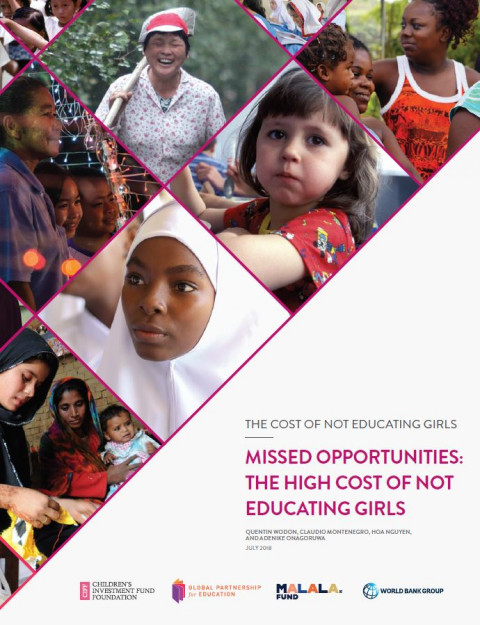 Missed opportunities: the high cost of not educating girls Año de publicación: 2018 Autor: Quentin Wodon | Claudio Montenegro | Hoa Nguyen | Adenike Onagoruwa Autor corporativo: Children's Investment Fund Foundation (CIFF) This report estimates the global impact of depriving girls of education as well as showing how educational attainment can affect their life chances and choices, and the outcomes of this at an individual, family and community level. Its findings show the transformative power of education for girls in six areas: (1) earnings and standards of living, (2) child marriage and early childbearing, (3) fertility and population growth, (4) health, nutrition and well-being, (5) agency and decision-making, and (6) social capital and institutions. Findings indicate that limited educational opportunities for girls and barriers to completing 12 years of education cost countries between $15 trillion and $30 trillion dollars in lost lifetime productivity and earnings. The report also finds that primary education is not enough. Across many indicators, benefits from primary education only are limited.
 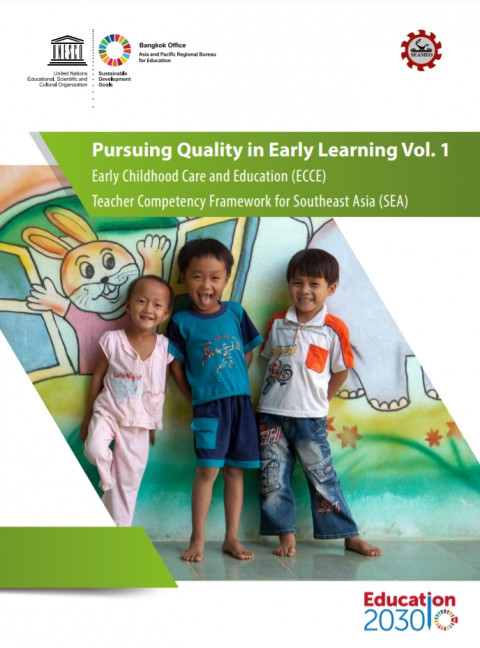 Pursuing quality in early learning, vol. 1: Early childhood care and education (ECCE) teacher competency framework for Southeast Asia (SEA) Año de publicación: 2018 Autor corporativo: Southeast Asian Ministers of Education Organization (SEAMEO) | UNESCO Bangkok With the United Nation’s (UN) Sustainable Development Goals (SDGs) as a platform for achieving quality early childhood care and education outcomes by 2030, ECCE policy-makers, practitioners, and academicians from Asia-Pacific countries gathered at the second Asia-Pacific Regional Policy Forum on Early Childhood Care and Education in Putrajaya, Malaysia in 2016 to share experiences, innovations, and lessons learned in developing and implementing ECCE policies and initiatives. This document first provides a brief background, and discusses the purposes and intended audience for which the framework was developed (Section I). A succeeding section reflects on the regional ECCE landscape (Section II), before proceeding to a discussion of the ECCE teacher competency framework for Southeast Asia (Section III). Section IV suggests possible uses of the ECCE teacher competency framework; a final section concludes with areas for future action.
 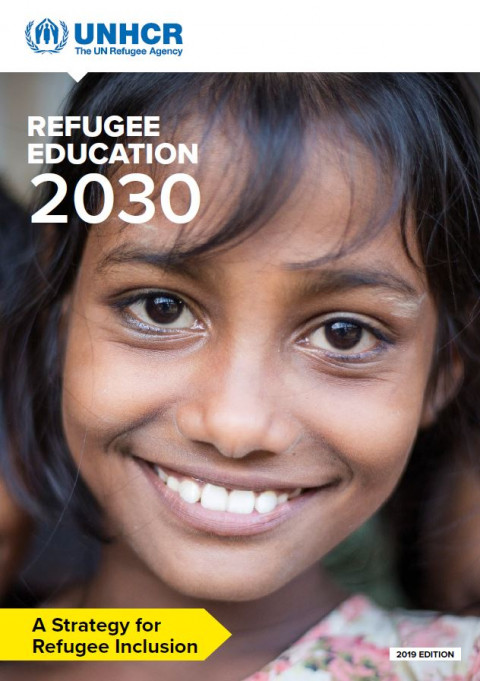 Refugee Education 2030: A Strategy for Refugee Inclusion Año de publicación: 2019 Autor corporativo: UN. Office of the United Nations High Commissioner for Refugees (UNHCR) The UNHCR's 2019 Education strategy, which builds on the Global Compact on Refugees.
  Online Programme and Meeting Document Situation Analysis of SDG 4 with a Gender Lens, Target 4.C Año de publicación: 2018 Autor corporativo: UNESCO Bangkok Teachers play a critical role in delivering high-quality education and learning outcomes. Indeed, the quality of an education system cannot exceed that of its teachers (OECD, 2010). Target 4.c recognizes this fact by calling on countries to increase the supply of qualified teachers. East Asia and the Pacific does not have enough trained and qualified teachers, particularly in remote and impoverished areas where children are most in need of highquality education. Moreover, the gender distribution of teachers is uneven across the education system, in teaching and administration. While integrating Target 4.c into national education policies and sector plans, governments should develop specific strategies to ensure that teachers are trained, qualified and deployed in an equitable manner.
  RESPECT Women: Preventing Violence Against Women Año de publicación: 2019 Autor corporativo: World Health Organization (WHO) Violence against women and girls remains pervasive across the world, despite significant efforts being made to recognize, eliminate, and prevent it in all its forms. Eliminating violence against women and girls is pivotal to achieving gender equality, women’s empowerment, and the Sustainable Development Goals. Elimination can only be done through prevention. Successful prevention requires: political commitment and leadership,implementing laws and policies that promote gender equality,investing in women’s organizations,allocating resources to prevention, andaddressing the multiple forms of discrimination women face daily. Based on the principles of respect and equality, and lessons learned from evidence-based results on what works in preventing violence from occurring and recurring, the World Health Organization (WHO) and UN Women, in collaboration with ten other UN, bilateral, and multilateral agencies, have developed “RESPECT Women: Preventing violence against women”. This publication provides a comprehensive framework to inform policy makers and implementers about designing, planning, implementing, monitoring, and evaluating interventions and programmes on preventing and responding to violence against women. The framework outlines seven inter-related intervention strategies derived from the word “respect”: Relationships skills strengthenedEmpowerment of womenServices ensuredPoverty reducedEnvironments made safeChild and adolescent abuse preventedTransformed attitudes, beliefs and norm