
Recursos
Exploren una amplia gama de recursos valiosos en GCED para profundizar su comprensión y promover su búsqueda, incidencia, enseñanza y aprendizaje.
1,448 resultados encontrados
 Multilingue et éducation interculturelle en Amérique latine: le Mexique, le Guatemala, la Colombie, le Brésil, l'Équateur, le Pérou, la Bolivie et le Paraguay et la Norvège Año de publicación: 2011 Autor corporativo: Internacional de la Educación para Latinoamerica Ce document traite de l'éducation interculturelle bilingue (BIE), son état actuel et les concepts et les processus de conduite aujourd'hui - et d'une certaine manière les conflits englobant elle. Il contient des informations sur le Mexique, le Guatemala, la Colombie, le Brésil, l'Équateur, le Pérou, la Bolivie et le Paraguay, et comprend quelques infomations et commentaires sur la Norvège. Certes, toute l'Amérique Latine est impliqué dans le sujet, d'une façon ou d'une autre, mais pour l'instant c'est la portée géographique du papier. Il vise à donner un aperçu de l'ensemble et le profil de quelques aspects spécifiques par pays.
 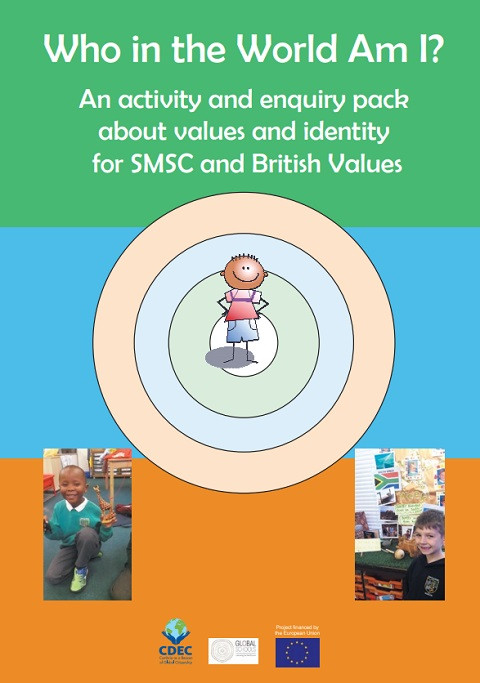 Who in the World Am I?: An Activity and Enquiry Pack about Values and Identity for SMSC and British Values Año de publicación: 2018 Autor: Caroline Harmer Autor corporativo: European Union (EU) | Global Schools Program | Cumbria Development Education Centre(CDEC) Who in the World Am I is a resource pack for teachers and children who want to actively explore their own identity from the personal right through to being part of a family, a community, a country and becoming a global citizen. The activities develop progressively through the global learning themes of valuing diversity and skills of self-awareness and reflection.
 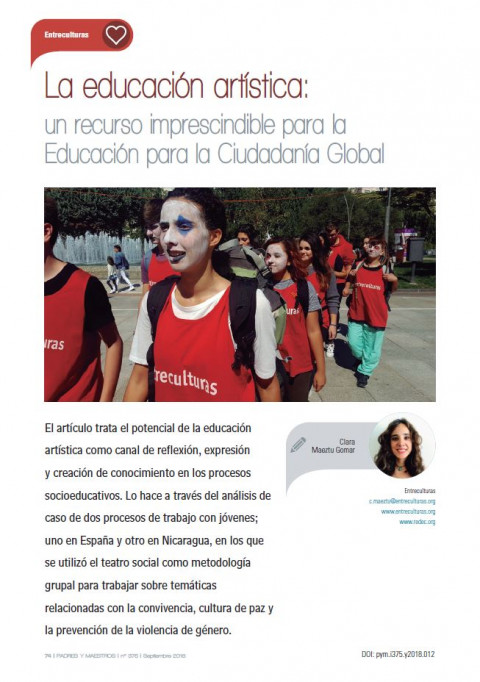 Artistic Education: An Essential Resource for Global Education Año de publicación: 2018 Autor: Clara Maeztu Gomar The article is about the potential of artistic education as a means of reflection, expression and production of knowledge in socioeducative processes. It details a case study were two working processes with youth are explained: one in Spain and the other one in Nicaragua. In both cases social theatre was used as a group methodology to work on thematics related with coexistence, culture of peace, and prevention of gender violence. La educación artística: un recurso imprescindible para la Educación para la Ciudadanía Global Año de publicación: 2018 Autor: Clara Maeztu Gomar El artículo trata el potencial de la educación artística como canal de reflexión, expresión y creación de conocimiento en los procesos socioeducativos. Lo hace a través del análisis de caso de dos procesos de trabajo con jóvenes; uno en España y otro en Nicaragua, en los que se utilizó el teatro social como metodología grupal para trabajar sobre temáticas relacionadas con la convivencia, cultura de paz y la prevención de la violencia de género.
  The Meaning of Citizenship in Social Inequality Contexts: Guidelines for a Comprehensive Education Año de publicación: 2016 Autor: Alma A Ramírez Iñiguez This article analyses the sense of citizenship education currently regarding the social inequality in the global era. For this, a conceptual framework about citizenship meaning is stablished and the need of a conceptual change is highlighted taking into account the social transformations, the increase of inequality in the worldwide and the neoliberal model hegemony in last decades. Based on this, some relevant Ibero American educational experiences in citizenship education are analyzed and their results are discussed. From this, some key elements involved in education for inclusive citizenship are pointed out as well as their contribution for social inequality decrease. El significado de la ciudadanía en contextos de desigualdad social: pautas para una educación incluyente Año de publicación: 2016 Autor: Alma A Ramírez Iñiguez El presente artículo tiene el propósito de analizar el sentido de la educación para la ciudadanía en la actualidad, tomando en cuenta la desigualdad social existente en la era global. Para ello, se realiza una revisión conceptual sobre el significado de la ciudadanía en nuestros días, destacando la necesidad de un cambio de perspectiva para entender este concepto y considerando las transformaciones sociales de las últimas décadas, así como el predominio del modelo económico neoliberal, el cual ha tenido como consecuencia el incremento de la desigualdad social a nivel mundial. Con base en dicha revisión, se realiza un análisis documental de algunas experiencias educativas iberoamericanas relevantes por su propósito de crear ciudadanía a través de propuestas inclusivas. A partir de este análisis, se discuten los resultados de dichas experiencias, los elementos clave que propician una ciudadanía incluyente desde la educación y sus implicaciones en la reducción de la desigualdad social.
  Global Citizenship Education in Europe: A Comparative Study on Education Policies across 10 EU Countries Año de publicación: 2016 Autor corporativo: Global Schools | European Union (EU) This research, realised in the framework of the EU-funded project Global Schools, is a comparative qualitative analysis of educational policies of 10 European countries (Austria, Bulgaria, Czech Republic, France, Ireland, Italy, Latvia, Spain, Portugal, England) that support the introduction of Global Citizenship Education (GCE) in primary school curriculum. The analysis focuses on four main topics: 1) identification of key actors and definition of their roles; 2) conceptual and terminology analysis; 3) levels and modes of implementation of GCE in primary school; and 4) identification of barriers to introducing GCE in the primary school system.The research has highlighted that political actors, not only governmental ones, play a crucial role in implementing GCE policies, as well as in promoting GCE more generally, and in facilitating links between different actors, who in some countries may otherwise have little institutional coordination with schools. The conceptual analysis points out that, besides the choice of different wording of GCE national terms, the main topics composing GCE are very similar. The specific terminology often reflects the history, will and political discourse of the organisations promoting GCE in the different countries.
 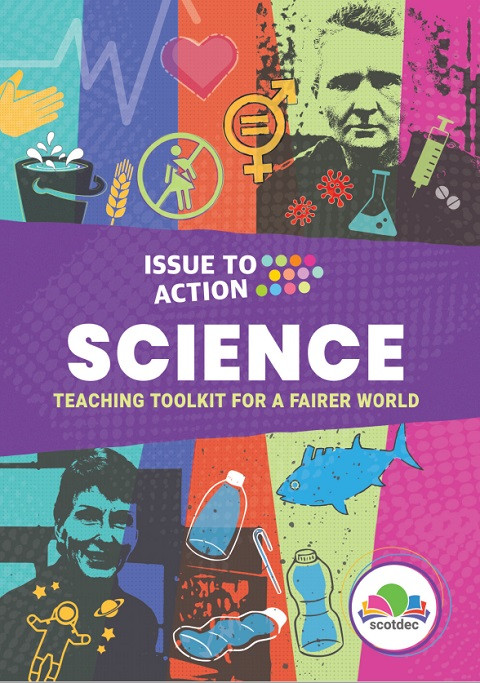 Issue to Action: Science; Teaching Toolkit for a Fairer World Año de publicación: 2020 Autor: Tracey Shaw | Claire Tatar | Krissie Davis Autor corporativo: Scotdec | European Union (EU) Global Citizenship Education is essential in enabling young people to access and participate in shaping modern society. All teachers and subjects have a role to play in educating young people to enable them to participate as fully as possible in building a fair and just world for all. Global Citizenship provides a wealth of real-life contexts for learning Science. By using relevant and meaningful topics, young people are more motivated to learn and understand the key role Science plays in driving change for a more sustainable future. The materials in this resource have been written by Science teachers and tested in Scottish classrooms. They focus on sustainability, plastic waste, health and wellbeing and women in Science.
  Palestine & Israel: How Will There Be a Just Peace?; A Citizenship Education Resource for Transition Year and Key Stage 4 based on Human Rights and International Law Año de publicación: 2012 Autor: Mary Gannon | Elaine Murtagh Autor corporativo: City of Dublin Vocational Education Committee (CDVEC). Curriculum Development Unit | Centre for Cross Border Studies This resource is an important development in helping post-primary students throughout the island of Ireland to explore the Palestinian Israeli situation within the context of Human Rights and International Law.The resource addresses key issues underlying the origins of the conflict and current obstacles to bringing about a just peace.
  Bank of Actions for Global Citizens Año de publicación: 2020 Autor corporativo: Global Citizens Award The Bank of Actions guide can be used by anyone looking for creative inspiration to take action as global citizens. It is designed as a toolkit for engaging the public in global justice issues in meaningful ways that can help bring about positive change in our world.The Bank of Actions has been designed in the context of returned international volunteers participating in the Global Citizen Award programme.