
Recursos
Exploren una amplia gama de recursos valiosos en GCED para profundizar su comprensión y promover su búsqueda, incidencia, enseñanza y aprendizaje.
3,790 resultados encontrados
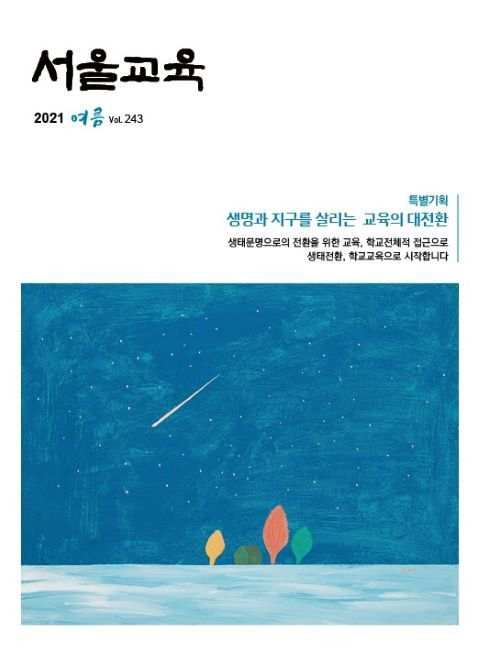 서울교육 2021년 여름호 (제63권 통권 243호) Año de publicación: 2021 Autor corporativo: 서울특별시교육청 교육연구정보원 권두칼럼:포스트 코로나, 휴먼터치(Human touch)의 시대를 기대하다 특별기획: 생명과 지구를 살리는 교육의 대전환 생태문명으로의 전환을 위한 교육, 학교전체적 접근으로생태전환, 학교교육으로 시작합니다해외교육:독일의 지속가능발전교육(ESD)과 기후위기 대응 교육 정책연구:공감 능력 신장을 위한 학교 교육, 어떻게 할 수 있을까? 본 저작물은 서울특별시교육청교육연구정보원에서 2021년 작성하여 공공누리 제 4유형으로 개방한 ‘서울교육 2021년 여름호 (제63권 통권 243호)’ 을 이용하였으며 해당 저작물은 서울특별시교육청교육연구정보원 (www.serii.re.kr)에서 무료로 다운받으실 수 있습니다.
 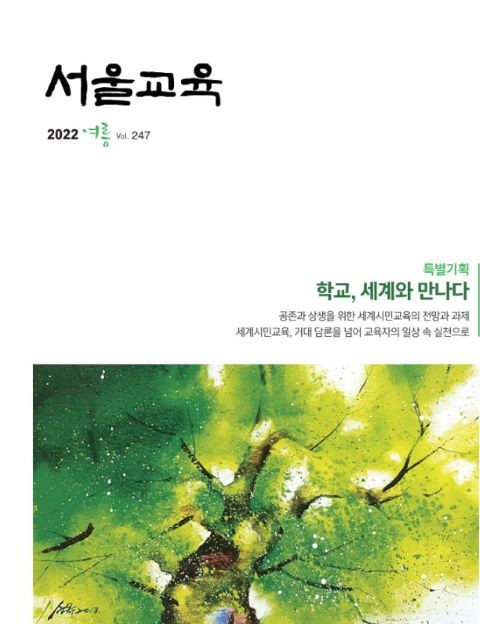 서울교육 2022년 여름호 (제64권 통권 247호) Año de publicación: 2022 Autor corporativo: 서울특별시교육청 교육연구정보원 권두칼럼:세계시민으로 사는 길 특별기획: 학교, 세계와 만나다 공존과 상생을 위한 세계시민교육의 전망과 과제세계시민교육, 거대 담론을 넘어 교육자의 일상 속 실천으로 해외교육:프랑스, 왜 다시 시민교육 강화에 나서는가? 정책연구:메타버스의 교육적 활용 방안 - 확장된 학습 공간으로서의 가능성과 한계 본 저작물은 서울특별시교육청교육연구정보원에서 2022년 작성하여 공공누리 제 4유형으로 개방한 ‘서울교육 2022년 여름호 (제64권 통권 247호)’ 을 이용하였으며 해당 저작물은 서울특별시교육청교육연구정보원 (www.serii.re.kr)에서 무료로 다운받으실 수 있습니다.
  كيفيات التربية المدرسية على قيم المواطنة في ظل المبادئ التي تحملها الدول العربية المتجهة نحو الديمقراطية من أجل تحقيق التكامل المجتمعي (مجلة هيرودوت ، المجلد 6 ، رقم 1) Año de publicación: 2022 Autor: Zahya Shuashi | Noura Diradi Autor corporativo: Herodotus Foundation for Scientific Research and Training تناقش هذه الورقة البحثية موضوع التربية على المواطنة من خلال الأدوار التي تقوم بها الأنظمة التعليمية والتربوية في العالم العربي، وسيركز موضوعنا على فكرة تثمين وتعزيز إدماج ثقافة المواطنة في الحقل التعليمي وترسيخها خاصة وأنها أصبحت مطلب من مطالب الديمقراطية التي تحاول الدول العربية الانخراط فيها، وفي ظل التحديات التي يفرضها النظام العالمي الجديد، وهي محاولة تستخدم على صعيد المناهج التعليمية للاستجابة للمتطلبات الاجتماعية والقيم الثقافية وطموحات المواطنين، وذلك من خلال ترسيخ ثقافة المواطنة عبر التربية الشاملة، مع تأطير كل ذلك داخل الفضاء الثقافي المجتمعي والذي يطلق عليه تسمية المدرسة، لكن لكي يتحقق ذلك لابد من اعتماد المدرسة في الدول العربية على فلسفة تربوية تقوم على برامج ومناهج حية تستهدف ترسيخ أخلاقيات وسلوكيات المواطنة الحقة، والتي تظهر أثارها الإيجابية في حياة أفراد المجتمع، ونسعى هنا إلى تبيان العلاقة بين فكرة التربية على المواطنة باستخدام مناهج تتماشى ومسارات التطور العلمي للارتقاء بإنسانية المواطن المتعلم، فهل فعلا أسهمت المناهج التعليمية في البلدان العربية من تحقيق التربية على المواطنة Modalities of School Education on the Values of Citizenship in Light of the Principles Carried by Arab Countries Moving Towards Democracy in Order to Achieve Societal Integration (Herodote Journal; vol. 6, no. 1) Año de publicación: 2022 Autor: Zahya Shuashi | Noura Diradi Autor corporativo: Herodotus Foundation for Scientific Research and Training This research paper discusses the topic of citizenship education through the roles played by the educational and educational systems in the Arab world, and our topic will focus on the idea of valuing and promoting the integration and consolidation of the culture of citizenship in the educational field, especially since it has become one of the demands of democracy that Arab countries are trying to engage in. The challenges posed by the new world order, which is an attempt to be used on the level of educational curricula to respond to the social requirements, cultural values and aspirations of citizens, by consolidating the culture of citizenship through comprehensive education, while framing all of this within the societal cultural space called the school, but in order to achieve this. The school in the Arab countries must rely on an educational philosophy based on live programs and curricula aimed at consolidating ethics and true citizenship behaviors, which show their positive effects on the lives of community members, and we seek here to clarify the relationship between the idea of citizenship education by using curricula that are in line with the scientific development paths to advance the citizen's humanity The learner, so did the educational curricula in the Arab countries really contribute to achieving citizenship education?
  Education for a Democratic Citizenship in the Countries of Latin America: A Critical Look Año de publicación: 2007 Autor: Bradley A.U. Levinson | Juan G. Berumen This report is a contribution to the discussion of the Regional Policy Dialogue on training for democracy and secondary education in Latin America. In this text, we present an analysis of the results of a survey on education for democracy carried out as part of the activities of the Education Network, which was sent by the Bank to the member countries of the Dialogue. We frame these results in a conceptualization of what it means to educate for democracy. We complement the discussion with information from additional sources that illuminate different aspects of the conceptual framework proposed here. Educación para una Ciudadanía Democrática en los Países de América Latina: Una Mirada Crítica Año de publicación: 2007 Autor: Bradley A.U. Levinson | Juan G. Berumen Este informe es un aporte a la discusión del Diálogo Regional de Política sobre la formación para la democracia y la educación secundaria en América Latina. En este texto presentamos un análisis de los resultados de una encuesta sobre la educación para la democracia realizada como parte de las actividades de la Red de Educación, que fue enviada por el Banco a los países miembros del Diálogo. Enmarcamos estos resultados en una conceptualización sobre qué significa educar para la democracia. Complementamos la discusión con información de fuentes adicionales que iluminan distintos aspectos del marco conceptual que aquí proponemos.
 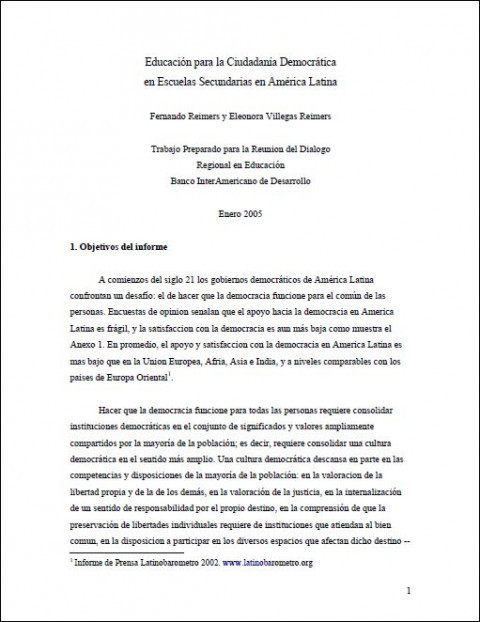 Education for Democratic Citizenship in Secondary Schools in Latin America Año de publicación: 2005 Autor: Fernando Reimers, Eleonora Villegas Reimers Autor corporativo: Banco InterAmericano de Desarrollo (BID) This document was commissioned by the Educational Network of the Regional Policy Dialogue for the VII Hemispheric Meeting held on February 17 and 18, 2005. This report is a contribution to the discussion of the Dialogue on Formation for Democracy and Secondary Education in Latin America. In this text, we present an analysis of the results of a survey on education for democracy carried out as part of the activities of the Education Network, which was sent by the Bank to the member countries of the Dialogue2. We frame these results in a conceptualization of what it means to educate for democracy. We complement the discussion with information from additional sources that illuminate different aspects of the conceptual framework proposed here. Educación para la Ciudadanía Democrática en Escuelas Secundarias en América Latina Año de publicación: 2005 Autor: Fernando Reimers, Eleonora Villegas Reimers Autor corporativo: Banco InterAmericano de Desarrollo (BID) Este documento fue comisionado por la Red de Educación del Diálogo Regional de Política para la VII Reunión Hemisférica celebrada los días 17 y 18 de febrero de 2005. Este informe es un aporte a la discusión del Diálogo sobre la formación para la democracia y la educación secundaria en América Latina. En este texto presentamos un análisis de los resultados de una encuesta sobre la educación para la democracia realizada como parte de las actividades de la Red de Educación, que fue enviada por el Banco a los países miembros del Diálogo2. Enmarcamos estos resultados en una conceptualización sobre qué significa educar para la democracia. Complementamos la discusión con información de fuentes adicionales que iluminan distintos aspectos del marco conceptual que aquí proponemos.
 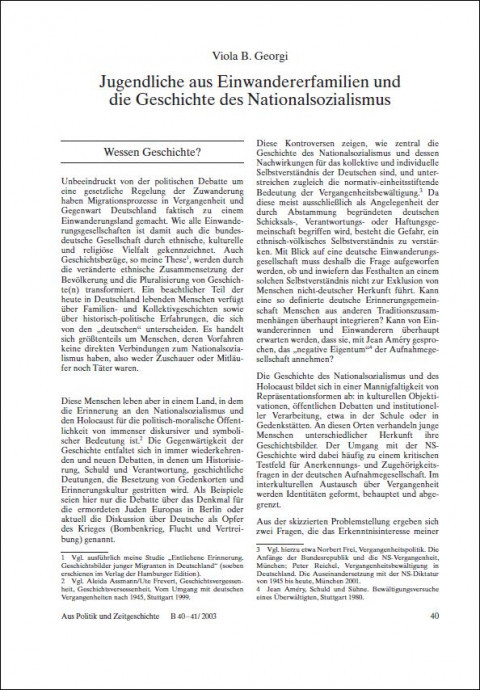 Jugendliche aus Einwandererfamilien und die Geschichte des Nationalsozialismus Año de publicación: 2003 Autor: V. B. Georgi Based on 55 interviews with young Germans with immigrant family background from the age of 15–20, Giorgi constructs a typology of how they position themesleves to the German Nazi past.
  Nationalsozialismus im Geschichtsunterricht: Beobachtungen unterrichtlicher Kommunikation Año de publicación: 2002 Autor corporativo: Johann Wolfgang Goethe University This is a pilot study about the potential of history education about Nazism and the Holocaust. The aim is, 1) to establish whether it is possible to conduct empirical analysis about “Education after Auschwitz,” and 2) based on empircal observation improve the theoretical assumptions about the relationship between education and the specific theme of Nazism and the Holocaust. The empirical part consists of five case studies about different aspects of “Holocaust education” in two Upper Secondary schools in Frankfurt.The above abstract is taken from the International Holocaust Remembrance Alliance Education Research Project. Please also consult the full list of abstracts in 15 languages and the accompanying publication Research in Teaching and Learning about the Holocaust: A Dialogue Beyond Borders.Ed: IHRA, Monique Eckmann, Doyle Stevick, Jolanta Ambrosewicz-Jacobs, 2017, Metropol Verlag at http://www.holocaustremembrance.com/publications.