
Recursos
Exploren una amplia gama de recursos valiosos en GCED para profundizar su comprensión y promover su búsqueda, incidencia, enseñanza y aprendizaje.
3,448 resultados encontrados
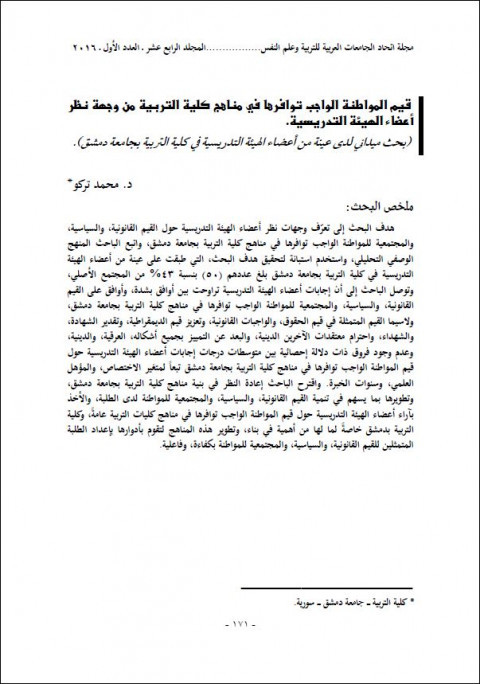 The Citizenship Values That Should Be Available in the Curricula of Faculty of Education from the Academic Staff Viewpoint : A Field Study on a Sample from the Academic Staff in Faculty of Education at Damascus University Año de publicación: 2016 Autor: Mohammad Turko Autor corporativo: Damascus University. Faculty of Education This study aimed at at identifying the views of the teaching staff regarding the legal, political, and the community values of citizenship that must to be available in the curriculla of the Education Faculty at Damascus University. The researcher used the anaalytical method and a questionnaire that was applied to a sample of 50 teachers making 43% of the original community.The responses varied between 'I strongly agree' and 'I agree to legal, political, and the community values of citizenship that must be available'...especially values of rights and legal obligations and social values of citizenship that must be available, promoting democratic values, valuing martyrdom and martyrs, respecting the religous beliefs of others and staying away from racial and religous discrimation. There were no differences of statistical significance between the mean degrees of responses as per the variables of specializatiop, scientific degrees or years of experience. the researcher suggested that the curriclla of the Education Faculty be rewied and developed in order for them to contribute to the development of the legal, political and social values of citizenship among students, and that the views of the teaching staff are taken into consideration regarding the citizenship values that must be available in order for them to prepare the students to assimilate the values efficiently and effectively.
  التعليم وتأسيس المواطنة لدى الإنسان العربي Año de publicación: 2014 Autor: مدكور، علي أحمد Autor corporativo: Cairo University تناولت هذه المقالة قضية المواطنة وإشكاليتها وتنوعاتها مركّزة على علاقتها بالديمقراطية باعتبارها آلية لتحقيق العدل الاجتماعي، فالديمقراطية الحقيقية لها ثلاثة مقومات: أن يشارك الناس في صناعة القرار، وفي تنفيذ القرار، وفي الثمار الناتجة عن القرار. كما حاولت الورقة التركيز على أسس المواطنة من جهة مثل المشاركة الفعلية في كل مجالات الحياة الاجتماعية، السياسية، الاقتصادية والتعليمية والثقافية؛ ومقومات المواطنة من جهة أخرى مثل حقوق الإنسان كالحق في الحياة والحرية والمساواة والعدل والعمل والتعليم والتفكير والتعبير والاعتقاد... كل هذه الحقوق تمثل المقومات الرئيسة لقوة الوطن والمواطنة. كما تمّ الاعتماد في هذه الورقة على المواثيق العالمية لحقوق الإنسان في عرض العلاقة بين المواطنة وبين هذه المقومات. من هذه المواثيق: الإعلان العالمي لحقوق الإنسان في الإسلام، والإعلان العالمي لحقوق الإنسان الذي أعلن عام 1948، والاتفاقية الأوروبية لحقوق الإنسان. Education and the Laying the Foundations of Citizenship for Arab Humans Año de publicación: 2014 Autor: مدكور، علي أحمد Autor corporativo: Cairo University This article deals with the issue of citizenship and its variations focusing on its relation to democracy being a mechanism to achieve social justice. Real democracy has three determinants: people’s participation in taking the decisions, in implementing them and in benefiting from their effects. The paper also tried to focus on the fundamentals of citizenship from the perspective of effective participation in all aspects of social, economic and cultural life, on one side, and on the determinants of citizenship such as human rights -the right to life, freedom, equality, justice, work, thinking, expression and belief… from the other - all those rights represent the main determinants of the strength of the homeland and citizenship. Among the human rights conventions: The Universal Islamic Declaration of Human Rights, The Universal Declaration of Human Rights of 1948, The European Convention on Human Rights.
 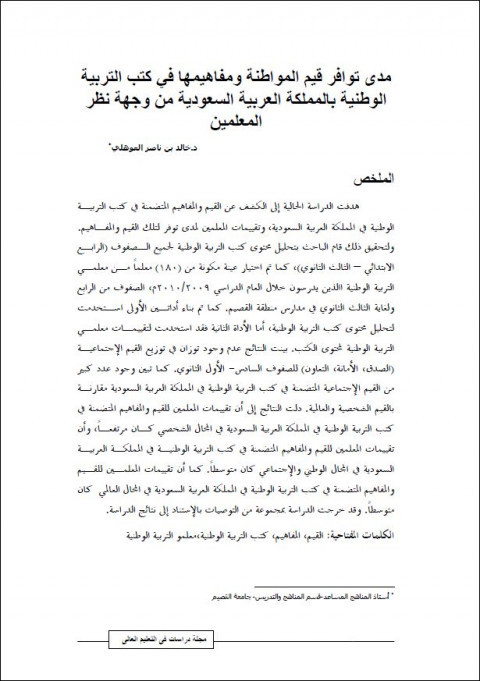 مدى توافر قیم المواطنة ومفاھیمھا في كتب التربیة الوطنیة بالمملكة العربیة السعودیة من وجھة نظر المعلمین Año de publicación: 2014 Autor corporativo: Assiut University هدفت الدراسة الحالية إلى الكشف عن القيم والمفاهيم المتضمنة في كتب التربيـة الوطنية في المملكة العربية السعودية، وتقييمات المعلمين لمدى توفر تلك القيم والمفـاهيم . ولتحقيق ذلك قام الباحث بتحليل محتوى كتب التربية الوطنية لجميع الـصفوف (الرابـع الابتدائي – الثالث الثانوي )، كما تم اختيار عينة مكونة من (١٨٠) معلماً مـن معلمـي التربية الوطنية االذين يدرسون خلال العام الدراسي ٢٠٠٩/٢٠١٠م، الصفوف من الرابع ولغاية الثالث الثانوي في مدارس منطقة القصيم . كما تم بناء أداتـين الأولى اسـتخدمت لتحليل محتوى كتب التربية الوطنية، أما الأداة الثانية فقد استخدمت لتقييمـات معلمـي التربية الوطنية لمحتوى الكتب . بينت النتائج عدم وجود توزان في توزيع القيم الإجتماعيـة (الصدق، الأمانة، التعاون ) للصفوف السادس - الأول الثانوي . كما تبين وجود عدد كبير من القيم الإجتماعية المتضمنة في كتب التربية الوطنية في المملكة العربية السعودية مقارنـة بالقيم الشخصية والعالمية . دلت النتائج إلى أن تقييمات المعلمين للقيم والمفاهيم المتضمنة في كتب التربية الوطنية في المملكة العربية السعودية في المجال الشخصي كـان مرتفعـاً، وأن تقييمات المعلمين للقيم والمفاهيم المتضمنة في كتب التربية الوطنيـة في المملكـة العربيـة السعودية في المجال الوطني والإجتماعي كان متوسطاً . كما أن تقييمات المعلمـين للقـيم والمفاهيم المتضمنة في كتب التربية الوطنية في المملكة العربية السعودية في المجال العالمي كان متوسطاً. وقد خرجت الدراسة بمجموعة من التوصيات بالإستناد إلى نتائج الدراسة. The Availability of the Values of Citizenship and It’s Concepts in the Books of National Education, Saudi Arabia, from the Teachers’ Perspective Año de publicación: 2014 Autor corporativo: Assiut University The purpose of the study was to investigate valuesand concepts included in Civil Education books in Saudi Arabia, and teacher evaluation of the availability of values and concepts. To achieve the study the researcher analyize the contents of the civil education books (fourth grade - third year secondary), a sample has been selected consisting of 180 teachers of civil education, who taught during (2009/2010), in Alqasim schools. Two instruments were developed. The first one was used to analyize the contents of national education books, while the second one was used to evaluate teachers of books' content. The result showed that there is no balance in social values distribution (honesty, trust and co-opration) for (sixth grade –first secondary). The result showed a large number of social values are included in the national education books compared to international and personal values. The results showed that teachers' evaluation of values and concepts included in the national education books in personal field was high.Teachers' evaluation of the values and concepts in the national and social field was medium. Teachers evaluation for values and concepts in the global field was medium.The study presents a group of relevant recommendations.
 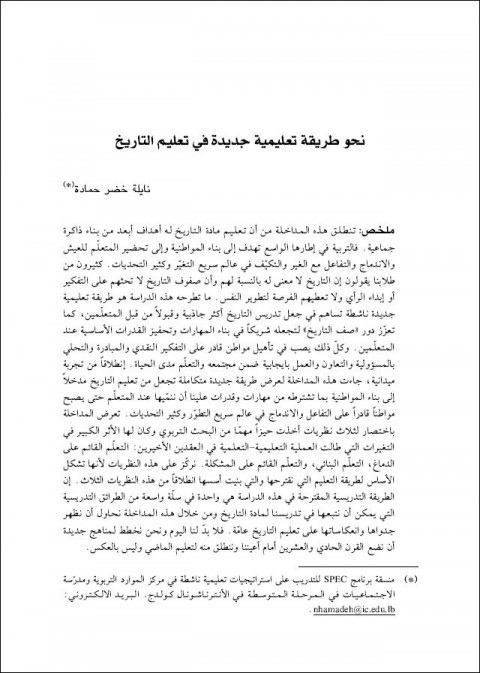 نحو طريقة تعليمية جديدة في تعليم التاريخ Año de publicación: 2012 Autor corporativo: International College تنطلق هذه المداخلة من أن تعليم مادة التاريخ له أهداف أبعد من بناء ذاكرة جماعية. فالتربية في إطارها الواسع تهدف إلى بناء المواطنية والى تحضير المتعلّم للعيش والاندماج والتفاعل مع الغير والتكيّف في عالم سريع التغيّر وكثير التحديات. كثيرون من طلابنا يقولون إن التاريخ لا معنى له بالنسبة لهم وأن صفوف التاريخ لا تحثّهم على التفكير أو إبداء الرأي ولا تعطيهم الفرصة لتطوير الذات. ما تطرحه هذه الدراسة هو طريقة تعليمية جديدة ناشطة تساهم في جعل تدريس التاريخ أكثر جاذبية وقبولاً من قبل المتعلّمين، كما تعزّز دور "صف التاريخ" لتجعله شريكاً في بناء المهارات وتحفيز القدرات الأساسية عند المتعلّمين. وكلّ ذلك يصب في تأهيل مواطن قادر على التفكير النقدي والمبادرة والتحلي بالمسؤولية والتعاون والعمل بايجابية ضمن مجتمعه والتعلّم مدى الحياة. انطلاقا من تجربة ميدانية، جاءت هذه المداخلة لعرض طريقة جديدة متكاملة تجعل من تعليم التاريخ مدخلاً إلى بناء المواطنية بما تشترطه من مهارات وقدرات علينا أن ننمّيها عند المتعلّم حتى يصبح مواطناً قادراً على التفاعل والاندماج في عالم سريع التطوّر وكثير التحديات. تعرض المداخلة باختصار لثلاث نظريات أخذت حيزاً مهمّا من البحث التربوي وكان لها الأثر الكبير في التغيرات التي طالت العملية التعليمية–التعلمية في العقدين الأخيرين: التعلّم القائم على الدماغ، التعلّم البنائي، والتعلّم القائم على المشكلة. نركّز على هذه النظريات لأنها تشكل الأساس لطريقة التعليم التي نقترحها والتي بنيت أسسها انطلاقاً من هذه النظريات الثلاث. إن الطريقة التدريسية المقترحة في هذه الدراسة هي واحدة في سلّة واسعة من الطرائق التدريسية التي يمكن أن نتبعها في تدريسنا لمادة التاريخ ومن خلال هذه المداخلة نحاول أن نظهر جدواها وانعكاساتها على تعليم التاريخ عامّة. فلا بدّ لنا اليوم ونحن نخطط لمناهج جديدة أن نضع القرن الحادي والعشرين أمام أعيننا وننطلق منه لتعليم الماضي وليس العكس. Towards a New Methodology for Teaching History Año de publicación: 2012 Autor corporativo: International College This paper rests on the idea that the teaching of history has goals beyond that of building a collective memory and that education, in its broader context, aims at building citizenship and preparing the learner to live, integrate within a community, interact with others and adapt to a challenging to a rapidly changing world. Many of our students say that History makes no sense to them. They complain that, in history classes, they are not urged to think actively or to form opinions and that they are not given the chance to self-development. This paper proposes a new active methodology that renders the teaching of History more attractive to students and better received by them. It enhances the role of the “History class” as a partner in building learners’ skills and stimulating fundamental dispositions. The goal is to nurture a responsible citizen capable of critical thinking, taking initiatives, collaboration, working positively within one’s community, and is a life-long learner. Based on hands-on activities, this paper suggests a comprehensive model of instruction that transforms the History classroom into a gateway for building citizenship by equipping the learner with the necessary skills and dispositions. This methodology is based on three theories that had a great impact on the teaching – learning process in the last two decades: Brain-based learning, constructivism, and problem-based learning. Hence, these theories are briefly presented. Seen as one of many possible teaching methodologies in a History classroom, this model is presented and its impact on the teaching of History is highlighted. As we plan for a new History curriculum in Lebanon, it is crucial that we look ahead to the 21st century instead of looking back.
  دور المدرسة في تنمية قيم المواطنة من وجهة نظر أساتذة التعليم المتوسط Año de publicación: 2015 Autor: Ahmed A. Zegaoua Autor corporativo: American Arabic Academy of Science and Technology هدفت الدراسة إلى التعرف على دور المدرسة في تربية التلميذ على قيم المواطنة من وجهة نظر أساتذة التعليم المتوسط على ضوء متغير الجنس، والخبرة المهنية، ومادة التدريس. ولتحقيق ذلك صمم الباحث أداة الاستبيان المكونة من (49) فقرة موزعة على أربعة مجالات: دور البرنامج التعليمي، دور الأستاذ، دور المناخ المدرسي، ودور الأنشطة المدرسية. طبق الاستبيان على عينة قدرت بـــ (180) أستاذا وأستاذة من ولاية غليزان (الجزائر). وقد كشفت نتائج الدراسة أن مستوى دور المدرسة كان متوسطا في تنمية قيم المواطنة، وجاء مجال دور الأستاذ في الرتبة الأولى بمستوى مرتفع، أما المجالات الأخرى فقد كان ترتيبها على التوالي: دور المناخ المدرسي، دور البرنامج التعليمي، دور الأنشطة المدرسية وكلها جاءت بمستوى متوسط. كما أظهرت النتائج عن عدم وجود فروق دالة إحصائيا تعزى إلى متغير الجنس والخبرة المهنية ومادة التدريس. وفي ضوء ذلك ناقش الباحث هذه النتائج وطرح عددا من التوصيات والمقترحات ذات صلة بموضوع الدراسة. The Role of School in the Development of Citizenship Values from Middle School Teachers’ Point of View Año de publicación: 2015 Autor: Ahmed A. Zegaoua Autor corporativo: American Arabic Academy of Science and Technology The purpose of this study was to investigate the schools’ role in teaching pupils the citizenship values from the middle school teachers’ point of view, according to gender, professional experience and the object of teaching. The researcher developed a questionnaire of 49 items which was applied on a sample of 180 teachers (males and females) from the Relizane Wilaya (Algeria). The results revealed that the level of the school’s role in the development of citizenship values was medium. The teacher’s role was came first playing a high level role; however the remaining fields were classified in the following following order: the school climate, the curriculum, and the school activities, all of which were considered to play an average level role. The study also shows that there were no significant differences attributed to gender, professional or the teaching material. The researcher discussed those results and presented a number of relevant suggestions.
  أثر برنامج تدريبي في تنمية مبادئ المواطنة العالمية لدى معلمي التاريخ في الأردن Año de publicación: 2015 Autor: Zaid Suleiman Autor corporativo: University of Jordan هدفت الدارسة إلى بناء برنامج تدريبيّ لمعلمي التاريخ في ضوء مبادئ المواطنة العالميّة واختبار أثره في مستوى معرفتهم لتلك المبادئ في الأردن. تكونت عينة الد ا رسة من ( 26 ) معلمًا ومعلمة، تم اختيارهم بالطريقة العشوائية من معلمي التاريخ في المرحلة الأساسيّة العليا في مديرية التربية والتعليم لمحافظة مأدبا. ولتحقيق أهداف الدارسة تم بناء برنامج تدريبيّ في ضوء مبادئ المواطنة العالميّة، هي: السلام العالميّ، والديمقراطيّة، وحقوق الإنسان، الإنسان والبيئة، التفكير العلميّ، التكنولوجيا، الثقافات المتعددة. وتم اعداد اختبار معرفيّ لمبادئ المواطنة العالميّة. وبعد اجراء التحليلات الاحصائية المناسبة أظهرت نتائج الدرارسة أن مستوى المعرفة القبْلية عند معلمي التاريخ في المرحلة الأساسيّة العليا لمبادئ المواطنة العالميّة كان أقل من المستوى المقبول تربويًّا ( % 80)، ووجود فروق ذات دلالة إحصائيّة عند مستوى الدلالة ( α= 0.01 ) بين مستوى المعرفة البَعدية عند معلمي التاريخ في المرحلة الأساسيّة العليا لمبادئ المواطنة العالميّة والمستوى المقبول تربويًّا (80 %)، ولصالح البرنامج التدريبيّ في كلّ مجال من مبادئ المواطنة العالمية وللمجالات مجتمعة. وأوصت الدراسة بتضمين أبعاد مفاهيم المواطنة العالميّة ومبادئها في البرامج التدريبيّة للمعلمين لزيادة وعيهم بالقضايا العالميّة.