
Recursos
Exploren una amplia gama de recursos valiosos en GCED para profundizar su comprensión y promover su búsqueda, incidencia, enseñanza y aprendizaje.
1,187 resultados encontrados
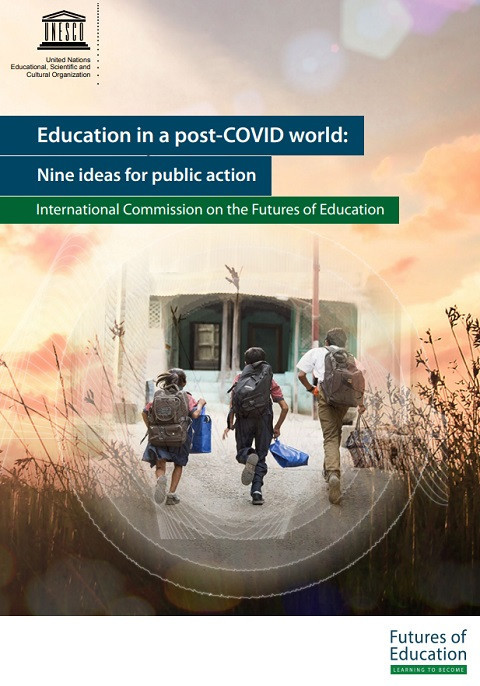 Образование в мире, пережившем пандемию COVID-19: Девять идей для коллективных действий Año de publicación: 2020 Autor corporativo: Организация Объединенных Наций по вопросам образования, науки и культуры (UNESCO) Решения, принимаемые сегодня в контексте пандемии Covid-19, будут иметь долгосрочные последствия для будущего образования. В этом докладе Международная комиссия по перспективам образования представляет девять ключевых идей для преодоления вызванного пандемией COVID-19 кризиса и его последствий, будучи убеждена в том, что в этот период беспрецедентных потрясений, затронувших экономику, общество и системы образования, мы должны опираться на основополагающие принципы и известные нам преимущества. В ходе обновления и переосмысления системы образования первоочередное внимание должно уделяться человеческим взаимоотношениям и благополучию. Необходима также приверженность глобальной солидарности, которая не будет мириться со сложившимися в современном мире показателями неравенства. 后疫情世界的教育: 推进公共行动的九个构想 “教育的未来”国际委员会 Año de publicación: 2020 Autor corporativo: 联合国教科文组织 (UNESCO) 在冠状病毒病(Covid-19)疫情背景的当下作出的决定,将对教育的未来产生深远的影响。在本报告中,“教育的未来”国际委员会提出了应对Covid-19危机及其后果的九个关键构想。报告认为,当面临经济、社会以及教育体系遭到前所未有破坏的情况时,我们必须坚持核心原则,继续发挥固有优势。在振兴和重塑教育时,必须优先考虑人际互动和人的福祉问题。同时,还必须致力于全球团结,不能接受当今世界出现如此程度的不平等。
 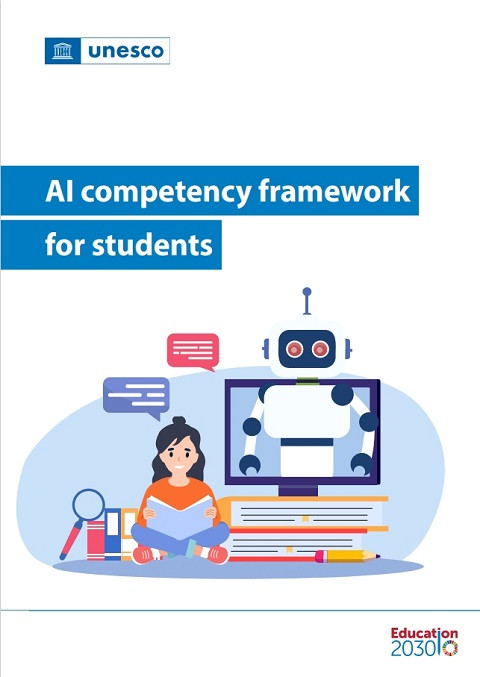 AI Competency Framework for Students Año de publicación: 2024 Autor: Fengchun Miao | Kelly Shiohira Autor corporativo: UNESCO Artificial intelligence is increasingly integral to our lives, necessitating proactive education systems to prepare students as responsible users and co-creators of AI. Integrating AI learning objectives into official school curricula is crucial for students globally to engage with AI safely and meaningfully.The UNESCO AI Competency Framework for Students aims to help educators in this integration, outlining 12 competncies across four dimensions:- A human-centred mindset- Ethics of AI- AI techniques and applications- AI system designThese competencies span three progression levels:- Understand- Apply- Create The framework details curricular goals and domain-specific pedagogical methodologies.Grounded in the vision of students as AI co-creators and responsible citizens, the publication emphasizes critical judgement of AI solutions, awareness of citizenship responsibilities in the AI era, foundational AI knowledge for lifelong learning, and inclusive, sustainable AI design.
  AI Competency Framework for Students Año de publicación: 2025 Autor: Fengchun Miao | Kelly Shiohira Autor corporativo: Organización de las Naciones Unidas para la Educación, la Ciencia y la Cultura (UNESCO) Preparar a los estudiantes para ser ciudadanos responsables y creativos en la era de la IALa inteligencia artificial (IA) está cada vez más presente en nuestras vidas, lo que requiere sistemas educativos proactivos que preparen a los estudiantes para que sean usuarios responsables y cocreadores de la IA. Integrar los objetivos de aprendizaje de IA en los programas de estudio oficiales de las escuelas es fundamental para que los estudiantes de todo el mundo interactúen de forma segura y significativa con la IA.El objetivo del Marco de competencias para estudiantes en materia de IA de la UNESCO es ayudar a los educadores con esta integración, para lo cual describe 12 competencias que atraviesan cuatro dimensiones: una forma de pensar centrada en el ser humano, la ética de la IA, las técnicas y aplicaciones de la IA, la pedagogía de la IA, y la IA para el diseño de sistemas de IA. Estas competencias abarcan tres niveles de progresión: comprender, aplicar y crear. El marco detalla las metas curriculares y las metodologías pedagógicas específicas para cada dominio.Basado en una visión de los estudiantes como cocreadores de IA y ciudadanos responsables, el marco pone énfasis en el juicio crítico de las soluciones de IA, la conciencia de las responsabilidades ciudadanas en la era de la IA, el conocimiento fundacional de la IA para el aprendizaje a lo largo de la vida, y el diseño de IA inclusiva y sostenible.
  AI Competency Framework for Students Año de publicación: 2025 Autor: Fengchun Miao | Kelly Shiohira Autor corporativo: Organisation des Nations Unies pour l'éducation, la science et la culture (UNESCO) Préparer les apprenants à devenir des citoyens responsables et créatifs à l’ère de l’IAL’intelligence artificielle (IA) fait tous les jours davantage partie intégrante de nos vies, ce qui implique d’avoir des systèmes éducatifs proactifs en mesure de préparer les élèves et les étudiants à être des utilisateurs responsables et des cocréateurs de l’IA. L’intégration d’objectifs d’apprentissage de l’IA dans les programmes scolaires officiels est essentielle pour que les apprenants du monde entier puissent s’intéresser en toute sécurité et de manière pertinente à l’IA.Le Référentiel de compétences en IA pour les apprenants de l’UNESCO vise à aider les éducateurs dans cette démarche, en décrivant 12 compétences réparties en quatre dimensions, à savoir une perspective centrée sur l’humain, l’éthique de l’IA, les techniques et applications de l’IA, et la conception de systèmes d’IA. Ces compétences se déploient selon trois niveaux de progression : Comprendre, Appliquer et Créer. Le référentiel détaille les objectifs du programme d’études et les méthodes pédagogiques spécifiques au domaine.Fondé sur une vision des élèves et des étudiants considérés comme cocréateurs de l’IA et citoyens responsables, le référentiel met l’accent sur le jugement critique vis-à-vis des solutions d’IA, la prise de conscience des responsabilités citoyennes à l’ère de l’IA, les connaissances fondamentales en matière d’IA pour l’apprentissage tout au long de la vie, ainsi que la conception d’une IA inclusive et durable.
  AI Competency Framework for Teachers Año de publicación: 2024 Autor: Fengchun Miao | Mutlu Cukurova Autor corporativo: UNESCO AI processes vast information, generates new content, and helps decision-making through predictive analyses. In education, AI has transformed the traditional teacher–student relationship into a teacher–AI–student dynamic.This shift requires a re-examination of teachers’ roles and the competencies they need in the AI era. Yet, few countries have defined these competencies or developed national programmes to train teachers in AI, leaving many educators without proper guidance.The AI competency framework for teachers addresses this gap by defining the knowledge, skills, and values teachers must master in the age of AI. Developed with principles of protecting teachers’ rights, enhancing human agency, and promoting sustainability, the publication outlines 15 competencies across five dimensions: Human-centred mindset, Ethics of AI, AI foundations and applications, AI pedagogy, and AI for professional learning. These competencies are categorized into three progression levels: Acquire, Deepen, and Create.As a global reference, this tool guides the development of national AI competency frameworks, informs teacher training programmes, and helps in designing assessment parameters. It also provides strategies for teachers to build AI knowledge, apply ethical principles, and support their professional growth.
  دليل ومجموعة أدوات المدارس السعيدة رافد ومصدر للسعادة ورفاه المتعلم والتعلم الاجتماعي والعاطفي في منطقة آسيا والمحيط الهادئ Año de publicación: 2021 Autor corporativo: منظمة الأمم المتحدة للتربية والعلم والثقافة (UNESCO) | UNESCO Bangkok تم إعداد هذا الدليل بــهدف دعم المعــلمين والقــادة فــي مجالــي التعــليم األساســي والثــانوي فــي جميــع مناطــق آسيــا والمحيط الهــادئ فــي التــفكير فــي كيفيــة إنشــاء مدرســة ســعيدة، وهو بذلك يستند علــى عدة ركائز إلطــار عمل المدارس الســعيدة. وفــي حين أن دليل المدارس الســعيدة يستــهدف قــادة المدارس والمعــلمين فيمــا يتعلــق بــالمستوى اإلداري وتطوير عــلوم التربيــة، فــإن مجموعــة أدوات المدرســة الســعيدة قد صممت للمعــلمين علــى مستوى الصف الدراســي. Happy Schools Guide and Toolkit: A Resource for Happiness, Learners’ Well-Being and Social and Emotional Learning Año de publicación: 2021 Autor corporativo: UNESCO | UNESCO Bangkok The Happy Schools Guide and Toolkit is designed to support teachers and school leaders in primary and secondary schools across the Asia-Pacific region, in thinking about how they can create their own Happy School. It has therefore drawn from aspects of the Happy Schools Framework, which can be most readily addressed at the school level. While the Happy Schools Guide is targeted towards school leaders and teachers at the school level of administration and pedagogy development, the Happy Schools Toolkit is conceived for teachers at the classroom level.
  From Learning Recovery to Education Transformation: Insights and Reflections from the 4th Survey on National Education Responses to COVID-19 School Closures Año de publicación: 2022 Autor corporativo: UNESCO | UNESCO Institute for Statistics (UIS) | United Nations Children's Fund (UNICEF) | World Bank | Organisation for Economic Co-operation and Development (OECD) From Learning Recovery to Education Transformation, a new joint report by UNESCO, UNESCO Institute for Statistics (UIS), UNICEF, The World Bank and The OECD, presents findings from the fourth round of the Survey on National Education Responses to COVID-19 School Closures, administered between April–July 2022 with responses from Ministries of Education in 93 countries. It explores how countries are progressing in the RAPID actions to recover learning: Reach every child and keep them in school; Assess learning levels regularly; Prioritize teaching the fundamentals; Increase the efficiency of instruction; and Develop psychosocial health and wellbeing.
  Artificial Intelligence and Digital Transformation: Competencies for Civil Servants Año de publicación: 2022 Autor corporativo: UNESCO | Broadband Commission for Sustainable Development. Working Group on AI Capacity Building | International Telecommunication Union (ITU) This report presents a competency framework for civil servants on AI and digital transformation, and recommends ways to implement it to support related capacities in government. The research for this report was guided by the following question: What competencies need to be developed for public-sector officials to effectively design and implement digital and AI transformation initiatives in government, and to create an enabling environment for digital transformation in society?The report provides an overview of the major digital competencies for public sector officials when dealing with digital transformation. The competency framework provides guidance for civil servants, but also for international organisations and research centers to develop curricula and provide a basis for the development of action plans and strategies on digital competencies.