
Recursos
Exploren una amplia gama de recursos valiosos en GCED para profundizar su comprensión y promover su búsqueda, incidencia, enseñanza y aprendizaje.
1,180 resultados encontrados
 Smart Education Strategies for Teaching and Learning: Critical Analytical Framework and Case Studies Año de publicación: 2022 Autor: Shafika Isaacs | Sanjaya Mishra Autor corporativo: UNESCO Institute for Information Technologies in Education (IITE) | Beijing Normal University This electronic publication about smart education strategies for building the resilience of education and training systems in the postpandemic environment provides a framework to develop appropriate policy and strategy in existing and emerging forms of schooling, higher education, technical and vocational education, and training (TVET), adult education and lifelong learning, including formal, nonformal and informal educational environments. The publication reviews the status of smart education policies in 10 countries. It includes 15 case studies within the six policy themes: infrastructure, curriculum and pedagogy, digital education resources and platforms, skills and competencies, governance, management and administration, and partnership.
  Sub-regional Policy Review on Teachers, Teaching and the Teaching Profession to Accelerate Achieving SDG4 in Southeast Asian Countries Año de publicación: 2022 Autor: Azlina Abdul Aziz | Kamisah Osman | Khairul Farhah Khairuddin | Meeyoung Choi Autor corporativo: UNESCO Jakarta The objectives of this report are to analyse existing national policies related to Teachers, Teaching and the Teaching Profession and examine their implementation in the five UNESCO cluster countries, namely Brunei, Indonesia, Malaysia, the Philippines and Timor-Leste. Eight themes have emerged from the systematic review of literature and they are i) Teacher Standard Competence, ii) Teacher professional Development, iii) Teacher Support, iv) Teaching Quality, v) Formative and Summative Assessment Framework on Teaching, vi) Showcasing and Rewarding Best Teaching Practices, vii) Teacher Professionalism and finally viii) Teacher Career Development.
  Переосмысление школьного обучения ДЛЯ XXI ВЕКА Состояние образования ради мира, устойчивого развития и глобальной гражданственности в Азии Año de publicación: 2017 Autor corporativo: Mahatma Gandhi Institute of Education for Peace and Sustainable Development (MGIEP) В публикации «Переосмысление школьного образования в XXI веке: состояние образования в интересах мира, устойчивого развития и в духе глобальной гражданственности в Азии» Института ЮНЕСКО Махатмы Ганди по образованию в интересах мира и устойчивого развития (МГИЭП) обсуждается о необходимости изменения фундаментальных целей школьного образования, включая идеалы образования в интересах устойчивого развития, в духе глобальной гражданственности и мира и (ЦУР 4.7). Кроме того, в исследовании рассматривается разработка сравнительных показателей – так называемые «бенчмарки», позволяющие оценить будущий прогресс в этой области.В этом отчете приняли участие более 60 исследователей из 22 стран Азии и он также основан на анализе ключевой образовательной политики и образовательных стандартов этих стран. Отчет также включает обширный обзор литературы по школьному образованию в Азии. В шестой главе публикации можно найти анализ текущего состояния и вопросов, стоящих по внедрению образования в интересах мира, устойчивого развития и в духе глобальной гражданственности в различных субрегионах Азии, включая Центральной Азии. Во-первых, глава раскрывает реформы в школьном образовании в постсоветской Центральной Азии, которые проводились в целях удовлетворения потребности в быстром создании собственной государственности в странах региона, которые не были готовы к независимости при распаде СССР. Во-вторых, в главе подчеркивается трансформация понимания советского восприятия образования как «общего блага» и его вытеснение, по крайней мере, на уровне политического дискурса, с неустанным акцентом на образование как инструмента развития «человеческих ресурсов» с учетом спроса рынка на компетенции.Глобальное сообщество обязалось достичь целей устойчивого развития (ЦУР), включая ЦУР4 по образованию, к 2030 году. Задача ЦУР4.7 направлена на предоставление учащимся знаний и компетенций, необходимых им для реализации всех целей устойчивого развития. Основное внимание уделяется когнитивным, социально-эмоциональным и поведенческим результатам обучения, которые помогают учащимся решать конкретные задачи, рассматриваемые ЦУР. Поскольку государства-члены Организации Объединенных Наций работают над достижением ЦУР, им предлагается переосмыслить образование для внесения вклада в ЦУР. В то время как ЦУР4.7 обеспечивает необходимую структуру в этом отношении.
  Transformative Education for Global Citizenship in the Spanish Education System: Recommendations for Its Incorporation and Approach Año de publicación: 2022 Autor: Fabiola Fares Sade | Carolina Del Río Usábel | Yénifer López Ramos | Marta Martín Pastor | Elisabet Santpere Baro Autor corporativo: Movement for Transformative Education and Global Citizenship This document is the Report corresponding to the research commissioned by the Movement for Transformative Education and Global Citizenship to the University of Santiago de Compostela within the framework of the agreement "For a transformative education and for Global Citizenship committed to the fulfillment of the SDGs" led by the NGOs Alboan, Entreculturas, InteRed and Oxfam Intermón, which has been approved and financed by the Spanish Agency for International Development Cooperation, AECID. This publication aims to highlight the most significant elements of the analysis and conclusions obtained in the research, whose ultimate objective is to state recommendations for the inclusion of Transformative Education approaches for Global Citizenship in the formal education system. These recommendations seek to be a contribution to the intersectoral dialogue between the different agents with responsibilities in the educational field, both at the state and regional level. La educación transformadora para la ciudadanía global en el sistema educativo español: Recomendaciones para su incorporación y abordaje Año de publicación: 2022 Autor: Fabiola Fares Sade | Carolina Del Río Usábel | Yénifer López Ramos | Marta Martín Pastor | Elisabet Santpere Baro Autor corporativo: Movement for Transformative Education and Global Citizenship El presente documento es el Informe correspondiente a la investigación encargada por el Movimiento por la Educación Transformadora y la Ciudadanía Global a la Universidad de Santiago de Compostela en el marco del convenio “Por una educación transformadora y para la Ciudadanía Global comprometida con el cumplimiento de los ODS” liderado por las ONGD Alboan, Entreculturas, InteRed y Oxfam Intermón que ha sido aprobado y financiado por la Agencia Española de Cooperación Internacional para el Desarrollo, AECID. Esta publicación pretende destacar los elementos más significativos del análisis y de las conclusiones obtenidas en la investigación, cuyo objetivo último es enunciar recomendaciones para la inclusión de los enfoques de la Educación Transformadora para la Ciudadanía Global en el sistema educativo formal. Estas recomendaciones buscan ser un aporte para el diálogo intersectorial entre los diferentes agentes con responsabilidades en el ámbito educativo, ya sea a nivel estatal así como autonómico.
  International Conference on Artificial Intelligence and Education, Planning Education in the AI Era: Lead the Leap; Final Report Año de publicación: 2019 Autor corporativo: UNESCO The current report is an exhaustive account of the discussion and debate at the International Conference on Artificial Intelligence and Education (hereafter referred to as ‘the conference’) held in Beijing from 16 to 18 May 2019. Under the overarching theme of ‘Planning Education in the AI Era: Lead the Leap’, the conference was structured into seven plenary sessions and 16 breakout sessions complemented by a live exhibition and study tours to facilitate forwardlooking debates, share cutting-edge knowledge and AI solutions, and deliberate on sector-wide strategies.
  SDG-Education 2030 Steering Committee: Making Higher Education More Inclusive, July 2020 Año de publicación: 2020 Autor corporativo: UNESCO The rapid expansion of higher education in the past two decades, as well as the growing diversity of providers and technological models for delivering education, have made higher education accessible to more students globally. Yet significant barriers remain for many vulnerable groups, and women still lag behind in science, technology, engineering and mathematics. A better understanding of inequality as well as new paradigms, strategies and a renewed political will for ‘leaving no one behind’ are required. Structural equity policies at all levels throughout the education system, as well as extraordinary measures when needed, should ensure that students from any background with the potential to succeed are fully integrated with equal opportunities into higher education. This policy paper reviews the current literature and sets out findings and recommendations to increase and strengthen equity and inclusion in higher education in a lifelong learning perspective. It provides a conceptual framework for equity and inclusion, analyses the urgent need to improve funding and its efficiency, provides insight into the challenges for teaching and teachers, and recommends policy measures for establishing higher education systems that are more equitable and more inclusive.
  Transforming Knowledge and Research for Just and Sustainable Futures: Towards a New Social Imaginary for Higher Education (Education, Research and Foresight: Working Papers; No.33, 2024) Año de publicación: 2024 Autor: Leon Tikly Autor corporativo: UNESCO The paper considers why it is important to transform knowledge and research for just and sustainable futures and discusses the role of higher education in these transformation processes. The paper sets out how knowledge, research, and knowledge systems can be understood and critiques knowledge hierarchies that have emerged in the context of colonialism, leading to the marginalization of the knowledge systems and languages of the colonized. It is argued that there is a need to create new ecologies of knowledge that value and develop synergies between ‘all of the archives of the world’ and that can revitalize and expand the knowledge commons and contribute to more just and sustainable futures. Higher education has a pivotal role to play in the creation of new ecologies of knowledge and a revitalized knowledge commons through promoting socially and ethically engaged research, the decolonization and reorientation of university curricula and pedagogy to foster sustainable futures, and the democratization of universities to better represent historically marginalized groups. Underpinning this role must be a shift from a Western modernist social imaginary of higher education to one based on a new planetary consciousness.
  SDG-4: Flexible Learning Pathways in Higher Education – from Policy to Practice: An International Comparative Analysis Año de publicación: 2022 Autor: Michaela Martin | Uliana Furiv Autor corporativo: UNESCO International Institute for Educational Planning (IIEP) Higher education systems across the world are currently faced with a massive influx of learners with more diverse needs. They are expected to respond to this growing diversity through a more flexible learning offer and pathways that allow all learners, including those from disadvantaged groups, to access, progress through, and complete, higher education.To enhance knowledge on how to provide increased flexibility in higher education, IIEP–UNESCO undertook an international research project on SDG-4: Planning for Flexible Learning Pathways (FLPs) in Higher Education. The project included a stocktaking of policies, instruments, and practices, an international survey among UNESCO Member States, and eight in-depth country studies on Chile, Finland, India, Jamaica, Malaysia, Morocco, South Africa, and the UK.This book presents the findings from the research, including a cross-country analysis of available FLP policies and practices, and how they enhance equitable higher education systems. It also presents a series of country experiences with innovative approaches to alternative entry, flexible progression, and governance systems in support of FLPs.
 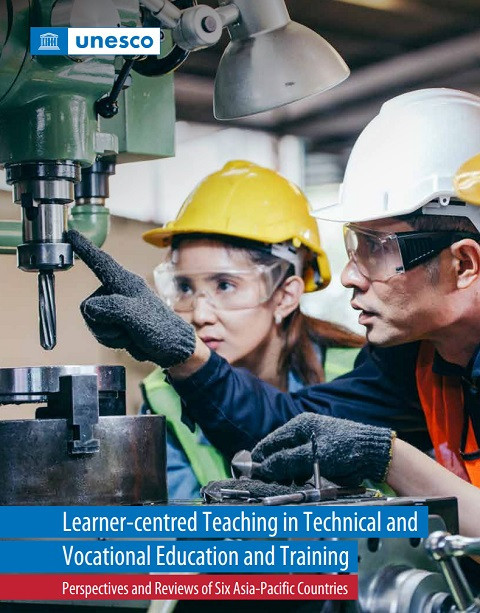 Learner-Centred Teaching in Technical and Vocational Education and Training: Perspectives and Reviews of Six Asia-Pacific Countries Año de publicación: 2023 Autor corporativo: UNESCO Bangkok Learner-centred Teaching in Technical and Vocational Education and Training: Perspectives and Reviews of Six Asia-Pacific Countries A learner-centred approach to teaching in Technical and Vocational Education and Training (TVET) is based on learner engagement, autonomy and outcome-based activities to support professional development. This report analyses the status of learner-centred TVET teaching in six selected countries across Asia and the Pacific, including China, Republic of Korea, Samoa, Sri Lanka, Thailand, and Uzbekistan. The countries were selected because of their geographic diversity, access to national experts, and potential around learner-centred TVET.The first part of the study is a review of the theoretical background on the learner-centred approach and TVET teaching with an international scope. A total of 25 indicators were used to assess three components of TVET teaching in the region. The analysis includes 17 examples corresponding to the selected indicators. The findings showcase lessons learned and recommendations for countries to self-assess their TVET teaching strategies. These examples will help to inform future projects and capacity building in each sub-region of Asia-Pacific.As a result, seven proposals are identified and discussed to promote the development of learner-centred TVET teaching in the region. These proposals include: 1) supporting national reform of the pedagogy based on the results of pilot projects; 2) increasing two-way communication between students and teachers; 3) producing learning materials adapted to learner-centred methods; 4) using technology in the learning process; 5) implementing competency-based learning to support the learner-centred pedagogy; 6) integrating transversal and core skills; and 7) developing teachers’ capacities by employing a learner-centred approach. These proposals (on reform, teaching method, use of materials, etc.) also address gender dimensions throughout the planning, implementation and review process. Conclusions from the study provide lessons learned as well as proposals for further research and implementation of learner-centred TVET teaching in Asia-Pacific.