
Recursos
Exploren una amplia gama de recursos valiosos en GCED para profundizar su comprensión y promover su búsqueda, incidencia, enseñanza y aprendizaje.
3,229 resultados encontrados
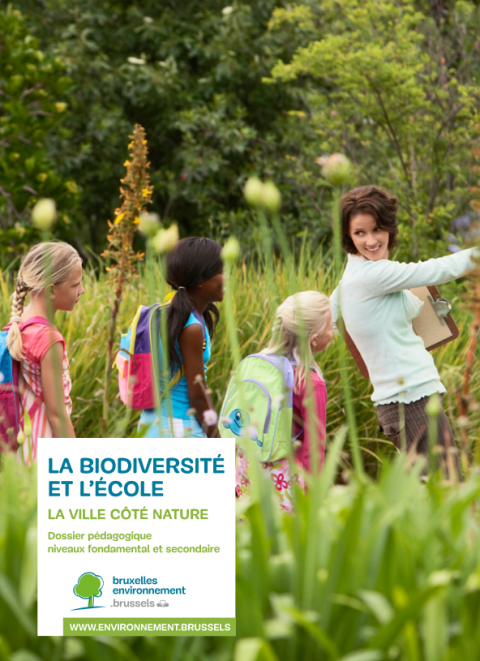 La biodiversité et l'école: la ville côté nature Año de publicación: 2019 Autor corporativo: Bruxelles Environnement Ce dossier pédagogique donne des infos de qualité sur la thématique et des pistes pour mener des activités concrètes au sein de l'école. Les activités proposées allient pédagogie et actions. Ce dossier vous propose divers outils et activités pédagogiques pour passer à l’action avec votre classe ou école : simple découverte de la biodiversité pour motiver vos élèves ; activités pour mieux comprendre la biodiversité à Bruxelles, son importance et les pressions qui pèsent sur elle, et actions concrètes pour la protéger ou la développer, au départ de l’école ou du quartier.
  [Video] 국가 지속가능발전목표(K-SDGs) Año de publicación: 2019 Autor corporativo: 대한민국 환경부 K-SDGs는 국제적 정세에 대응하여 수립한 한국형 SDGs이며, 경제, 사회, 환경 등 국정 전분야를 아울러 대한민국이 가야할 2030년까지 이정표를 설정한 것이다.K-SDGs는 기존에 행정부처에서 각종 정책 및 계획 등을 먼저 수립한 후 관계 전문가와 국민의견을 수렴하는 하향식(Top-down) 방식과는 다른 상향식(Bottom-up) 방식으로 추진되었다. 초안을 마련하는 단계부터 192명의 민간 작업반이 참여하여 우리 사회의 지속가능성을 위해 요구되는 사항들을 반영한 세부목표, 지표체계(안)을 마련했다.
  A Report on Korean-Sustainable Development Goals (K-SDGs) 2019 Año de publicación: 2019 Autor corporativo: 대한민국 환경부 지속가능발전위원회 South Korea's Commission on Sustainable Development set up the Korean Sustainable Develpment Goals(K-SDGs) in 2018 by applying the international sustainable development goal system to domestic circumstances. 국가 지속가능발전목표(K-SDGs) 수립보고서 2019 Año de publicación: 2019 Autor corporativo: 대한민국 환경부 지속가능발전위원회 K-SDGs는 국제적 정세에 대응하여 수립한 한국형 SDGs이며, 경제, 사회, 환경 등 국정 전 분야를 아울러 대한민국이 가야 할 2030년까지 이정표를 설정한 것이다.
  Progress Report on the Implementation of the UNECE Strategy for Education for Sustainable Development Año de publicación: 2010 Autor corporativo: State Agency on Environment Protection and Forestry (Kyrgyzstan) This report aims to evaluate the implementation of the UNECE Strategy for Education for Sustainable Development in the Kyrgyz Republic as part of the United Nations Decade of Education for Sustainable Development (2005-2014). The report presents the results of efforts aimed at implementing ESD, current challenges with reference to socio-economic conditions and development prospects. This report has been prepared by the State Agency for Environmental Protection and Forestry of the Kyrgyz Republic with the participation of interested departments, international and local experts. In preparing the report, materials and reports of international organizations - the OSCE, were used,UNESCO, UNDP, etc. Доклад о ходе осуществления стратегии ЕЭК ООН для образования в интересах устойчивого развития Año de publicación: 2010 Autor corporativo: Государственное агентство охраны окружающей среды и лесного хозяйства (Кыргызстан) Данный отчет направлен на оценку результатов осуществления стратегии ЕЭК ООН для образования в интересах устойчивого развития в Кыргызской Республике в рамках проводимого Организацией Объединенных Наций Десятилетия образования в интересах устойчивого развития (2005-2014 годы). В отчете представлены результаты усилий, направленных на внедрение ОУР, текущие вызовы со ссылкой на социально-экономические условия и перспективы развития. Настоящий доклад подготовлен Государственным агентством Охраны Окружающей Среды и Лесного Хозяйства КР с участием заинтересованных ведомств, международных и местных экспертов. При подготовке отчета были использованы материалы и отчеты международных организаций – ОБСЕ, ЮНЕСКО, UNDP, и т.д.
 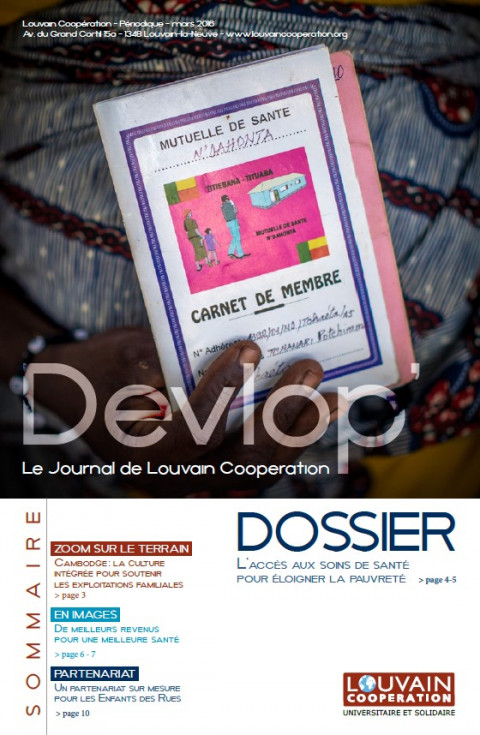 Devlop’ Le journal de Louvain Coopération 2 - Mars 2016 Año de publicación: 2016 Autor corporativo: Louvain Coopération "2016 sera une annee charniere pour Louvain Cooperation" 2016 sera une annee charniere a beaucoup d’egards. Nous fetons les 10 ans d’un partenariat solide avec l’Union Nationale des Mutualites Libres, autour des mutuelles de sante au Benin et au Togo. Chaque annee la collaboration se renforce. Les echanges d’expertise se multiplient. Tout cela dans un contexte ou la protection sociale et la couverture maladie universelle sont en bonne place dans les agendas politiques africains. Au-dela des communes et districts, l’enjeu est national. Le programme MASMUT, alliant les differentes Unions mutualistes belges et leurs ONG partenaires , soutient ce plaidoyer. Differents modeles s’opposent. La mutuelle de sante est le seul qui repartit les responsabilites entre l’Etat, les prestataires de soins et les patients d’une maniere fonctionnelle et democratique. Mais 2016, c’est aussi l’annee de reflexions et decisions en vue de notre prochain plan strategique et notre programme 2017-2021. Une evaluation pointue de nos actions passees nous pousse a encore elargir notre comprehension des mecanismes sociaux ou culturels qui operent partout. Quels codes regissent les choix des micro-entrepreneurs, les reticences a adherer a une cooperative ou a une mutuelle, le type d’alimentation, la conception du bien-etre ? Nos equipes et partenaires, avec l’appui transdisciplinaire de l’UCL vont consacrer leur energie a ces analyses qui nourriront nos projets et actions. Enfin, 2016, ce sont aussi des nouveaux projets, de nouvelles zones d’intervention.
  Devlop’ Le journal de Louvain Coopération 3 - Octobre 2016 Año de publicación: 2016 Autor corporativo: Louvain Coopération “Renforcer la collaboration entre ONG“ Quatre ONG universitaires belges, actives dans les pays du Sud et en Belgique, qui se rejoignent dans leurs domaines et lieux d’intervention, mais aussi dans leur specificite universitaire… Les points qui unissent Louvain Cooperation (ONG de l’UCL), ULB Cooperation (ONG de l’ULB), ADG (ONG de l’ULg-Gembloux) et la FUCID (ONG de l’UNamur) sont nombreux. Ces ONG ont en commun la realisation d’etudes ou de recherches-actions, la capitalisation des acquis, l’appel a des experts academiques universitaires, la diffusion la plus judicieuse possible des savoirs, la sensibilisation des etudiants a travers l’organisation de Campus Plein Sud… Ces collaborations existantes et points communs forment la base de l’idee d’une cooperation plus large, qui correspond a la dynamique du secteur de l’aide au developpement : rechercher des synergies, des apprentissages communs, des reseaux actifs. Les ONG, il faut bien l’admettre, ont souvent eu tendance a travailler de maniere trop isolee. A l’ere de la mondialisation, des nouvelles technologies de l’information et de la communication et des reseaux sociaux, il n’est plus possible, ni souhaitable de travailler dans son coin… Profitons au mieux de chacune des experiences, positive ou negative, des autres ! Juin 2016 fut donc une grande premiere dans l’histoire de ces quatre ONG : celles-ci ont decide de s’associer et de definir ensemble un programme quinquennal (2017-2021) qui vient d’etre soumis a la DGD pour une demande de financement commune. Ce programme comprend des actions au Sud dans les domaines de la Securite alimentaire et economique et de la Sante, et des actions en Belgique, d’Education a la Citoyennete Mondiale et Solidaire.
  Overview of Central Asia on Education for Sustainable Development Año de publicación: 2006 Autor corporativo: Regional Environmental Centre for Central Asia (CAREC) This review summarizes the great work carried out by the Central Asian countries in the framework of the implementation of the UN Decade on ESD and the CAREC EE and ESD Program, and aims to achieve significant results in the implementation of the ESD Strategy for the Ministerial Conference in Belgrade in 2007. Обзор Центральной Азии о прогрессе в области образования в интересах устойчивого развития Año de publicación: 2006 Autor corporativo: Regional Environmental Centre for Central Asia (CAREC) Данный обзоре обобщает большую работу, проделанную странами Центральной Азии в рамках реализации Десятилетия ООН по ОУР и Программы ЦАРЭС в области ЭЭ и ОУР, и направлена на достижение значительных результатов в реализации Стратегии ОУР для Министерской конференции в Белграде в 2007 году.