
Recursos
Exploren una amplia gama de recursos valiosos en GCED para profundizar su comprensión y promover su búsqueda, incidencia, enseñanza y aprendizaje.
3,790 resultados encontrados
 The Extent to which the Students of Qassim University Posses the Dialogue Culture and Its Role in Promoting Tolerance Año de publicación: 2017 Autor: الصمادي، هند سمعان Autor corporativo: International Group for Consulting and Training (IGCT) The current study aimed to identify the extent to which the students of Qassim University possess the dialogue culture and its role in promoting tolerance from their point of view. To achieve the aim of the study, the researcher developed a questionnaire which was applied on a stratified study sample.The researcher adopted the analytical descriptive approach. The outcomes showed that the degree of possessing the culture of dialogue among the students was average with an arithmetic mean،and there were no statistically significant differences attributed to gender variable. In addition, the findings detected that there were statistically significant differences attributed to study year and to the discipline variable and that the role of dialogue culture in promoting tolerance was average with an arithmetic mean.The intellectual tolerance had the highest mean, whereas the social tolerance had the lowest mean. Furthermore, the results revealed that there were no statistically significant differences attributed to gender variable, and that there were statistically significant differences attributed to the study year variable. The researcher recommends that more studies should be conducted in the domain of social tolerance.
  دور التربية الاسلامية في مواجهة العصبية في زمن العولمة الاجتماعية Año de publicación: 2012 Autor: آل جحراف، عايض بن محمد بن عايض Autor corporativo: Umm Al-Qura University منهج الدراسة: المنهج الوصفي. الفصل الأول:الإطار العام للدراسة. الثاني: العصبية مفهومها، أنواعها، أسبابها، آثارها السلبية. الثالث: موقف الإسلام من العصبية - لمحة تاريخية لظهور العصبية عند الأمم، موقف القرآن الكريم من العصبية وموقف السنة النبوية. الرابع: موقف العولمة الاجتماعية من العصبية - ظهور العولمة عمومًا والعولمة الاجتماعية خصوصًا، الدعوة إلى الامتزاج الاجتماعي والعوامل المؤثرة على تفعيل مؤسسات العولمة الاجتماعية وآثارها على الدول النامية والفقيرة. الخامس: المبادئ التربوية الإسلامية التي دعت إلى نبذ العصبية ومنها مبدأ المساواة، مبدأ المصير والجزاء الواحد، مبدأ حقوق الإنسان وكرامته، مبدأ التسامح والإحسان، مبدأ العدل وعدم الظلم، مبدأ الوسطية والاعتدال. السادس: دور التربية الإسلامية في مواجهة العصبية من خلال المؤسسات التربوية - الأسرة، المسجد، المدرسة، وسائل الإعلام. السابع: الاستخلاصات العامة والتوصيات والمقترحات. أهم نتائج الدراسة: 1) وجود آثار خطيرة للعصبية تؤثر على التنشئة الصالحة كالجمود وحب التقليد والحقد، والسخرية، والأنانية، وتصنيف الناس على أساس تكبر واحتقار، وما يترتب عليه من خلافات وحروب وتأثر مما يمزق جسد الأمة الإسلامية. 2) قيام مؤسسات العولمة الاجتماعية على هدف خدمة الإنسان، والدفاع عن حقوقه يتطلب احترام ثقافات وعادات وتقاليد كل بلد أو عرق أو قومية وعدم فرض مبدأ القوة والفكرة الواحدة. 3) نشر ثقافة المساواة وحقوق الإنسان والتسامح والعدل والوسطية والاعتدال والمصير والجزاء الواحد بين أفراد المجتمع منذ الصغر لكي يتربى الفرد ويشرب تلك المبادئ. 4) تلعب القدوة الحسنة والحوار الفعال في الأسرة، والمسجد، والمدرسة ووسائل الإعلام دورا فعالا في توجيه نفوس أبناء المجتمع نحو مجتمع مترابط ينبذ العصبية وآثارها السيئة. 5) تعلم مبادئ الاحترام للآخرين وتعزيزها في نفوس الأبناء يولد شخصية متوازنة تفخر بانتمائها لأمتها، وتحترم الآخرين ولا تتعدى عليهم ويمكن للمدرسة القيام بذلك من خلال التنوع في طرائق التدريس والتركيز على الأنشطة الجماعية الطلابية وتفعيلها داخل وخارج المدرسة. أهم توصيات الدراسة: 1) قيام المؤسسات الدينية، والثقافية، والإعلامية، والتربوية بدورها الفعال في تصحيح فكر المجتمع، واستخدام أساليب جذابة وفعالة لمواجهة العصبية. 2) على الدول الإسلامية القيام بعمل منظمات غير حكومية تتابع وتساعد في حل علاج مشكلات العصبية بين أفراد الأمة الإسلامية. 3) على الجامعات في المجتمعات القيام بإنشاء كراس علمية تعنى بالبحوث التي تدرس ظواهر العصبية، وتساهم في تزويد المنظمات والمؤسسات المتابعة لظاهرة العصبية بالوسائل والطرق والحلول. أهم مقترحات الدراسة: يقترح الباحث عمل دراسات عن العصبية ضد المرأة، وفي داخل المدرسة بين المعلمين أو الطلاب، وكذلك دراسة أساليب التربية النبوية في مواجهة العصبية في المجتمع المدني، ودراسة الاختلاف والتنوع البشري وربطه بالتربية الإسلامية، ودراسة لبعض المقررات المدرسة ومدى تناولها لموضوع العصبية من وجهة نظر الخبراء، وعمل دراسة عن القبلية وآثارها داخل المدرسة الثانوية في منطقة عسير باعتبارها منطقة تتميز بالتنوع القبلي. The Role of Islamic Education in Countering Tribalism in the Age of Social Globalization Año de publicación: 2012 Autor: آل جحراف، عايض بن محمد بن عايض Autor corporativo: Umm Al-Qura University Methodology: descriptive approach. Chapter I: A general framework. Chapter II: Tribalism: concept, types, causes and negative effects. Chapter III: Islam's position on tribalism - a Historical overview of the emergence of tribalism; Holy Quran’s and Sunnah’s positions; Chapter IV: Social Globalization’s Position on Tribalism - the emergence of Globalization in general and social globalization specifically; social globalization, calls for Social mixing and the factors affecting activation of social globalization institutions; The Effects of Social Globalization on the Developing and Poor Countries.Chapter V: Educational Principles that called for the rejection of tribalism”, including equality, determination and unified penalty, human rights and dignity, tolerance and philanthropy, justice and the rejection of injustice, moderation. Chapter VI: The role of Islamic Education in countering tribalism through educational institutions -the Family, the mosque, the school and the Media. Chapter VII: General conclusions and recommendations and proposals.Following the prime results and recommendations, the researcher proposes the following: “conducting studies on discrimination against women, and within school communities with regard to teachers or students, as well as studying Sunnah educational methods with regard to countering tribalism in the civil society, and studying human differences and diversity in addition to linking it to Islamic education.Also, there should be a study of some school curricula in order to examine the extent to which it addresses the issue of tribalism from the viewpoint of experts, as well as conducting a study of tribalism and its effects within the high school in Asir region as this region is characterized by tribal diversity”.
  اشكاليات المواطنة في التعليم بعد ثورة 25 يناير Año de publicación: 2013 Autor: فرج، إلهام عبد الحميد Autor corporativo: Cairo University تناولت هذه الورقة قضية المواطنة وإشكاليتها في التعليم بعد ثورة 25 يناير في مصر من خلال النقاط التالية: 1) مفهوم المواطنة، خصائصها وأبعادها؛ 2) السياسة التربوية تجاه التربية على المواطنة قبل وبعد ثورة 25 يناير في مصر؛ 3) إنعكاس السياسة التربوية على قضية المواطنة في المناهج التعليمية. وقد خلصت الورقة إلى أن الحفاظ على الوحدة الوطنية في مصر أصبح هدفا ساميا وهو يتطلب أن يصبح التعليم المصري وسيلة لتحقيق المواطنة من خلال استنارة العقول والاعتماد عل المنهجية العلمية والنقدية. وقد عرضت الورقة لعدّة نقاط يجب مراعاتها حتى يصبح التعليم وطنيا ويبتعد عن الأدلجة والتسييس منها مراعاة العلمية والموضوعية في المناهج التعليمية، والتأكيد على فكرة التعددية الثقافية والدينية التي كانت من سمات الثقافة المصرية على مدى التاريخ، التأكيد على مبدأ المواطنة في التعلم بدعم التماسك والترابط الوطني. كما تمّ التركيز على المسؤولية الملقاة على عاتق المعلمين، مما يؤكد على ضرورة أن يتم تدريبهم على استراتيجات تدريسية تستند على الحوار وتبتعد عن ثقافة التلقين. The Probelmatic of Citizenship in Education Following the January 25th Revolution Año de publicación: 2013 Autor: فرج، إلهام عبد الحميد Autor corporativo: Cairo University This paper dealt with the issue of citizenship and its problematics in education in the wake of the 25th January Revolution (in Egypt) through the following points: 1) The characteristics and dimensions of the concept of citizenship; 2) The educational policy regarding the education on citizenship before and after the 25th January Revolution; 3) The reflection of the education policy on the issue of citizenship in the educational curricula.The paper concluded that preserving national unity in Egypt has become a supreme aim that requires that Egyptian education becomes a means for achieving citizenship through the enlightening of minds and relying on a scientific critical approach.The paper tables several points that need to be considered in order for education to become patriotic and void of indoctrination and politicization. The points include: respecting scientific and objective thinking in the curricula, emphasizing the concept of cultural and religious pluralism that has all along been a feature of Egyptian culture and emphasizing the principle of citizenship in education through national cohesion and correlation. The paper also stresses the responsibility of teachers which requires training them on teaching strategies the are based on dialogue away from rote culture.
  التربية على المواطنة وحقوق الإنسان مشروع تكوين مواطن الغد Año de publicación: 2014 Autor: العماري، الصديق الصادقي هدفت هذه المقالة إلى إدماج ثقافة المواطنة وحقوق الإنسان كبيداغوجيا في الحقل التعليمي، وترسيخ تلك الثقافة عبر التربية الشاملة، مع تأطير ذلك كله داخل فضاء ثقافي مجتمعي عقلاني. لكن هذا الهدف لن يتحقق إلا باعتماد فلسفة تربوية تقوم على برامج ومناهج حية تستهدف ترسيخ قيم المواطنة والسلوك المدني وقيم حقوق الإنسان، يكون لها آثار إيجابية على الفرد والمجتمع. وقد تمّت معالجة هذا الموضوع من خلال الإجابة عن الأسئلة التالية: ما هي علاقة التربية بمنظومة القيم؟ كيف تساهم التربية على قيم المواطنة وقيم حقوق الإنسان في تكوين متعلم اليوم، وتأهيله ليصبح مواطن الغد؟ هل يكفي اعتماد هذه التربية القيمية في البرامج والمناهج التعليمية للحكم على سلوك المتعلم بالاستقامة والصلاح بما يجعله مستقبلا مواطنا صالحا؟ أم أن هناك إجراءات أخرى أساسية إضافة إلى الفلسفة التربوية المعتمدة؟ وقد ختمت الورقة بتحديد معالم التربية على المواطنة وحقوق الإنسان والتي تتمثل في أن يكون للأفراد الثقة في هويتهم وأن يعملوا من أجل تحقيق السلام وحقوق الإنسان في مجتمعهم وذلك من خلال: تحمل المسؤولية الاجتماعية، التعاون من أجل معالجة المشكلات، احترام الاختلافات بين الناس، دعم التضامن والعدالة. Education on Citizenship and Human Rights: A Project for Training the Human Being of Tomorrow Año de publicación: 2014 Autor: العماري، الصديق الصادقي This article aimed to integrate citizenship culture and human rights as pedagogy into education and to consolidate that culture through global education while farming all of this within a social, cultural and rational space. However, this aim won’t be realized unless an education philosophy is adopted that is based on lively curricula and programs aiming at consolidating the values of citizenship, civic behavior and human rights, a philosophy that has positive impact on the individual and on society.This topic was treated by responding to these questions: How is the system of values related to education? How does education on citizenship values and human rights values contribute to the development of today’s learner and to his/her qualification to become tomorrow’s citizen?Would the adoption of these values based education into the educational curricula and programs suffice to judge the learner’s behavior as being straight and correct enough to qualify him/her to be the good citizen of the future? Or are there other fundamental additional procedures than the adopted education philosophy?The paper concluded with defining the aspects of the education on citizenship and human rights expressed in the ability of individuals to have confidence in their identity and to work for peace and human rights in their society through the following: shouldering social responsibility, cooperate for the sake of solving problems, respect differences among people and support solidarity and justice.
 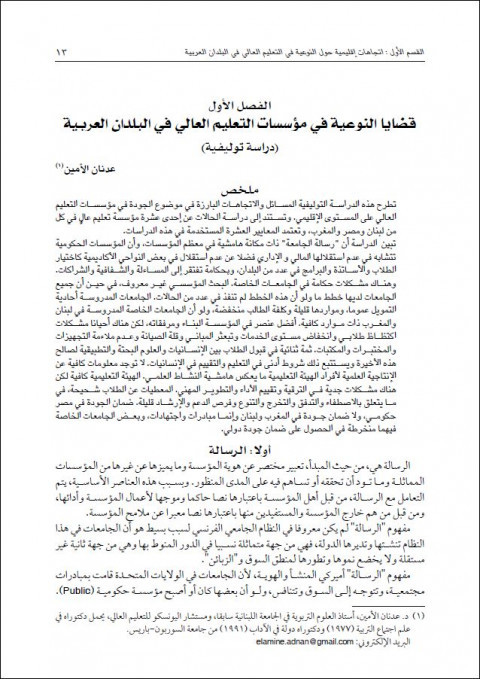 اتجاهات إقليمية حول النوعية في التعليم العالي في البلدان العربية: قضايا النوعية في مؤسسات التعليم العالي في البلدان العربية Año de publicación: 2014 Autor: الأمين،عدنان Autor corporativo: Lebanese Association for Educational Studies (LAES) تطرح هذه الدراسة التوليفية المسائل والاتجاهات البارزة في موضوع الجودة في مؤسسات التعليم العالي على المستوى الإقليمي. وتستند إلى دراسة الحالات عن إحدى عشرة مؤسسة تعليم عالٍ في كل من لبنان ومصر والمغرب، وتعتمد المعايير العشرة المستخدمة في هذه الدراسات. تبين الدراسة أن "رسالة الجامعة" ذات مكانة هامشية في معظم المؤسسات، وأن المؤسسات الحكومية تتشابه في عدم استقلالها المالي والإداري فضلا عن عدم استقلال في بعض النواحي الأكاديمية كاختيار الطلاب والأساتذة والبرامج في عدد من البلدان، وبحكامة تفتقر إلى المساءلة والشفافية والشراكات. وهناك مشكلات حكامة في الجامعات الخاصة. البحث المؤسسي غير معروف، في حين أن جميع الجامعات لديها خطط ما ولو أن هذه الخطط لم تنفذ في عدد من الحالات. الجامعات المدروسة أحادية التمويل عموما، ومواردها قليلة وكلفة الطالب منخفضة، ولو أن الجامعات الخاصة المدروسة في لبنان والمغرب ذات موارد كافية. أفضل عنصر في المؤسسة البناء ومرفقاته، لكن هناك أحيانا مشكلات اكتظاظ طلابي وانخفاض مستوى الخدمات وتبعثر المباني وقلة الصيانة وعدم ملاءمة التجهيزات والمختبرات والمكتبات. ثمة ثنائية في قبول الطلاب بين الإنسانيات والعلوم البحتة والتطبيقية لصالح هذه الأخيرة ويستتبع ذلك شروط أدنى في التعليم والتقييم في الإنسانيات. لا توجد معلومات كافية عن الإنتاجية العلمية لأفراد الهيئة التعليمية ما يعكس هامشية النشاط العلمي. الهيئة التعليمية كافية لكن هناك مشكلات جدية في الترقية وتقييم الأداء والتطوير المهني. المعطيات عن الطلاب شحيحة، في ما يتعلق بالاصطفاء والتدفق والتخرج والتنوع وفرص الدعم والإرشاد قليلة. ضمان الجودة في مصر حكومي، ولا ضمان جودة في المغرب ولبنان وإنما مبادرات واجتهادات، وبعض الجامعات الخاصة فيهما منخرطة في الحصول على ضمان جودة دولي. Quality Issues in Higher Education Institutions in Arab Countries: Synthesis Study Año de publicación: 2014 Autor: الأمين،عدنان Autor corporativo: Lebanese Association for Educational Studies (LAES) This synthesis study addresses outstanding issues and trends concerning quality in higher education institutions at the regional level. It is based on case studies from eleven higher education institutions in Lebanon, Egypt and Morocco and on the ten standards used in these studies.The study shows that "the mission of the university" has a marginal position in most institutions; that government institutions are similar in their lack of financial and administrative independence; that there is a lack of independence in some academic respects such as the selection of students, faculty and programs in a number of countries; and that governance is lacking accountability, transparency and partnerships. Indeed, there are governance problems in private universities. Institutional research is not evidently known while all universities have some relevant plans even though these plans have not been implemented in a number of cases.The universities that are under study are generally unilaterally funded, their resources are scarce and the cost per student is low, however; private universities that were subject to this study in Lebanon and Morocco have sufficient resources. The most satisfactory element of the institution is the buildings and annexes thereto.However, at times, there are problems in terms of student overpopulation, poor level of services, scattered buildings, lack of maintenance and inadequate equipment, laboratories and libraries. There is a duality in student admission between Humanities and the Physical and Applied Sciences disciplines in favor of the latter which causes lower conditions in the education and assessment of the Humanities discipline.There is not enough information about the scientific productivity of faculty members, which reflects the marginality of scientific activity. The number of faculty staff is sufficient but there are serious problems regarding their promotion, performance assessment and professional development. Data on students are scarce in terms of students’ selection, influx, graduation and diversity; and support and guidance opportunities remain scarce.Quality assurance in Egypt is a governmental responsibility and there is no such thing in Morocco and Lebanon instead there are some initiatives and attempts. Some private universities in Morocco and Lebanon are engaged in obtaining quality assurance from international bodies.
 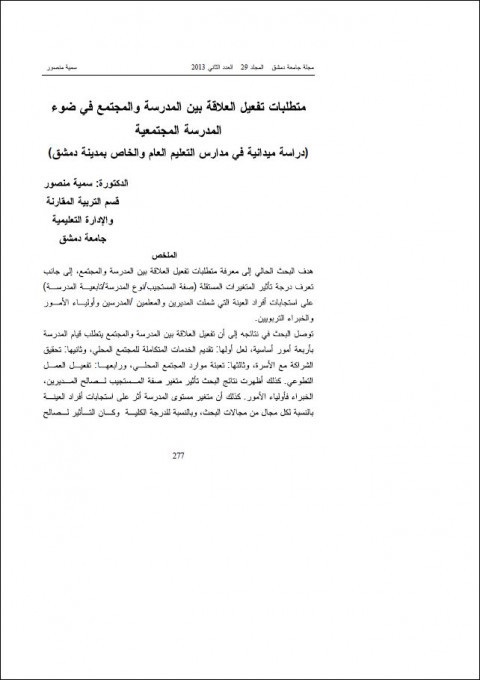 متطلبات تفعيل العلاقة بين المدرسة والمجتمع في ضوء المدرسة المجتمعية : دراسة ميدانية في مدارس التعليم العام والخاص بمدينة دمشق Año de publicación: 2013 Autor: منصور، سمية Autor corporativo: Damascus University هدف البحث الحالي إلى معرفة متطلبات تفعيل العلاقة بين المدرسة والمجتمع، إلى جانب تعرف درجة تأثير المتغيرات المستقلة (صفة المستجيب/ نوع المدرسة/ تابعية المدرسة) على استجابات أفراد العينة التي شملت المديرين والمعلمين/ المدرسين وأولياء الأمور والخبراء التربويين. توصل البحث في نتائجه إلى أن تفعيل العلاقة بين المدرسة والمجتمع يتطلب قيام المدرسة بأربعة أمور أساسية، لعل أولها: تقديم الخدمات المتكاملة للمجتمع المحلي، وثانيها: تحقيق الشراكة مع الأسرة، وثالثها: تعبئة موارد المجتمع المحلي، ورابعها: تفعيل العمل التطوعي. كذلك أظهرت نتائج البحث تأثير متغير صفة المستجيب لصالح المديرين، فالخبراء فأولياء الأمور. كذلك فإن متغير مستوى المدرسة أثر على استجابات أفراد العينة بالنسبة لكل مجال من مجالات البحث، وبالنسبة للدرجة الكلية، وكان التأثير لصالح مدارس التعليم الأساسي. وتبين أيضا عدم وجود تأثير لمتغير تابعية المدرسة على استجابات أفراد العينة بالنسبة لأغلب المجالات والدرجة الكلية. بعد ذلك قدم البحث عدة مقترحات من أجل تجسيد متطلبات المشاركة بين المدارس والمجتمع، مثل: تبني وزارة التربية السورية لهذا الاتجاه المتمثل بتفعيل العلاقة بين المدرسة والمجتمع، وسن تشريعات تشجع المدارس المحلية وأولياء الأمور على المشاركة.