
Recursos
Exploren una amplia gama de recursos valiosos en GCED para profundizar su comprensión y promover su búsqueda, incidencia, enseñanza y aprendizaje.
1,322 resultados encontrados
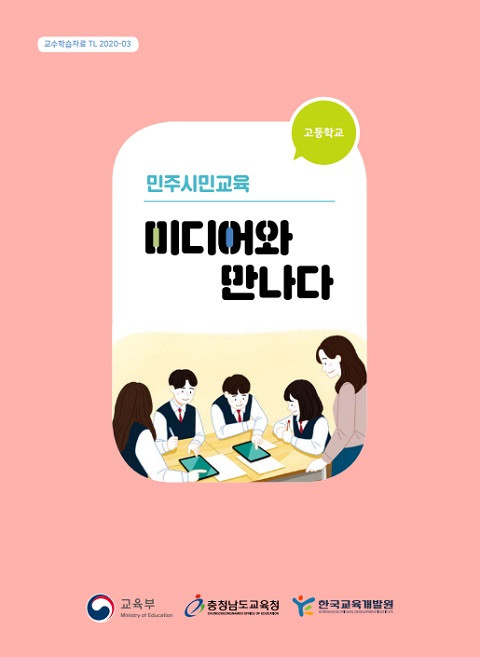 민주시민교육, 미디어와 만나다: 고등학교 Año de publicación: 2020 Autor: 나윤숙 | 김태현 | 임지예 | 정병연 | 조미옥 Autor corporativo: 한국교육개발원 | 대한민국 교육부 | 충청남도교육청 ‘민주시민교육, 미디어와 만나다’는 민주시민교육과 미디어리터러시 교육 간의 연계성을 강화하여 민주시민교육과 관련한 수업에 손쉽게 활용할 수 있도록 개발된 자료이다. 이를 통해 민주시민교육에 관심이 있는 선생님들에게 교과, 창의적 체험활동 등 교육활동 전반에 활용할 수 있는 교수-학습 자료를 제공하고자 하였다. 아울러 민주시민교육의 주제별 협력학습, 토론 수업 및 프로젝트 학습 등에 활용 가능한 교육 콘텐츠를 지원하고자 한다. 수업 대상은 고등학교 1학년이다. 다만 학습 주제, 성취기준, 학교 및 교실 여건 등을 고려하여 적용 대상을 달리하여 활용 가능하다.
  The Theoretic Relationship Between Global Citizenship and Moral Education: An Analysis of Global Citizenship and the Moral Education Curriculum for Middle School Students in South Korea (The Journal of Korean Education; Vol.43, No.3) Año de publicación: 2016 Autor: Jinhee Kim | Seunghan Cha Autor corporativo: Korean Educational Development Institute (KEDI) This study explores the theoretical relationship between global citizenship and moral education to enhance global citizenship as espoused within a moral education context. 세계시민의식과 도덕 교육의 이론적 관계 정립: 세계시민이론과 중학교 도덕 교육과정 분석 (한국교육; Vol.43, No.3) Año de publicación: 2016 Autor: 김진희 | 차승한 Autor corporativo: 한국교육개발원 본 연구는 국제사회에서 세계시민교육이 강조되고 있는 오늘날 세계시민의식과 밀접한 연관을 가지고 있는, 도덕 교육을 통한 세계시민성의 개념 정립이 필요하다는 문제의식에서 출발하였다. 세계시민의식 함양이 도덕교육에 주는 의미를 분석하고, 현행 중학교 도덕 교육에 세계시민의식의 내용을 얼마나 반영되어 있는지 진단하고자 하였다. 이를 위해 칸트, 아렌트, 너스봄, 아피아를 중심으로 세계시민과 도덕의 관계에 대한 이론을 분석하였고, 각 이론에서 중시한 ‘세계관찰자, 도덕적 공동체, 뿌리내린 세계시민’ 담론을 세계시민적 정체성(belonging), 세계시민적 태도(attitude), 세계시민적 개입(engagement)과 연계지어 논리적으로 정련함으로써 도덕 교육에서 세계시민의식을 측정할 수 있는 분석틀을 도출하였다. 분석결과, 세계문제에 대한 다양한 쟁점을 다루는 글로벌 윤리 개념이 세계시민의식과 도덕 교육 사이에서 징검다리 역할을 할 수 있다는 점을 밝혔다. 한국의 현행 도덕 교육과정은 세계시민의식과 관련한 내용을 직간접적으로 반영하고 있으나 ‘공적 영역에 대한 헌신’을 반영하는 내용 요소는 빈약한 것으로 드러났다. 본 연구는 한국교육의 상황에 맞는 세계시민의식의 개념 정립을 위해 학교 교육의 장면 중 중학교 도덕 교육에서 세계시민교육을 내실화하는 단초를 이론적으로 제시하였다.
  2022년 평생교육통계 자료집 Año de publicación: 2022 Autor corporativo: 대한민국 교육부 | 한국교육개발원 「2022 평생교육통계 자료집」은 17개 시도, 4,869개의 평생교육기관을 조사하여 우리나라의 평생교육시설을 진단할 수 있는 기초자료를 종합하였습니다.본 저작물은 교육부에서 2022년 작성하여 공공누리 제3유형으로 개방한 '2022년 평생교육통계 자료집'을 이용하였으며, 해당 저작물은 교육부 누리집(https://www.moe.go.kr/)과 교육통계 서비스 누리집(https://kess.kedi.re.kr/index) 에서 무료로 내려받으실 수 있습니다.
  2022 한국 성인의 평생학습실태 Año de publicación: 2022 Autor: 최성부 | 이혜진 | 배효진 | 김별라 | 임소현 | 강성국 | 정동철 | 박미현 | 김경남 | 김나정 | 안윤정 | 라다애 | 장훈민 | 박초아 Autor corporativo: 대한민국 교육부 | 한국교육개발원 「2022년 한국 성인의 평생학습 실태」자료집은 평생학습개인실태조사 결과를 평생학습 전문가 뿐 아니라 일반독자들이 이해할수 있도록 지표 중심으로 구성한 자료집입니다. 본 자료집은 정책 담당자뿐만 아니라 연구자 및 일반 독자들이 쉽게 이해할 수 있도록 만25~79세 우리나라 성인의 전 생애단계별 평생학습 참여 실태를 지표 중심으로 구성하였습니다.본 저작물은 교육부에서 2022년 작성하여 공공누리 제3유형으로 개방한 '2022 한국 성인의 평생학습실태'를 이용하였으며, 해당 저작물은 교육부 누리집(https://www.moe.go.kr/)과 교육통계 서비스 누리집(https://kess.kedi.re.kr/index) 에서 무료로 내려받으실 수 있습니다.
 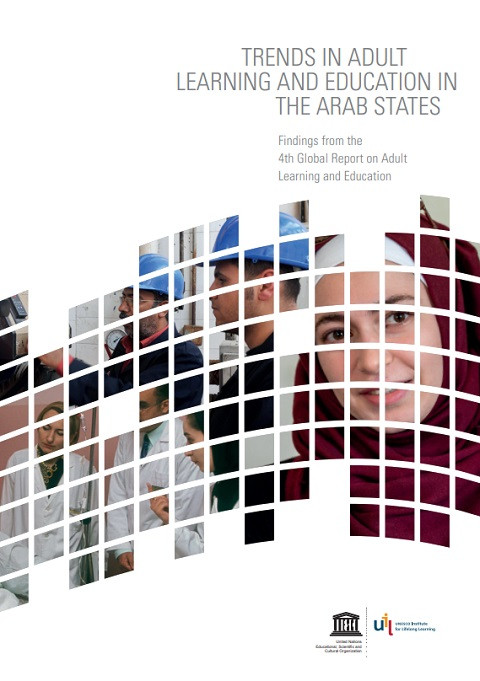 Trends in Adult Learning and Education in the Arab States: Findings from the Fourth Global Report on Adult Learning and Education Año de publicación: 2020 Autor corporativo: UNESCO Institute for Lifelong Learning (UIL) This report reveals that adult learning and education in the region is strongly focused on literacy, with less attention given to other areas of adult learning, such as continuing education and professional development, and citizenship education. This suggests that, while further progress is needed in achieving basic education for all, the other dimensions of adult learning need to be given adequate attention to ensure provision that is comprehensive and relevant to the diverse needs of adult and youth learners. Furthermore, the report suggests that good governance, supportive political will and adequate funding are key to fully realizing the potential of adult learning and education for economic, social, technological, and societal transformation. It is hoped that this report can provide some benchmarks and be a source of inspiration for policy-makers and stakeholders in Arab countries to further enhance the provision, quality and relevance of adult learning and education in order to build a sustainable and resilient future. الكبار وتعليمهم يف الدول العربية : اتجاهات يف تعل َصة من التقرير العاملي نتائج مستخل الرابع بشأن تعلم الكبار وتعليمهم Año de publicación: 2020 Autor corporativo: UNESCO Institute for Lifelong Learning (UIL) يكشف التقرير أن تركيز دول المنطقة ّ العربية ينصب ّ في المقام األو ّ ل على مجال »القرائية/محو األمية والمهارات األساسية« ، في حين تحظى مجاالت أخرى ذات صلة، مثل »التعليم المستمر والتطوير المهني«، و« تعليم المواطنة«، بدرجة أقل من االهتمام. لذلك، ومع وجود حاجة إلى إحراز ّق بتوفير التعليم األساسي للجميع ّ مزيد من التقدم فيما يتعل ّصلة ، يظلّ من الضروري إيالء اهتمام أكبر لألبعاد األخرى المت ّم الكبار وتعليمهم، بما يضمن توفير التعليم على نحو شامل بتعل ّمين من الكبار والشباب. ّ ومالئم لالحتياجات المتنوعة للمتعل ّ عالوة على ذلك، يشير التقرير إلى أن الحوكمة الرشيدة واإلرادة ّ السياسية الداعمة والتمويل الكافي تشكل عوامل أساسية لضمان ّم الكبار وتعليمهم االستفادة الكاملة من اإلمكانات التي يتيحها تعل ّ لتعزيز التحول االقتصادي واالجتماعي والتكنولوجي والمجتمعي المنشود. وأخيرا، أملنا أن يوفّر هذا التقرير بعض النقاط المرجعية وأن ّ يشكل مصدر إلهام لصانعي السياسات ولجميع الجهات المعنية ّم الكبار وتعليمهم من حيث توفير البرامج وضمان الجودة وتحقيق ّ في البلدان العربية، من أجل المضي قدما في تعزيز تعل ُه االستدامة ُ ِ سهم في بناء مستقبل أفضل سمت ّ الجدوى، مما ي والقدرة على الصمود
 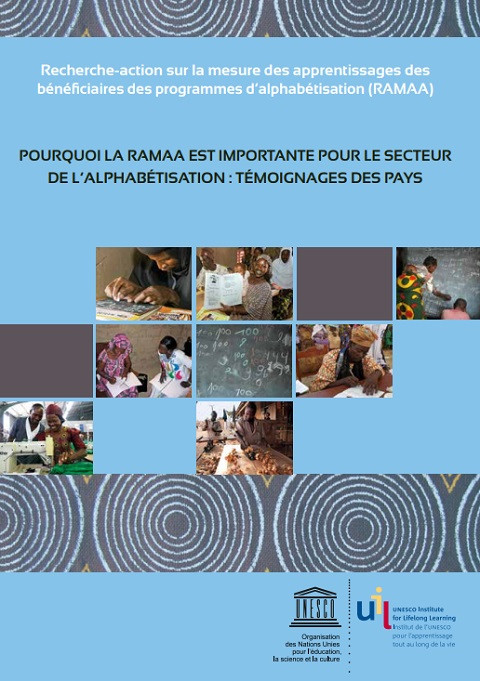 Why RAMAA Is Important for Literacy: Testimonies From Participating Countries; Action Research on Measuring Literacy Programme Participants’ Learning Outcomes (RAMAA) Año de publicación: 2016 Autor corporativo: UNESCO Institute for Lifelong Learning (UIL) The RAMAA action research, launched at the initiative of the UNESCO Institute for Lifelong Learning (UIL), and piloted in partnership with local UNESCO offices, responds to this vital need to assess the quality of literacy programmes by taking the learning effectively acquired by the beneficiaries at the end of their training as an objective variable.The first phase of RAMAA involved five countries, now twelve countries are participating in the second phase of RAMAA – Benin, Burkina Faso, Cameroon, Côte d'Ivoire, Central African Republic, Democratic Republic of Congo, Morocco, Mali, Niger, Senegal, Chad and Togo. The countries’ commitment throughout the implementation of the second phase of RAMAA and the integration of the results into the national systems are key to the project. Pourquoi la RAMAA est importante pour le secteur de l'alphabétisation: Témoignages des pays; Recherche-action sur la mesure des apprentissages des bénéficiaires des programmes d'alphabétisation (RAMAA) Año de publicación: 2016 Autor corporativo: UNESCO Institute for Lifelong Learning (UIL) La Recherche-action RAMAA, lancée à l’initiative de l’Institut de l’UNESCO pour l’apprentissage tout au long de la vie (UIL), et pilotée en partenariat avec les bureaux UNESCO répond à ce besoin vital d’évaluer la qualité des programmes d’alphabétisation en prenant comme variable objective les apprentissages réellement acquis par les bénéficiaires à la sortie de leur formation.La première phase de la RAMAA comptait cinq pays, douze pays sont désormais engagés dans la deuxième phase de la RAMAA - Bénin, Burkina Faso, Cameroun, Côte d’Ivoire, République centrafricaine, République démocratique du Congo, Maroc, Mali, Niger, Sénégal, Tchad et Togo. L’engagement des pays tout au long de la mise en œuvre de la deuxième phase de la RAMAA et l’intégration des résultats dans les dispositifs nationaux deviennent impératifs.
 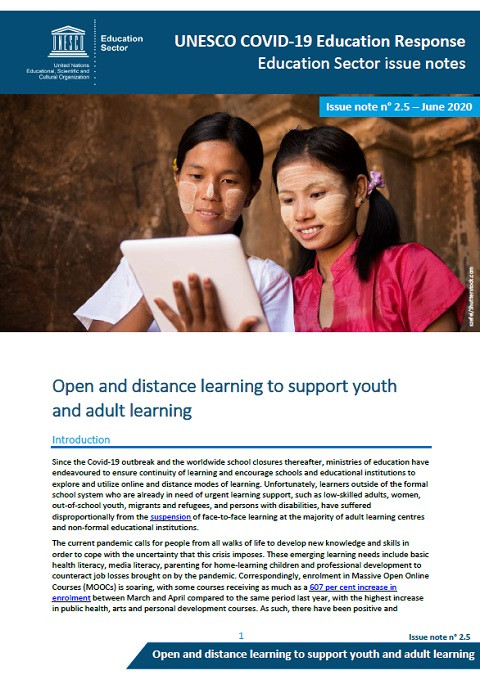 UNESCO COVID-19 Education Response: Open and Distance Learning to Support Youth and Adult Learning (Education Sector Issue Note; No. 2.5 – June 2020) Año de publicación: 2020 Autor corporativo: UNESCO Institute for Lifelong Learning (UIL) A new UNESCO issue note, produced by the UNESCO Institute for Lifelong Learning (UIL), aims to support education policy-makers and planners in ensuring open and distance learning to support youth and adult learning in the context of the current pandemic, now and in its aftermath.Since the COVID-19 outbreak and the worldwide school closures that followed, ministries of education have endeavoured to ensure continuity of learning and encourage schools and educational institutions to explore and utilize online and distance modes of learning. Unfortunately, learners outside of the formal school system who are already in need of urgent learning support, such as low-skilled adults, women, out-of-school youth, migrants and refugees, and persons with disabilities, have suffered disproportionally from the suspension of face-to-face learning at the majority of adult learning centres and non-formal educational institutions.The current pandemic calls for people from people from all socio-economic backgrounds, wherever they live in the world, to develop new knowledge and skills in order to cope with the uncertainty that this crisis imposes. These learning needs include basic health literacy, media literacy, parenting for home-schooling children and professional development to counteract job losses brought on by the pandemic. Correspondingly, enrolment in massive open online courses (MOOCs) is soaring. As such, there have been positive and demand-driven trends in exploring alternative options, such as open and distance learning (ODL), to ensure the continuity and expansion of non-formal education and adult learning.This issue note takes stock of opportunities and challenges in using ODL, both online and offline as defined in the UNESCO Issue Note on Distance Learning Strategies, for youth and adult learners outside the formal education system. After examining key issues and illustrating promising cases from public and private sectors, it provides key messages for policy interventions to support inclusive lifelong learning for youth and adults during and after the current pandemic.UNESCO Education Sector’s issue notes cover key topics related to the COVID-19 education response.