
Recursos
Exploren una amplia gama de recursos valiosos en GCED para profundizar su comprensión y promover su búsqueda, incidencia, enseñanza y aprendizaje.
2,199 resultados encontrados
 重申培养社会主义合格公民的价值立场 (学校党建与思想教育; No. 612) Año de publicación: 2019 Autor: Du Shizhong | Yan Changrui Autor corporativo: Hubei Education Press 文章根据人类民主实践的历史成就,特别是中国仁人志士浴血奋斗的艰难历程,指出普通中国人获得的公民身份来之不易。公民意味着人民主权,意味着国家与公民对等、公民与公民平等,以及权利和义务对称,它具有法律、政治和社会诸多层面的丰富内涵。培养社会主义合格公民,是当代中国民主政治、市场经济、信息社会发展的历史必然,是最重要、最根本、最富有时代精神的中国教育特色。促进中国人从臣民到公民的转变,实现人的现代化,是时代赋予中国教育的使命。
  ICT융합교육 글로벌 동향: 초·중등교육 글로벌 동향 (2020년 5호 통권 128호) Año de publicación: 2020 Autor: 김민 | 이민주 | 윤환선 Autor corporativo: 한국교육학술정보원 이 자료는 코로나 19로 인한 학교 폐쇄와 재개에 대한 글로벌동향과 사례를 미주, 유럽, 아시아 등 각 지역별로 나누어 정리하고 학교 재개에 대하여 국제기구가 제시하는 프레임 워크에 대해서 설명하고 있다. 또한 코로나 19에 대응하는 교육대책으로 ICT를 활용한 온라인 교육과 원격 수업에 대한 방안과 현황을 제시한다.
  A Case Study on Teaching and Learning Process for Global Citizenship Education: Focused on Classes on the Refugee Disputes (Journal of Educational Innovation Research; Vol. 26, No. 3) Año de publicación: 2016 Autor: Junho Choi Autor corporativo: Pusan National University. Educational Development Institute Purpose: With the advent of the global civil society, this study is initiated from the necessity to design and make practical educational contents and methods which help us find relevant social studies’ topics and deal with them profoundly. For this reason, this study, in relation to our Global Citizenship Education(GCE) at school, was to focus on finding out practical strategies for the solutions to the refugee disputes and to find practical syllabuses. Method: This study was performed by using a literature research methods. I collected and examined relevant existing paper materials such as journals, reports, and books. Thereby, I searched a related topic and extracted meanings, values, perspectives on the topic which each materials contained. And then, I analyzed them by categorizing, integrating, and comparing the each extracted content. Based on this method, I can find the general characteristics and present practical strategies on the global citizenship education. Results: This study makes it possible to be well organized, based on self-directed and small group cooperative learning process by utilizing the PBL method(Problem Based Learning). In particular, this method allows students to make ‘Virtual Commission of Refugees’, and to debate and negotiate issues on their own. Conclusion: This process intends for students to recognize that the refugee disputes are the problem which as a member of the global civil society, all of the people should consider and overcome for the public welfare and developments. For this reason, this study, in relation to our Global Citizenship Education(GCE) at school, tries to focus on finding out practical strategies for the solutions to the refugee disputes and to find practical syllabuses. 세계시민교육을 위한 교수․학습과정안 사례연구: 난민문제 수업을 중심으로 (교육혁신연구; Vol 26, No. 3) Año de publicación: 2016 Autor: 최준호 Autor corporativo: 부산대학교 교육발전연구소 연구목적: 본 연구는 세계시민사회 도래에 대응한 적합성이 높은 사회과교육의 주제를 발굴하고 이를 더욱 심층적으로 다룰 수 있도록 하는 교육적 내용 및 방법에 관한 설계와 실천이 절실히 필요하다고 보았다. 이 같은 취지에서 본 연구의 목적은 사회교과를 통해 세계시민교육을 하고자 할 때 시의적절한 주제를 선정하고 실제 수업에 활용하기에 적절한 내용과 방법을 구체적으로 살펴보고자 함에 있다. 연구방법: 본 연구는 문헌 연구 방법을 통해 국내·외 선행연구로서의 학술논문, 단행본, 연구보고서 및 자료 등을 수집·분석하여 세계시민교육의 배경과 특징을 파악하고, 세계시민교육의 의미와 가치에 대한 이해를 바탕으로 세계시민교육 차원의 사회교과 교수·학습을 위한 구체적인 주제를 발굴함과 동시에 그에 따른 내용과 방법상의 실천 전략을 제시하고자 하였다. 연구결과: 본 연구는 PBL 기법(문제중심학습)을 활용하여 난민문제의 교수·학습 과정을 학습자의 자기주도 학습 및 소집단별 협동학습에 주안점을 두며 지식, 기능, 가치·태도, 그리고 실천적 목표를 달성하기 위한 내용과 절차를 유기적으로 구성하였다. 특히, 학습자 중심의 가상의 ‘난민조정위원회’의 구성과 토론 및 협상 과정이라는 상황을 입혀 난민문제를 학습자들이 직접 다루도록 하였다. 논의 및 결론: 세계시민교육 차원에서 난민문제가 사실상 세계시민사회 전체의 공공복리와 공영발전을 위해 극복해야 할 필수 과제이며, 세계시민의 일원으로서의 관심과 참여적 역할이 필요하다는 점을 학생들이 직접 깨닫도록 하였다.
  United Nations Sustainable Development Partnership Framework for Bhutan 2019-2023: Leaving No One Behind Año de publicación: 2019 Autor corporativo: UN Bhutan This Partnership Framework 2019-2023 is the common strategic framework for UN activities in Bhutan, working closely with the different agencies to effectively meet the needs of the current stage of development in the country. Strongly committed to the promotion of “A Just, harmonious and sustainable Bhutan where no one is left behind”, this document highlights strategic priorities, integrated programming, and continued partnership between the Royal Government of Bhutan, its development partners, key stakeholders, as well as between UN agencies to overcome the many inequalities still present in Bhutan.
 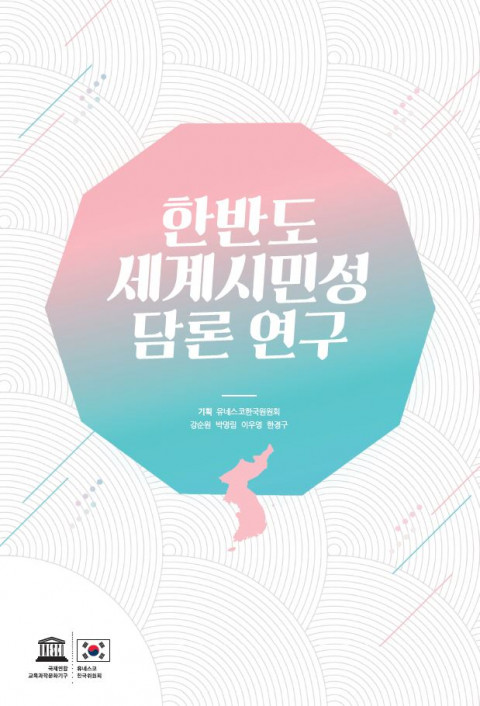 한반도 세계시민성 담론 연구 Año de publicación: 2019 Autor: 강순원 | 박명림 | 이우영 | 한경구 Autor corporativo: 유네스코한국위원회 유네스코한국위원회는 폭력과 갈등을 조장하는 이분법적 구도를 벗어나 서로의 다름을 이해하고 평화의 문화를 확산하는 새로운 포용 담론으로써 ‘한반도 세계시민성’의 가능성을 모색해보고자 합니다. 세계시민성은 지역의 문화적 맥락 속에서 추진될 때 그 사회 사람들에게 보다 쉽게 수용될 수 있습니다. 특히, 한반도처럼 분단이라는 특수한 환경을 가지고 있는 사회는 인류 보편적인 세계시민성을 어떻게 지역의 현실에 반영하고 지구적 현안을 어떻게 지역화 하느냐가 더욱 중요한 문제일 것입니다.한국은 분단 상황 속에서 점차 다문화사회로 변화하고 있습니다. 민족 동질성의 회복과 이질적 문화 수용이라는 이중적 과제를 안고 있는 것입니다. 분단은 한반도의 특수한 환경으로부터 비롯되었지만 오늘날 우리가 살아가는 세계의 상호의존적 맥락을 이해한다면 세계의 보편적 틀 안에서 한반도의 특수성을 담아낼 수 있는 새로운 포용 담론이 필요하다고 할 수 있습니다. ‘한반도 세계시민성 담론 연구’는 이런 배경에서 기획되었습니다.
 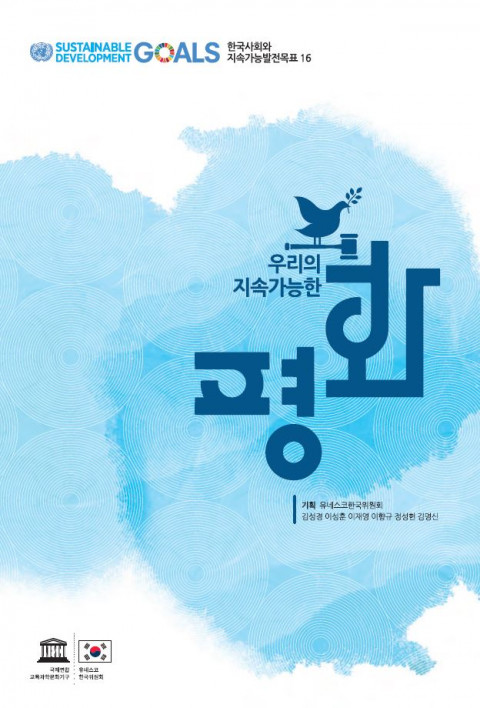 한국사회와 지속가능발전목표 16: 우리의 지속가능한 평화 Año de publicación: 2019 Autor: 김성경 | 이성훈 | 이재영 | 이향규 | 정성헌 | 김명신 Autor corporativo: 유네스코한국위원회 유네스코한국위원회는 좀더 많은 사람들이 SDGs를 쉽게 이해하도록 돕기 위해 ‘한국사회와 지속기능발전목표’ 라는 이름 아래 SDGs 해설서를 발간하고 있습니다.16번 해설서인 『한국사회와 지속가능발전목표 16: 우리의 지속가능한 평화』 는 남북 분단 상황 속에서 점차 다문화사회로 변화해가는 오늘날 우리의 일상이 어떻게 하면 더욱 포용적으로 발전할 수 있을지에 대한 이야기로 독자 여러분의 이해를 돕기 위해 각 분야의 전문가들을 인터뷰한 내용으로 구성돼 있습니다.
 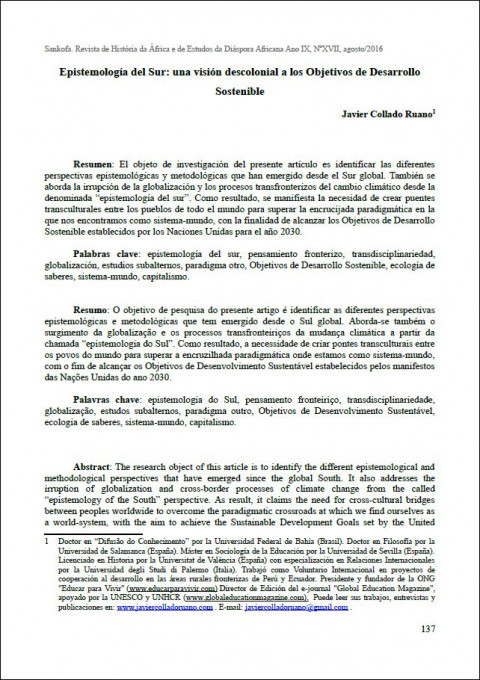 Epistemology from the South: A Decolonized Vision of the Objectives for Sustainable Development Año de publicación: 2016 Autor: Javier Collado Ruano Autor corporativo: Universidade de Sao Paulo The research object of this article is to identify the different epistemological and methodological perspectives that have emerged from the global South. It also addresses the irruption of globalization and cross-border processes of climate change from the called “epistemology of the South” perspective. As a result, it claims the need for cross-cultural bridges between people from all over the world to overcome the paradigmatic crossroads at which we find ourselves as a world-system, with the aim to achieve the Sustainable Development Goals set by the United Nations for the year 2030. Epistemología del Sur: una visión descolonial a los Objetivos de Desarrollo Sostenible Año de publicación: 2016 Autor: Javier Collado Ruano Autor corporativo: Universidade de Sao Paulo El objeto de investigación del presente artículo es identificar las diferentes perspectivas epistemológicas y metodológicas que han emergido desde el Sur global. También se aborda la irrupción de la globalización y los procesos transfronterizos del cambio climático desde la denominada “epistemología del sur”. Como resultado, se manifiesta la necesidad de crear puentes transculturales entre los pueblos de todo el mundo para superar la encrucijada paradigmática en la que nos encontramos como sistema-mundo, con la finalidad de alcanzar los Objetivos de Desarrollo Sostenible establecidos por los Naciones Unidas para el año 2030.
  Education for global and multicultural citizenship: a strategy for Victorian Government schools 2009-2013 Año de publicación: 2009 Autor corporativo: State of Victoria (Australia) | Melbourne. Department of Education and Early Childhood Development. Office of Government School Education. Student Learning Programs Division The purpose of this strategy is to provide a renewed vision for global and multicultural education in Victorian Government schools; to align priorities to current legislative, policy and curriculum frameworks; and to guide action across schools, regions and the Department. The strategy offers a new concept for thinking about multicultural education: global and multicultural citizenship. The actions outlined will pursue the following objectives: improving educational outcomes for all students through the implementation of inclusive practices and through learning and teaching that utilises the Victorian Essential Learning Standards (VELS) domains relevant to global and multicultural citizenshipdeveloping the intercultural literacies that students, parents, educators, and leadership groups need to live and work as part of a diverse and globalised populationpromoting social cohesion and diversity as sources of educational and economic advantage for all students • enhancing the engagement, wellbeing and sense of belonging for all students in safe and secure learning environmentsbuilding the capacity of the school community to identify and address overt, subtle and institutionalised racism, stereotyping and other forms of prejudicebuilding and sustaining inclusive and participative school–community partnerships that prepare all students for global and multicultural citizenship.