
Recursos
Exploren una amplia gama de recursos valiosos en GCED para profundizar su comprensión y promover su búsqueda, incidencia, enseñanza y aprendizaje.
1,443 resultados encontrados
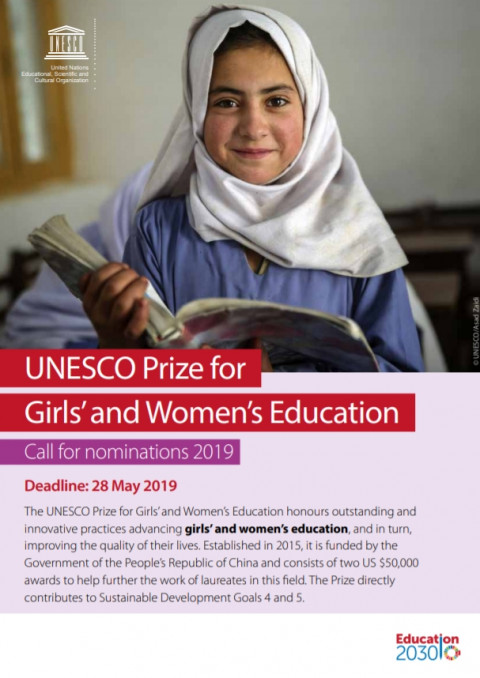 Premio UNESCO de educación de las niñas y las mujeres: convocatoria de candidaturas 2019 Año de publicación: 2019 Autor corporativo: Organización de las Naciones Unidas para la Educación, la Ciencia y la Cultura (UNESCO) El premio UNESCO de educación de las niñas y las mujeres recompensa las prácticas sobresalientes e innovadoras que promueven la educación de las niñas y las mujeres y, a su vez, mejoran su calidad de vida. Este premio, que se creó en 2015 y es financiado por el gobierno de la República Popular China, está dotado con dos cuantías de 50 000 dólares estadounidenses destinadas a fomentar la labor de los galardonados en este ámbito. El premio contribuye directamente a los Objetivos de Desarrollo Sostenible 4 y 5.
 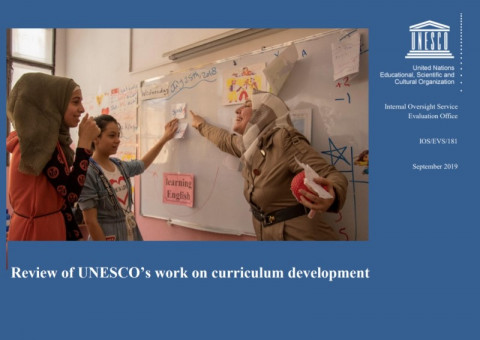 Review of UNESCO’s work on curriculum development Año de publicación: 2019 Autor corporativo: UNESCO In response to a request from the UNESCO Executive Board in Spring 2019, the UNESCO Internal Oversight Service (IOS) Evaluation Office has undertaken this Review to provide a mapping and analysis of UNESCO’s activities in curriculum; to provide an overview of the roles typically played by other national, regional and international actors in the field of curriculum, and to assess the demand for services from UNESCO Member States and donors in the area of curriculum. The review found that curriculum is widely considered as the foundational building block of the education system, resulting from a pedagogical and political consensus with regard to what is important in learning and why, according to both the learner’s needs and societal visions. In light of challenges of the 21st century and the need to strengthen the role of the humanities in a context dominated by technology and data, the redefinition of curriculum has become one of the main concerns of national education authorities around the world. It is also widely accepted that quality curricula can support the attainment of Sustainable Development Goal 4 (SDG 4). The review concluded that curriculum, particularly curriculum development and reform processes, should remain an area of UNESCO’s education programme as it addresses a clear need from Member States. As curriculum implies both technical and political dimensions, UNESCO can act as a neutral broker, to facilitate informed and inclusive policy dialogue. It also has a long-term tradition in facilitating complex curriculum processes in often difficult and sensitive contexts. In addition, UNESCO has the capacity to serve as a platform for international exchanges and comparative research, including through networks such as UNESCO Chairs, and coordinating knowledge hubs and communities of practice. To address curriculum with added value in the future, UNESCO should focus on providing methodological technical assistance, capacity development, standard-setting and policy advice to support the curriculum processes, products and competences in Member States while ensuring a coordinated and holistic perspective. Complementary to work on curriculum from a methodological point of view, thematic Sections at Headquarters should continue elaborating content on specific crosscutting topics. Looking to the future, the review recommends (i) maintaining a specialized category 1 institute as a lead entity on curriculum development; (ii) refining the offer of technical assistance and capacity development to Member States on curriculum development and reform; (iii) developing and maintaining a knowledge base of materials and a roster of experts on curriculum; (iv) providing a platform for policy dialogue and exchange of experience among Member States; and (v) systematizing the inclusion of curriculum in standard-setting and normative work.
  #CommitToEducation Año de publicación: 2019 Autor corporativo: UNESCO In December 2018, building on a series of regional consultations, the education community struck a common chord at the Global Education Meeting in Brussels, the first gathering of its kind since the adoption of the 2030 Agenda. Ministers, representatives of government, multilateral organizations, civil society and other stakeholders agreed on a set of priorities for collective action. These include an overarching focus on the right to inclusive quality education; eradicating illiteracy; including migrants, displaced persons, refugees and stateless persons in education; quality gender-responsive education and training; strengthened education for global citizenship and sustainable development; more flexible and open learning systems providing a broader range of knowledge, skills and competences at all levels; qualified teachers and domestic and international resource mobilization. This set the ground for the first review of SDG 4 by the July 2019 High level Political Forum, the UN apex platform for the follow-up and review of Agenda 2030. As the UN agency responsible for the coordination of SDG 4, mandated by the World Education Forum in Incheon (Republic of Korea, 2015), UNESCO provided an analysis of where the world stands on SDG 4, how countries have taken up the goal in their policies, and made recommendations to act better, differently and collaboratively.
  School, Identity and Discrimination Año de publicación: 2011 Autor: Néstor López Autor corporativo: UNESCO IIEP Office for Latin America and the Caribbean Education, identity and school is just one more link, within the many wills that work for full equality of opportunities. As in other publications of the Institute, the wealth of perspectives is added, which give shape to sometimes pressing realities with a demand for urgent action. The publication is a new opportunity for the voices of different interlocutors to give an account, in their countries and contexts, both of the construction of identity processes, and of their recognition and respect. This also implies raising the obstacles, the contributions and the advances, to face the challenges still pending. In each work presented here, the authors-whose participation and effort we deeply appreciate-offer sharp insights on various tasks and contexts. We wish, to conclude, that this text also contributes to the reflection on the possible courses that have been adopted or that require a deepening of the educational policies, specifically in the agendas related to the themes of this publication. Escuela, identidad y discriminación Año de publicación: 2011 Autor: Néstor López Autor corporativo: UNESCO IIEP Oficina para América Latina y el Caribe Educación, identidad y escuela es solo un eslabón más, dentro de las muchas voluntades que trabajan por la plena igualdad de oportunidades. Como en otras publicaciones del Instituto, se suma la riqueza de perspectivas, que dan forma a realidades en ocasiones acuciantes con demanda de urgente acción. La publicación supone una nueva oportunidad para que las voces de distintos interlocutores den cuenta, en sus países y contextos, tanto de la construcción de procesos identitarios, como de su reconocimiento y respeto. Ello implica también plantear los obstáculos, los aportes y los avances, para afrontar los desafíos aún pendientes. En cada trabajo que aquí se presenta, los autores –cuya participación y esfuerzo agradecemos profundamente– ofrecen agudas miradas sobre diversos quehaceres y contextos. Deseamos, para concluir, que este texto también contribuya a la reflexión sobre los posibles rumbos que se han adoptado o que requieren profundización en las políticas educativas, específicamente en las agendas vinculadas con las temáticas de esta publicación.
 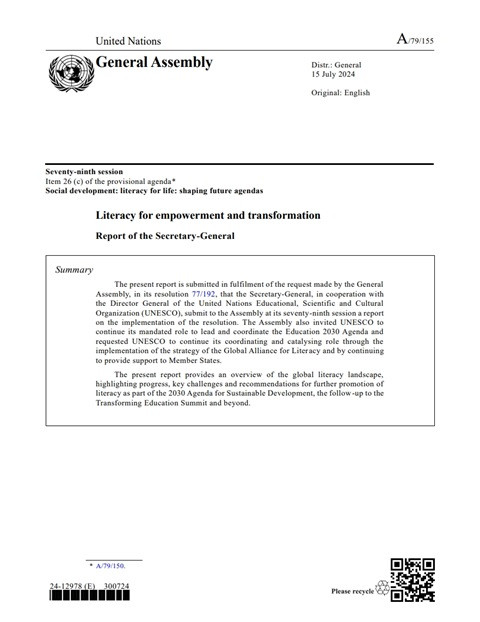 Literacy for Empowerment and Transformation: Report of the Secretary-General Año de publicación: 2024 Autor corporativo: United Nations | UNESCO The present report is submitted in fulfilment of the request made by the General Assembly, in its resolution 77/192, that the Secretary-General, in cooperation with the Director General of the United Nations Educational, Scientific and Cultural Organization (UNESCO), submit to the Assembly at its seventy-ninth session a report on the implementation of the resolution. The Assembly also invited UNESCO to continue its mandated role to lead and coordinate the Education 2030 Agenda and requested UNESCO to continue its coordinating and catalysing role through the implementation of the strategy of the Global Alliance for Liter acy and by continuing to provide support to Member States. The present report provides an overview of the global literacy landscape, highlighting progress, key challenges and recommendations for further promotion of literacy as part of the 2030 Agenda for Sustainable Development, the follow-up to the Transforming Education Summit and beyond.
  평생학습 문화 수용하기: '교육의 미래' 이니셔티브에 대한 기여 Año de publicación: 2020 Autor corporativo: UNESCO Institute for Lifelong Learning (UIL) 유네스코 ‘교육의 미래’ 이니셔티브의 일환으로 발간되는 이 보고서는 교육 분야를 변화시키고, 보다 지속가능하고 건강하며 포용적인 미래를 만들기 위해 이루어진 평생학습의 잠재적 기여를 고찰하고 있다. 이 보고서는 서로 다른 분야와 국가에서 온 12명의 저명한 전문가들의 통찰력을 바탕으로, 평생학습에 대한 확고한 비전과 이를 뒷받침하는 가치와 원칙을 제시한다. 아울러, 교육의 사회적⋅개인적 차원을 인식하고, 평생학습을 새로운 인권으로 인정할 것을 국제사회에 요청하고 있다.이 보고서는 평생학습의 비전을 실현하기 위해서는 인류가 당면한 도전과제의 복잡하고 다차원적인 성격을 효과적으로 파악할 수 있는 초학제적 접근방식을 채택해야 한다고 주장한다. 이 책의 구성은 평생학습을 교육 정책의 주요 원칙으로 삼고, 배경이나 여건에 관계없이 모든 사람들에게 전 생애에 걸쳐 학습 기회를 제공할 수 있는 ‘우호적인 환경’의 주요 특징을 요약하고 있다. 그리고 일련의 주요 메시지를 결론으로 제시하고, 구체적인 행동 방침과 선정된 정책 조치를 보완적으로 논의하고 있다.
 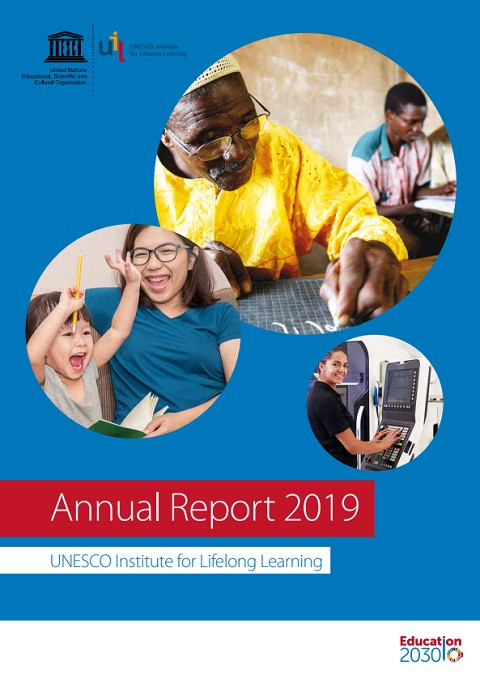 Annual Report 2019: UNESCO Institute for Lifelong Learning Año de publicación: 2020 Autor corporativo: UNESCO Institute for Lifelong Learning (UIL) This report shows how, in 2019, UIL worked to fulfil its mission, with a focus on youth and adults and a special emphasis on UNESCO’s priority areas of Africa and gender equality. UIL’s vision is for all children, young people and adults to benefit from quality lifelong learning opportunities, within the framework of sustainable development and peace. We promote lifelong learning as the leading educational paradigm for inclusive and sustainable learning societies in the context of the United Nations’ 2030 Agenda for Sustainable Development, which provides an ambitious set of goals and targets for Member States that together form a coherent, universal framework of reference for our activities. Working to this framework, and recognizing lifelong learning’s important transversal role not only with respect to Sustainable Development Goal (SDG) 4 on education but across all 17 SDGs, UIL has made an impact across a range of fronts, including in the areas of policy advice, capacity development, research, monitoring, and networking and advocacy. Rapport annuel 2019: Institut de l’UNESCO pour l’apprentissage tout au long de la vie Año de publicación: 2020 Autor corporativo: Institut de l’UNESCO pour l’apprentissage tout au long de la vie (UIL) Ce rapport décrit la façon dont l’Institut a opéré en 2019 pour remplir sa mission en concentrant ses activités sur les jeunes et les adultes, et en mettant particulièrement l’accent sur les domaines prioritaires de l’UNESCO que sont l’Afrique et l’égalité des genres. L’UIL nourrit la vision d’un monde où tous les enfants, tous les jeunes et tous les adultes bénéficient d’offres d’apprentissage de qualité tout au long de leur vie, dans le cadre d’un développement durable et dans un monde en paix. Nous assurons la promotion de l’apprentissage tout au long de la vie en tant que paradigme éducatif majeur de sociétés apprenantes inclusives et durables dans le contexte du Programme de développement durable des Nations unies à l’horizon 2030. Ce programme fournit aux États membres une série d’objectifs et de cibles ambitieux qui, dans leur ensemble, constituent un cadre de référence universel et cohérent pour nos activités. Œuvrant à la réalisation de ce cadre et reconnaissant le rôle important de l’apprentissage tout au long de la vie, non seulement dans l’optique de l’Objectif de développement durable 4 (ODD 4) sur l’éducation, mais aussi, de façon plus générale pour réaliser les 17 ODD, l’UIL s’est engagé sur différents terrains tels que la formulation des politiques et leur mise en œuvre, le développement des capacités, la recherche, le pilotage et suivi ainsi que la mise en réseau et le plaidoyer.
  A Transformative Agenda: Outcomes of the CONFINTEA VII Regional Preparatory Conferences Año de publicación: 2022 Autor corporativo: UNESCO Institute for Lifelong Learning (UIL) In preparation for the Seventh International Conference on Adult Education (CONFINTEA VII), in Marrakech, Morocco, in June 2022, a series of regional conferences took place between February and September 2021, in some cases preceded by sub-regional consultations. Each of the regional preparatory conferences produced an outcome document summarizing the discussion, including key achievements in adult learning and education, crucial challenges and key recommendations. This document provides a synthesis of the outcomes of these regional and subregional consultations and will contribute to the Marrakech Framework for Action, the main outcome document from CONFINTEA VII, as well as providing a guide for all relevant stakeholders and UNESCO Member States to the key current issues in adult learning and education.