
Recursos
Exploren una amplia gama de recursos valiosos en GCED para profundizar su comprensión y promover su búsqueda, incidencia, enseñanza y aprendizaje.
3,229 resultados encontrados
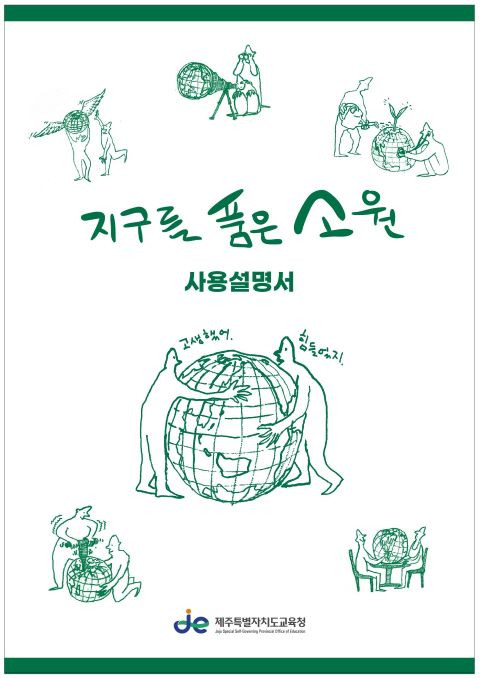 지구를 품은 소원: 지역연계 탄소중립실천 교육자료(중등용 교구) Año de publicación: 2024 Autor corporativo: 제주특별자치도교육청 탄소중립실천 독서프로그램 교구(중등용) [지구를 품은 소원]입니다. 구성품은 아래와 같습니다.1. [지구를 품은 소원] 사용설명서2. [소원을 위한 지식]3. 질문카드(실천카드, 지식카드, 책카드, 미션카드)4. 단어카드 5. [지구를 품은 소원] 매뉴얼
 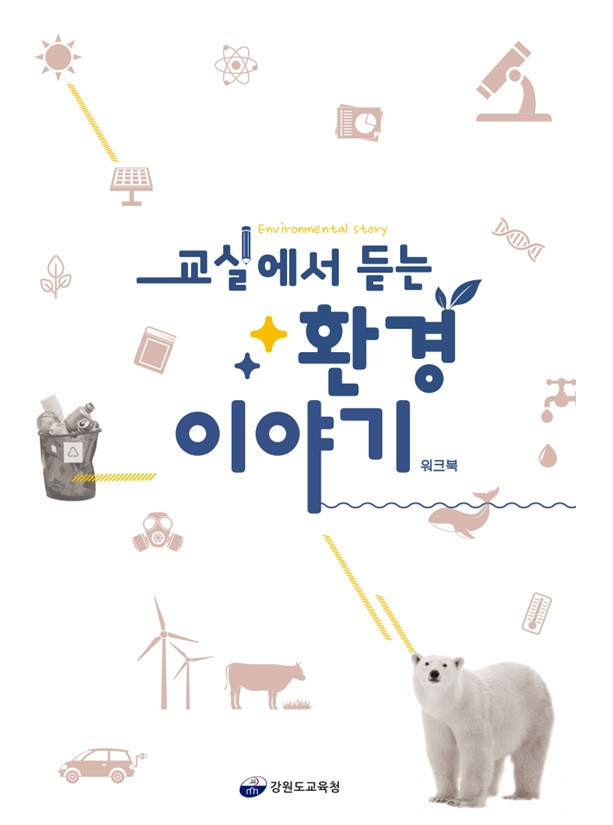 워크북: 교실에서 듣는 환경 이야기 Año de publicación: 2022 Autor: 김진영 | 박영식 | 유미리 | 이전기 | 이현지 | 정준영 | 홍성택 Autor corporativo: 강원도교육청 강원도에서 초등학교를 다니는 5, 6학년 학생을 위한 교재입니다. 쓰레기, 물 부족, 탄소중립, 기후변화, 신재생에너지 등 최근 이슈가 되고 있는 환경문제를 우리 지역 사례를 통해 쉽게 이해할 수 있도록 했습니다. 특히 과도한 위기의식이나 좌절감을 느끼지 않도록 부정적인 요소를 강조하지 않았습니다. 나의 삶과 환경이 어떤 관계가 있는지 생각해 볼 수 있는 기회가 될 것입니다.
 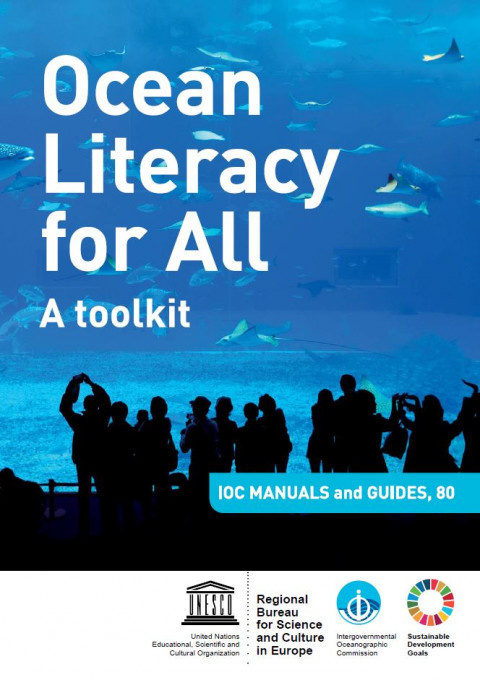 Ocean Literacy for All: A Toolkit (IOC Manuals and Guides, 80) Año de publicación: 2017 Autor: Francesca Santoro | Selvaggia Santin | Gail Scowcroft | Géraldine Fauville | Peter Tuddenham Autor corporativo: UNESCO Venice Ocean literacy programs and projects, until now, have been mainly focusing on developing resources, lesson plans and activities targeting Science, Technology, Engineering and Mathematics (STEM) education. Currently, and in particular after the adoption of the Sustainable Development Goal (SDG) 14, we have assisted to a shift in the focus towards the inclusion of approaches closer to those developed under the UNESCO framework of Education for Sustainable Development (ESD).ESD aims to improve access to quality education on sustainable development at all levels and in all social contexts, to transform society by reorienting education and help people develop knowledge, skills, values and behaviors needed for sustainable development. Individuals are encouraged to be responsible actors who resolve challenges, respect cultural diversity and contribute to creating a more sustainable world. This publication is made of two parts. The first part presents the history of ocean literacy, and describes its framework made of 7 essential principles, and connects them to international ocean science programs that contributes to enhancing ocean knowledge and observations. Moreover, marine scientists and educators were interviewed to share their professional experiences on ocean literacy as well as their views on its future. The last chapter of part 1 describes the existing challenges to marine education, as well as the path for the development of successful ocean literacy activities in the context of the 2030 Agenda. One of the most important factors identified is related to the creation of multi-sector partnerships among the education, government, and private sector that have jointly built ocean literacy programs for all formal educational levels from the primary school to the university level as well as for non-formal learners. Worldwide examples of such programs are presented. The second part, after introducing the methodological approach based on the multi-perspective framework for ESD developed by UNESCO, presents 14 activities that could provide tested examples and support for the implementation of marine education initiatives. The aim is not to provide a one size-fits-all ready to use collection, but rather to offer support and examples of what could be then adapted for different geographical and cultural contexts. The resources are designed to be relevant for all learners of all ages worldwide and to find their application in many learning settings, while in their concrete implementation they will, naturally, have to be adapted to the national or local context. Cultura oceánica para todos: kit pedagógico (COI Manuales y guías, 80) Año de publicación: 2017 Autor: Francesca Santoro | Selvaggia Santin | Gail Scowcroft | Géraldine Fauville | Peter Tuddenham Autor corporativo: UNESCO Venice Más que un concepto, la cultura oceánica es una herramienta fundamental para mejorar el conocimiento sobre el océano y estimular la participación activa de los ciudadanos y de las partes interesadas en la implementación de acciones sostenibles. Es también una manera de promover prácticas de producción sostenible, formular sólidas políticas públicas marinas, promover una ciudadanía más responsable, y animar a los jóvenes a iniciar una carrera en la economía azul o en las ciencias oceánicas. Esta publicación pretende describir y revisar los actuales enfoques, iniciativas, programas y proyectos sobre cultura oceánica. La primera parte ilustra los principios esenciales de la cultura oceánica y evidencia el conocimiento científico subyacente a través de estudios de casos, datos históricos e información cultural. Asimismo, muestra los esfuerzos actuales que realiza la cultura oceánica desde una perspectiva multidisciplinaria mediante entrevistas a expertos, educadores y científicos que trabajan y estudian en todo el mundo. La segunda parte presenta catorce actividades que proporcionan herramientas y buenas prácticas basadas en las competencias clave necesarias para que alumnos de todas las edades conozcan y se comprometan activamente con los temas sobre el desarrollo sostenible. Estas actividades pueden ser adaptadas a las necesidades y a los recursos disponibles. Las referencias adicionales que se proporcionan sirven para ampliar la información de los temas propuestos. Con este manual, la UNESCO y su Comisión Oceanográfica Intergubernamental (COI) pretenden que los países y las partes interesadas participen en el desarrollo de actividades interdisciplinarias y culturalmente diversas sobre cultura oceánica a escala mundial.
  Education and Disability: Analysis of Data from 49 Countries (UIS Information Paper No. 49) Año de publicación: 2018 Autor corporativo: UNESCO Institute for Statistics (UIS) Sustainable Development Goal (SDG) 4 calls for “inclusive and quality education for all”. Persons with a disability are among the population groups most likely to suffer from exclusion from education but data that permit an analysis of the links between disability and education remain scarce.This paper examines educational disparities linked to disability based on data from 49 countries and territories for five education indicators: Proportion of 15- to 29-year-olds who ever attended school Out-of-school rate (primary school age, lower secondary school age) Completion rate (primary education, lower secondary education) Mean years of schooling of the population 25 years and older Adult literacy rate (population 15 years and older)
  2018 High-level Political Forum: Contribution from the SDG-Education 2030 Steering Committee Año de publicación: 2018 Autor corporativo: SDG-Education 2030 Steering Committee ECOSOC invited intergovernmental bodies, including the SDG-Education 2030 Steering Committee, to contribute to the 2018 High-level Political Forum. This contribution is based on the HLPF mandated structure for all submissions, and suggested focus areas from the perspective of SDG4 based on discussions held during the last SDG-Education 2030 Steering Committee meeting (Paris, 28 February – 2 March 2018).
  Address by Irina Bokova, Director-General of UNESCO, on the occasion of the Ethics in Action event, Casina Pio IV in the Vatican Gardens; Vatican, 16 October 2017 Año de publicación: 2017 Autor corporativo: UNESCO. Director-General, 2009-2017 (Bokova, I.G.) This address was delivered by Irina Bokova, Director-General of UNESCO, on the occasion of the Ethics in Action event, Casina Pio IV in the Vatican Gardens; Vatican, on 16 October 2017.
 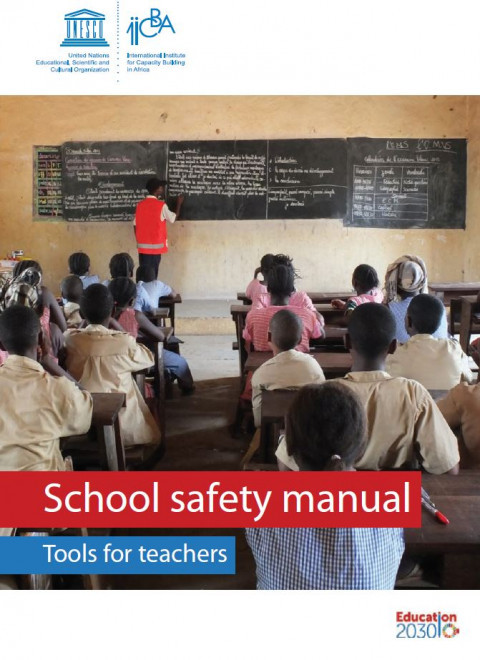 School Safety Manual: Tools for Teachers Año de publicación: 2017 Autor corporativo: UNESCO International Institute for Capacity-Building in Africa (IICBA) This manual was produced as part of the Teacher Training and Development for Peace-building in the Horn of Africa and Surrounding Countries project and aims to introduce teachers to the knowledge and skills needed for the establishment, maintenance and sustainment of basic school safety. As more children are enrolling in school in Africa, creating a safe and peaceful environment must be a top priority of teachers and educational institutions.The responsibility of schools to provide a safe environment for their students has been affirmed in the United Nations (UN) Sustainable Development Goal (SDG) four on Education.
  Metadata for the Global and Thematic Indicators for the Follow-up and Review of SDG 4 and Education 2030 Año de publicación: 2017 Autor corporativo: UNESCO Institute for Statistics (UIS) This document contains standardised metadata for each of the proposed global and thematic indicators for monitoring Sustainable Development Goal 4 (SDG 4) and the Education 2030 Agenda.The metadata included in this document have been developed by the UIS and are based on the set of thematic indicators approved by the Technical Cooperation Group on SDG 4–Education 2030 Indicators, a group set up in 2016 to provide the technical platform to support the implementation of the thematic indicator framework for the follow-up and review of SDG 4 and the Education 2030 Agenda. Метаданные глобальных и тематических показателей для сопровождения и обзора "ЦУР 4" и программы «Образование-2030" Año de publicación: 2017 Autor corporativo: UNESCO Institute for Statistics (UIS) Этот документ содержит стандартизованные метаданные для каждого из предлагаемых глобальных и тематических показателей для мониторинга Цели 4 устойчивого развития (SDG 4) и Повестки дня "Образование-2030".Метаданные, включенные в этот документ, были разработаны Институтом статистики ЮНЕСКО и основаны на наборе тематических показателей, одобренных Группой технического сотрудничества по индикаторам ЦУР 4 - "Образование-2030", созданной в 2016 году для предоставления технической платформы по поддержке реализации структуры тематических показателей для последующей деятельности и обзора ЦУР 4 и Повестки дня "Образование-2030".