
Recursos
Exploren una amplia gama de recursos valiosos en GCED para profundizar su comprensión y promover su búsqueda, incidencia, enseñanza y aprendizaje.
3,448 resultados encontrados
 Осуществление целей устойчивого развития в регионе СПЕКА Año de publicación: 2017 Autor corporativo: United Nations Economic Commission for Europe (UNECE) Данное исследование направлено на анализ связей между работой по достижению Целей устойчивого развития (ЦУР) в национальных рамках стран, участвующих в Специальной программе ООН для экономик Центральной Азии (СПЕКА) и определение областей, в которых будет полезно сотрудничество этих стран в рамках СПЕКА. Анализ приведет к выработке политических рекомендаций относительно того, как региональное сотрудничество в рамках СПЕКА может способствовать прогрессу в реализации ЦУР.
  Violent extremism in Central Asia 2018: A preliminary survey of groups, digital dimensions and state responses Año de publicación: 2018 Autor corporativo: Civil Initiative on Internet Policy | SecDev This research has been produced within the framework of the “Contributing to stability and peace in Central Asia through media literacy, improved reporting and regional cooperation” Project implemented by Internews and funded by the European Union. The contents of this research are the sole responsibility of The SecDev Group, and Public Foundation Civil Initiative on Internet Policy and can not be regarded as reflecting the position of the European Union and Internews under any circumstances. Насильственный экстремизм в Центральной Азии, 2018: обзор террористических групп, законодательства стран ЦА и правоприменительной практики по противодействию насильственному экстремизму онлайн Año de publicación: 2018 Autor corporativo: Civil Initiative on Internet Policy | SecDev Исследование проведено совместно с общественным фондом «Гражданская инициатива интернет - политики» и организацией The SecDev Group в рамках проекта «Содействие стабильности и миру в Центральной Азии посредством повышения медиа-грамотности, эффективного освещения и регионального сотрудничества», финансируемого Европейским союзом и реализуемого Интерньюс. Содержание этого исследования является исключительной ответственностью организации The SecDev Group и общественного фонда «Гражданская инициатива интернет-политики» и ни при каких обстоятельствах не отражает позицию Европейского Союза и Интерньюс.
  إستراتيجية مكافحة التصحر لتحقيق التنمية المستدامة في الوطن العربي : دراسة برنامج الجزائر الوطني لمكافحة التصحر Año de publicación: 2019 Autor: Boshwait Qairouz إن البحث عن استراتيجيات مستدامة لمكافحة التصحر تحترم البيئة الطبيعية وتحقق العدالة الاجتماعية إضافة إلى تحقيق الفعالية الاقتصادية في المناطق المتضررة من العالم أصبحت من القضايا الهامة التي تخص كل الدول خاصة الدول العربية، لما لمشكلة التصحر من عواقب وخيمة تعود بالضرر على اتمعات البشرية من الناحية الاقتصادية والاجتماعية وكذا البيئية، وبالتالي عدم تحقق التنمية المستدامة التي أصبحت من متطلبات العصر والرامية إلى تحسين الجانب الاجتماعي والاقتصادي تحت إطار حماية البيئة. ومنه نطرح التساؤل التالي: هل تتبع الدول العربية إستراتيجية واحدة لمكافحة التصحر والتي تأخذ في الاعتبار مبادئ التنمية المستدامة؟ وما هو واقع ذلك في الجزائر من خلال البرنامج الوطني لمكافحة التصحر؟ Strategy to Combat Desertification to Achieve Sustainable Development in the Arab World: A Study of Algeria 's National Program to Combat Desertification Año de publicación: 2019 Autor: Boshwait Qairouz Regarding to its impacts on the economic, social and environnemental levels, desertification became one of critical environnemental issue that disturbs the international community. Especially in the dry land, semi dry land and semi humid dry lands. Desertification is the great durable development challenge based on three dimensions: economical efficiency, social justice and nature protection. Viewing the international trends towards achieving durable development, the Arab countries must create new durable strategies and methods, in order to face the phenomenon, these strategies should include the following dimensions: economical, social and environnemental one. Accounting the different reasons of desertification, its intensity and considering the financing capacity, it so difficult to expect one typical strategy that suits each Arab countries. To face such problem, Algeria like the other damaged countries takes needful procedures to combat this problem following a national programme which started in the sixteenth oh last century. To sum up, now days desertification till now a global issue, but the question which rest posing, If may we remove definitely such problem?
 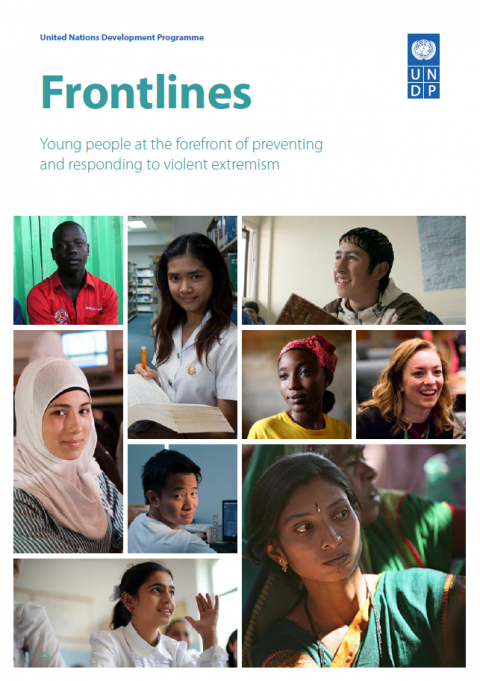 Frontlines - Young people at the forefront of preventing and responding to violent extremism Año de publicación: 2019 Autor corporativo: United Nations Development Programme (UNDP) The Frontlines global report was developed by the United Nations Development Programme (UNDP), under the umbrella of the UNDP Youth Global Programme for Sustainable Development and Peace (Youth-GPS 2016–2020), and in collaboration with the Oslo Governance Centre (OGC). This new global research initiative was made possible with generous support by the Government of Norway. The report puts forward and synthesizes data from field case studies/focus group discussions, a mapping of youth-led actions in the five regions, a global literature review, and a global survey on Youth and countering and preventing violent extremism for practitioners, to better understand young people’s aspirations and perceptions and improve programming. It is titled “Frontlines” in recognition of the fact that young people are already at the forefront of efforts to address and prevent violent extremism (PVE). Effective and long-term prevention approaches require the active support of, and investment in, young people’s holistic development priorities, their initiatives and their participation in decision-making.
  Asia and the Pacific SDG Progress Report 2019 Año de publicación: 2019 Autor: Arman Bidarbakht Nia | Eric Hermouet | Dayyan Shayani | Phuong Tran Autor corporativo: United Nations (UN) This report analyses Sustainable Development Goals (SDGs) trends as well as data availability for monitoring progress in Asia and the Pacific and its five subregions. It assesses progress towards the SDGs and the gaps which must be closed for these to be achieved by 2030. This assessment is designed to ensure the region’s actions remain on target, shortcomings are addressed as they arise, and all interested parties remain engaged. It is an invaluable resource for all stakeholders involved in prioritisation, planning, implementation and follow-up of the 2030 Agenda for Sustainable Development in Asia and the Pacific.
  Improving early-grade performance for 2030: measurement and estimation options for innovative policy dialogue Año de publicación: 2019 Autor: Helen Abadzi Autor corporativo: UNESCO International Bureau of Education (IBE) Governments and donors are faced with the challenge of attaining the 2030 Sustainable Development Goals (SDGs). One of the challenges for education is to measure and set benchmarks that indicate whether people have developed sufficient core literacy and numeracy skills to function in the complex literate environments of the 21st century. Benchmark setting has proved difficult in education because stakeholders find it hard to define which variables really matter and how they can be measured. Measurement of skills particularly in grades 1‐3 is highly relevant for policy dialogue, because this is when many students fall behind. Donors use existing national, regional, and international assessments, for which longitudinal data are available. However, assessments require reading fluency and do not focus on the lowest literacy and numeracy levels, so they may overestimate or underestimate learners’ skills in grades 1‐3. Governments need specific feedback as soon as possible of likely student performance by 2030 so that they can take measures to improve performance by then. This monograph aims to publicize options for measuring early literacy and numeracy skills, using neuroscientific insights. These may help develop interventions that could accelerate early learning, facilitate monitoring and promote policy interventions to accelerate the achievement of the SDG 4.1 goals in various countries by 2030. The research evidence presented indicates that: Performance benchmarks can be set using reading and math fluency research;The performance of lower grades worldwide could be monitored through brief tests, measuring concepts that have high predictive validity, derived from cognitive science;If these test results were linked to international and national assessments, statistical models could be developing to estimate roughly how populations of various countries are likely to score in 2030;Clear feedback, along with recommendations for appropriate interventions, would allow countries and donors to engage in targeted policy dialogue to close the gap;Improved performance in grade 1 would improve performance in subsequent grades;With sufficient emphasis, funding, and space logistics, illiteracy among low‐income students could be eliminated in about 7 years and near‐universal and sustainable literacy could be attained by 2030.
 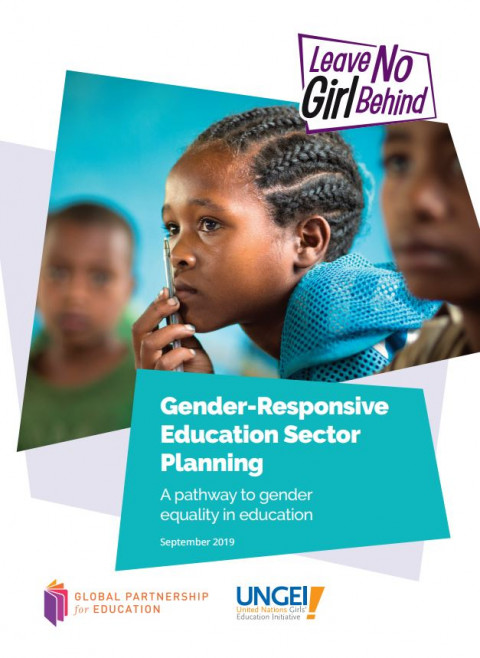 Gender-responsive education sector planning: A pathway to gender equality in education Año de publicación: 2019 Autor corporativo: Global Partnership for Education (GPE) | United Nations Girls' Education Initiative (UNGEI) Education transforms lives. It is the surest investment to break down social and economic differences between people, unravel inequalities based on gender and accelerate progress towards the entire vision of the 2030 Agenda for Sustainable Development. Yet, despite the world’s commitment to ensure every child completes 12 years of quality education, in low-income countries only 4% of the poorest finish upper secondary school, falling to 2% among marginalized girls.Sustainable Development Goal 4, inclusive and equitable quality education for all, is about much more than education access. It calls for education policies to look beyond gender parity in school enrollment in order to put gender equality at the heart of education through gender-sensitive plans and policies. Gender-responsive education sector planning is an essential tool for advancing gender equality in and through education.
  New Methodology Shows that 258 Million Children, Adolescents and Youth Are Out of School Año de publicación: 2019 Autor corporativo: UNESCO Institute for Statistics (UIS) This fact sheet presents the latest UIS data on education available as of September 2019.Three years after the adoption of Sustainable Development Goal 4 (SDG 4) and the promise to provide universal primary and secondary education, there has been no progress in reducing the global number of out-of-school children, adolescents and youth. This fact sheet by the UNESCO Institute for Statistics (UIS) highlights the most recent statistics on trends at the global and regional levels, based on a revised calculation method that provides more precise estimates of the out-of-school population.