
Recursos
Exploren una amplia gama de recursos valiosos en GCED para profundizar su comprensión y promover su búsqueda, incidencia, enseñanza y aprendizaje.
2,790 resultados encontrados
 Education for Immigrant Children, and Youth in the Americas: Current Situation and Challenges Año de publicación: 2011 Autor: María Cecilia Sleiman Autor corporativo: Organization of American States (OAS) This report is a synthesis of the results of the "Mapping of Education Policies and Programs for migrant children and youth (2009)" and of the case studies carried out during 2010 within the framework of the project "Education of children and young migrants ”, carried out by the Office of Education and Culture of the OAS. Educación para niñas, niños y jóvenes inmigrantes en las Américas: Situación actual y desafíos Año de publicación: 2011 Autor: María Cecilia Sleiman Autor corporativo: Organization of American States (OAS) Este informe es una síntesis de los resultados del “Mapeo de Políticas y Programas de educación de niños, niñas y jóvenes migrantes (2009)” y de los estudios de caso realizados durante el año 2010 en el marco del proyecto “Educación de niños, niñas y jóvenes migrantes”, llevado adelante por la Oficina de Educación y Cultura de la OEA.
  평화견문록: 평화와 공존을 위한 세계시민교육; 교과통합형 세계시민교육 수업자료집 Año de publicación: 2019 Autor: 강방식 | 강은하 | 김경훈 | 김웅 | 김준구 | 김지광 | 여지화 | 윤상철 | 임재민 | 정미선 | 정애경 Autor corporativo: 서울특별시교육청 민주시민생활교육과 본 자료는 학생들의 평화감수성 함양을 위해 학생들이 일상적인 삶에서 경험할 수 있는 소재를 활용한 세계시민교육 수업활동집이다. 학생들은 다양한 관점을 연결하는 교과통합형 세계시민교육을 통해 문제해결력과 비판적 사고를 함양할 수 있다.
  La persona más allá de la migración: Manual de intervención psicosocial con personas migrantes Año de publicación: 2010 Autor: Luisa Melero Valdéz Autor corporativo: Compromiso Social Bancaja Este libro recoge diferentes miradas sobre la intervención psicosocial alrededor del tema de la migración y brinda herramientas teóricas y prácticas para trabajar sobre este tópico.
  Preparation of National Action Plans Against Racial Discrimination: Practical Guide Año de publicación: 2014 Autor corporativo: United Nations (UN) This publication is a practical guide for the development of national plans of action against racial discrimination. National action plans are the basis for the development of a comprehensive public policy against racial discrimination and therefore can help States to comply with their international human rights obligations related to the elimination of racial discrimination.
  Global Education for Teachers: MOOC Año de publicación: 2020 Autor: Nicole Blum | Frances Hunt Autor corporativo: University College London (UCL) The Global Education for Teachers MOOC (Massive Online Open Course) is a three-week course for teachers (3 hours per week) around the world hosted by FutureLearn. The course has been designed specifically for teachers as an introduction to global education and related terms such as global learning / global citizenship education. It will engage teachers with key issues and debates in global education, support collaboration between teachers around the world and provide practical support on how to introduce global issues into teaching. It is intended to develop teachers’ confidence, knowledge and skills to include global education in teaching and in so doing, better prepare students to take on the global challenges they will face now and in the future.
 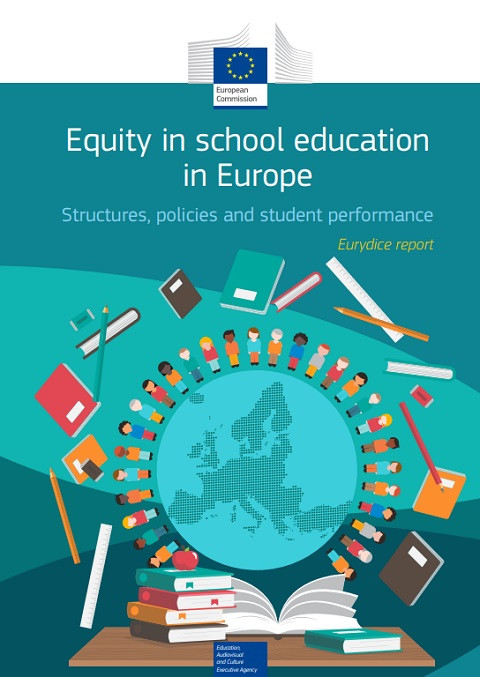 Equity in School Education in Europe: Structures, Policies and Student Performance; Eurydice Report Año de publicación: 2020 Autor: Teodora Parveva | Anna Horváth | Anita Krémó | Emmanuel Sigalas | Christian Monseur Autor corporativo: European Commission | Education, Audiovisual and Culture Executive Agency (EACEA) | Eurydice This report provides an overview of education structures and policies that influence equity in school education. It connects these system-level features to student performance in international student assessment surveys (PISA, PIRLS and TIMSS). Looking at 42 European education systems, the report identifies which policies and structures are associated with higher levels of equity in student performance. The report examines the following education system features: participation in early childhood education and care, school funding, differentiation and school types, school choice, admissions policies, tracking systems, grade repetition, school autonomy, school accountability, support for disadvantaged schools, support for low-achieving students and the opportunity to learn.
  التربية الوقائية للمؤسسات التربوية فى مواجهة التطرف الفكرى Año de publicación: 2015 Autor: Muhammad Hassan Autor corporativo: Ain Shams University تتلخص المشكلة في هذه الدراسة بالسؤال التالي: كيف تواجه المؤسسات التربوية مشكلة التطرف الفكري من خلال التربية الوقائية؟ من هنا تستهدف الدراسة تحقيق بعض الفوائد للمهتمين بشأن التربية ومواجهة التطرف، مثل: 1) التعرف على مفاهيم التطرف والتربية الوقائية في مواجهته. 2) التعرف على مخاطر ظاهرة التطرف الفكري وآثاره بين أفراد المجتمع. 3) التعرف على أبرز التحديات الإقليمية ذات التأثير المباشر في نشر الفكر المنحرف. 4) الوقوف على الدور التربوي في التصدي لهذه الظاهرة ممثلاً في بعض المؤسسات التربوية. 5) إبراز بعض المتطلبات التربوية في الوقاية من مخاطر التطرف الفكري.تعتمد هذه الدراسة على المنهج الوصفي التحليلي. بعد إجراءات الدراسة التي تضمنت ما يلي: التربية الوقائية وتحديات العصر حيث تم عرض مفهوم التربية وأهميتها وأهدافها ومجالاتها والتحديات الفكرية المعاصرة التي تؤثر في موضوع الدراسة، من ثم التطرف الفكري: مفهومه أسبابه وأخطاره، انتقالاً إلى متطلبات الدور الوقائي للتربية في مواجهة التطرف الفكري. خلصت الدراسة إلى ما يلي: إن التطرف الفكري لا يعبر عن حالة معزولة عن السياق الاجتماعي والثقافي العام، بل هو ضرورة أحد نتاجاته المباشرة أو الضمنية. ومن هنا، فإن أية معالجة للتطرف الفكري يجب أن تدرك واقع الأسرة والمدرسة والجامعة والمسجد، والإنتاج الثقافي والإعلامي. وكلما اتجهت المعالجات اتجاهاً أفقياً، يلحظ الأبعاد والعناصر المختلفة، كانت النتائج أكثر جدوى وفائدة. Preventive Education for Educational Institutions in Confronting Ideological Extremism Año de publicación: 2015 Autor: Muhammad Hassan Autor corporativo: Ain Shams University The problem in this study is summarized by the following question: How do educational institutions face the problem of ideological extremism through preventive education? Hence, the study aims to achieve some benefits for those interested in education and confronting extremism, such as: 1) Identifying the concepts of extremism and preventive education in facing it. 2) Identify the dangers of the phenomenon of intellectual extremism and its effects among members of society. 3) Identifying the most prominent regional challenges that have a direct impact on spreading deviant thought. 4) Standing on the educational role in confronting this phenomenon, as represented by some educational institutions. 5) Highlighting some educational requirements in preventing the dangers of intellectual extremism.This study relies on the analytical descriptive approach. After the study procedures, which included the following: Preventive education and the challenges of the times, where the concept of education, its importance, objectives and fields, and contemporary intellectual challenges affecting the subject of study were presented, and then intellectual extremism: its concept of its causes and dangers, moving to the requirements of the preventive role of education in facing intellectual extremism. The study concluded the following: Intellectual extremism does not express a situation isolated from the general social and cultural context, but rather the necessity of one of its direct or implicit results. Hence, any treatment of intellectual extremism must be aware of the reality of the family, school, university, mosque, and cultural and media production. The more treatments are directed horizontally, noting the different dimensions and elements, the more feasible and beneficial the results will be.
  Effects and Limits of Core Schools for Multicultural Education (The Journal of Curriculum and Evaluation; Vol. 19, No. 1) Año de publicación: 2016 Autor: Hyosun Kim | Wonpyo Hong Autor corporativo: Korea Institute for Curriculum and Evaluation (KICE) This study investigates curriculum programs of core schools for multicultural education and teachers’ responses to their effects and limits. To address these topics, this study analyzes curricular documents collected from 18 elementary and secondary schools selected as exemplary cases in 2014. It also conducted in-depth interviews with 14 teachers who are in charge of planing and implementing multicultural programs in core schools. Major results support that multicultural core schools expand the targets of multicultural education to mainstream students, their parents and local residents beyond minority students and their parents. It turned out, however, that multicultural core schools still tend to untouch structural biases and discriminations, while focusing on extending students’ awareness of cultural and racial diversities. This study also reveals that participating teachers face such difficulties as heavy workloads, lack of collaboration from local schools, and lack of relevant experiences and instructional materials. Based on these results, this study suggests the sharing of successful programs, enhancing teachers awareness of the significance of multicultural education, and further supports for teachers in charge of multicultural education to achieve the targeted goals of multicultural core schools.