
Recursos
Exploren una amplia gama de recursos valiosos en GCED para profundizar su comprensión y promover su búsqueda, incidencia, enseñanza y aprendizaje.
1,450 resultados encontrados
 Multicultural Education between Theoretical Modeling and Problematic Practices: A Comparative Study between Egypt, France, and Japan Año de publicación: 2006 Autor: Ahmed Aidrous | Mohammed Awad Autor corporativo: Zagazig University This paper focuses on studying multiculturalism as a concept, theories, frameworks and associated applied models. The study reviews the experience of France, Japan and Egypt, and makes comparisons between them. The study ends with a proposed vision for multicultural education in light of the experiences presented.
 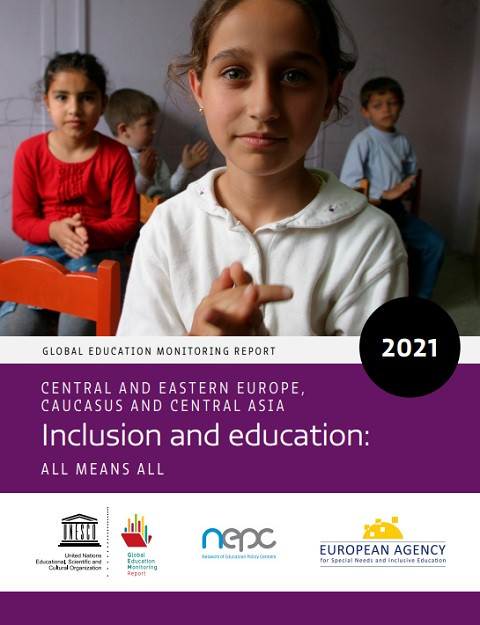 Global Education Monitoring Report, 2021, Central and Eastern Europe, Caucasus and Central Asia: Inclusion and Education; All Means All Año de publicación: 2021 Autor corporativo: Global Education Monitoring Report Team | European Agency for Special Needs and Inclusive Education | Network of Education Policy Centers Prepared by the Global Education Monitoring (GEM) Report, in partnership with the European Agency for Special Needs and Inclusive Education and the Network of Education Policy Centers, the regional report on inclusion and education in Central and Eastern Europe, the Caucasus and Central Asia offers a deep dive into the core challenges and key solutions. The region is working hard to overcome a legacy, whereby children with disabilities attended special schools, once wrongly regarded as an effective solution, segregated by type of disability, if not fully excluded from education.The report draws on in-depth profiles of 30 education systems in the region. It also presents the additional risks to inclusion now posed by the COVID-19 pandemic. Building on the 2020 Global Education Monitoring Report, it documents barriers facing learners, particularly where multiple disadvantages intersect. Its recommendations provide a systematic framework for identifying and dismantling these barriers, according to the principle that ‘every learner matters and matters equally’. Всемирный доклад по мониторингу образования 2021 г. : для всех означает для всех инклюзивность и образование; центральная и восточная европа,кавказ и средняя азия Año de publicación: 2021 Autor corporativo: Global Education Monitoring Report Team | European Agency for Special Needs and Inclusive Education | Network of Education Policy Centers В этом докладе описана огромная и географически разнородная территория, которую объединили в один регион схожие образовательные системыи подходы, сформированные во второй половине 20 века в рамках государственного социализма. Образование было доступно, гендерное неравенство и неравенство, связанное с местом проживания, было искоренено. Но образовательные системы подвергали дискриминации детей с особыми потребностями, которые посещали специальные школы. Это решение ошибочно считалось эффективным: ученики разделялись по типу инвалидности, а некоторые из них полностью исключались из системы образования.Начиная с 1989 года, регион старается преодолеть это тяжелое наследие и перейти к инклюзивному образованию, основанному на правах человека, подходу, который часто поддерживается международными организациями. В законодательство и образовательную политику было включено более широкое понимание инклюзии. Педагогическое образование и программы повышения квалификации учителей были пересмотрены и реструктурированы. Тем не менее, прогресс неравномерен. Многие изменения произошли на бумаге, в то время как глубинные убеждения и реальная практика практически не изменились. В то же время образовательные системы пытаются преодолеть негативные последствия политического и экономического кризисов, которые углубили неравенство и усилили социальную напряженность. Такие факторы как гендер, удаленное место проживания, бедность, этническая принадлежность, язык, миграция, принадлежность к числу перемещенных лиц, тюремное заключение, сексуальная ориентация, гендерная идентичность и религиозные и другие убеждения связаны с неравенством образовательных возможностей.Составленный группой по подготовке Всемирного доклада по мониторингу образования, в партнерстве с Европейским агентством по специальным потребностям и инклюзивному образованию и Сетью центров образовательной политики, этот доклад содержит подробные описания 30 образовательных систем региона. В докладе также представлены дополнительные риски для инклюзии, возникшие в результате пандемии COVID-19. Основываясь на Всемирном докладе ЮНЕСКО по мониторингу образования, этот документ фиксирует барьеры, с которыми сталкиваются учащиеся. Рекомендации, данные в докладе, предлагают систему для выявления и устранения этих барьеров, в основе которой лежит принцип «каждый ученик важен и важен одинаково».
 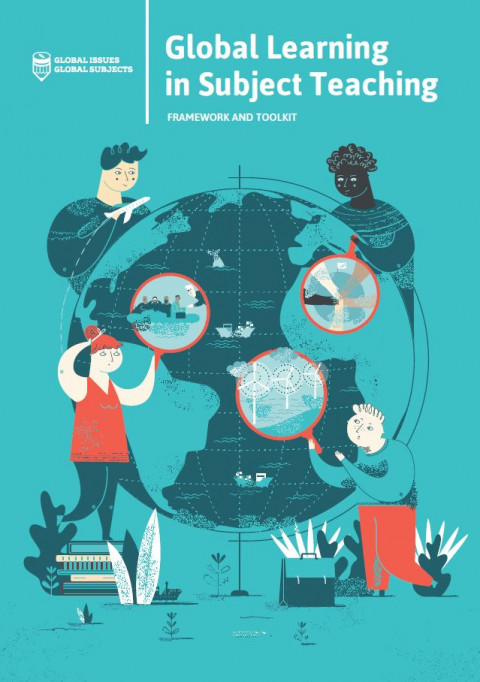 Global Learning in Subject Teaching: Framework and Toolkit Año de publicación: 2020 Autor corporativo: Center for Citizenship Education (CCE) | Global Issues, Global Subjects (GIGS) The brochure 'Global Learning in Subject Teaching: Framework and Toolkit' has been developed as a proposal for teachers, educators and educational institutions on how to reach pupils with Global Learning. In its practical part, the brochure provides the reader with a toolkit of 20 ready-to-use lesson plans for subject lessons where the subject curriculum topics are linked with global issues such as migration, climate change and gender equality.
  老年教育模式的探索与启示 : 基于德国老年教育多元化模式的分析 (老龄化研究 第11卷 第2期) Año de publicación: 2024 Autor: 李明悦 Autor corporativo: 汉斯出版社 德国是欧洲老龄化程度最高的国家,在全球的范围内仅次于日本。老年教育作为德国老年人学习的主要 途径,成为他们参与社会活动的重要方式之一。20世纪中后期,德国老年教育经历了孕育、起始与发展 三个阶段。如今,多元化成为德国老年教育模式的显著特征,主要体现在教育形式、课程设置、教育理 念、教师队伍以及资金来源五个方面。本文从德国老年教育的历史背景、发展过程、呈现特点与影响因 素四方面着手,以此得出德国老年教育的多元化模式对我国的启示。
 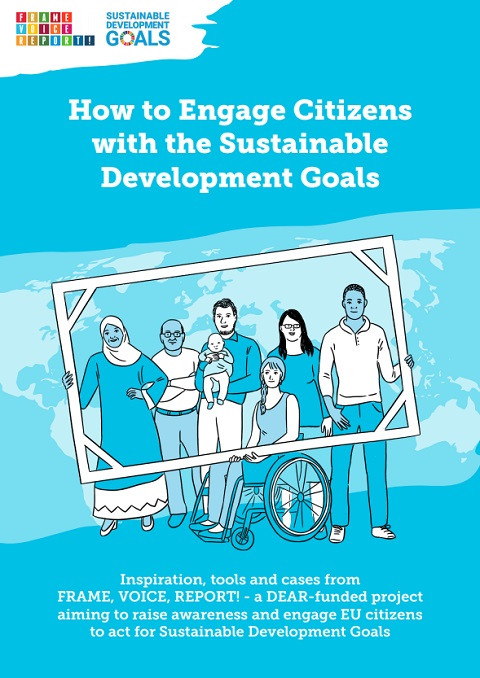 How to Engage Citizens with the Sustainable Development Goals Año de publicación: 2020 Autor corporativo: Finnish Development NGOs Fingo The purpose of this booklet is to share reflections, successes and learning outcomes from the FRAME, VOICE, REPORT! (FVR) project.It can be used to find inspiration from other civil society organisations (CSOs) working on the same topics and themes you do, but also as a source for ideas for new ways of looking at old issues.This booklet covers both the more theoretical approaches and concrete cases from CSOs across Europe. These cases are examples of the many projects funded by the FVR.The project had its roots in the previous successes and tried and tested approaches of the partner organisations. The aim of FVR! was to secure resources and develop the value-based, high quality work of civil society organisations. The second aim was to enable smaller organisations to learn about EU project funding and to build capacity on how to conduct high quality global citizenship education and development communications. Finally, the overarching aim of the project was to engage EU citizens with the SDGs.
  The Implications of the COVID-19 Pandemic on Fundamental Rights and Civic Space Año de publicación: 2022 Autor: Filip Pazderski | Giada Negri | Chayma Khazzani | Ivana Rosenzweigova | Boglarka Szalma | Luben Panov | Carlotta Besozzi Autor corporativo: European Economic and Social Committee (EESC) This report was compiled for the European Economic and Social Committee at the request of the Diversity Europe Group by a consortium of four partners - European Civic Forum, Civil Society Europe, European Center for Not-for-Profit Law and the Institute of Public Affairs. It examines how the COVID-19 pandemic has affected the work of civil society organisations (CSOs) across Europe. It also focuses on how solutions implemented in individual EU Member States have impacted CSOs' ability to exercise their fundamental rights and freedoms.The report is based on in-depth analysis of existing studies and reports, a survey, 29 expert interviews and three focus groups. It showcases a number of ways in which the pandemic has affected the functioning of civil society organisations in the EU. The observations emerging from the different stages of the research were characterised by a high degree of consistency, validating the picture depicted.
  Introductory News Literacy: Adapted from High Five 2012; The Integrated Language Arts and Journalism Curriculum for Middle School Students Año de publicación: 2013 Autor corporativo: American Press Institute The American Press Institute’s Introductory News Literacy Units are lightweight general usage lesson plans for introducing middle school students to how to read and understand news media and current events. While the Institute offers more specific and in-depth materials and ideas for promoting news literacy, these new units provide a resource for the time-pressed teacher working with students at an important age. Split into three units of one-to-two weeks each, the curriculum briefly overviews critical elements in news understanding and healthy processes for determining source information and bias. Individual lessons can be adapted and used to fit specific classroom needs.
 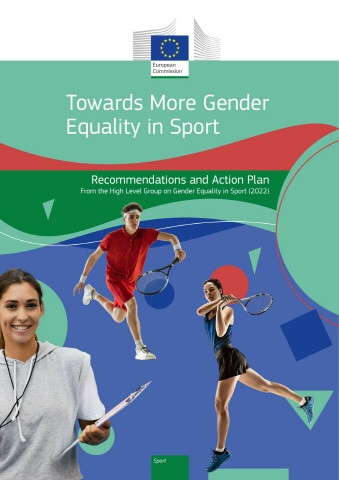 Towards More Gender Equality in Sport: Recommendations and Action Plan From the High Level Group on Gender Equality in Sport (2022) Año de publicación: 2022 Autor corporativo: European Commission | European Union (EU) Gender equality is a fundamental European Union (EU) principle. Enshrined in the Treaties, it is something the EU is actively trying to achieve – most recently through its Gender Equality Strategy 2021-2025. The Strategy aims to give women, men, girls and boys, in all their diversity, the freedom to pursue their chosen path in life and equal opportunities to thrive and to participate in and lead European society. Looking back at the steps already taken, the ‘Gender equality in sport – Proposal for strategic actions 2014-2020’ has certainly led to achievements, but the pace of reforms needs to be accelerated. Firstly, the principle of gender equality now underpins all actions funded under Erasmus+ Sport and projects supporting women’s sport are actively encouraged. Secondly, awareness raising is at the core of EU action in this field, notably through studies or discussions, such as within the Commission Expert Group on Good Governance. Finally, initiatives such as the annual #BeInclusive EU Sport Awards recognise those organisations using sport to increase social inclusion, including gender equality. In 2020, Commissioner Gabriel announced the setting up of an expert group with the aim of discussing the way forward and proposing future actions in the area of gender equality in sport to the European Commission, EU Member States and sports organisations. The work of the experts will lead to the implementation of concrete actions at local, national and European level. This report is the result of the work of the European Commission High-Level Group (HLG) on Gender Equality in Sport. The 15 members of the HLG were appointed in December 2020. Work began in February 2021 and was completed in December 2021. Meetings focused on six areas of engagement identified by the experts. Scientists and practitioners shared findings of their research and good practices. Each meeting was followed by working sessions to summarise the presentations and formulate recommendations. Vers une plus grande égalité des genres dans le sport: Recommandations et plan d'action du groupe de haut niveau sur l’égalité des genres dans le sport (2022) Año de publicación: 2022 Autor corporativo: European Commission | European Union (EU) L’égalité des genres est l’un des principes fondamentaux de l’Union européenne (UE). Inscrite dans les traités, elle constitue un objectif que l’UE s’efforce activement d’atteindre – notamment dans le cadre de sa stratégie en faveur de l’égalité entre les femmes et les hommes 2021-2025. Cette stratégie a pour objectif de donner aux femmes, aux hommes, aux jeunes filles et aux jeunes garçons, dans toute leur diversité, la liberté de suivre le chemin qu’ils ont choisi dans la vie et des chances égales de s’épanouir, de participer à la société européenne et de la diriger. Si l’on considère les mesures déjà prises, le rapport « Égalité des genres dans le sport – Proposition d’actions stratégiques 2014-2020 » a certes permis des avancées, mais le rythme des réformes doit être accéléré. Tout d’abord, le principe de l’égalité des genres sous-tend désormais toutes les actions financées dans le cadre du programme Erasmus+ Sport, et les projets soutenant le sport féminin sont activement encouragés. Ensuite, la sensibilisation est au coeur de l’action de l’UE dans ce domaine, notamment par le biais d’études ou de discussions, comme au sein du groupe d’experts de la Commission sur la bonne gouvernance. Enfin, des initiatives telles que les prix annuels #BeInclusive EU Sport Awards récompensent les organisations qui se servent du sport pour accroître l’inclusion sociale, notamment l’égalité des genres. En 2020, la commissaire Mariya Gabriel a annoncé la création d’un groupe d’experts chargé de déterminer la marche à suivre et de proposer des actions à implémenter dans le domaine de l’égalité des genres dans le sport à la Commission européenne, aux États membres de l’UE et aux organisations sportives. Le travail des experts permettra de mettre en oeuvre des actions concrètes aux niveaux locaux, nationaux et européen. Ce rapport est le résultat du travail du groupe de haut-niveau (GHN) de la Commission européenne sur l’égalité des genres dans le sport. Les 15 membres du groupe de haut-niveau ont été nommés en décembre 2020 Les travaux ont commencé en février 2021 et se sont terminés en décembre 2021. Les réunions ont porté sur six domaines d’engagement identifiés par les experts. Des scientifiques et des praticiens ont partagé le fruit de leurs recherches et leurs bonnes pratiques. Chaque réunion a été suivie par des sessions de travail destinées à résumer les présentations et à formuler des recommandations.