
Recursos
Exploren una amplia gama de recursos valiosos en GCED para profundizar su comprensión y promover su búsqueda, incidencia, enseñanza y aprendizaje.
2,162 resultados encontrados
 Education à la citoyenneté et à la solidarité internationale en histoire-géographie Año de publicación: 2020 Autor corporativo: Le Partenariat | Global Issues, Global Subjects (GIGS) | Union européenne Afin de promouvoir la démarche d'Education à la Citoyenneté et à la Solidarité Internationale et les Objectifs de Développement Durable dans l'enseignement secondaire, des groupes de travail d’enseignants ont conçu cette ressources pédagogique à destination de leurs collègues d'histoire-géographie.
  Education à la citoyenneté et à la solidarité internationale en mathématiques Año de publicación: 2020 Autor: Jean Delautre | Pierre Lasalle | Audrey Walkowiak Autor corporativo: Le Partenariat | Global Issues, Global Subjects (GIGS) | Union européenne Cette brochure a été publiée pour promouvoir la démarche d'Education à la Citoyenneté et à la Solidarité Internationale et les Objectifs de Développement Durable dans l'enseignement mathématique.
 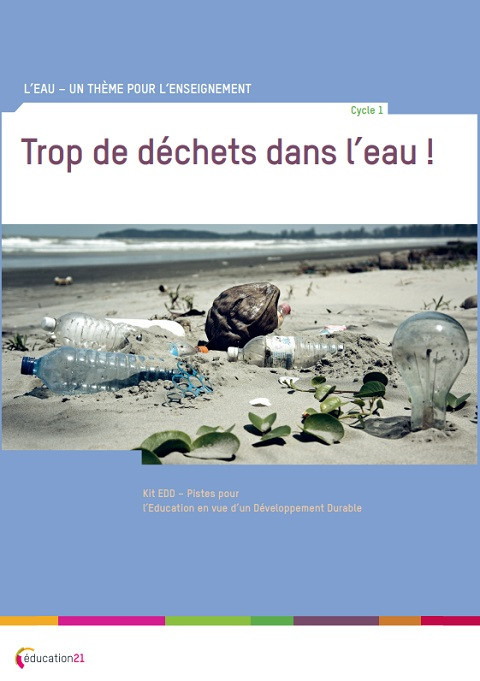 Trop de déchets dans l’eau: Kit EDD; Cycle 1 Año de publicación: 2018 Autor: Mirko Saam | Pierre-André Magnin Autor corporativo: Éducation 21 Cela vous aide à intégrer l'éducation en vue d'un développement durable (EDD) dans votre enseignement. Pour l‘enseignement, cette suggestion pédagogique aborde le thème de l’eau de multiples manières en fonction des différents degrés scolaires.
 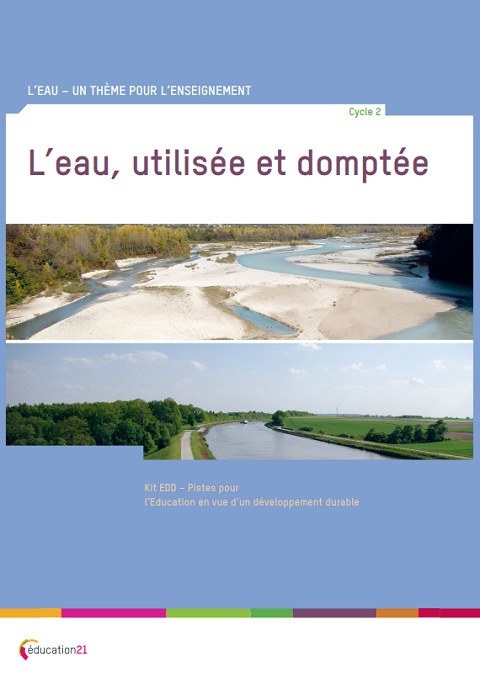 L’eau, utilisée et domptée: Kit EDD; Cycle 2 Año de publicación: 2018 Autor: Mirko Saam | Pierre-André Magnin Autor corporativo: Éducation 21 Cela vous aide à intégrer l'éducation en vue d'un développement durable (EDD) dans votre enseignement. Pour l‘enseignement, cette suggestion pédagogique aborde le thème de l’eau de multiples manières en fonction des différents degrés scolaires.
 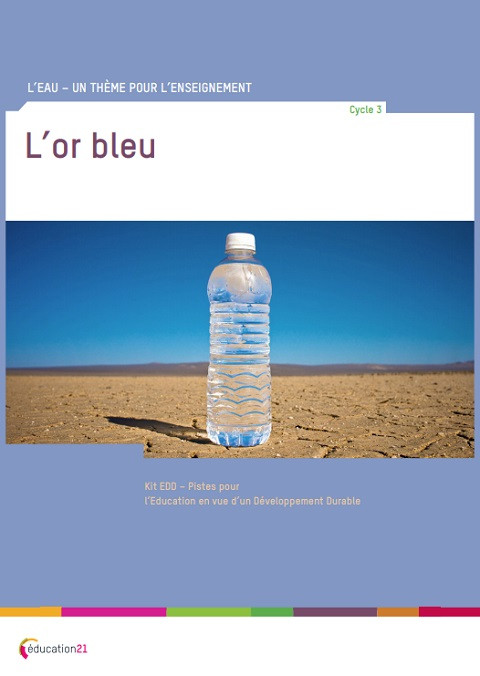 L’or bleu: Kit EDD; Cycle 3 Año de publicación: 2018 Autor: Philip Herdeg Autor corporativo: Éducation 21 Cela vous aide à intégrer l'éducation en vue d'un développement durable (EDD) dans votre enseignement. Pour l‘enseignement, cette suggestion pédagogique aborde le thème de l’eau de multiples manières en fonction des différents degrés scolaires.
  An Introduction to Global Learning: Guidance for Schools Año de publicación: 2017 Autor corporativo: Global Learning Programme (GLP) | Centre for Global Education (CGE) This document aims to provide guidance to schools on how to enhance global learning as a whole school approach in primary, post primary and special schools through curriculum teaching and learning.
  A Whole School Approach to Global Learning: Guidance for Schools Año de publicación: 2017 Autor corporativo: Global Learning Programme (GLP) | Centre for Global Education (CGE) This guidance document has been created to follow on from the ideas provided in the previous publication, An Introduction to Global Learning: Guidance for Schools. This document focuses on whole school approaches to global learning which connect learning and reveal interconnections between issues, concepts and realities in our world. Whole school approaches move beyond the dedication of one or two motivated teachers and arrive at a team approach, involving both teaching and non-teaching staff and the wider school community. Evidence from best practice suggests this approach will achieve the greatest global learning outcomes across the school and will better support wider school improvement.
 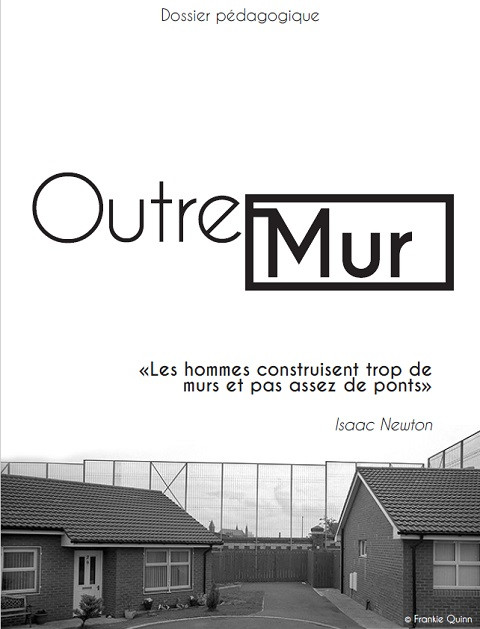 Outre-Mur: Les hommes construisent trop de murs et pas assez de ponts; Dossier pédagogique Año de publicación: 2017 Autor: Julie Bijnens | Lucie Desaubies | Fanny Gosset | Hélène Pochet Autor corporativo: Institut des Hautes Études des Communications Sociales (IHECS) | Annoncer la Couleur (ALC) Le dossier pédagogique Outre-Mur a été réalisé dans le cadre d’un mémoire médiatique de fin d’études à l’IHECS (Institut des Hautes Études des Communications Sociales); à Bruxelles|. Hélène; Lucie; Fanny et Julie sont étudiantes en dernière année dans l’option “Animation Socioculturelle et Éducation Permanente”. Leur intérêt commun pour la problématique des murs frontières les a réunies autour de ce projet ambitieux. Étant préoccupées par le respect des droits de l’homme et des libertés individuelles; la problématique les a interpellées. Cet outil a été développé en collaboration avec Annoncer la Couleur, programme fédéral d’éducation à la citoyenneté mondiale qui propose aux (futurs) enseignants des démarches pédagogiques participatives pour aborder avec les élèves des questions de citoyenneté mondiale. Riche de son expérience pédagogique, le programme vise à éveiller et former les élèves aux interdépendances mondiales et les incite à agir en citoyens responsables, conscients de l’importance de la solidarité internationale, et à contribuer à un monde plus juste et plus durable.
  Fair enough? Talking about aid and development Año de publicación: 2017 Autor corporativo: Oxfam | Christian Aid This resource aims to introduce to learners the concepts of aid and development and how these differ; how a limited development budget might be most effectively spent; critically evaluating media stories around development spending and the Global Goals for Sustainable Development. There are four session plans. Each includes an outline of the session with activity description, background information, photocopiable resource sheets for learners and links to online articles and video.
  Promoting inclusive teacher education: curriculum Año de publicación: 2013 Autor: Ian Kaplan | Ingrid Lewis Autor corporativo: UNESCO Bangkok ‘Promoting Inclusive Teacher Education’ is a series of five advocacy guides. The guides discuss challenges and barriers to inclusive education in different areas of teacher education and offer related strategies and solutions for effective advocacy towards more inclusive practices. The series begins with this introductory guide. It provides an overview of inclusive teacher education and of what advocacy means in this context. It also provides an introduction to the topics covered in the four other guides in the series. These are ‘Policy’, ‘Curriculum’, ‘Materials’, and ‘Methodology’.Advocacy Guide 3: Curriculum – changing the overall organization and sequencing of teacher education. Curriculum refers to the overall courses of study at pre-service teacher education institutions. A curriculum is a way of organizing and sequencing learning experiences with the aim of achieving specified learning outcomes. It guides what will be learned, and why, and how this learning is facilitated. The curriculum reflects connections between society, politics and schools/teachers, so the development of inclusive curricula reflects 2 ADVOCACY GUIDE 1 3 a desire to develop an equitable, non-discriminatory society1 through attention to the overall structuring of teaching and learning within teacher education.