
Recursos
Exploren una amplia gama de recursos valiosos en GCED para profundizar su comprensión y promover su búsqueda, incidencia, enseñanza y aprendizaje.
3,777 resultados encontrados
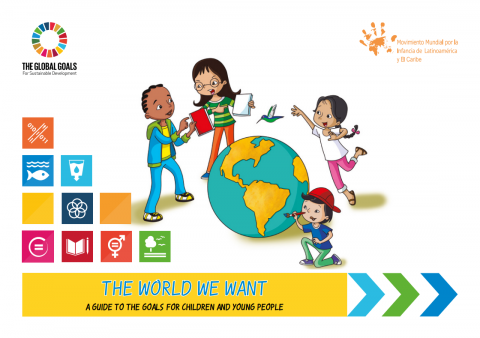 The World We Want: A Guide to the Goals for Children and Young People Año de publicación: 2015 Autor: Dora Bardales | Paola Arenas Autor corporativo: Global Movement for Children of Latin America and Caribbean | United Nations Children's Fund (UNICEF) The purpose of this guide is to help children and young people understand the Sustainable Development Goals, how they impact their life and what they can do every day to help their government achieve the Goals.
 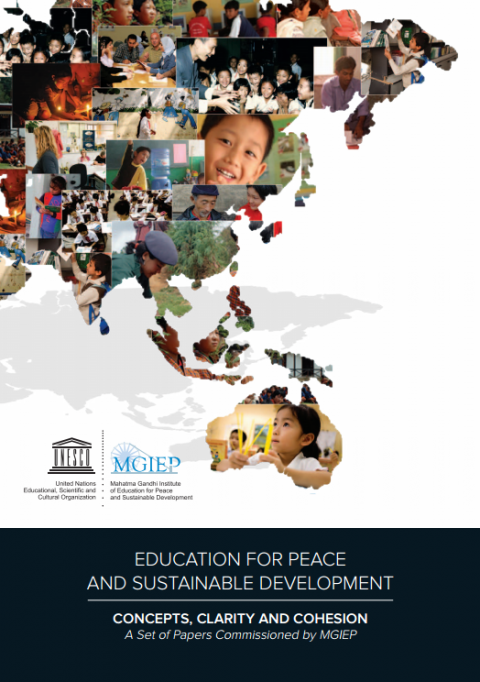 Education for peace and sustainable development: concepts, clarity and cohesion Año de publicación: 2013 Autor corporativo: Mahatma Gandhi Institute of Education for Peace and Sustainable Development (MGIEP) UNESCO MGIEP's focus lies in exploring and engaging with the strong interlinkages between peace and sustainable development and making interventions in the education systems to impart these principles. The first publication from the Institute Education for Peace and Sustainable Development: Concepts, Clarity and Cohesion explores the interlinkages and interdependencies of Education for Peace and Education for Sustainable Development. The monograph contains four concept papers which elaborate on the interlinkages between education, peace and sustainable development, define the gaps in the current approach to education for peace and sustainable development and argue for a comprehensive approach to issues of peace and sustainability to be incorporated in education systems. UNESCO MGIEP aims to develop a theoretical framework to look at the interlinkages between peace and sustainability in a holistic manner and this monograph is the first exercise towards building this discourse. L'éducation pour la paix et le développement durable: concepts, la clarté et la cohésion Año de publicación: 2013 Autor corporativo: Mahatma Gandhi Institute of Education for Peace and Sustainable Development (MGIEP) La mise au point de l'UNESCO MGIEP réside dans l'exploration et la collaboration avec les liens étroits entre la paix et le développement durable et faire des interventions dans les systèmes éducatifs pour communiquer ces principes. La première publication de «L'éducation pour la paix et le développement durable: concepts, la clarté et la cohésion de l'Institut explore les liens et les interdépendances de l'éducation pour la paix et l'éducation pour le développement durable. La monographie contient quatre documents de réflexion qui élaborent sur les liens entre l'éducation, la paix et le développement durable, définissent les lacunes dans l'approche actuelle de l'éducation pour la paix et le développement durable et plaident en faveur d'une approche globale des questions de paix et de développement durable à incorporer dans l'éducation systèmes. UNESCO MGIEP vise à développer un cadre théorique pour examiner les liens entre la paix et le développement durable d'une manière holistique et cette monographie est le premier exercice à la construction de ce discours.
  Address by Irina Bokova, Director-General of UNESCO, on the occasion of Seminar on Global Citizenship Education, UNHQ; New York, 6 March 2015 Año de publicación: 2015 Autor corporativo: UNESCO. Director-General, 2009-2017 (Bokova, I.G.) This document is an address by Irina Bokova, Director-General of UNESCO on the occasion of "Seminar on Global Citizenship Education" in New York, 6 March 2015. She highlights the importance of GCED for education in the 21st century. جهانی شدن و ضرورت آموزشهای شهروندی جهانی Año de publicación: 2012 Autor: Yousef Keshavarz Autor corporativo: Center for Strategic Studies of the Presidency Today, due to “Globalization”, the fate of all individuals, organizations and governments are more tied together and effects of this process in all areas of human activity is undeniable. By looking at the concept of “Global Citizenship” new expectations of education as a meaningful factor to people’s lives and a tool to develop human character and supplying the social needs, is formed. This paper aims to examine and discuss the characteristics and components of global citizenship, the role, importance and necessity of global citizenship education. If we accept that the current use of existing resources in the world is unfair and unacceptable and the gap between rich and poor (in all aspects) wide and widens, should ponder choice. Training and education of global citizens (especially children and young people) who wish the world as a place full of justice, equality, peace and sustainable development, respect and protection of racial diversity, religious etc… and also possess other characteristic features addressed in this paper seems to be a powerful tool and solution. In this frame work, poverty and identity crisis of Iranian youth and in the other hand being attracted to the Globalization culture of outsiders, are two points that reveal the necessity for paying more attention to the training of global citizens, to adopt a broad and enormous prospective to the global issues. Therefore, according to the valuable Islamic texts and outlined prominent place for human beings and human values, also with consideration to the rich Iranian culture and civilization in direction with an active role in global co-management, living such training in formal and informal education system and also establishment of a center as such in partnership and cooperation with other educational institutions in the country is suggested. جهانی شدن و ضرورت آموزشهای شهروندی جهانی Año de publicación: 2012 Autor: Yousef Keshavarz Autor corporativo: Center for Strategic Studies of the Presidency Aujourd'hui, en raison de «mondialisation», le sort de tous les individus, les organisations et les gouvernements sont plus attachés ensemble et les effets de ce processus dans tous les domaines de l'activité humaine est indéniable. En regardant le concept de "citoyenneté mondiale" nouvelles attentes de l'éducation comme facteur significatif pour la vie des gens et un outil pour développer le caractère humain et de fournir les besoins sociaux, est formé. Ce document vise à examiner et discuter des caractéristiques et des composantes de la citoyenneté mondiale, le rôle, l'importance et la nécessité de l'éducation à la citoyenneté mondiale.Si nous aCECptons que l'utilisation actuelle des ressources existantes dans le monde est injuste et inaCECptable, et l'écart entre les riches et les pauvres (dans tous les aspects) de large et élargit, devraient méditer choix. La formation et l'éducation des citoyens du monde (en particulier les enfants et les jeunes) qui souhaitent le monde comme un lieu plein de la justice, l'égalité, la paix et le développement durable, le respect et la protection de la diversité raciale, religieuse, etc ... et aussi possèdent d'autres caractéristiques abordées dans le présent papier semble être un outil et une solution puissante. Dans ce cadre de travail, la pauvreté et la crise de la jeunesse iranienne et dans l'autre main identité étant attirés par la culture de la mondialisation de l'extérieur, sont deux points qui révèlent la nécessité d'accorder plus d'attention à la formation des citoyens du monde, d'adopter une vaste et énorme prospective aux enjeux mondiaux. Par conséquent, selon les textes islamiques et une grande place de premier plan décrit pour les êtres humains et les valeurs humaines, également avec considération à la culture iranienne riche et la civilisation dans le sens d'un rôle actif dans la co-gestion globale, vivant une telle formation dans le système éducatif formel et informel et également la création d'un centre en tant que tel en partenariat et de coopération avec d'autres établissements d'enseignement dans le pays est suggéré. Défi des professeurs d'université à cultiver la citoyenneté Mondiale des étudiants Año de publicación: 2014 Autor corporativo: National Science and Technology Council (Taiwan) A l'intersection de la mondialisation et de la localisation depuis les années 1990, la nation se retire dans l'ère de la mondialisation et en même temps faire face aux défis de problèmes intérieurs, tels que l'indifférence du vote, le retrait de la protection sociale, la discrimination raciale, les conflits culturels, etc. La politique, les droits économiques, sociaux et culturels des citoyens sont également accompagnés de responsabilités. Le rôle de l'éducation est d'aider les gens à réaliser leurs rôles en tant que citoyens du monde, en améliorant la qualité des citoyens, et la promotion de la maturité de la société entière et la sphère publique. 大學校院教師培養學生全球公民素養之挑戰 Año de publicación: 2014 Autor corporativo: 國家科學及技術委員會 In the intersection of globalization and localization since the 1990s, the nation is stepping into the era of globalization and simultaneously facing challenges of inner problems, such as indifference of voting, shrinkage of social welfare, racial discrimination, cultural conflicts, etc. The political, economic, social and cultural rights for citizens are also accompanied with responsibilities. The role of education is to help people realize their roles as global citizens, through enhancing the quality of citizens, and promoting the maturity of whole society and public spheres. Democracy and diversity: principles and concepts for educating citizens in a global age Año de publicación: 2005 Autor: James A. Banks | Cherry A. McGee Banks | Carlos E. Cortes | Carole L. Hahn | Merry M. Merryfield | Kogila A. Moodley | Stephen Murphy-Shigematsu | Audrey Osler | Caryn Park | Walter C. Parker Autor corporativo: Center of Multicultural Education, University of Washington The Center for Multicultural Education at the University of Washington convened—with support from the Spencer Foundation—a Diversity, Citizenship, and Global Education Consensus Panel. The Panel’s goal was to develop a set of principles, concepts, and guidelines that school practitioners can use to build or renew citizenship education programs that balance diversity and unity and prepare students to become effective citizens in a global context. An important resource for the Panel’s work was the book that resulted from an earlier conference sponsored by the Center, Diversity and Citizenship Education: Global Perspectives (Banks, 2004a).The Consensus Panel developed four principles and identified ten concepts, which are detailed in this publication. The Panel also developed a checklist that is designed for use by educators who want to consider the extent to which the principles and concepts identified by the Panel are reflected in their classrooms and schools.PRINCIPLESSection I Diversity, Unity, Global Interconnectedness, and Human Rights1. Students should learn about the complex relationships between unity and diversity in their local communities, the nation, and the world.2. Students should learn about the ways in which people in their community, nation, and region are increasingly interdependent with other people around the world and are connected to the economic, political, cultural, environmental, and technological changes taking place across the planet.3. The teaching of human rights should underpin citizenship education courses and programs in multicultural nation-states.Section II Experience and Participation4. Students should be taught knowledge about democracy and democratic institutions and provided opportunities to practice democracy. Démocratie et diversité: principes et concepts pour l'éducation des citoyens dans un âge global Año de publicación: 2005 Autor: James A. Banks | Cherry A. McGee Banks | Carlos E. Cortes | Carole L. Hahn | Merry M. Merryfield | Kogila A. Moodley | Stephen Murphy-Shigematsu | Audrey Osler | Caryn Park | Walter C. Parker Autor corporativo: Center of Multicultural Education, University of Washington Le Centre pour l'éducation multiculturelle à l'Université de Washington a convoqué-avec le soutien de la Fondation-a Spencer Diversité, Citoyenneté et Éducation Globale Panel Consensus . L'objectif du Groupe est de développer un ensemble de principes, des concepts et des lignes directrices que les praticiens de l'école peuvent utiliser pour construire ou de renouveler les programmes d'éducation à la citoyenneté que la diversité de l'équilibre et de l'unité et de préparer les étudiants à devenir des citoyens efficaces dans un contexte mondial. Une ressource importante pour les travaux du Groupe spécial était le livre qui résulte d'un earlierconférencesponsored par le Centre, la diversité et l'éducation à la citoyenneté: perspectives mondiales (banques, 2004a). Le groupe de concertation a élaboré quatre principes et identifi é dix concepts, qui sont détaillées dans cette publication. Le Groupe spécial a également mis au point une liste de contrôle qui est conçu pour être utilisé par les éducateurs qui veulent examiner la mesure dans laquelle les principes et les concepts identifi és par le Groupe sont refl ète dans leurs salles de classe et les écoles. PRINCIPES Section I Diversité, Unité, Global interconnectivité et droits de l'homme 1. Les élèves devraient en apprendre davantage sur les relations complexes entre l'unité et la diversité dans leurs communautés locales, la nation et le monde. 2. Les élèves devraient en apprendre davantage sur les façons dont les gens dans leur communauté, de la nation et de la région sont de plus en plus interdépendantes avec d'autres personnes dans le monde et sont reliés aux changements économiques, politiques, culturels, environnementaux et technologiques qui ont lieu à travers la planète. 3. L'enseignement des droits de l'homme devrait soutenir les cours et les programmes d'éducation à la citoyenneté dans les États-nations multiculturelles. Section II Expérience et participation 4. Les élèves doivent apprendre les connaissances sur la démocratie et les institutions démocratiques et a fourni des occasions de pratiquer la démocratie.