
Recursos
Exploren una amplia gama de recursos valiosos en GCED para profundizar su comprensión y promover su búsqueda, incidencia, enseñanza y aprendizaje.
2,776 resultados encontrados
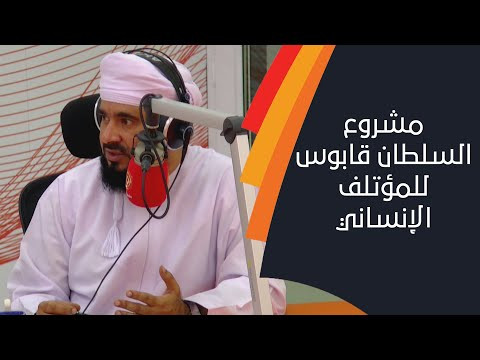 مشروع السلطان قابوس للمؤتلف الإنساني Año de publicación: 2019 Autor corporativo: Al Shabiba البرنامج يتطرق لمشروع المؤتلف الإنساني وأهميته وأهدافه. المشروع جاء بمباركة من السلطان الراحل من أجل جمع جهود الأمم في تحسين حياة البشر، ولإثارة الوعي الانساني بأهمية منظومة الاخلاق العالمية المشتركة.
  Landmarks of Mercy between Islam and Multiculturalism Año de publicación: 2016 Autor: Abdel Karim Osman Ali Autor corporativo: Nile Valley University Conference paper in which the researcher sought to: Explaining the greatness and comprehensiveness of the Allah’s path Disclosure of the features of mercy through the Qur’anic intentions to recognize and respect cultural diversity Show the distinction of Islam over the latest political theories in the West. معالم الرحمة بين الاسلام والتعددية الثقافية Año de publicación: 2016 Autor: Abdel Karim Osman Ali Autor corporativo: Nile Valley University ورقة مؤتمر سعى الباحث فيها إلى: بيان عظمة المنهج الرباني وشموله. الكشف عن معالم الرحمة من خلال المقاصد القرآنية في إقرار واحترام التنوع الثقافي تبيين تميز الإسلام على آخر النظريات السياسية في الغرب.
 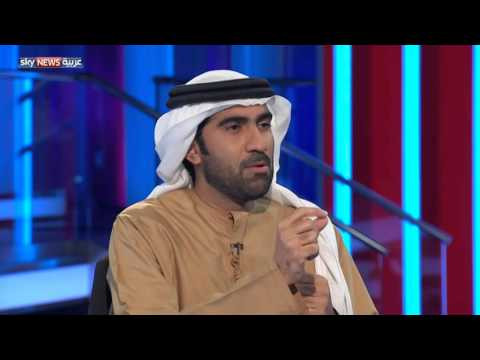 Gulf Society .. and the Multiplicity of Foreign Cultures Año de publicación: 2014 Autor corporativo: Sky News Arabia This video is a TV program discussing the case of multiculturalism in the Arab Gulf countries. The multiculturalism is brought to the Gulf by foreign workers. There program is having guests discussing the issue. What are the negative and positive effects of foreign cultures on local culture in the countries of the region? What are the ways to preserve the identity and values of society? المجتمع الخليجي.. وتعدد الثقافات الوافدة Año de publicación: 2014 Autor corporativo: Sky News Arabia برنامج تلفزيوني يناقش قضية التعددية الثقافية في دول الخليج العربي، ويتطرق لجلب التعددية الثقافية إلى الخليج من قبل العمال الأجانب. ويستضيف البرنامج مجموعة من الضيوف لمناقشة القضية. ويجاوب على الاسئبة التالية: ما هي الآثار السلبية والإيجابية للثقافات الأجنبية على الثقافة المحلية في دول المنطقة؟ ما هي طرق الحفاظ على هوية المجتمع وقيمه؟لمشاهدة المزيد، يرجى زيارة صفحة البرنامج على الموقع الإلكتروني لسكاي نيوز عربية من خلال الضغط على الرابط التالي:http://www.skynewsarabia.com/web/AlMasaa
  The Ratio of the National and Universal in the Sphere of Spirituality (on the example of Central Asia) Año de publicación: 2015 Autor: Ranokhon Tursunova The ratio national and universal in the sphere (Central Asia)» on the spiritual revival in the region, the place of human values in the reforms. The transformation of national and universal values in Central Asia, which is represented by a wide range of multiculturalism, ethnic groups, religions, languages traditions and customs. Соотношение национального и общечеловеческого в сфере духовности (на примере Центральной Азии) Año de publicación: 2015 Autor: Ranokhon Tursunova Статья «Соотношение национального и общечеловеческого в сфере духовности (на примере Центральной Азии)» о духовном возрождении в регионе, о месте общечеловеческих ценностях в проводимых преобразованиях. О трансформации национальных и общечеловеческих ценностей в Центральной Азии, которая представлена широким спектром мультикультур, этносов, конфессий, языков, традиций и обычаев.
 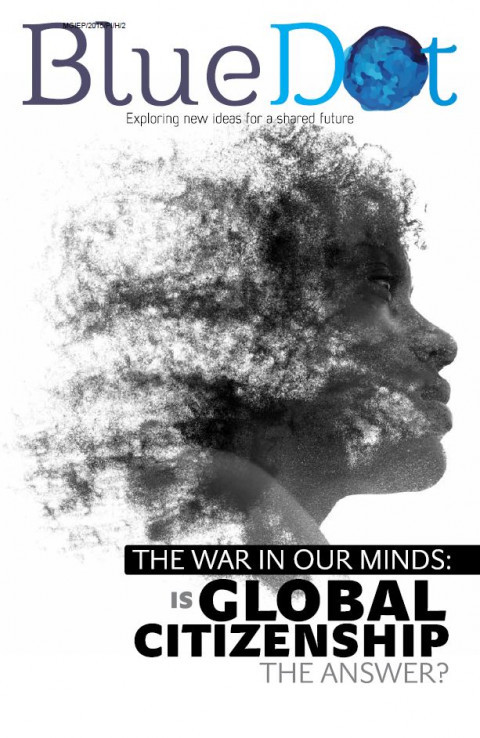 The war in our minds: is global citizenship the answer? (Blue Dot issue 1) Año de publicación: 2015 Autor corporativo: Mahatma Gandhi Institute of Education for Peace and Sustainable Development (MGIEP) Feature Global Citizenship Education: A New Educational, Pedagogical and Political Narrative in the World System? (by Carlos A. Torres) In Pursuit of a Global Civics (by Hakan Altinay) Global Citizenship: Necessary and Possible (by Paul and Anne Ehrlich) Cover Story YOUth Speak for a better today and tomorrow (by Piyali Sarkar Debnath, UNESCO MGIEP) Essays Unlocking the Civic Sense of Young Minds (by Karthik Shankar) Shared Home, Shared Hopes and Shared Actions (by Trang T. Nguyen) Redesigning the Education System for Global Citizenship (by Ayodeji Ojo) Youth Voices Who is a global citizen? News What we have been up to UNESCO MGIEP Crossword Event Calendar
 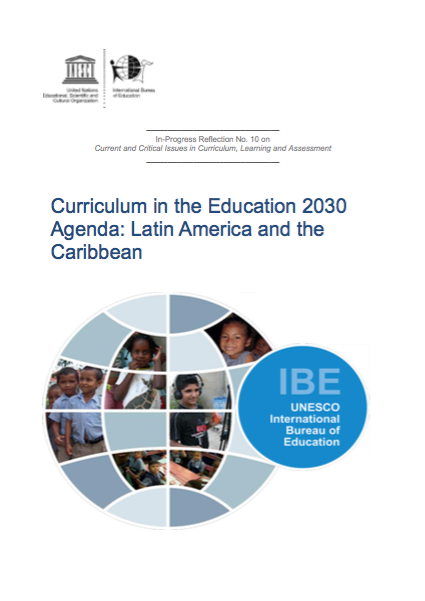 Curriculum in the Education 2030 Agenda: Latin America and the Caribbean Año de publicación: 2017 Autor: Renato Opertti Autor corporativo: UNESCO International Bureau of Education (IBE) “Curriculum in the Education 2030 Agenda: Latin America and the Caribbean”1 discusses the importance of rethinking the curriculum in light of a transformational, humanistic and holistic vision of education. The Education 2030 Agenda, which emerged from the World Education Forum (WEF) 2015 held in Incheon, Republic of Korea, positions curriculum as a powerful education policy tool leading the way to effective, relevant and sustainable learning opportunities, processes and outcomes. Curricula have a positive effect as levers for the sustainable, inclusive, fair and cohesive development of a country. They reflect and help to construct the type of society envisioned. The article provides recommendations to strengthen the positioning of curriculum toward an inclusive and equitable quality education in Latin America and the Caribbean. It therefore addresses the following questions: 1) How is curriculum currently conceived?; 2) What role does it play in the reforms aimed at improving equity and quality of the learning processes?; 3) What are the main regional challenges in relation to curriculum development?; and 4) How could countries align their curricula with their development needs?
 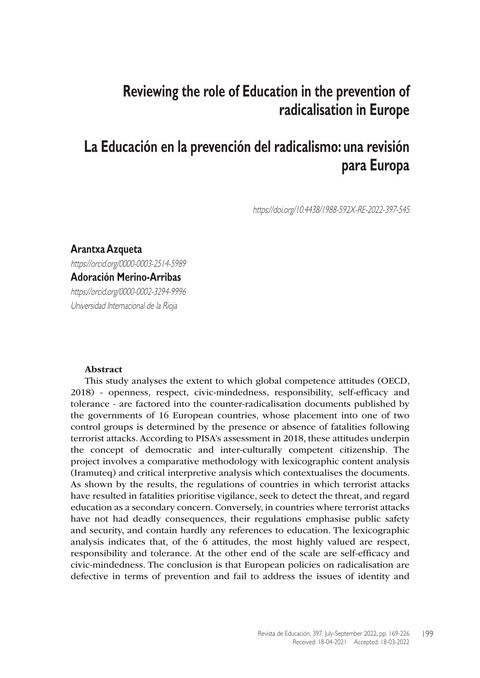 The Role of Education in Preventing Violent Radicalisation: A Review for Europe (The Journal of Education; No.397, 2022) Año de publicación: 2022 Autor: Arantxa Azqueta | Adoración Merino-Arribas Autor corporativo: Spain. Ministry of Education This research analyses government documents addressing the prevention of radicalisation in 16 European countries, differentiated according to the presence or absence of fatalities in attacks. The aim to identify the presence of the attitudes which PISA 2018 identifies as key to define a democratic and interculturally competent citizenry and guide integration-friendly policies: openness, respect, civic awareness, responsibility, self-efficacy and tolerance. A comparative methodology is employed, using a lexicographical content analysis through Iramuteq software together with a critical-interpretative analysis of the texts.