
Recursos
Exploren una amplia gama de recursos valiosos en GCED para profundizar su comprensión y promover su búsqueda, incidencia, enseñanza y aprendizaje.
3,451 resultados encontrados
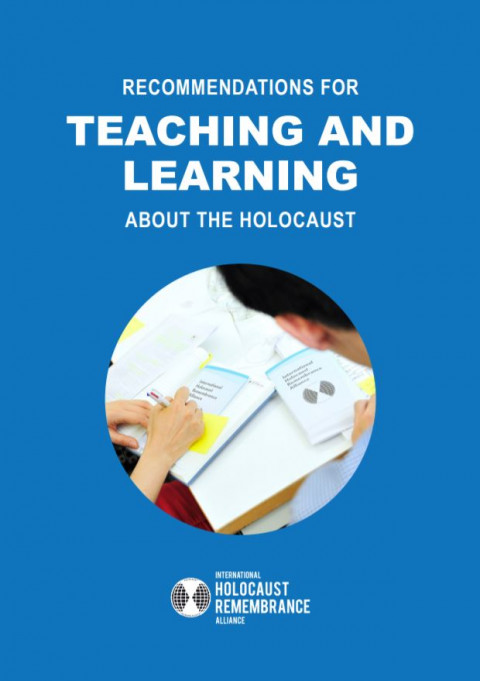 Recommendations for Teaching and Learning about the Holocaust Año de publicación: 2019 Autor corporativo: International Holocaust Remembrance Alliance (IHRA) These recommendations, written by a group of international experts, are crafted to help educators with fact-based and educationally sound techniques for teaching the complex and nuanced history of the Holocaust. These recommendations will allow you to: Explain why teaching and learning about the Holocaust matters. The guidelines provide compelling reasons for covering the Holocaust in classroom curricula, so that students have a deeper understanding of the past and how it shapes the present. Find appropriate sources for the classroom. Covering this subject in a way which is both sensitive and accurate can be difficult; these recommendations include practical guidance on how to make your choices. Bring curricula up to date with latest research. There’s a huge range of recent research in this field; we’ve made it easy to incorporate these findings into your classroom.
  Objectifs du développement durable (odd) & éducation à la citoyenneté et à la solidarité internationale (ecsi): Quelles mobilisations pour quels changements ? Año de publicación: 2019 Autor corporativo: Educasol Du mois de mai au mois de juillet 2019, Educasol a organisé un parcours d’animation-formation structuré autour de 5 temps et consacré à l’interaction entre Objectifs du Développement Durable et Education à la Citoyenneté et à la Solidarité internationale. Trois angles d’analyse ont été priorisés : culture et universalité, transversalité et territoire, et enfin la question du changement. Ce parcours a permis d’initier un processus permettant aux participants de :• Penser leurs actions d’ECSI,• Se penser eux-mêmes à partir de leurs actions et organisations,• Penser les autres autant que possible en évitant la projection de soi• Questionner la relation avec les bailleurs,• Construire une représentation commune des ODD et identifier les conditions qui en permettraient un meilleur usage Cette publication regroupe l’ensemble des documents produits dans le cadre des 3 journées du parcours et lors de la séance conclusive.
  International Youth White Paper on Global Citizenship Año de publicación: 2017 Autor corporativo: Centre for Global Citizenship Education and Research (CGCER) | Centre for Global Education (CGE) The paper aims to mobilize, connect and amplify the voices and actions of youth from across the globe on GCED. The Centre provided feedback on the draft of the initial framework and activities for the project in November, 2016 and provided funds to help support the travel and participation of several students at UNESCO Education Week. Ten of these youth presented the International Global Citizenship White Paper, discussing both the content and the process.The paper identifies three pillars that these youth feel define global citizenship and make it accessible to everyone: deep listening to others, self-reflexivity and engaged actions within a global community. These double as important features of educating for pluralism. The paper focuses on three themes: 1) interconnection and complexity; 2) diversity and difference; 3) community, relationality and compassion.
 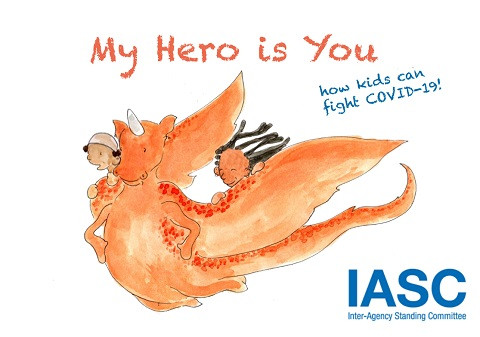 My Hero Is You: How Kids Can Fight COVID-19 Año de publicación: 2020 Autor: Helen Patuck Autor corporativo: Inter-Agency Standing Committee (IASC) A new story book that aims to help children understand and come to terms with COVID-19 has been produced by a collaboration of more than 50 organizations working in the humanitarian sector. With the help of a fantasy creature, Ario explains how children can protect themselves, their families and friends from coronavirus and how to manage difficult emotions when confronted with a new and rapidly changing reality. Mon héroïne, c’est toi: Comment combattre la COVID-19 quand on est un enfant Año de publicación: 2020 Autor: Helen Patuck Autor corporativo: Inter-Agency Standing Committee (IASC) Un novel livre qui a pour but d’aider les enfants à comprendre et à y faire face a été publié par plus d’une cinquantaine d’organisations actives dans le secteur humanitaire. Ario, une créature fantastique, comment les enfants peuvent se protéger et protéger leurs proches et leurs amis du coronavirus et comment ils peuvent gérer les émotions complexes qui s’emparent d’eux lorsqu’ils sont confrontés à une réalité nouvelle qui évolue rapidement.
  Spotlight: Quality Education for All during COVID-19 Crisis Año de publicación: 2020 Autor: Chris Petrie | Katija Aladin | Pukhraj Ranjan | Romayne Javangwe | Danny Gilliland | Saku Tuominen | Leponiemi Lasse Autor corporativo: HundrED | Organisation for Economic Co-operation and Development (OECD) | Supercell This report aims to offer effective solutions that help parents, teachers and children navigate through challenges facing education during the pandemic. It has plentiful insights and high- quality resources from the opportunity for teacher to form much stronger connections with parents, students to challenges of untrained teacher and lack of access to digital learning resources.
  Understanding the Return on Investment from TVET: A Practical Guide Año de publicación: 2020 Autor: Jane Schueler | Phil Loveder Autor corporativo: UNESCO International Centre for Technical and Vocational Education and Training (UNEVOC) | National Centre for Vocational Education Research(NCVER) This guide presents an analytic framework that summarizes some of the main elements and issues that need to be considered in measuring ROI. This includes establishing the scope, context and purpose for measuring ROI, adopting guiding principles, identifying costs, benefits and factors that impact on ROI, and approaches to data collection and analysis. The Guide then introduces a framework that looks at the ROI equation from a range of perspectives – including economic and social dimensions – and for different stakeholders, including individuals, businesses and societies. The Guide presents relevant ROI indicators and measures drawn from the existing international research. Finally, it provides guidelines to planning and collecting ROI data, along with a set of practical pro forma resources and case studies to assist the reader.
  Education for Global Citizenship: Meanings and Practices for a Transformative Cosmopolitism Año de publicación: 2017 Autor: Alejandra Boni Aristizabal According to the author: "The article aims to analyze in depth the meanings of global citizenships in order to characterize the pedagogical practices of what is known as education for global citizenship. After a brief analysis of the different stages that education for development has gone through, from the assistencialist approach of the 50s to education for global citizenship, we study different perspectives of cosmopolitanism: a vision from the field of ethics, mainly from Martha Nussbaum's perspective that talks about cosmopolitan abilities, from politics, that has democratic proposals such as David Held's, critical perspectives as Boaventura de Souza Santos' ones, and the sociological perspective that allows us to identify intercultural communicative processes where the cosmopolitan view is produced, according to Ulrick Beck's or Gerald Delanty's words. After this, we conclude with a discussion about how to encourage education for develpment spaces that foster global citizenship." Educación para la Ciudadanía Global: Significados y espacios para un cosmopolitismo transformado Año de publicación: 2017 Autor: Alejandra Boni Aristizabal Según la autora: "El presente artículo tiene como objetivo profundizar en los significados de la ciudadanía global con el fin de caracterizar las prácticas pedagógicas de lo que se conoce como educación para la ciudadanía global. Tras una breve análisis de las distintas etapas por las que ha pasado la educación para el desarrollo, desde el planteamiento asistencialista de los años 50 hasta la educación para la ciudadanía global, nos detenemos en diferentes perspectivas del cosmopolitismo: la visión desde la ética, fundamentalmente a través de la obra de Martha Nussbaum que nos habla de las habilidades cosmopolitas, desde la política, que contiene propuestas de democracia como las de David Held y perspectivas más críticas como las de Boaventura de Sousa Santos, y la perspectiva sociológica que nos permite identificar los procesos de comunicación intercultural donde se produce la mirada cosmopolita, según palabras de Ulrick Beck o Gerard Delanty. Tras ello, concluiremos con una discusión sobre cómo potenciar espacios de educación para el desarrollo desde donde contribuir a la formación de ciudadanos globales"
  Postcolonial Perspectives on Global Citizenship Education Año de publicación: 2012 Autor: Vanessa Andeotti | Lynn Mario T. Menezes de Souzz This volume bridges the gap between contemporary theoretical debates and educational policies and practices. It applies postcolonial theory as a framework of analysis that attempts to engage with and go beyond essentialism, ethno- and euro-centrisms through a critical examination of case studies and conceptual issues.