
Recursos
Exploren una amplia gama de recursos valiosos en GCED para profundizar su comprensión y promover su búsqueda, incidencia, enseñanza y aprendizaje.
2,162 resultados encontrados
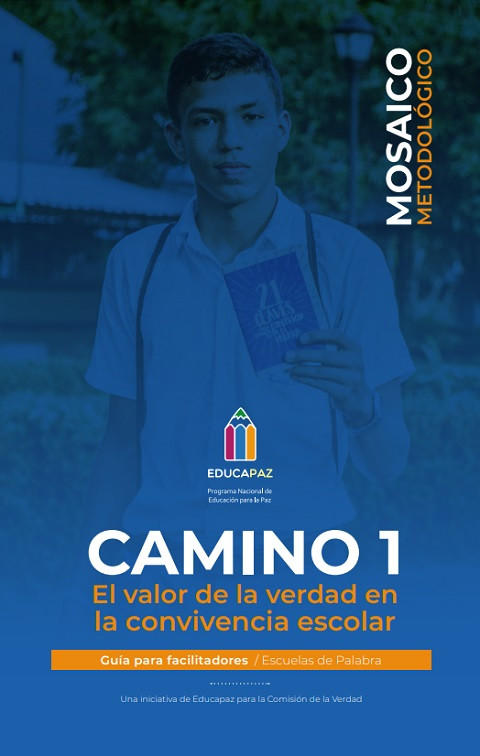 Mosaico Metodológico: Camino 1; El valor de la verdad en la convivencia escolar Año de publicación: 2019 Autor corporativo: EDUCAPAZ Esta publicación recoje el trabajo desarrollado por el Programa Nacional de Educación para la Paz EDUCAPAZ y a Comisión de la Verdad en Colombia, para el trabajo pedagógico en escuelas que quieran reflexionar sobre el valor de la verdad en la reconstrucción de la memoria, el perdón y la reconciliación. En este módulo se explora la relación con la convivencia escolar.
 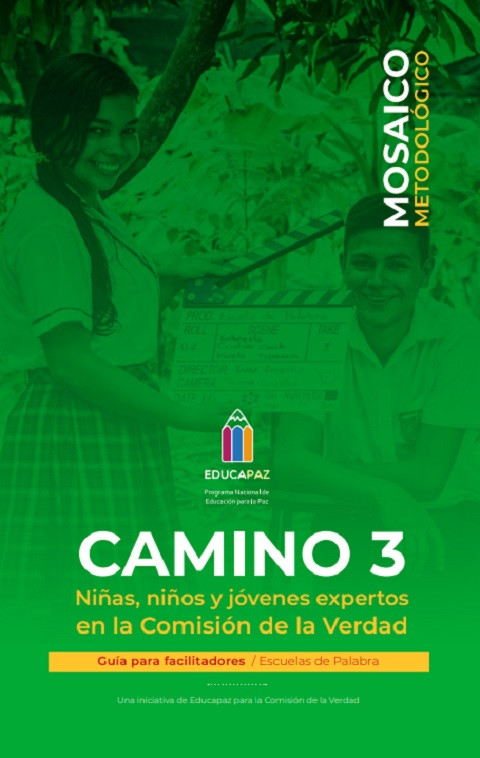 Methodological Mosaic: Path 3; Girls, Boys and Young Experts in the Truth Commission Año de publicación: 2019 Autor corporativo: EDUCAPAZ This publication reflects the work carried out by the National Program of Education for Peace EDUCAPAZ and the Truth Commission in Colombia, for education in schools that want to reflect on the value of truth in the reconstruction of memory, forgiveness and reconciliation. This module presents strategies to educate children and young people about the truth commission.
 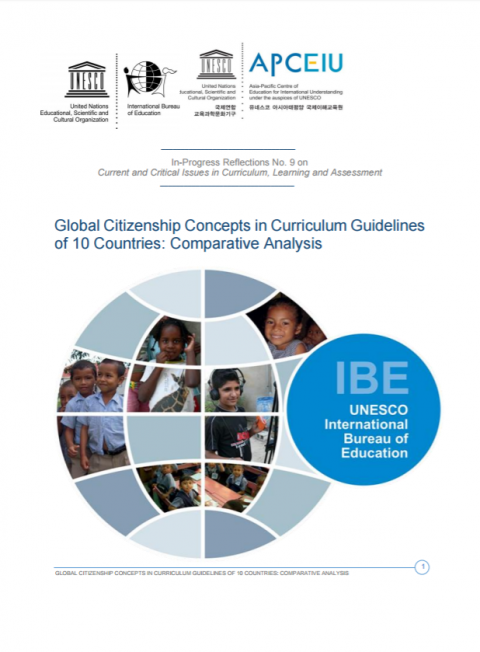 Global Citizenship Concepts in Curriculum Guidelines of 10 Countries: Comparative Analysis Año de publicación: 2017 Autor: Cristián Cox Autor corporativo: UNESCO International Bureau of Education (IBE) This paper reports on a study of concepts associated with the new construct of global citizenship education (GCED) in school curricula. We compared the national school curricula of ten countries with markedly different cultures and levels of development across different regions of the world (Africa, Asia, Europe, Latin America, and Southeast Asia) on the presence of concepts associated with GCED. The curricula of both primary and secondary education, in the areas of history and social sciences, and civics and moral education, were compared using a set of categories constructed for this study and derived from UNESCO’s definitions of GCED as well as from the International Association for the Evaluation of Educational Achievement’s (IEA) international assessment studies of civic and citizenship education. Patterns of presence/absence of GCED and related content were identified. The main finding is that only two of the ten countries’ curricula consistently included global citizenship concepts. At the same time, all ten countries, to the extent that the analysis distinguished, included content related to knowledge, values and attitudes that have the world or humanity as referent.
 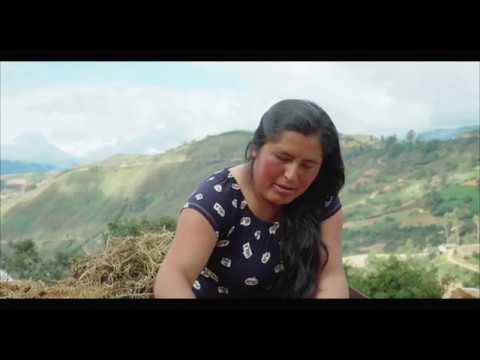 Del campo al plato Año de publicación: 2019 Autor corporativo: Îles de Paix D’où vient la nourriture consommée quotidiennement ? Qui produit ces aliments ? Comment ont-ils été produits ? Et quels sont leurs impacts sur le Monde ? Autant de questions que chaque consommateur peut se poser et auxquelles les réponses peuvent varier… Del campo al plato, produit avec SOS Faim et Autre Terre, est un reportage de 15 minutes qui aborde ces questions en présentant un modèle alternatif de commercialisation au Pérou.
 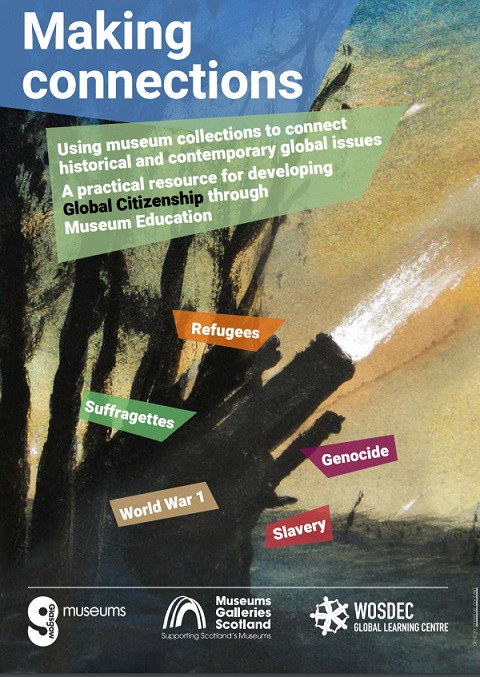 Making Connections: Using Museum Collections to Connect Historical and Contemporary Global Issues; A Practical Resource for Developing Global Citizenship through Museum Education Año de publicación: 2019 Autor corporativo: Glasgow Museums | Museums Galleries Scotland | West of Scotland Development Education Centre (WOSDEC) Looking at Refugees, Genocide, World War I, Suffragettes and Slavery, this is a practical resource to support educators to connect historical and contemporary global issues and develop the skills, values and attitudes of Global Citizenship through museum collections. The tasks and activities contained within this resource are aimed at providing ideas for museum educators and can work either in a gallery or classroom setting. Many of the techniques and approaches are transferrable to a range of different themes and collections.
  Audacious Education Purposes: How Governments Transform the Goals of Education Systems Año de publicación: 2020 Autor: Fernando Reimers This open access book offers a comparative study of eight ambitious national reforms that sought to create opportunities for students to gain the necessary breath of skills to thrive in a rapidly changing world. It examines how national governments transform education systems to provide students opportunities to develop such skills. It analyses comprehensive education reforms in Brazil, Finland, Japan, Mexico, Peru, Poland, Portugal and Russia and yields original and important insights on the process of educational change. The analysis of these 21st century skills reforms shows that reformers followed approaches which are based on the five perspectives: cultural, psychological, professional, institutional and political. Most reforms relied on institutional and political perspectives. They highlight the systemic nature of the process of educational change, and the need for alignment and coherence among the various elements of the system in order. They underscore the importance of addressing the interests of various stakeholders of the education system in obtaining the necessary impetus to initiate and sustain change. In contrast, as the book shows, the use of a cultural and psychological frame proved rarer, missing important opportunities to draw on systematic analysis of emerging demands for schools and on cognitive science to inform the changes in the organization of instruction. Drawing on a rich array of sources and evidence the book provides a careful account of how education reform works in practice.
 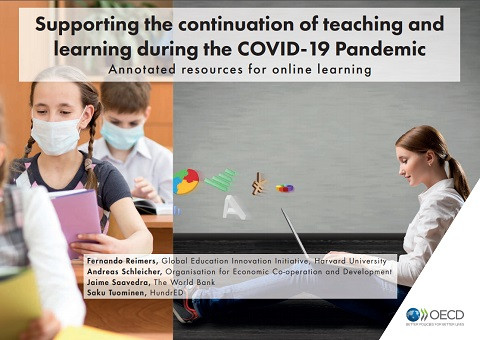 Supporting the Continuation of Teaching and Learning during the COVID-19 Pandemic: Annotated Resources for Online Learning Año de publicación: 2020 Autor: Fernando Reimers | Andreas Schleicher | Jaime Saavedra | Saku Tuominen Autor corporativo: Organisation for Economic Co-operation and Development (OECD) | Global Education Innovation Initiative | HundrED This resource discusses the second module of a series which presents the results of a comparative analysis of emerging educational needs and responses as the pandemic unfolds across countries around the world. The overall goal of this series is to facilitate the rapid design process and implementation of adaptive responses to the emerging education challenges, and to protect young people’s educational opportunities during and following the pandemic. This second module presents a first set of online educational resources to support the continuity of teaching and learning during the 2019-20 COVID-19 Pandemic with education leaders around the world. The resources were compiled from responses to the same survey used to produce the first module: A framework to guide an education response to the COVID-19 Pandemic, and additional online sources were included to enhance the list in order to support the continuity of learning for students who have access to the internet and digital devices.
 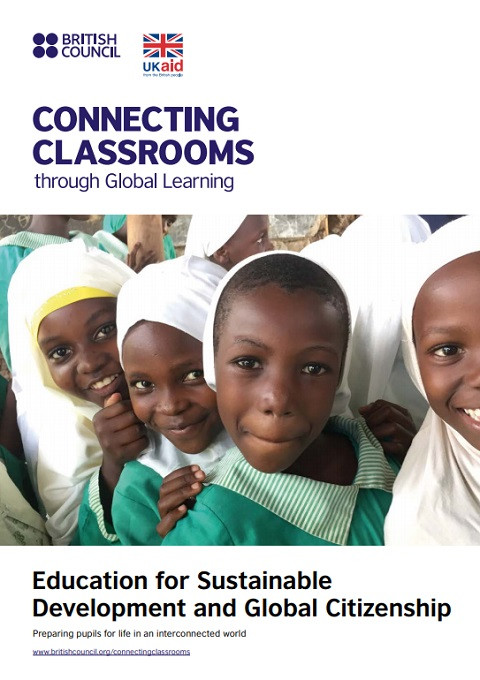 Connecting Classrooms through Global Learning: Education for Sustainable Development and Global Citizenship; Preparing Pupils for Life in an Interconnected World Año de publicación: 2020 Autor corporativo: British Council | UK aid This resource contributes to the development of pupils’ core skills, enabling them to think critically, to consider how to resolve problems, to take informed and reflective action and to develop personal leadership skills. During the course, pupils will analyse global issues, and will plan, implement and evaluate action. This course can be linked to a variety of curriculum areas, including English, Social Studies, Geography, Modern Foreign Languages, Maths, History and Art and Design. It can be used with or without an overseas partner school.
 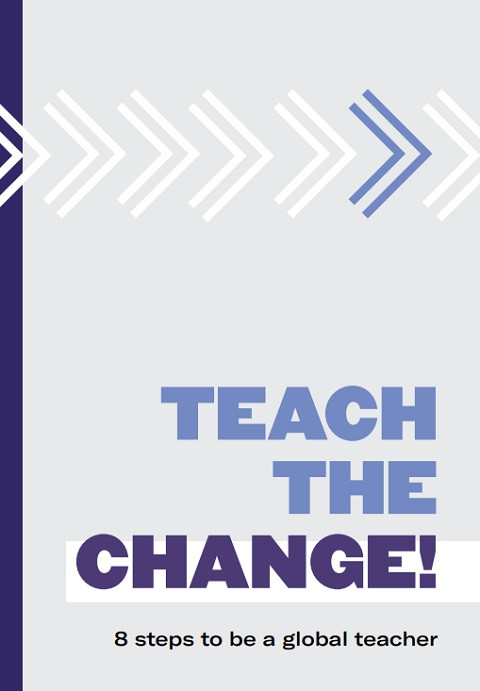 Teach the Change: 8 Steps to Be a Global Teacher Año de publicación: 2018 Autor corporativo: Start the Change | European Union (EU) These guidelines are a result of consultation with 45 teachers from across Europe, drawing on their combined experiences to reflect on the main challenges of developing educational activities on global issues and with a particular focus on the Sustainable Development Goals (SDGs) and migration.
 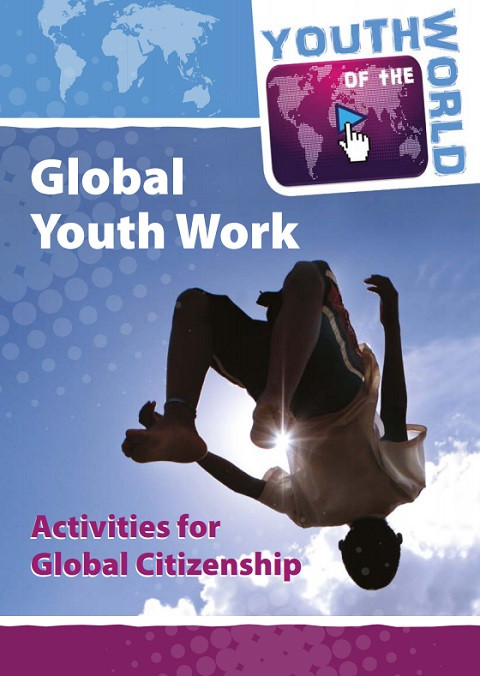 Global Youth Work: Activities for Global Citizenship Año de publicación: 2014 Autor: Kate Allen | Charlotte Dwyer Autor corporativo: Scotdec | European Union (EU) | Government of Scotland This resource has been designed for youth workers and other professionals working with young people to promote global youth work as a mainstream practice across Scotland. Each chapter contains practical activities, background information and resources aimed at encouraging young people to think about their own lives and how they connect with others. Examining these topics within the framework of social justice, human rights and sustainable development enables young people to reflect on how their behaviour and actions impact on people and issues locally and globally.