
Recursos
Exploren una amplia gama de recursos valiosos en GCED para profundizar su comprensión y promover su búsqueda, incidencia, enseñanza y aprendizaje.
1,450 resultados encontrados
 Гендер и развитие сельских районов в Восточной Европе и Центральной Азии: Основные проблемы Año de publicación: 2016 Autor corporativo: Продовольственная и сельскохозяйственная организация Объединённых Наций (ФАО) В данном отчете представлен краткий обзор и описание важнейших вопросов, оказывающих влияние на положение женщин в сельских районах в регионе. Данный обзор составлен с целью информирования всех заинтересованных сторон и использования этой информации в общественных кампаниях и для достижения большей результативности интервенций по развитию.
 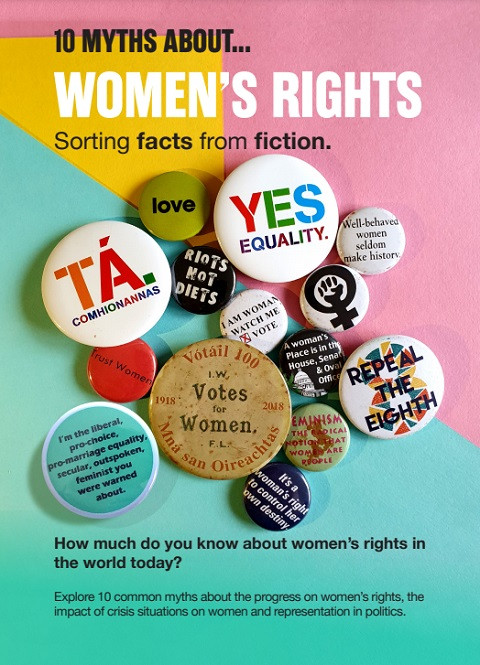 10 Myths About Women’s Rights: Sorting Facts From Fiction Año de publicación: 2020 Autor: Toni Pyke | Colm Regan Autor corporativo: DevelopmentEducation.ie Gender-based inequality is one of the most enduring and deep-seated discriminations. It affects all regions, classes and sectors. In most countries, it is maintained and defended in most of the same ways. One key component of that maintenance is a set of myths that are repeated time and time again.This pocket-size booklet includes:Why thinking about women’s rights matters10 short myths about progress on equality, who benefits from feminism, the realities of women’s health and the impact of COVID-19.Links to the Sustainable Development GoalsReferences per each myth following a fact or fiction approach and an explainerThe 10 Myths About…. series looks to sort facts from fiction on key global development, human rights and justice issues.Download 10 Myths About Women’s Rights PDFTest your knowledge and take the 10 Myths About Women’s Rights quiz or share with your group / class / friends For the latest fact checks and factsheets more on the fact checking project and development ideas, issues and debates, visit our What The Fact? project.
  Gender-Based Hate Crime Año de publicación: 2021 Autor corporativo: Organization for Security and Co-operation in Europe (OSCE) Gender-based hate crimes are a consequence of gender inequalities and disproportionately affect women, as well as anyone perceived as not complying with prevailing gender norms. Gender-based hate crimes often seek to intimidate and suppress ways of life or expressions of identity that are perceived as not complying with traditional gender norms. They have a significant, long-lasting impact on the victims, and undermine security and social cohesion by perpetuating gender inequalities. The existence of such crimes also underscores wider trends of intolerance towards other groups. Everyone has a role to play in countering this and all forms of intolerance.
  Religion and Belief Issues in the Countries of Central Asia (Kyrgyzstan, Kazakhstan, Uzbekistan, Tajikistan) and Russia in the Media; April 2016 - April 2017 Año de publicación: 2017 Autor: Evgeny Zavyalov Autor corporativo: Open Position (Kyrgyzstan) This publication is a review of news on religion and belief issues that appeared in the media from April 2016 to April 2017, in Central Asia (Kyrgyzstan, Kazakhstan, Uzbekistan, Tajikistan) and Russia. The materials included in the publication were distributed monthly on a newsletter including members of religious communities and experts working on issues of religion and belief. Вопросы религии и убеждений в странах Центральной Азии (Кыргызстан, Казахстан, Узбекистан, Таджикистан) и России в материалах СМИ. Апрель 2016 г. - апрель 2017 г. Año de publicación: 2017 Autor: Evgeny Zavyalov Autor corporativo: Open Position (Kyrgyzstan) Настоящее издание представляет собой обзор новостей по вопросам религии и убеждений, вышедших в СМИ в период с апреля 2016 по апрель 2017 года, по странам Центральной Азии (Кыргызстан, Казахстан, Узбекистан, Таджикистан) и России. Вошедшие в публикацию материалы ежемесячно рассылались по рассылке, включающей членов религиозных общин и экспертов, занимающихся вопросами религии и убеждений.
  World Report on the Culture of Peace: Civil Society Report at Midpoint of the Culture of Peace Decade Año de publicación: 2005 Autor corporativo: Foundation for a Culture of Peace The year 2005 marks the midpoint of the International Decade for a Culture of Peace and Non-Violence for the Children of the World (2001-2010) as proclaimed by the United Nations General Assembly.The present report has been submitted to the UN Secretary-General for the General Assembly's consideration at its next session under the relevant agenda item which will review the midpoint of the Culture of Peace Decade. This initiative responds to the invitation contained in operative paragraph 10 of General Assembly resolution A/59/143.The report is based on the accounts submitted by 700 organizations from all regions of the world. From the information received, it can be concluded that the culture of peace is advancing.The report provides the first comprehensive view of the progress made by the global movement for a culture of peace, since it was called for in 1999 by General Assembly resolution A/53/243 (annexed to the end of this report). Rapport Mondial de la Culture de la Paix: Rapport de la société civile à mi-parcours de la Décennie de la Culture de Paix Año de publicación: 2005 Autor corporativo: Foundation for a Culture of Peace L'année 2005 se situe à mi-parcours de la Décennie internationale de la promotion d'une culture de la nonviolence et de la paix au profit des enfants du monde (2001-2010), conformément à la proclamation de l'Assemblée générale de l'Organisation des Nations Unies.Le présent rapport a été présenté au secrétaire général de l'Organisation des Nations Unies pour être étudié lors de la 60e session de l'Assemblée générale, lorsque sera abordé le point de l'ordre du jour relatif aux cinq premières années de la Décennie pour une culture de la paix. Cette initiative répond à l'invitation formulée au paragraphe 10 de la résolution A/59/143 de l'Assemblée générale.Le rapport est élaboré à partir d'informations présentées par 700 organisations provenant de toutes les régions du monde. Toutes les informations reçues permettent de conclure que la culture de la paix progresse.Le rapport fournit le premier panorama exhaustif des progrès réalisés par le mouvement mondial pour une culture de la paix depuis sa proclamation en 1999 par l'Assemblée générale dans sa résolution A/53/243 (en annexe au présent rapport). Informe Mundial de Cultura de Paz: Informe de la sociedad civil en la mitad del Decenio de Cultura de Paz Año de publicación: 2005 Autor corporativo: Foundation for a Culture of Peace El año 2005 marca la mitad del Decenio Internacional de una cultura de paz y no violencia para los niños del mundo (2001-2010), tal y como proclamó la Asamblea General de las Naciones Unidas.Este informe se ha presentado al Secretario General de las Naciones Unidas para la consideración de la Asamblea General en su 60º periodo de sesiones dentro del punto del orden del día donde se examinarán los primeros cinco años del Decenio de una Cultura de Paz. Esta iniciativa responde a la invitación recogida en el párrafo operativo 10 de la resolución A/59/143 de la Asamblea General.El informe se basa en la información presentada por 700 organizaciones provenientes de todas las regiones del mundo. De toda la información recibida, se puede concluir que la cultura de paz está avanzando.El informe proporciona la primera visión exhaustiva del progreso hecho por el movimiento global por una cultura de paz, desde que fue proclamado en 1999 por la Asamblea General en su resolución A/53/243 (anexada al presente informe). تقرير عن ثقافة السلام في العالم Año de publicación: 2005 Autor corporativo: Foundation for a Culture of Peace أعلنت الجمعية العامة للأمم المتحدة العقد الدولي من أجل ثقافة للسلام وعدم العنف ضد أطفـال العـالم خلال الفترة 2001 – 2010 قرارها 53/25 بتاريخ 10 نوفمبر 1998 .وعلاوة على ذلك، أقرت الجمعية العامة سنة 1999 إعلان وبرنامج عمل من أجل ثقافة السلام.وفي سنة 2000 أنشئت مؤسسة ثقافة السلام دف الإسهام بناء وتدعيم ثقافة السلام مـن خـلال التفكير، والبحوث، والتعليم، والعمل الموقع. وقد تابعت المؤسسة بنشاط تنفيذ إعلان وبرنامج عمل الأمم المتحدة والأنشطة التي نفذت أثناء العقد الدولي.وبناء على ذلك، أعدت المؤسسة، طبقً للقرار 59 / 143 بتاريخ 15 ديسمبر 2004 التقرير العـالمي الحالي عن ثقافة السلام وقدمته إلى الأمين العام للأمم المتحدة لكي تنظر فيه الجمعية العامة. ويضم هذا الكتيب تقرير اتمع المدني منتصف عقد ثقافة السلام. وهو يتضمن معلومات جمعتها وقدمتها ما يقرب من 700 منظمة على مستوى العالم وهي التي حللت الأنشطة التي نفذت لتعزيز ثقافة السلام وعدم العنف وكذلك التقدم الذي تحقق أثناءالنصف الأول من العقد الدولي.ويوضح الكتيب المعوقات التي اعترضت تنفيذ القيم التي تضمنها الإعلان وبرنامج العمل. كمـا ذكـرت الجمعية العامة مراراً، فإ الدول الأعضاء تزال مدعوة تواصل إعطاء مزيد من التركيز وتوسـيع أنشـطتها الداعمة لثقافة السلام وعدم العنف على المستويات الوطنية، والإقليمية، والدولية.
  Europe and North America Regional GCED Network Meeting: Final Report (21-22 November 2018, Lisbon, Portugal) Año de publicación: 2018 Autor corporativo: APCEIU This meeting report is for the meeting, held on 21-22 November 2018 in Lisbon, Portugal, which aimed to strengthen global action on Global Citizenship Education. The event was jointly organized by the Asia-Pacific Centre of Education for International Understanding (APCEIU) under the auspices of UNESCO, the UNESCO Venice Office and ANGEL project partners GENE.The meeting brought together over 50 GCED-related stakeholders, including those from academia, nongovernmental organizations (NGOs), intergovernmental organizations, ministries, and the National Commissions for UNESCO. The meeting featured a range of presentations and reflections from partners and provided a platform to discuss action to strengthen GCED networking strategies within and beyond the region. It also offered participants the opportunity to share experiences, insights and knowledge with one another, and encouraged them to explore areas of collaboration in the future.