
Recursos
Exploren una amplia gama de recursos valiosos en GCED para profundizar su comprensión y promover su búsqueda, incidencia, enseñanza y aprendizaje.
2,790 resultados encontrados
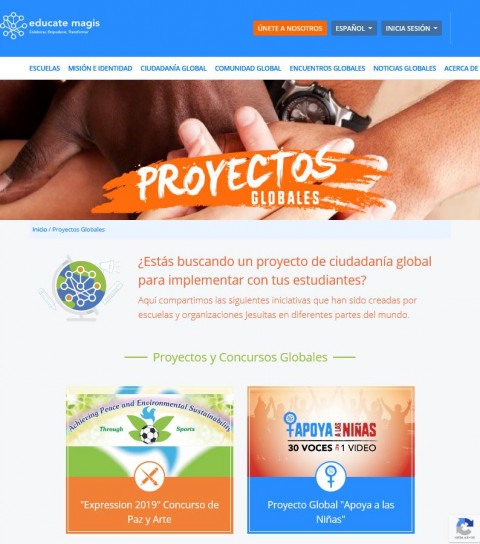 Are You Looking for a Global Citizenship Project to Implement with Your Students?: Global Projects and Contests Año de publicación: 2019 Autor corporativo: Educate Magis In this part of the Educate Magis' webpage from the Society of Jesus one can access a calendar with global activities and events and information about different initiatives that have been organized by different jesuit schools and organizations around the world. One can access different global citizenship educational projects such as "Global red chair", "Walk a mile in my shoes", or "Stand with Girls global project". ¿Estás buscando un proyecto de ciudadanía global para implementar con tus estudiantes?: Proyectos y Concursos Globales Año de publicación: 2019 Autor corporativo: Educate Magis En este espacio de la página web de Educate Magis de la Comunidad de Jesús se accede a un calendario de actividades y eventos a nivel global y a información sobre iniciativas que han sido creadas por escuelas y organizaciones Jesuitas en diferentes partes del mundo. Se accede a distintos proyectos educatiovs para fomentar una ciudadanía mundial como "La silla roja global", "Camina una milla en mis zapatos", o "Únete a las niñas".
  Identity: A Planetary Construction, a Cosmological Perspective Año de publicación: 2016 Autor: Norma Azucena Flores Retana In the article the author asks herself what a planetary citizenship is and how it should be promoted. She starts by questioning econocimic perspectives and ends by focusing on an ideal based on solidarity. In the article summary she states: "We live in a world that evolves and changes at a very high speed, a world that is become planetary, that is interdependant and interconnected. Some authors call it the planetary era, others a planetary consciousness. The important thing is to stop and think. Up to what extent, this new world reality, planetary, influences our individual and social identities? How can we educate ourselves in a new planetary conciousness, for a new individual and social identity?, and, which are the paths that we should follow? These are key questions which I will try to analyse in the article, recognizing ourselves not only as human beings that are individual and social, but also planetary." In the article the author provides broad answers and perspectives to the questions stated in the summary. La identidad : una construcción planetaria, una perspectiva cosmológica Año de publicación: 2016 Autor: Norma Azucena Flores Retana En el artículo la autora se pregunta qué es una ciudadanía planetaria y cómo debería fomentarse esta. Comienza haciendo una critica a las perspectivas econocimicistas para luego centrarse en un ideal basado en la solidaridad. En su resumen del artículo dice: "Vivimos en un mundo que evoluciona y cambia vertiginosamente, un mundo que deviene planetariamente, que es interdependiente y se mantienen interconectado. Algunos autores le llaman la era planetaria, otros le llaman la conciencia planetaria. Lo importante es detenerse y pensar ¿En qué medida, esta nueva realidad mundial, planetaria influye en la construcción de nuestra identidad individual y social?, ¿Cómo educarnos en una nueva conciencia planetaria, para una nueva identidad individual y social? y ¿Cuáles son los caminos a seguir? Estas son preguntas claves las cuales tratare de abordar en el siguiente escrito, reconociéndonos como seres humanos no solo individuales y sociales, sino sujetos planetarios. " En el artículo la autora da respuestas y perspectivas amplias a las preguntas que plantea en el resumen.
  Educación Multilingüe e Intercultural en América Latina: México, Guatemala, Colombia, Brazil, Ecuador, Perú, Bolivia y Paraguay y Noruega Año de publicación: 2011 Autor corporativo: Internacional de la Educación para Latinoamerica This document deals with Intercultural Bilingual Education (IBE), its current status and the concepts and processes driving it today – and in a certain way the conflicts encompassing it. It contains information on Mexico, Guatemala, Colombia, Brazil, Ecuador, Peru, Bolivia and Paraguay, and includes some data and comments on Norway. Certainly all Latin America is involved in the topic, one way or another, but for now this is the geographical scope of the paper. It seeks to give an overview of the whole and profile a few specific aspects by country. Multilingue et éducation interculturelle en Amérique latine: le Mexique, le Guatemala, la Colombie, le Brésil, l'Équateur, le Pérou, la Bolivie et le Paraguay et la Norvège Año de publicación: 2011 Autor corporativo: Internacional de la Educación para Latinoamerica Ce document traite de l'éducation interculturelle bilingue (BIE), son état actuel et les concepts et les processus de conduite aujourd'hui - et d'une certaine manière les conflits englobant elle. Il contient des informations sur le Mexique, le Guatemala, la Colombie, le Brésil, l'Équateur, le Pérou, la Bolivie et le Paraguay, et comprend quelques infomations et commentaires sur la Norvège. Certes, toute l'Amérique Latine est impliqué dans le sujet, d'une façon ou d'une autre, mais pour l'instant c'est la portée géographique du papier. Il vise à donner un aperçu de l'ensemble et le profil de quelques aspects spécifiques par pays. Education for global and multicultural citizenship: a strategy for Victorian Government schools 2009-2013 Año de publicación: 2009 Autor corporativo: State of Victoria (Australia) | Melbourne. Department of Education and Early Childhood Development. Office of Government School Education. Student Learning Programs Division The purpose of this strategy is to provide a renewed vision for global and multicultural education in Victorian Government schools; to align priorities to current legislative, policy and curriculum frameworks; and to guide action across schools, regions and the Department. The strategy offers a new concept for thinking about multicultural education: global and multicultural citizenship. The actions outlined will pursue the following objectives: improving educational outcomes for all students through the implementation of inclusive practices and through learning and teaching that utilises the Victorian Essential Learning Standards (VELS) domains relevant to global and multicultural citizenshipdeveloping the intercultural literacies that students, parents, educators, and leadership groups need to live and work as part of a diverse and globalised populationpromoting social cohesion and diversity as sources of educational and economic advantage for all students • enhancing the engagement, wellbeing and sense of belonging for all students in safe and secure learning environmentsbuilding the capacity of the school community to identify and address overt, subtle and institutionalised racism, stereotyping and other forms of prejudicebuilding and sustaining inclusive and participative school–community partnerships that prepare all students for global and multicultural citizenship. Education à la Citoyenneté Mondiale et Multiculturelle: une stratégie pour les écoles Victorienne Governement 2009-2013 Año de publicación: 2009 Autor corporativo: State of Victoria (Australia) | Melbourne. Department of Education and Early Childhood Development. Office of Government School Education. Student Learning Programs Division Le but de cette stratégie est de fournir une vision renouvelée de l'éducation globale et multiculturelle dans les écoles publiques victorienne; d'aligner les priorités des cadres législatifs, politiques et programmes actuels; et pour guider l'action dans les écoles, les régions et le ministère. La stratégie offre un nouveau concept pour la réflexion sur l'éducation multiculturelle: mondiale et citoyenneté multiculturelle. Les actions décrites poursuivra les objectifs suivants:Améliorer les résultats scolaires pour tous les élèves grâce à la mise en œuvre de pratiques inclusives et par l'apprentissage et l'enseignement ont fait utliser les Normes d'Apprentissage Essentielles Victoriennes (NAEV) les domaines pertinents à la citoyenneté mondiale et multiculturelle développer les alphabétisations interculturelles ne élèves, les parents, les éducateurs et les groupes de leadership doivent vivre et travailler dans le cadre d'une diversité et globalisé promo population ting cohésion sociale et la diversité comme sources d'avantage éducatif et économique pour tous les élèves • renforcement de la participation, bien-être et le sentiment d'appartenance pour tous les élèves dans des environnements d'apprentissage sûrs et sécurisésle renforcement des capacités de la communauté scolaire pour identifier et traiter ouvertement, subtile et institutionnalisés racisme, les stéréotypes et d'autres formes de renforcement des préjugés et de maintien de partenariats inclusifs et participatifs scolaires communautaires a fait préparer tous les élèves à la citoyenneté mondiale et multiculturelle.
 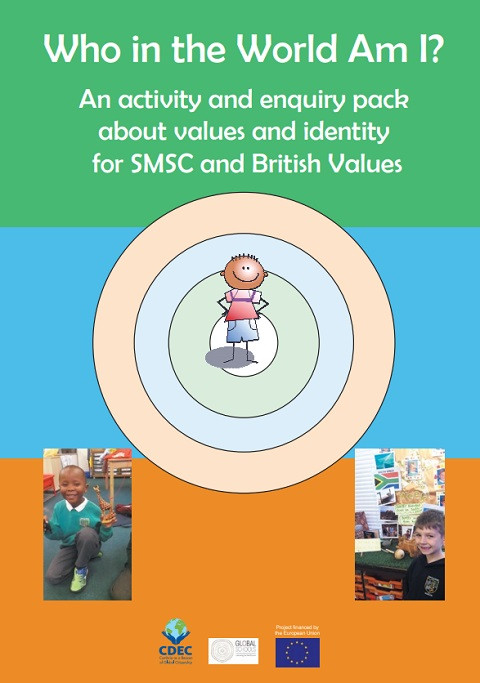 Who in the World Am I?: An Activity and Enquiry Pack about Values and Identity for SMSC and British Values Año de publicación: 2018 Autor: Caroline Harmer Autor corporativo: European Union (EU) | Global Schools Program | Cumbria Development Education Centre(CDEC) Who in the World Am I is a resource pack for teachers and children who want to actively explore their own identity from the personal right through to being part of a family, a community, a country and becoming a global citizen. The activities develop progressively through the global learning themes of valuing diversity and skills of self-awareness and reflection.
  The Meaning of Citizenship in Social Inequality Contexts: Guidelines for a Comprehensive Education Año de publicación: 2016 Autor: Alma A Ramírez Iñiguez This article analyses the sense of citizenship education currently regarding the social inequality in the global era. For this, a conceptual framework about citizenship meaning is stablished and the need of a conceptual change is highlighted taking into account the social transformations, the increase of inequality in the worldwide and the neoliberal model hegemony in last decades. Based on this, some relevant Ibero American educational experiences in citizenship education are analyzed and their results are discussed. From this, some key elements involved in education for inclusive citizenship are pointed out as well as their contribution for social inequality decrease.