
Recursos
Exploren una amplia gama de recursos valiosos en GCED para profundizar su comprensión y promover su búsqueda, incidencia, enseñanza y aprendizaje.
1,443 resultados encontrados
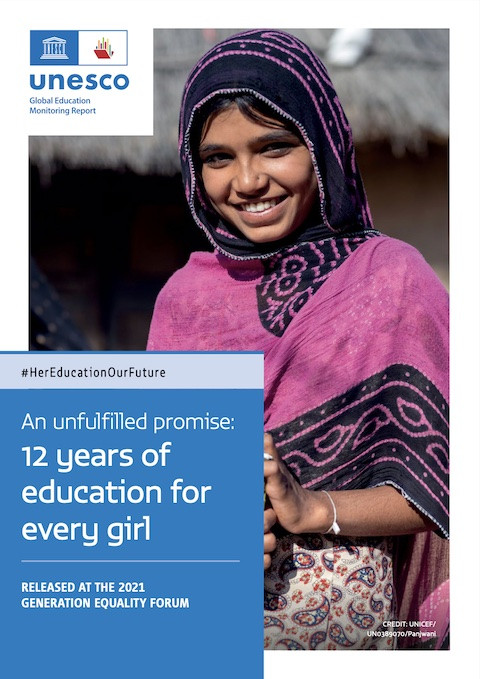 Une promesse non tenue: 12 années d’enseignement pour toutes les filles Año de publicación: 2021 Autor corporativo: UNESCO | Global Education Monitoring Report Team En 1995, il y a un peu plus de 25 ans, 189 gouvernements ont adopté la Déclaration et le Programme d’action de Beijing – un programme visionnaire en faveur de l’autonomisation des femmes et le cadre stratégique mondial le plus complet à ce jour pour promouvoir l’égalité des genres. Le document faisait de l’éducation et de la formation des filles et des femmes l’un des 12 domaines clés dans lesquels il était urgent d’agir pour assurer une plus grande égalité.Depuis Beijing, la communauté internationale a mis l’accent sur le pouvoir transformateur de l’éducation des filles et des femmes, et sur ses avantages – non seulement pour les filles et les femmes, mais aussi pour des sociétés entières et même pour les générations futures. Dans le Programme de développement durable à l’horizon 2030, l’objectif de développement durable (ODD) 4, relatif à l’accès de tous à une éducation de qualité sur un pied d’égalité et à l’apprentissage tout au long de la vie, définit des cibles ambitieuses pour garantir l’égalité des chances – notamment une cible visant à faire en sorte, d’ici à 2030, que toutes les filles et tous les garçons suivent un cyclede 12 années d’enseignement.Ce bref document étudie l’évolution des taux d’achèvement des études primaires et secondaires des filles et des garçons depuis 1995, et appelle à agir pour que nous tenions notre engagement de ne laisser personne de côté.
 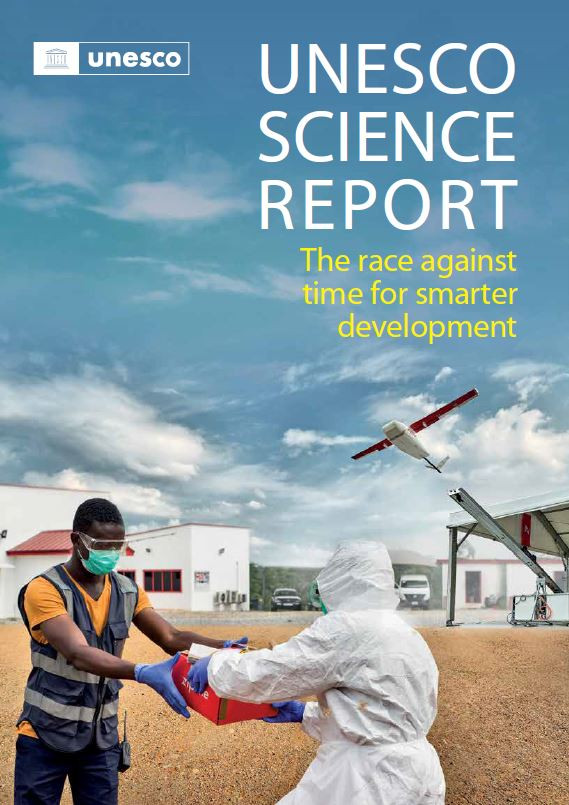 UNESCO Science Report: The Race Against Time for Smarter Development Año de publicación: 2021 Autor: Susan Schneegans | Tiffany Straza | Jake Lewis Autor corporativo: UNESCO This seventh edition of the report monitors the development path that countries have been following over the past five years from the perspective of science governance. It documents the rapid societal transformation under way, which offers new opportunities for social and economic experimentation but also risks exacerbating social inequalities, unless safeguards are put in place.The report concludes that countries will need to invest more in research and innovation, if they are to succeed in their dual digital and green transition. More than 30 countries have already raised their research spending since 2014, in line with their commitment to the Sustainable Development Goals. Despite this progress, eight out of ten countries still devote less than 1% of GDP to research, perpetuating their dependence on foreign technologies.
 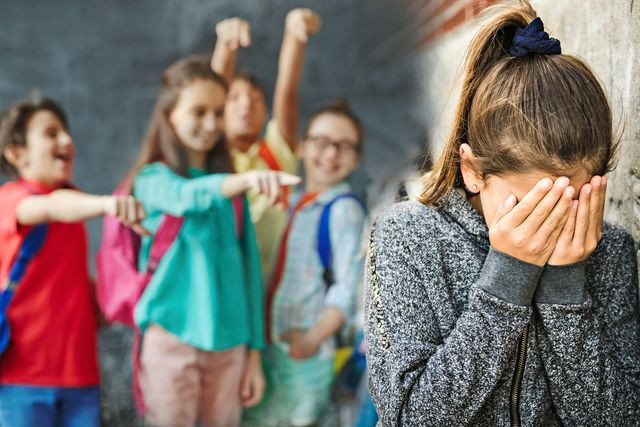 ОТЧЕТ по результатам проведенного исследования на тему «Мониторинг ситуации с профилактикой буллинга в средних образовательных школах Республики Казахстан» Año de publicación: 2023 Autor corporativo: Қадір-қасиет (Казахстан) Общественное объединение «КадірКасиет» организовало и провело исследование, посвященное мониторингу ситуации с профилактикой буллинга в средних образовательных школах Казахстана. Целью исследования выступало изучение шести школ, в которых планируется внедрить пилотную программу «Ынсап» по противодействию буллингу в школах. Настоящий доклад подготовлен в рамках проекта «Фокус прав человека: женщины и дети», реализуемого ОО «Қадір-қасиет» и Агентством США по международному развитию (USAID).
  Global Citizenship: A plural and Transformative Vision of Society and School; Volume Ⅰ Año de publicación: 2020 Autor: Rafael Díaz-Salazar | Alfonso Díez Prieto | Antonio Roura | Begoña Carmona | Carme García Yeste | Carmen Magallón | César García-Rincón | Florencio Luengo | Gema Celorio | Gonzalo Fanjul | Juan Iglesias | Juan Pablo Rayo | Luis González Reyes | Manuela Mesa | María Laín | Mónica Cantón de Celis | Pedro Sáez | Pilar Álvarez Cifuentes | Rafael Feito | Regina Gairal | Santiago Álvarez Cantalapiedra | Victoria Camps | Violeta Velasco | Yayo Herrero | Augusto Ibañez Autor corporativo: SM Foundation The objective of this work, which brings together the voices of great specialists, reinforced by the vision of the school itself, is to promote and channel the debate on global citizenship towards an education oriented to the care of the person, society and nature. Understood in this way, education for global citizenship can help us form fulfilled people, prepared to intervene positively in a world in continuous change, and capable of adopting a sustainable way of life for ourselves, those around us and those who will succeed us. Ciudadanía Global: Una visión plural y transformadora de la sociedad y de la escuela; Volumen Ⅰ Año de publicación: 2020 Autor: Rafael Díaz-Salazar | Alfonso Díez Prieto | Antonio Roura | Begoña Carmona | Carme García Yeste | Carmen Magallón | César García-Rincón | Florencio Luengo | Gema Celorio | Gonzalo Fanjul | Juan Iglesias | Juan Pablo Rayo | Luis González Reyes | Manuela Mesa | María Laín | Mónica Cantón de Celis | Pedro Sáez | Pilar Álvarez Cifuentes | Rafael Feito | Regina Gairal | Santiago Álvarez Cantalapiedra | Victoria Camps | Violeta Velasco | Yayo Herrero | Augusto Ibañez Autor corporativo: SM Foundation El objetivo de esta obra, que recoge las voces de grandes especialistas, reforzadas por la visión de la propia escuela, es impulsar y canalizar el debate sobre la ciudadanía global hacia una educación orientada al cuidado de la persona, de la sociedad y de la naturaleza. Entendida así, la educación para la ciudadanía global puede ayudarnos a formar a personas plenas, preparadas para intervenir positivamente en un mundo en continuo cambio, y capaces de adoptar un modo de vida sostenible para nosotros, los que nos rodean y los que nos sucederán.
  2021 미디어·정보 리터러시 데이 자료집: 어린이·청소년이 말하는 MIL Año de publicación: 2021 Autor corporativo: 한국언론진흥재단 | 시청자미디어재단 | 주한미국대사관 | 유네스코한국위원회 | 한국교육학술정보원 본 자료집은 2021 미디어·정보 리터러시 데이 행사(2021. 10.19. 개최) 에서 발표한 어린이·청소년 관련 미디어 리터러시 연구 성과 및 발표 자료를 수록하였다.
  Harnessing the Era of Artificial Intelligence in Higher Education: A Primer for Higher Education Stakeholders Año de publicación: 2023 Autor: Bosen Lily Liu | Diana Morales | Jaime Roser-Chinchilla | Emma Sabzalieva | Arianna Valentini | Daniele Vieira do Nascimento | Clarisa Yerovi Autor corporativo: UNESCO | UNESCO International Institute for Higher Education in Latin America and the Caribbean (IESALC) The International Institute for Higher Education in Latin America and the Caribbean (UNESCO IESALC) is one of UNESCO’s key education-focused institutes and is the only institute in the United Nations with a specific mandate for higher education. Taking a holistic and integrated intersectoral and cross-sectoral approach to higher education, UNESCO IESALC provides support to Member States through policy-driven and action-oriented research and publications, capacity development, training, advocacy and networking. Following the release of a Quick Start Guide on using ChatGPT and Artificial Intelligence (AI) in higher education, UNESCO IESALC is pleased to offer to the wider community of higher education stakeholders worldwide this Primer on AI and higher education. Providing information and tips for developing further thinking and policies related to the use of AI processes and outcomes in higher education institutions, the Primer is a comprehensive and comprehensible introduction to AI. It also serves as a practical tool for guidance and reference with recommendations for its use in higher education. Oportunidades y desafíos de la era de la inteligencia artificial para la educación superior: Una introducción para los actores de la educación superior Año de publicación: 2023 Autor: Bosen Lily Liu | Diana Morales | Jaime Roser-Chinchilla | Emma Sabzalieva | Arianna Valentini | Daniele Vieira do Nascimento | Clarisa Yerovi Autor corporativo: UNESCO | UNESCO International Institute for Higher Education in Latin America and the Caribbean (IESALC) El Instituto Internacional de la UNESCO para la Educación Superior en América Latina y el Caribe (UNESCO IESALC) es uno de los institutos clave de la UNESCO centrado en la educación y es el único instituto de las Naciones Unidas con un mandato específico para la educación superior. Adoptando un enfoque holístico e integrado de manera intersectorial y transectorial de la educación superior, el IESALC presta apoyo a los Estados miembros mediante investigaciones y publicaciones orientadas a la formulación de políticas y a la acción, al desarrollo de capacidades, la formación, la abogacía y la creación de redes. Tras la publicación de una Guía de inicio rápido sobre el uso de ChatGPT y la Inteligencia Artificial (IA) en la educación superior, UNESCO IESALC se complace en ofrecer a la comunidad en general interesada en la educación superior global este Manual en IA y educación superior. Proporcionando información y consejos para el desarrollo de pensamiento y de políticas relacionadas con el uso de la IA en las instituciones de educación superior, este Manual es una introducción comprensible y exhaustiva a la IA. También sirve como herramienta práctica de orientación y referencia con recomendaciones para su uso en la enseñanza superior.
  Arts Education: An Investment in Quality Learning Año de publicación: 2023 Autor: Vivek Venkatesh | Lydia Ruprecht | Martha K. Ferede Autor corporativo: UNESCO This paper reviews key research on the impact and outcomes of Arts Education (AE), with the objective of demonstrating how AE and its conceptualizations, methodological approaches, theoretical foundations and applications are closely aligned with the objectives and expectations of quality education as notably envisioned by Sustainable Development Goal 4 (SDG 4) on education. For UNESCO (2006), AE is understood to include two different approaches: o the teaching of art as an individual study subject and AE as developing learners’ artistic skills, abilities and sensibilities; o the mobilization of the arts, its tools, methods and stakeholders as a pedagogical approach, also referred to as 'arts in education' or 'learning through the arts.”The evidence gathered in this paper points to six main conclusions. • Arts education contributes to the humanistic outcomes associated with quality education as captured in Target 4.7 of SDG 4 on education, namely the promotion of values grounded in global peace, sustainability, justice and respect for cultural diversity and the development of social and emotional skills such as empathic concern and perspective-taking, all of which support personal and collective well-being and indices associated with increased societal happiness1 such as healthy life expectancy, freedom and generosity. • The evidence demonstrates that the “learning of the arts” positively impacts learning in ways that are relevant to broader academic and non-academic outcomes(see Tables 1 and 2).It has been associated with improvements in mathematics performance, writing skills, reading achievements, creativity, student engagement and attendance, as well as perseverance in pursuit of educational goals and classroom behaviours. • Arts education fosters teacher innovation and collaboration, positively impacting school culture and can help students gain a sense of mastery and accomplishment and engage with their communities. • By linking formal and non-formal learning settings, including both in-person and digital cultural spaces such as museums, festivals, performance venues and cultural centres, AE supports the capacity-building of artists and cultural bearers, while expanding the pedagogical role of cultural institutions and spaces. • Considering the nature of local and Indigenous knowledge in spanning language, cultural practices, land use practices, social interactions, ritual and spirituality, AE holds the potential to support knowledge revitalization for Indigenous peoples, which have been historically compromised or delegitimized within traditional education settings. • Last but not least, by building on the economic potential of the arts and creative industries, AE creates opportunities for employment and economic growth, which cannot be underestimated. • On a methodological note, the review of existing research highlights the limitations of quantitative methods and the absence of evaluation mechanisms to assess the contribution and impact of AE to learning.
  National Distance Learning Programmes in Response to the COVID-19 Education Disruption: Case Study of the Republic of Korea Año de publicación: 2022 Autor corporativo: UNESCO This document is one of several case studies on national distance learning programmes in response to the COVID-19 education disruptions. The case of the Republic of Korea was drawn from the 2020 edition of Mobile Learning Week, organized online in October 2020 under the theme of 'Beyond Disruption: Technology Enabled Learning Futures'. Envisaged to be a continuously enriched mechanism for knowledge sharing and dissemination, the case studies aim to surface best practices worldwide in leveraging digital technology to build inclusive and crisis-resilient learning systems, and to inform the planning of digital transformation of education towards SDG 4 and the futures of learning. Each case study documents governance and funding mechanisms, needs-driven planning of distance learning solutions, evaluation of digital learning’s effects on mitigating disruptions and ensuring inclusion, and pedagogical innovations to maintain or improve the quality of learning.