
Recursos
Exploren una amplia gama de recursos valiosos en GCED para profundizar su comprensión y promover su búsqueda, incidencia, enseñanza y aprendizaje.
1,180 resultados encontrados
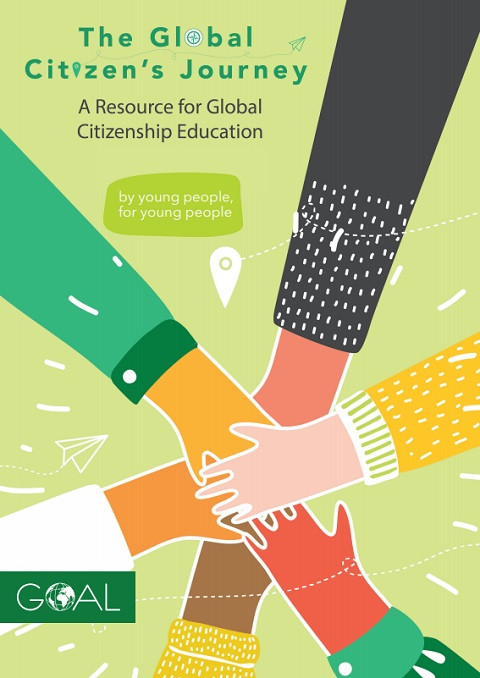 The Global Citizen's Journey: A Resource for Global Citizenship Education Año de publicación: 2021 Autor corporativo: GOAL Global This resource for Global Citizenship Education is designed by our Global Youth Programme for educators and leaders of 14–18-year-olds all over the world. Centring on the themes of interconnectedness, development, power and inequality this free, downloadable booklet of activities encourages critical thinking, reflection, and empower the pursuit of positive change.To find out more, watch our introductory video here.
  The prospects of development education in African countries: building a critical mass of citizenry for civic engagement Año de publicación: 2015 Autor: Simon Eten Autor corporativo: Centre for Global Education (CGE) This article argues that development education is often framed in an African context within notions of national citizenship designed to engender support for public institutions and policies rather than develop critical thinking skills. This limited concept and application of development education often results in public apathy and disengagement from participation in community, national and global development initiatives. The author argues that recourse to the more radical, Freirean conception of development education practice in African states could potentially support more engaged public activism in issues underpinning poverty and injustice locally and globally. The author draws upon his knowledge and experience of the public sector in Ghana and general trends across Africa to propose potentially fertile areas of research that could support more effective DE practice that nurtures enhanced civic engagement. Les perspectives de l'éducation au développement dans les pays africains: la construction d'une masse critique de citoyens pour l'engagement civique Año de publicación: 2015 Autor: Simon Eten Autor corporativo: Centre for Global Education (CGE) Cet article soutient que l'éducation au développement est souvent encadrée dans un contexte africain dans les notions de citoyenneté nationale visant à susciter le soutien des institutions et des politiques publiques plutôt que de développer la pensée critique. Ce concept limité et l'application de l'éducation au développement se traduit souvent par l'apathie du public et le désengagement de la participation à la communauté, les initiatives nationales et mondiales de développement. L'auteur fait valoir que le recours à la plus radicale, la conception freirienne de la pratique de l'éducation au développement dans les pays africains pourrait soutenir l'activisme public plus engagé dans les questions qui sous-tendent la pauvreté et de l'injustice localement et globalement. L'auteur puise dans ses connaissances et de l'expérience du secteur public au Ghana et les tendances générales à travers l'Afrique pour proposer des zones potentiellement fertiles de la recherche qui pourrait soutenir la pratique DE plus efficace qui favorise l'engagement civique renforcée.
  A Critically Informed Teacher Education Curriculum in Global Citizenship Education: Training Teachers as Field Experts and Contributors to Assessment and Monitoring of Goals (Journal of International Cooperation in Education; Vol.22-2/23-2) Año de publicación: 2020 Autor: Susan Wiksten Autor corporativo: CICE Hiroshima University A global market of education development has grown since the 1990s. As the circumstances and contexts of education change globally, there is both a need for shared references in teacher education as well as good reasons for contesting unitary efforts to implement policy goals. Specifically, shared global references for teacher education that can be used by teacher education programs, NGOs and civil society for responding to target 4c. of SDG 4.7 are needed. Accordingly, this article proposes guiding principles and outlines a teacher education curriculum for Global Citizenship Education (GCED) that can be adapted to low-income country contexts as well as high-income contexts. Some of the challenges, possibilities and limitations in the preparation of teachers with the skills needed for supporting the development of the next generation of global citizens are described. The analysis presented draws on data from the UNESCO Institute for Statistics, the OECD teacher survey, indicators developed by the World Bank, and policy efforts to develop a definition of global competence, among other sources. The concluding discussion proposes that an important possibility presents itself in efforts to involve teachers in the monitoring and evaluation of education development goals.
 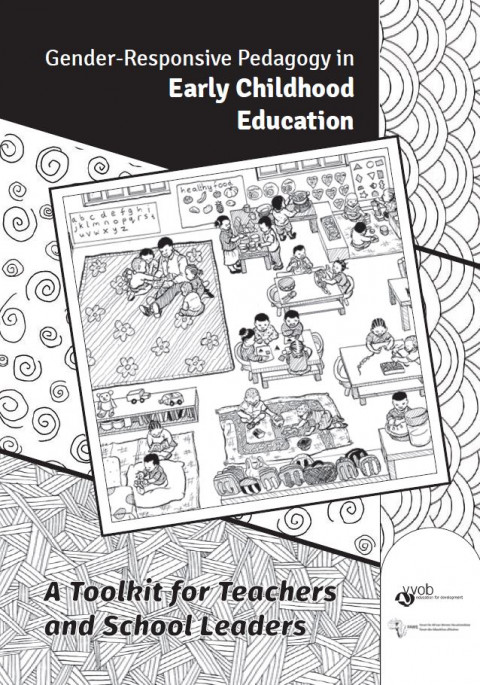 Gender-responsive Pedagogy for Early Childhood Education: A Toolkit for Teachers and School Leaders Año de publicación: 2019 Autor corporativo: VVOB | Forum for African Women Educationalists (FAWE) The Gender-Reponsive Pedagogy for Early Childhood Education Toolkit targets early childhood education teachers and all other practitioners who deal with younger children. It is a practical guide that can be adapted to any context and the related needs as well as a source of ideas and resources that individual teachers and school leaders can put to immediate use in their classrooms and schools. The toolkit is also a useful resource for researchers, school-parent committees and governing bodies, civil society organisations, community leaders and education policy makers.
 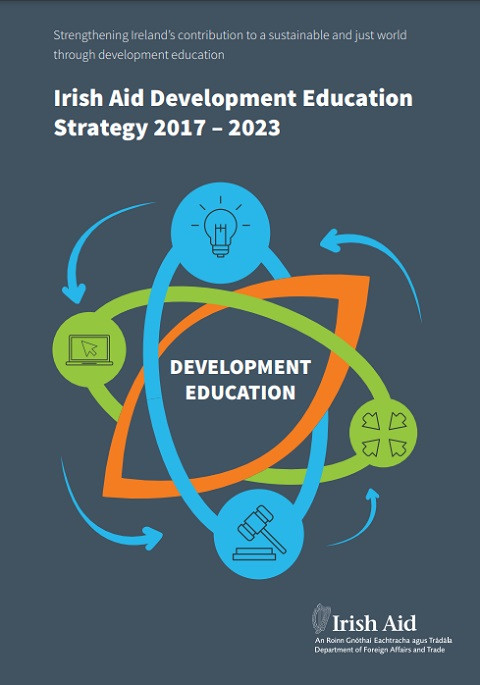 Irish Aid Development Education Strategy 2017-2023: Development Education Año de publicación: 2016 Autor corporativo: Irish Aid Ireland has a long and proud history in development education thanks to many of the civil society organisations represented here today and which pre-dates the start of Ireland’s official aid programme which is itself now over 40 years old.The Development Education Strategy 2017-2023 aims to increase access to development education in Ireland, in schools and colleges, in local and community groups, and among the old and young.Development education is a lifelong educational process which encourages people to critically analyse and challenge the root causes and consequences of global hunger, poverty and injustice, challenge stereotypes and engage in action to bring about change in both their local and global communities.
  Envision 4.7 Event and Roadmap Año de publicación: 2021 Autor corporativo: Bridge 47 Envision 4.7 took place in Helsinki in 2019, bringing together 200 education practitioners, civil society representatives and decision makes to create the Envision 4.7 Roadmap, a policy guideline to the future implementation of SDG Target 4.7 in Europe.
  Humanistic Futures of Learning: Perspectives from UNESCO Chairs and UNITWIN Networks Año de publicación: 2020 Autor corporativo: UNESCO UNESCO’s Futures of Education initiative aims to rethink education and shape the future. The initiative is catalyzing a global debate on how knowledge, education and learning need to be reimagined in a world of increasing complexity, uncertainty and precarity. This publication presents the first curated input to the Futures of Education initiative from the UNITWIN/UNESCO Chairs Programme, which now represents an extensive global network of more than 800 higher education institutions in over 115 countries. It features think pieces that highlight key dimensions to be considered in re-visioning and re-purposing education for the future of humanity and the planet. The collection of the pieces calls for greater focus on a number of critical areas such as: The role of culture in strengthening social and environmental sustainability; the values and attitudes that are needed to shape future generations; the importance of both robust public education, as well as of other learning spaces; the need to strengthen human creativity and capability in the digital era, as well as the role of higher education in generating the knowledge and driving the innovation required to transform our world. Les futurs humanistes de l’apprentissage: Perspectives des chaires UNESCO et des réseaux UNITWIN Año de publicación: 2020 Autor corporativo: UNESCO L’initiative de l’UNESCO intitulée Les futurs de l’éducation vise à repenser l’éducation et à façonner l’avenir, en lançant un débat mondial sur la manière de réinventer le savoir, l’éducation et l’apprentissage dans un monde de plus en plus complexe, incertain et précaire. Le présent volume constitue la première collection de contributions soumises à l’initiative Les Futurs de l’éducation de l’UNESCO par le Programme des chaires UNESCO/UNITWIN, un vaste réseau mondial regroupant plus de 800 établissements d’enseignement supérieur dans plus de 115 pays. Les documents de réflexion qu’il contient mettent en évidence les dimensions essentielles à prendre en compte pour ré-imaginer et redéfinir l’éducation dans l’intérêt de l’avenir de l’humanité et de la planète. Cette collection appelle à insister davantage sur un certain nombre de domaines critiques tels que le rôle de la culture dans le renforcement de la durabilité sociale et environnementale, les valeurs et les attitudes nécessaires pour préparer les générations futures, l’importance d’une éducation publique et robuste, ainsi que d’autres espaces d’apprentissage, la nécessité de renforcer la créativité et les capacités humaines à l’ère numérique, ainsi que le rôle de l’enseignement supérieur concernant la génération des savoirs et la conduite de l’innovation nécessaire pour transformer notre monde. 학습의 인본주의적 미래: 유네스코 석좌와 유니트윈의 시각에서 Año de publicación: 2020 Autor corporativo: 유네스코 유네스코의 ‘교육의 미래’(Futures of Education) 이니셔티브는 교육을 다시 생각해보고 교육의 미래를 만들어가는 것을 목표로 한다. 이 이니셔티브는 복잡성, 불확실성, 불안정성이 증가하는 세계에서 지식, 교육, 학습은 어떻게 재구상되어야 하는가라는 문제에 대한 전세계적 논의를 촉진하고 있다. 이 책은 현재 115개 이상의 국가의 800개 이상의 고등교육기관으로 구성된 광범위한 글로벌 네트워크를 대표하는 유니트윈/유네스코 석좌프로그램(UNITWIN/UNESCO Chairs Programme)이 교육의 미래 이니셔티브에 제출한 글들을 일차적으로 정리해 엮은 것이다. 이 책은 인류와 지구의 미래를 위해 교육의 비전과 목적을 재설정할 때 고려해야 할 핵심적 차원들을 조명하는 글들을 담고 있다. 이 글들은 사회적·환경적 지속가능성 강화에 있어 문화의 역할; 미래 세대 육성에 필요한 가치와 태도; 건실한 공교육 및 기타 학습공간의 중요성; 디지털 시대에 인간의 창의력과 역량을 강화할 필요성과 지식을 창출하고 세상을 변화시키는 데 필요한 혁신을 주도하는 고등교육의 역할 등 중요 영역에 더욱 초점을 맞출 것을 촉구한다.