
Recursos
Exploren una amplia gama de recursos valiosos en GCED para profundizar su comprensión y promover su búsqueda, incidencia, enseñanza y aprendizaje.
1,443 resultados encontrados
 National Distance Learning Programmes in Response to the COVID-19 Education Disruption: Case Study of the Republic of Korea Año de publicación: 2022 Autor corporativo: UNESCO This document is one of several case studies on national distance learning programmes in response to the COVID-19 education disruptions. The case of the Republic of Korea was drawn from the 2020 edition of Mobile Learning Week, organized online in October 2020 under the theme of 'Beyond Disruption: Technology Enabled Learning Futures'. Envisaged to be a continuously enriched mechanism for knowledge sharing and dissemination, the case studies aim to surface best practices worldwide in leveraging digital technology to build inclusive and crisis-resilient learning systems, and to inform the planning of digital transformation of education towards SDG 4 and the futures of learning. Each case study documents governance and funding mechanisms, needs-driven planning of distance learning solutions, evaluation of digital learning’s effects on mitigating disruptions and ensuring inclusion, and pedagogical innovations to maintain or improve the quality of learning.
  Reimaginar juntos nuestros futuros: un nuevo contrato social para la educación Año de publicación: 2021 Autor corporativo: International Commission on the Futures of Education | UNESCO Nuestra humanidad y el planeta Tierra están bajo amenaza. La pandemia solo ha servido para demostrar nuestra fragilidad y nuestra interconexión. Ahora se necesita una acción urgente, tomada en conjunto, para cambiar el rumbo y reimaginar nuestro futuro. Este informe de la Comisión Internacional sobre el Futuro de La educación reconoce el poder de la educación para generar cambios profundos. Nos enfrentamos al doble desafío de cumplir la promesa incumplida de garantizar el derecho a una educación de calidad para todos los niños, niñas, jóvenes y adultos y realizar plenamente el potencial transformador de la educación como vía para futuros colectivos sostenibles Para ello, necesitamos un nuevo contrato social para la educación que pueda reparar las injusticias mientras transforma el futuro. Este nuevo contrato social debe fundamentarse en los derechos humanos y basarse en los principios de no discriminación, justicia social, respeto por la vida, la dignidad humana y la diversidad cultural. Debe abarcar una ética del cuidado, la reciprocidad y la solidaridad. Debe fortalecer la educación como un esfuerzo público y un bien común. Este informe, que se preparó durante dos años y se basó en un proceso de consulta global en el que participaron alrededor de un millón de personas, invita a los gobiernos, instituciones, organizaciones y ciudadanos de todo el mundo a forjar un nuevo contrato social para la educación que nos ayudará a construir un futuro pacífico, justo y futuros sostenibles para todos. Las visiones, principios y propuestas que aquí se presentan son meramente un punto de partida. Traducirlos y contextualizarlos es un esfuerzo colectivo. Ya existen muchos puntos brillantes. Este informe intenta capturarlos y construir sobre ellos. No es ni un manual ni un anteproyecto, sino la apertura de una conversación vital. Repenser nos futurs ensemble: Un nouveau contrat social pour l'éducation Año de publicación: 2021 Autor corporativo: International Commission on the Futures of Education | UNESCO L’avenir de l’humanité sur la planète est, nous le savons aujourd’hui, compromis. La pandémie a eu au moins le mérite de démontrer combien nos existences sont fragiles et combien nos destins sont inextricablement liés. Il est nécessaire et urgent désormais, d’agir collectivement pour changer de cap et réinventer notre avenir. Dans ce tournant, l’éducation jouera un rôle crucial pour sa capacité, universellement reconnue, à provoquer le changement. Mais pour jouer son rôle, elle devra surmonter un double défi : honorer, d’une part, sa plus vieille promesse, c’est-à-dire d’être effective et d’assurer le droit à une éducation de qualité pour chaque enfant, chaque jeune, chaque adulte partout à travers le monde ; et, d’autre part, assumer entièrement son potentiel transformateur, afin d’ouvrir la voie vers un avenir collectif durable. Pour y parvenir, il convient de s’engager dans un nouveau contrat social pour l’éducation, qui permette de corriger les injustices tout en transformant l’avenir.Ce nouveau contrat social doit être enraciné dans les droits humains et être fondé sur les principes de non- discrimination, de justice sociale, de respect de la vie, de la dignité humaine et de la diversité culturelle ; il doit aussi s’appuyer sur une éthique de la sollicitude, de la réciprocité et de la solidarité ; il doit enfin renforcer l’éducation comme projet public et un bien commun de l’humanité.Le présent rapport, préparé durant deux ans et qui a pu s’appuyer sur une consultation mondiale de près d’un million de personnes, invite les gouvernements, les partenaires et les citoyens du monde entier à élaborer un nouveau contrat social en faveur de l’éducation, pour construire un avenir pacifique, juste et durable pour toutes et tous.Les conceptions, les principes et les propositions avancés ici ne constituent qu’un point de départ. Seul un effort collectif pourra les traduire en actes et les adapter aux situations locales. Il existe en effet de vraies lueurs d’espoir. Ce rapport essaie de les ressaisir afin que l’avenir se construise sur ces fondations. Qu’on n’y voit donc pas un manuel ou un plan directeur : c’est le début d’une conversation vitale.
  Framework for the Implementation of Education for Sustainable Development (ESD) Beyond 2019 Año de publicación: 2019 Autor corporativo: UNESCO This document contains the proposal for a new framework for Education for Sustainable Development (ESD) beyond 2019 and the comments and observations of the Executive Board thereon. Marco de aplicación de la Educación para el Desarrollo Sostenible (EDS) después de 2019 Año de publicación: 2019 Autor corporativo: Organización de las Naciones Unidas para la Educación, la Ciencia y la Cultura (UNESCO) El presente documento contiene la propuesta de un nuevo marco de educación para el desarrollo sostenible (EDS) después de 2019 y los comentarios y observaciones del Consejo Ejecutivo al respecto. Cadre pour la mise en oeuvre de l'éducation en vue du développement durable (EDD) après 2019 Año de publicación: 2019 Autor corporativo: Organisation des Nations Unies pour l'éducation, la science et la culture (UNESCO) Le présent document contient une proposition de cadre pour l’éducation en vue du développement durable (EDD) après 2019, ainsi que les commentaires et observations du Conseil exécutif à ce sujet. Рамочная основа деятельности в области образования в интересах устойчивого развития (ОУР)в период после 2019 г Año de publicación: 2019 Autor corporativo: Организация Объединенных Наций по вопросам образования, науки и культуры (UNESCO) В настоящем документе содержатся предложение отно- сительно новой рамочной основы деятельности в области образования в интересах устойчивого развития (ОУР), а также комментарии и заме- чания Исполнительного совета.
  International Forum on AI and the Futures of Education: Developing Competencies for the AI Era Synthesis Report; 7-8 December 2020 Año de publicación: 2021 Autor: Fengchun Miao | Wayne Holmes Autor corporativo: UNESCO This synthesis report has been developed by the UNESCO Unit for Technology and Artificial Intelligence in Education within the Future of Learning and Innovation Team, drawing on the International Forum on AI and the Futures of Education held in Beijing and simultaneously online from 7 to 8 December 2020.The Forum underlined the importance of reviewing the very purpose of education, together with the opportunity for real transformation, and the role that AI might play. It is widely acknowledged that current educational practices and educational environment are very rigid, and that the future of education should be more flexible and responsive to changing circumstances and innovation. National education authorities should identify what skills young people need to enable them to live and thrive in the new realities of a constantly changing world, and what digital transformation makes possible in the national and international context. In short, new education models are needed to put students at the centre, to move away from a focus on memorizing content, to integrate the digital and the analogue, and to foster human cognitive, socioemotional and critical skills, all of which might – with foresight and careful attention – be enabled by AI and other digital technologies.
 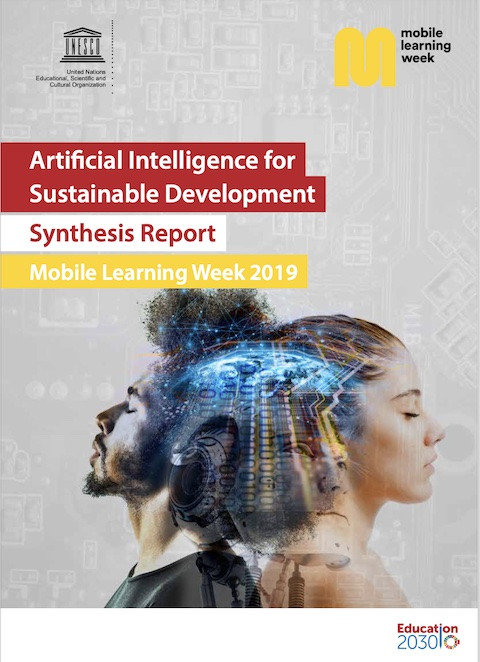 Artificial Intelligence for Sustainable Development: Synthesis Report; Mobile Learning Week 2019 Año de publicación: 2019 Autor corporativo: UNESCO During the five-day event for Mobile Learning Week 2019, UNESCO gathered participants from around the world to share experiences, initiatives and plan joint actions with a view to harnessing artificial intelligence (AI) to achieve Sustainable Development Goal (SDG) 4. The report stems from the work that the speakers presented and the insights that all the participants shared at the event.
  反击社交媒体上的仇恨言论:当代的挑战 Año de publicación: 2021 Autor corporativo: 联合国教科文组织 (UNESCO) | Oxford Internet Institute | European Union (EU) 本文件是牛津大学互联网研究所与联合国教科文组织合作开发的一个工具包的组成部分,该工具包包含各种现有的方法、资源及研究项目,旨在监测网络仇恨言论的发生、传播和影响,以及评估反击仇恨言论的能力和做法。