
Recursos
Exploren una amplia gama de recursos valiosos en GCED para profundizar su comprensión y promover su búsqueda, incidencia, enseñanza y aprendizaje.
1,450 resultados encontrados
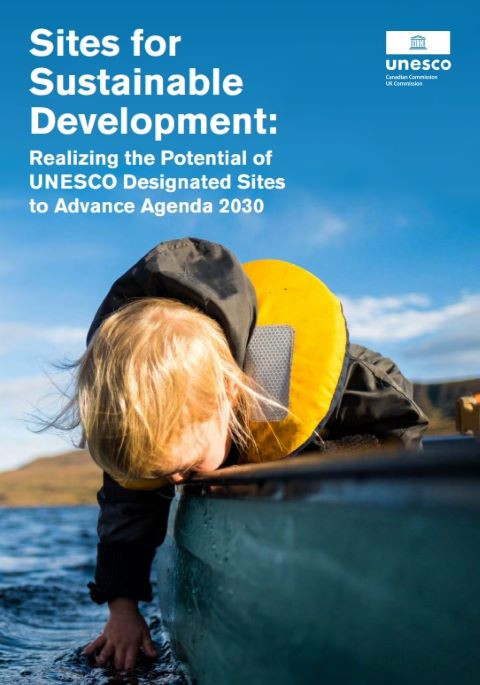 Sites for Sustainable Development: Realizing the Potential of UNESCO Designated Sites to Advance Agenda 2030 Año de publicación: 2022 Autor: Tim Carter | Eleanor R. Haine | Alexander J. Kent | Matthew Rabagliati Autor corporativo: Canadian Commission for UNESCO | United Kingdom National Commission for UNESCO This report outlines the role that UNESCO’s global network of designated sites — World Heritage Sites, global geoparks and biosphere reserves — can play in helping stakeholders (including businesses, communities, government agencies and their local organizations, Indigenous Peoples, traditional authorities, councils of elected representatives, and heritage and nature groups) carry out sustainable development approaches to tackle, mitigate and adapt to challenges like these.The ideas contained in this report emerge from a study designed to explore the merits of UNESCO’s increasing tendency to refer to biosphere reserves, global geoparks and World Heritage Sites as “sites for sustainable development.”
 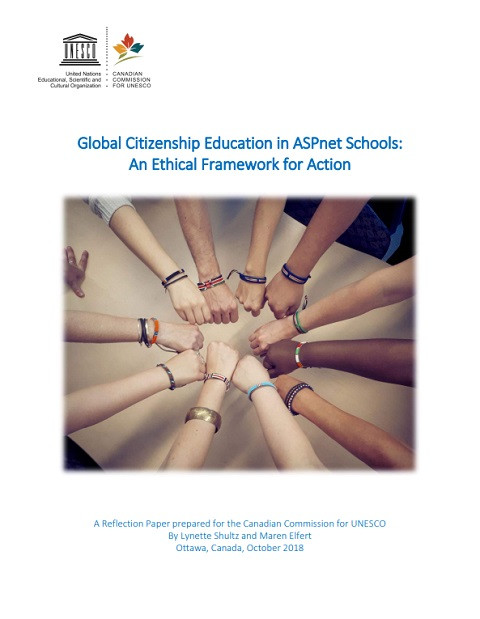 Global Citizenship Education in ASPnet Schools: An Ethical Framework for Action Año de publicación: 2018 Autor: Lynette Shultz | Maren Elfert Autor corporativo: Canadian Commission for UNESCO This report proposes global citizenship not so much as a curriculum subject or a pedagogical approach, but as an ethical position, a worldview that emphasizes human rights and earth rights, the interconnectedness of all human beings with each other, the animals and the planet, and an awareness of our global responsibilities in the face of the key challenges that we are facing today on our planet.This document is structured into three sections: It starts by introducing the UNESCO Associated Schools Network and the UNESCO perspective on global citizenship. In the second section, it shows the framework to implement GCED in schools, which will serve as the foundation for a whole school approach to the integration of a GCED perspective in curricula, lesson plans and broader school and community activities. It also gives some selected resources and examples in section three.
 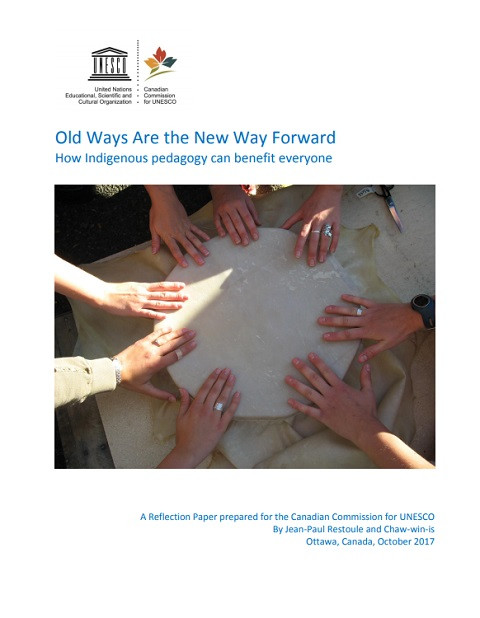 Old Ways Are the New Way Forward: How Indigenous Pedagogy Can Benefit Everyone Año de publicación: 2017 Autor: Jean-Paul Restoule | Chaw-win-is Autor corporativo: Canadian Commission for UNESCO This report explores traditional Indigenous ways of teaching and how they are the way forward for "new" innovations in education.
  Media and Information Literacy: Challenges and Opportunities for the World of Education Año de publicación: 2019 Autor: Carolyn Wilson Autor corporativo: Canadian Commission for UNESCO This paper explores media and information literacy and its importance to understanding democratic rights, active citizenship, and technological literacy. Filled with key concepts, sample questions, and additional resources, it is essential reading for both educators and the wider public.
  ESD Implementation in Learning Cities Año de publicación: 2021 Autor corporativo: UNESCO Institute for Lifelong Learning (UIL) This publication aims to share the best practice cases from nine cities on ESD implementation (policy and practice) following a lifelong learning approach. These cases showcase innovative local initiatives that have embedded ESD into lifelong learning systems through policy/ strategy development or project implementation, focusing on the following priority areas of action and local activities laid down in the ESD for 2030 roadmap: Local policy/strategy development on ESD: The development of an action plan that determines how the community as a whole can become a learning laboratory for sustainable development. Capacity-building for educators and local authorities: Lifelong learning initiatives for systematic and comprehensive ESD capacity development for educators in the formal and non-formal education sectors, and for local government officials. Efforts to foster engagement with local communities, including: • formal education institutions’ engagement with local communities for the promotion of ESD; • non-formal education institutions (e.g. community learning centres) serving as a hub for lifelong learning on ESD in their communities. Empowerment and mobilization of youth: Lifelong learning initiatives for ESD that focus on young people. Innovative use of local spaces for ESD: Designated areas or spaces that inspire learning and host projects that promote sustainability. In addition to the five priority areas listed above, the case studies share one cross-cutting theme: • Multi-stakeholder approach: How people from different walks of life or professional sectors come together to contribute to local ESD initiatives at either the policy or the project level.
  Communities in action: lifelong learning for sustainable Año de publicación: 2015 Autor: Fumiko Noguchi | Jose Roberto Guevara | Rika Yorozu Autor corporativo: UNESCO Institute for Lifelong Learning (UIL) This handbook identifies principles and policy mechanisms to advance community-based learning for sustainable development based on the commitments endorsed by the participants of the Kominkan-CLC International Conference on Education for Sustainable Development, which was in Okayama City, Japan, in October 2014. To inform policymakers and practitioners new to this field, the handbook clarifies the international vision and goals for sustainable development and Education for Sustainable Development, and identifies the potential contributions of community-based learning centres and organizations. It documents both policy and practice from different regions and concludes with a summary of principles and policy support mechanisms.
 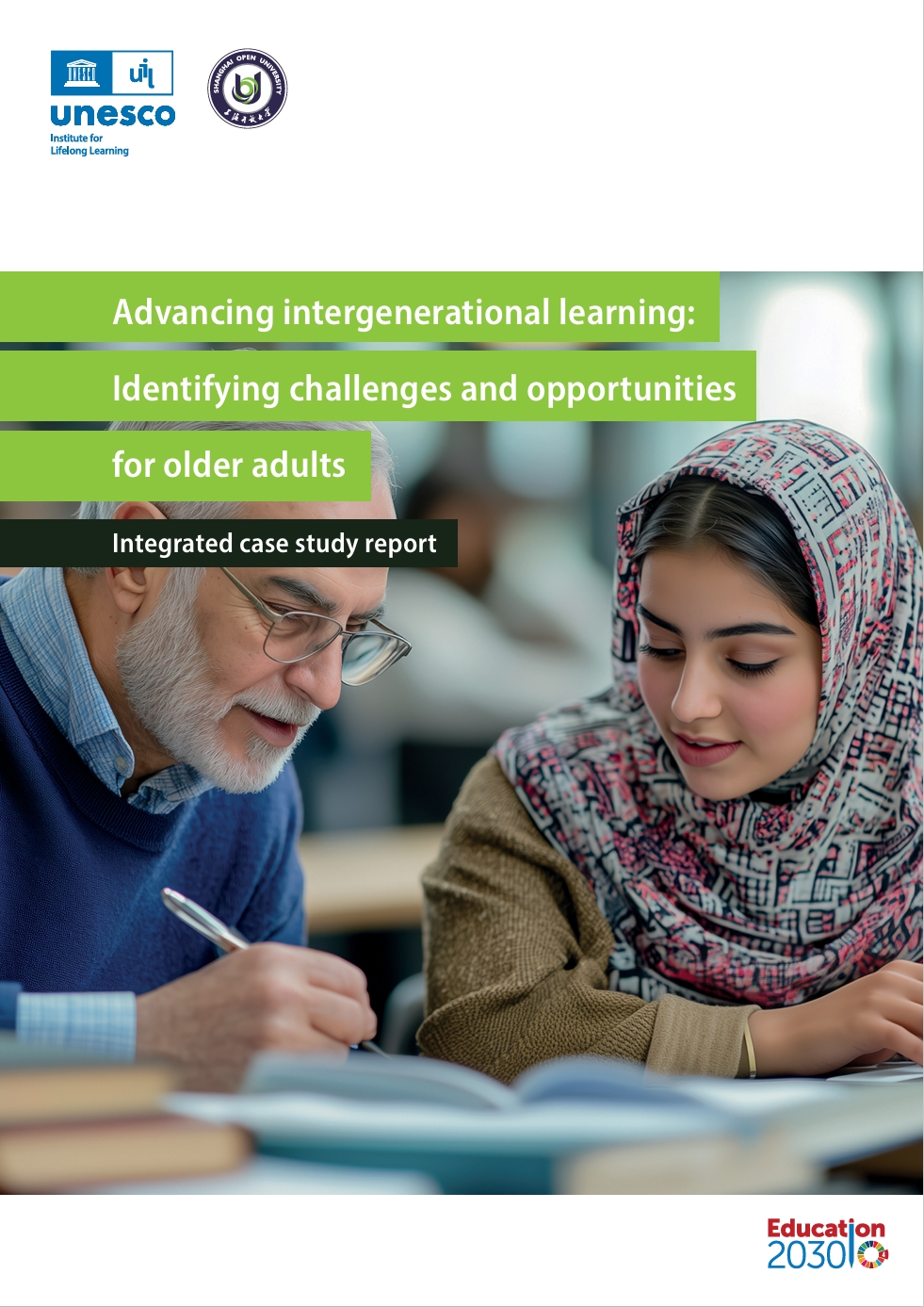 Advancing Intergenerational Learning: Identifying Challenges and Opportunities for Older Adults; Integrated Case Study Report Año de publicación: 2025 Autor corporativo: UNESCO Institute for Lifelong Learning (UIL) | Shanghai Open University (SOU) This research report presents case studies from the UNESCO regions Europe and North America, Africa, and Asia and the Pacific, showcasing various strategies for designing intergenerational learning initiatives. It highlights the diverse policy frameworks and implementation contexts within which these global programmes operate.Using an exploratory multiple case study approach, the report examines the dynamics and potential of intergenerational learning as a catalyst for cultivating a culture of lifelong learning. It assesses the value of such learning in promoting age-friendly environments and addressing ageism. Additionally, the report offers insights into generational learning motivations and identifies barriers to effective intergenerational programming.Finally, the report provides a set of evidence-based guidelines to inform and enhance future efforts in intergenerational learning. The findings and recommendations serve as a valuable resource for educators, policy-makers, and community leaders.These case studies were developed as part of the broader UNESCO Institute for Lifelong Learning research project, Higher Education Institutions – Responses to the Learning Needs of Ageing Societies.
 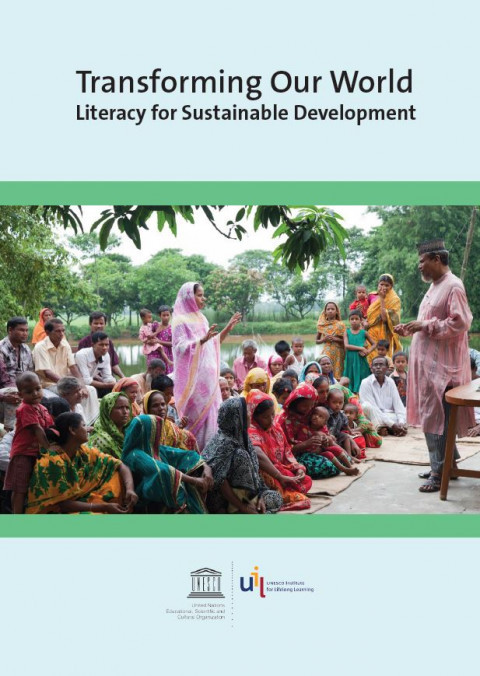 Transforming our world: literacy for sustainable development Año de publicación: 2015 Autor: Ulrike Hanemann | Cassandra Scarpino Autor corporativo: UNESCO Institute for Lifelong Learning (UIL) This compilation offers global examples of innovative and promising literacy and numeracy programmes that link the teaching and learning of literacy to sustainable development challenges such as health, social equality, economic empowerment and environmental sustainability. This publication is a timely contribution to the 2030 Agenda for Sustainable Development, which promotes the engagement of stakeholders to ‘ensure inclusive and equitable quality education and promote lifelong learning opportunities for all.’ Transformer notre monde: l'alphabétisation au service du développement durable Año de publicación: 2015 Autor: Ulrike Hanemann | Cassandra Scarpino Autor corporativo: UNESCO Institute for Lifelong Learning (UIL) This compilation offers global examples of innovative and promising literacy and numeracy programmes that link the teaching and learning of literacy to sustainable development challenges such as health, social equality, economic empowerment and environmental sustainability. This publication is a timely contribution to the 2030 Agenda for Sustainable Development, which promotes the engagement of stakeholders to ‘ensure inclusive and equitable quality education and promote lifelong learning opportunities for all.’
  Literacy and the Promotion of Citizenship: discourses and effective practices Año de publicación: 2008 Autor corporativo: UNESCO Institute for Lifelong Learning (UIL) The UNESCO Institute for Lifelong Learning and its partners, the Agence Nationale de Lutte Contre L’Illettrisme (ANLCI) and the UNESCO French National Commission, organized a Regional Meeting on “Literacy and the Promotion of Citizenship: The Challenge of Learning” from 2-5 April 2005 in Lyon, France. Participants from 38 countries of what UNESCO considers to be the European Region (i.e. Europe, Canada, Israel and the United States of America) reviewed pertinent policies and shared good practices.By focusing on the theme of citizenship, the meeting sought to establish a link between literacy and the empowerment of citizens. This publication brings together the main presentations from that meeting, and as such documents the diversity of literacy-related thinking and practice in the region.