
Recursos
Exploren una amplia gama de recursos valiosos en GCED para profundizar su comprensión y promover su búsqueda, incidencia, enseñanza y aprendizaje.
3,777 resultados encontrados
 Cultural Identity and Citizenship With the Challenges of Globalization (Journal of Humanities and Social Sciences; Vol.6, No.13) Año de publicación: 2022 Autor: Huda Alshamsi Autor corporativo: Arab Institute of Science and Research Publishing (AISRP) Citizenship is the emotional feeling that is based on three important pillars, including democracy in human rights, civil society, and the relationship between citizenship and identity, is manifested in the active role of individuals in social construction within human societies. Globalization affects citizenship when it exists among individuals and groups in society. Individual and social affiliations, characterized by anthropological features within social groups, can also impact citizenship. Thus, there may be a specific relationship between globalization and cultural, religious, or other identity patterns. Today, globalization threatens both identity and citizenship. As societies adapt to the global system through these global changes that force interaction with globalization, it becomes essential for communities to address this issue to preserve their identity and individual belonging, whether geographically or socially. This forms the basis for researching the dimensions related to citizenship, identity, globalization, and their interrelationships, which pose significant challenges for societies. تحديات العولمة في صياغة الهوية والمواطنة (مجلة العلوم الإنسانية والإجتماعية; Vol. 6, No. 13) Año de publicación: 2022 Autor: Huda Alshamsi Autor corporativo: Arab Institute of Science and Research Publishing (AISRP) إن المواطنة بوصفها ذلك الشعور الوجداني الذي يرتكز على ثلاثة ركائز مهمه منها الديمقراطية في حقوق الإنسان والمجتمع المدني وعلاقة المواطنة بالهوية تتمثل في دور الفرد في المشاركة الفاعلة في البناء الاجتماعي للمجتمعات الإنسانية ، تؤثر العولمة في المواطنة أن وجدت لدى أفراد المجتمع بوصفهم أفراد وجماعات أيضا يمكن أن تؤثر الانتماءات الفردية والاجتماعية من خلال مجموعة السمات الإنثروبولوجية التي تتسم بها الجماعات الاجتماعية داخل المجتمع على المواطنة، وبذلك يمكن أن تكون هنالك علاقة من نوع معين بين العولمة والهوية الثقافية أو الدينية أو غيرها من أنماط الهويات، وتهدد العولمة اليوم الهوية والمواطنة على حد سواء . وبما أن المجتمعات انتمت الى نظام العولمة وفق هذه التغيرات العالمية التي اجبرت المجتمعات الى التفاعل مع العولمة. لابد من المجتمعات ان تتدارك هذا الموضوع للمحافظة على هويتيها وانتماء الأفراد لها سواء كبعد جغرافي أو اجتماعي وهنا تتشكل مشكلة البحث في مناقشة الأـبعاد الخاصة بالمواطنة والهوية والعولمة والعلاقة بينها ويقف على أهم التحديات التي تواجهه المجتمعات.
  Thoughts on Global Citizenship (Universal) Año de publicación: 2017 Autor: Nahla Abu Aliwa Autor corporativo: Arab Council for Childhood and Development (ACCD) This article addresses global citizenship as one of the hot topics the world currently. The researcher highlighted the difference between global citizenship and traditional citizenship. He also touched upon the concept of multiculturalism and its importance in this multicultural world. Emphasis was placed on the Education for Global Citizenship initiative proposed by UNESCO. أفكار حول المواطنة العالمية ( الكوكبية ) Año de publicación: 2017 Autor: Nahla Abu Aliwa Autor corporativo: Arab Council for Childhood and Development (ACCD) يتناول هذا المقال المواطنة الكوكبية باعتبارها أحد الموضوعات المطروحة بقوة على الساحة العالمية. قام الباحث بإلقاء الضوء على الفرق بين المواطنة العالمية والمواطنة التقليدية. وأيضا تطرق لمفهوم التعددية الثقافية وأهميته في العالم المتنوع الثقافات. كما تم التركيز على مبادرة التربية من أجل المواطنة العالمية والتي طرحتها منظمة اليونسكو.
  Global Citizenship: Lessons from the Ancients (Curriculum on the Move Global, Thematic Notes No.5) Año de publicación: 2022 Autor: Conrad Hughes Autor corporativo: UNESCO International Bureau of Education (IBE) "Curriculum On The Move" is a new UNESCO-IBE Series aim at reflecting, debating, producing and disseminating knowledge and ways forward on emerging issues in curriculum-related aspects. The Series emerges from a bottom-up approach, with teachers and students providing their perspectives and experiences on the curriculum.The goal is to rethink the way curriculum is understood and practiced via Webinars, Concept Notes and Global Debates (via Blogs, Twitter, etc.) by involving in a participatory way youth and school practitioners.Right at the centre of the mission statement of many schools, universities and organisations is the phrase “global citizen”. But what does it mean to be a global citizen?
  The war in our minds: is global citizenship the answer? (Blue Dot issue 1) Año de publicación: 2015 Autor corporativo: Mahatma Gandhi Institute of Education for Peace and Sustainable Development (MGIEP) Feature Global Citizenship Education: A New Educational, Pedagogical and Political Narrative in the World System? (by Carlos A. Torres) In Pursuit of a Global Civics (by Hakan Altinay) Global Citizenship: Necessary and Possible (by Paul and Anne Ehrlich) Cover Story YOUth Speak for a better today and tomorrow (by Piyali Sarkar Debnath, UNESCO MGIEP) Essays Unlocking the Civic Sense of Young Minds (by Karthik Shankar) Shared Home, Shared Hopes and Shared Actions (by Trang T. Nguyen) Redesigning the Education System for Global Citizenship (by Ayodeji Ojo) Youth Voices Who is a global citizen? News What we have been up to UNESCO MGIEP Crossword Event Calendar
  Get Global!: Steps Worksheets Año de publicación: 2003 Autor: Joanne Price Autor corporativo: ActionAid | Oxfam Get Global! is a teachers' guide on how to facilitate active global citizenship. It allows learners to move from thinking about issues that are important to them, to planning and participating in action, and to reflect on their performance, and assess their work. Although aimed at 11-16 year olds, some of the activities could easily be adapted for use with younger learners.
  Get Global!: Assessment & Evaluation Worksheets Año de publicación: 2003 Autor: Joanne Price Autor corporativo: ActionAid | Oxfam Get Global! is a teachers' guide on how to facilitate active global citizenship. It allows learners to move from thinking about issues that are important to them, to planning and participating in action, and to reflect on their performance, and assess their work. Although aimed at 11-16 year olds, some of the activities could easily be adapted for use with younger learners.
 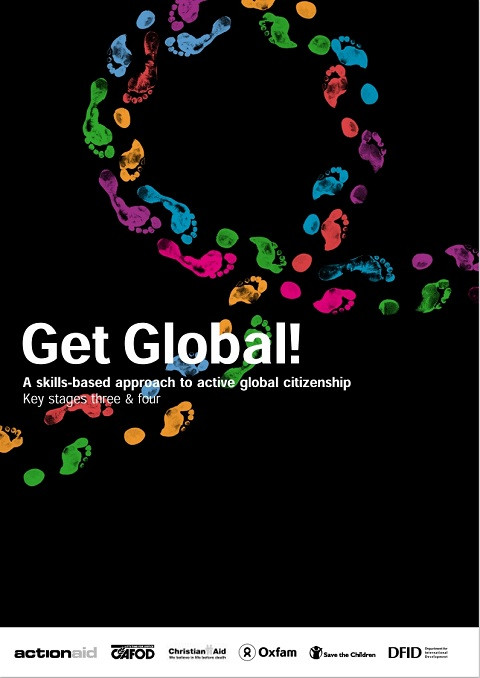 Get Global!: A Skills-based Approach to Active Global Citizenship Año de publicación: 2003 Autor: Joanne Price Autor corporativo: ActionAid | Oxfam Get Global! is a teachers' guide on how to facilitate active global citizenship. It allows learners to move from thinking about issues that are important to them, to planning and participating in action, and to reflect on their performance, and assess their work. Although aimed at 11-16 year olds, some of the activities could easily be adapted for use with younger learners.
  Discussing Terrorism: a pupil-inspired guide to UK counter-terrorism policy implementation in religious education classroom in England Año de publicación: 2016 Autor: Angela Quartermaine Autor corporativo: Christian Education | Taylor & Francis Religious education (RE) in England is affected by the challenging of terrorist ideologies and improving community cohesion, but many RE teachers feel ill-equipped in dealing with the issues that might arise from terrorism discussions. Therefore, I suggest that clarification could help alleviate some of the teacher’s concerns and help provide routes by which critical RE teaching and learning can take place.