
Recursos
Exploren una amplia gama de recursos valiosos en GCED para profundizar su comprensión y promover su búsqueda, incidencia, enseñanza y aprendizaje.
1,725 resultados encontrados
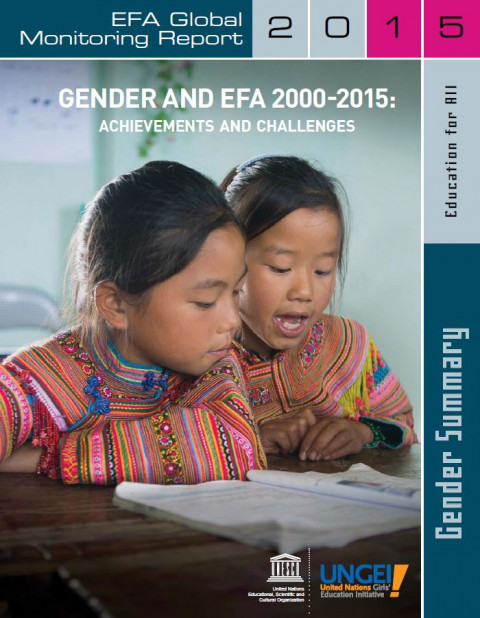 [Summary] Gender and EFA 2000-2015: Achievements and Challenges; EFA Global Monitoring Report 2015; Gender Summary Año de publicación: 2015 Autor corporativo: Global Education Monitoring Report Team This report describes an array of country efforts, some quite effective, to achieve and go beyond gender parity in education. Many of these policies and programmes focus on the immediate school environment in which girls learn. Others focus on the informal and formal laws, social norms and practices that deny girls their right of access to, and completion of, a full cycle of quality basic education. The analyses and key messages in Gender and EFA 2000–2015: Achievements and Challenges deserve careful scrutiny as the world embarks on a universal, integrated and even more ambitious sustainable development agenda in the years to come.
  International Higher Education: Shifting Mobilities, Policy Challenges, and New Initiatives Año de publicación: 2018 Autor: Rajika Bhandari | Chelsea Robles | Christine Farrugia Autor corporativo: Global Education Monitoring Report Team | Institute of International Education (USA). Center for Academic Mobility Research and Impact Cross-border mobility in higher education, while still referring to a minority of people, is a large phenomenon that is increasingly taking new forms, extending from students and faculty member mobility to the movement of educational programs and institutions, including the spread of online courses facilitated by improvements in technology. It is also a phenomenon with major implications in facilitating the flow and exchange of ideas and knowledge, improving practices, generating resources for receiving countries, and attracting talent. For that reason, the internationalization of higher education puts pressure on countries to develop a strategy that would maximize the education, political and economic benefits while minimizing the costs.Based on an in-depth review of research and existing data, this paper examines key issues in the internationalization of higher education, assesses broad consequences, and discusses a selection of the latest trends. The paper also provides an overview of the key policy challenges and options facing governments in low, middle and high income countries as they seek to internationalize their higher education sectors while also sending their top talent overseas to acquire a global education.
 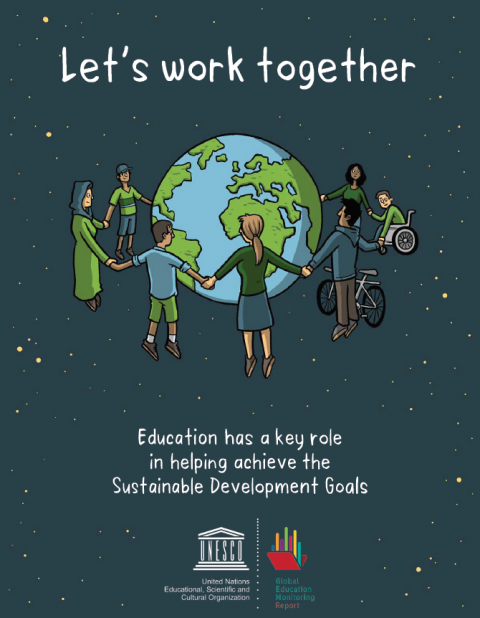 Let's work together: education has a key role in helping achieve the Sustainable Development Goals Año de publicación: 2019 Autor corporativo: Global Education Monitoring Report Team This publication has been produced on the occasion of the 2019 High-level Political Forum by the Global Eduation Monitoring Report. It draws upon findings from reports produced since 2015, showing the importance of education for the other goals in the 2030 agenda for sustainable development and calling for sectors to work together to achieve their aims.
 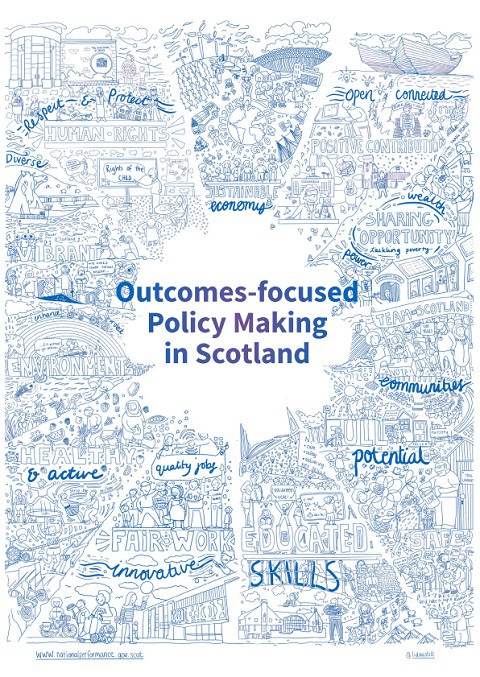 Outcomes-Focused Policy Making in Scotland Año de publicación: 2021 Autor corporativo: Government of Scotland | Scotland's International Development Alliance | SDG Network Scotland | Oxfam Scotland | International Development Education Association Scotland (IDEAS) | Bridge 47 Scotland’s International Development Alliance has co-created a new Scottish policy making guide focused on the Sustainable Development Goals (SDGs) and the National Performance Framework (NPF). The guide supports holistic policy making that reflects our interconnected world & addresses the need to better navigate its complexities.The resource is the result of a partnership between the Scottish Government’s National Performance Framework team, the International Development Education Association of Scotland (IDEAS) Network, Scotland’s International Development Alliance, the SDG Network Scotland and Oxfam Scotland. The partnership was initiated, supported and funded by the Bridge 47 – Building Global Citizenship project and special thanks go to Northern Star Associates for their work developing the content.What is the resource?The National Performance Framework (NPF) is Scotland’s way of localising the Sustainable Development Goals (SDGs). The 17 different goals and 11 NPF National Outcomes are key measures of how Scotland can move towards a more just and sustainable future. The resource has two main parts. The first half features a general overview of the United Nations Sustainable Development Goals (SDGs), Scotland’s National Performance Framework (NPF) and how the two are interlinked. The second half provides practical, interactive activities to explore how to apply the NPF and SDGs in the policy making process.Why is this resource important?Policy is a mechanism for creating change. Ensuring that the policy produced in Scotland is inclusive and takes a holistic view of systemic problems will have a positive impact for both people and planet.This resource comes at a critical juncture. The Covid-19 pandemic has emphasised local-global interconnections and the difficulties posed by complex global problems. They require us to be holistic in our policy making and understand we are part of a bigger system, where the decisions we make and the actions we take have an impact on others locally and globally, now and in the future.How was the resource created?The guide was co-created by a partnership between the NPF team at the Scottish Government and civil society stakeholders including the SDG Network Scotland, Scotland’s International Development Alliance and the EU project, Bridge 47. The development of the resource was funded through the Bridge 47 – Building Global Citizenship project, which is based at the International Development Education Association of Scotland (IDEAS) network. As a project, Bridge 47 supports building partnerships across different sectors with the aim of raising awareness of the SDGs and the transformative power of education as outlined in SDG Target 4.7.
  UNESCO-UNEVOC Medium-Term Strategy for 2021-2023: Strengthening TVET Capacities and Cooperation in the Member States Año de publicación: 2020 Autor corporativo: UNESCO International Centre for Technical and Vocational Education and Training (UNEVOC) The Medium-Term Strategy for 2021-2023 (MTS-III) sets out how UNESCO-UNEVOC will support TVET institutions to meet the demands of dynamic labour markets and provide quality skills training for a sustainable future of work. MTS-III focuses on developing the capacities of TVET leaders, supporting TVET institutions in implementing change programmes, and facilitating knowledge sharing and peer learning within the UNEVOC Network.
  The Role of Education in Addressing Future Challenges Año de publicación: 2020 Autor corporativo: Bridge 47 In response to UNESCO’s Futures of Education consultation, Bridge 47 has released the following report on the power that transformative education has to address future challenges, including those linked to inequalities, climate change and health.Through the consultation process UNESCO raises questions about the importance and purpose of education by 2050. In a fast-evolving world, Bridge 47 supports the idea that education should foster the kind of education that helps learners of all ages to become active global citizens and thus contribute to building a more just and sustainable report world for all.The report, ‘The Role of Education in Addressing Future Challenges’, further emphasises the importance of measuring and monitoring the progress towards achieving the transformative vision of education as outlined in Sustainable Development Goal Target 4.7. It is hoped that the overall Future of Education report will encourage a measuring framework for SDG 4.7 that acknowledges the connection between non-formal and formal education as well as supporting dialogue between key actors that the reflect any conceptual shifts within the fields of Education for Sustainable Development and Global Citizenship Education.
 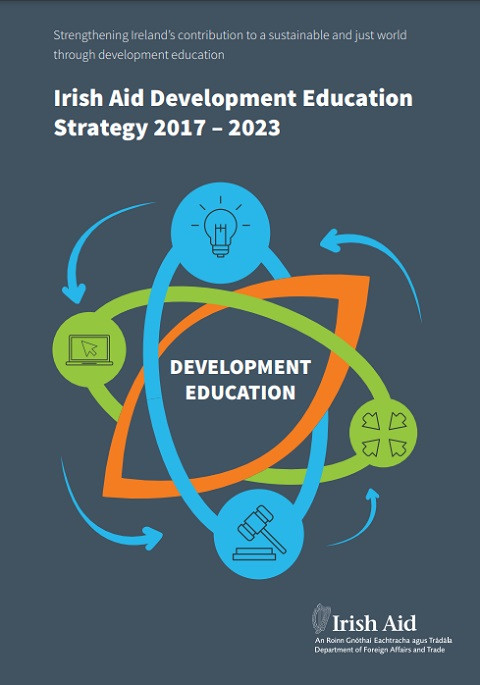 Irish Aid Development Education Strategy 2017-2023: Development Education Año de publicación: 2016 Autor corporativo: Irish Aid Ireland has a long and proud history in development education thanks to many of the civil society organisations represented here today and which pre-dates the start of Ireland’s official aid programme which is itself now over 40 years old.The Development Education Strategy 2017-2023 aims to increase access to development education in Ireland, in schools and colleges, in local and community groups, and among the old and young.Development education is a lifelong educational process which encourages people to critically analyse and challenge the root causes and consequences of global hunger, poverty and injustice, challenge stereotypes and engage in action to bring about change in both their local and global communities.
 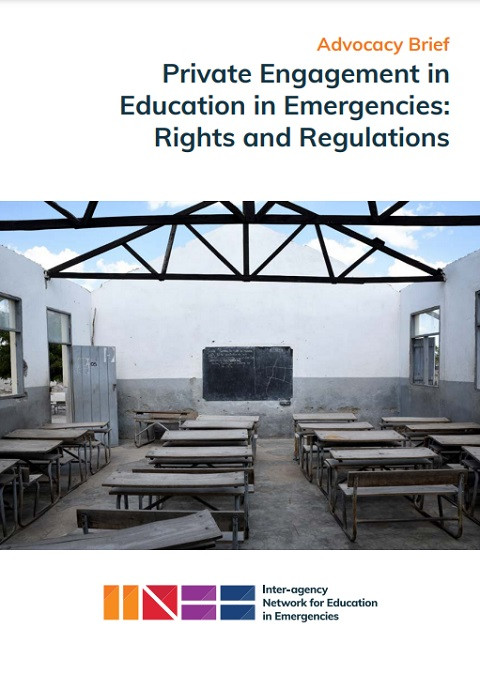 Private Engagement in Education in Emergencies: Rights and Regulations Año de publicación: 2021 Autor: Francine Sara Menashy | Zeena Zhakaria Autor corporativo: Inter-agency Network for Education in Emergencies (INEE) Efforts to secure inclusive and equitable education for all have prompted calls for greater engagement by the private sector, asserting that businesses and foundations can play significant roles as partners in achieving Sustainable Development Goal 4 (SDG4).In recent years, given shortfalls in public financing and the need for urgent responses, private actors have increasingly become involved in various aspects of educational programming for education in emergencies (EiE). This arrangement, however, can produce tensions between private engagement and humanitarian response in education, which need to be addressed and in turn require extra coordination, advocacy and attention. This brief explores some of these tensions and makes recommendations to support the prioritization of safe, equitable, and quality public education for all children and young people affected by crises.INEE supports every young person’s right to education and recognizes the State as the primary duty-bearer of schooling, in alignment with international declarations, frameworks, and legal instruments that assert and protect the right to education. Participación del sector privado en la Educación en situaciones de emergencia: Derechos y regulaciones Año de publicación: 2021 Autor: Francine Sara Menashy | Zeena Zhakaria Autor corporativo: Inter-agency Network for Education in Emergencies (INEE) Las iniciativas que buscan garantizar una educación inclusiva y equitativa para todos han generado peticiones para una mayor involucramiento del sector privado, afirmando que las empresas y las fundaciones pueden jugar un papel importante como socios para alcanzar el Objetivo de Desarrollo Sostenible 4 (ODS4). En los últimos años, debido a la falta de financiamiento público y a la necesidad de respuestas urgentes, ha crecido la participación del sector privado en diversos aspectos de la programación educativa para la educación en situaciones de emergencia (EeE). Esta forma de trabajar, sin embargo, puede causar tensiones entre la participación del sector privado y la respuesta humanitaria en materia de educación. Es necesario resolver estas tensiones, lo cual requiere una mayor coordinación, abogacía y atención. Este informe explora algunas de estas tensiones y ofrece recomendaciones para apoyar la priorización de una educación pública segura, equitativa y de calidad para todos los niños, niñas y jóvenes afectados por crisis. La INEE apoya el derecho que tienen todas las personas jóvenes a la educación y reconoce al Estado como el principal responsable de la escolarización, en línea con declaraciones, marcos e instrumentos legales internacionales que reconocen y protegen el derecho a la educación.
  Localizing the 2030 Agenda and Global Citizenship Education: An Essential Dialogue Año de publicación: 2020 Autor corporativo: Diputació de Barcelona Diputació de Barcelona has produced a document that offers guidelines to strengthen the links between Global Citizenship Education (GCE) actions and localizing SDGs initiatives, in order to drive real changes in local policies.What we call Global Citizenship Education (GCE) brings together key elements of different educational trends, such as development education, peace education or education for sustainability, among others. Each of them has decades of experience in promoting changes in citizen’s knowledge, attitudes and behaviours through formal or informal channels. This experience can help to reinforce the 2030 Agenda’s capacity to generate real change towards a more sustainable future for the planet, connecting local and global realities and highlighting interdependencies and co-responsibility. The document points out what can be done at the local level to improve this dialogue between SDG and GCE with practical proposals such as introducing GCE perspective in the SDGs training activities or implementing joint initiatives between development cooperation departments and other areas to reach new audiences.