
Recursos
Exploren una amplia gama de recursos valiosos en GCED para profundizar su comprensión y promover su búsqueda, incidencia, enseñanza y aprendizaje.
2,668 resultados encontrados
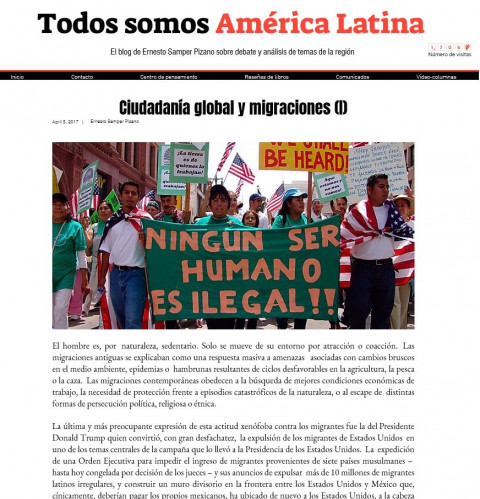 Global Citizenship and Migration Año de publicación: 2017 Autor: Ernesto Samper Pizano The news is a conference proclame in defense of migrants at a global scale. It was elaborated for the World People's Conference that took place in Bolivia in 2017 and it describes, very briefly, the situation of many inmigrants around the world, especially latinamericans. Ciudadanía global y migraciones Año de publicación: 2017 Autor: Ernesto Samper Pizano La noticia es una proclama a favor y defensa de los migrantes a nivel global. Esta fue elaborada para la Conferencia Mundial de los Pueblos que tuvo lugar en 2017 en Bolivia y describe muy brevemente la situación de los inmigrantes en el mundo, sobre todo de los latinoamericanos.
 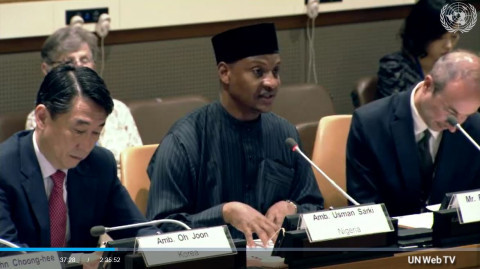 [Video] Global Citizenship Education for a just, peaceful, inclusive and sustainable world: a conceptual framework and its application in the field Año de publicación: 2015 Autor corporativo: United Nations (UN) The Seminar held at UN HQs entitled, "Global Citizenship Education for a Just, Peaceful, Inclusive, and Sustainable world: A Conceptual Framework and its Application in the Field" was co-organized by the Permanent Missions of France, Nigeria, Qatar and the Republic of Korea, the United States Mission and the United Nations Educational, Scientific and Cultural Organization (UNESCO), in support of the Secretary-General’s Global Education First Initiative (GEFI).The panel discussion was moderated by H.E. Ambassador Hahn Choong‐hee of Korea. Some of the speakers for this event included H.E. Ambassador Richard Erdman, Acting Representative to ECOSOC of the Permanent Mission of the United States of America to the United Nations; H.E. Ambassador Usman Sarki, Deputy Permanent Representative of the Permanent Mission of the Federal Republic of Nigeria to the United Nations; Yousef Laram, Deputy Permanent Representative of the State of Qatar to the United Nations; Mr. Francois Gave, Counsellor at the Permanent Mission of France to the United Nations; and Christopher Castle, Chief of UNESCO’s Section of Global Citizenship Education.This event was divided into two segments. In the first, GCED was discussed at the level of concept. How can it strengthen the three pillars of the United Nations and the three pillars of sustainable development in furtherance of a just, peaceful, inclusive and sustainable world. In the second, examples from the field – the local, national and international levels – were presented and discussed as were certain opportunities going forward including the important role of media. [vidéo] Éducation à la Citoyenneté mondiale pour un monde juste, pacifique, inclusive et durable: un cadre conceptuel et son application dans le domaine Año de publicación: 2015 Autor corporativo: United Nations (UN) Le séminaire a eu lieu au Siège de l'ONU intitulé «Éducation Mondiale Citoyenneté pour un monde juste, paisible, inclusive et durable: un cadre conceptuel et son application sur le terrain» a été co-organisée par les Missions permanentes de la France, le Nigeria, le Qatar et les République de Corée, la Mission des États-Unis et l'Organisation de l’ONU pour l'éducation, la science et la culture (UNESCO), à l'appui de First Éducation Mondiale Initiative du Secrétaire général (GEFI).Le débat a été animé par S.E. Ambassadeur Hahn Choong-hee de Corée. Certains des orateurs pour cet événement inclus S.E. Ambassadeur Richard Erdman, représentant par intérim à l'ECOSOC de la Mission permanente des États-Unis d'Amérique auprès de l'Organisation de l’ONU; IL. Ambassadeur Usman Sarki, Représentant permanent adjoint de la Mission permanente de la République fédérale du Nigéria auprès de l’ONU; Yousef LARAM, Représentant permanent adjoint de l'Etat du Qatar auprès de l'Organisation de l’ONU; M. François Gave, Conseiller à la Mission permanente de la France auprès de l’ONU; et Christopher Castle, la Section de l'éducation à la citoyenneté mondiale chef de l'UNESCO. Cet événement a été divisé en deux segments. Dans le premier, ECM a été discuté au niveau du concept. Comment peut-on renforcer les trois piliers de l'Organisation de l’ONU et les trois piliers du développement durable dans la poursuite d'un monde juste, pacifique, inclusif et durable. Dans le second, des exemples sur le terrain - aux niveaux local, national et international - ont été présentées et discutées de même que certaines opportunités à l'avenir, y compris le rôle important des médias.
 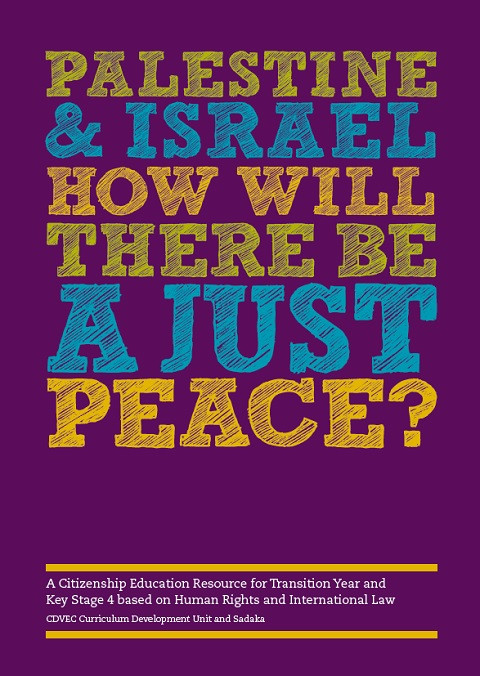 Palestine & Israel: How Will There Be a Just Peace?; A Citizenship Education Resource for Transition Year and Key Stage 4 based on Human Rights and International Law Año de publicación: 2012 Autor: Mary Gannon | Elaine Murtagh Autor corporativo: City of Dublin Vocational Education Committee (CDVEC). Curriculum Development Unit | Centre for Cross Border Studies This resource is an important development in helping post-primary students throughout the island of Ireland to explore the Palestinian Israeli situation within the context of Human Rights and International Law.The resource addresses key issues underlying the origins of the conflict and current obstacles to bringing about a just peace.
 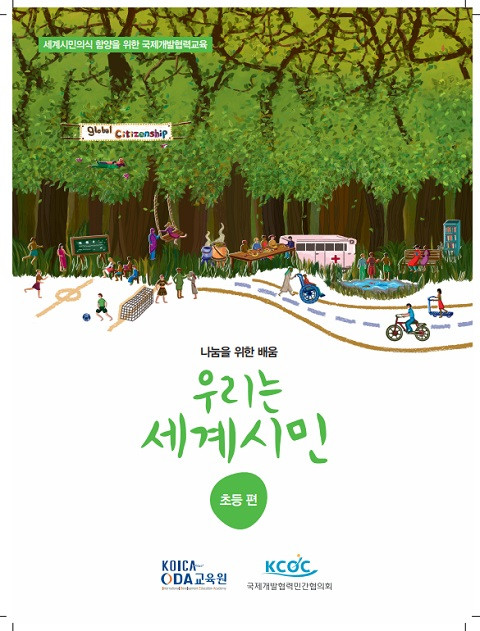 우리는 세계시민: 나눔을 위한 배움; 초등 편 Año de publicación: 2013 Autor: 고아라 | 고영주 | 김영미 | 성은경 | 홍지영 Autor corporativo: KOICA ODA 교육원 | 국제개발협력민간협의회 우리는 세계시민(초등편)은 상호연계성, 인권, 빈곤, 국제개발 진로 등 세계시민교육 관련 교사용 교수학습자료로 학생용 워크북이 포함되어 있다.
 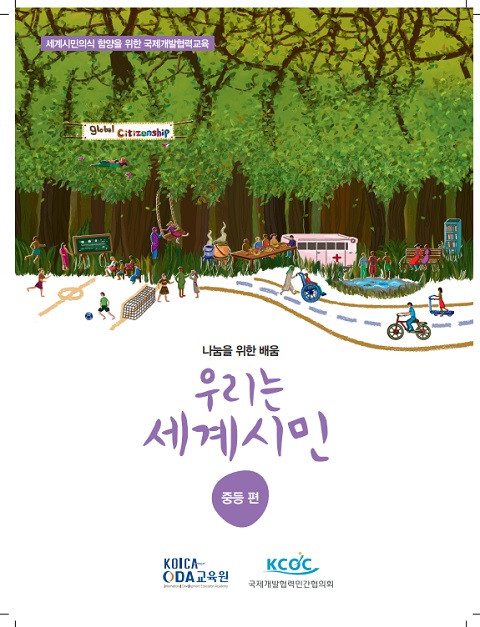 우리는 세계시민: 나눔을 위한 배움; 중등 편 Año de publicación: 2013 Autor: 고아라 | 고영주 | 김영미 | 성은경 | 홍지영 Autor corporativo: KOICA ODA 교육원 | 국제개발협력민간협의회 우리는 세계시민(중등편)은 상호연계성, 인권, 빈곤, 국제개발 진로 등을 주제로 한 세계시민교육 교사용 교수학습자료이다. 학생용 워크북 및 선택활동이 포함되어 있다.
 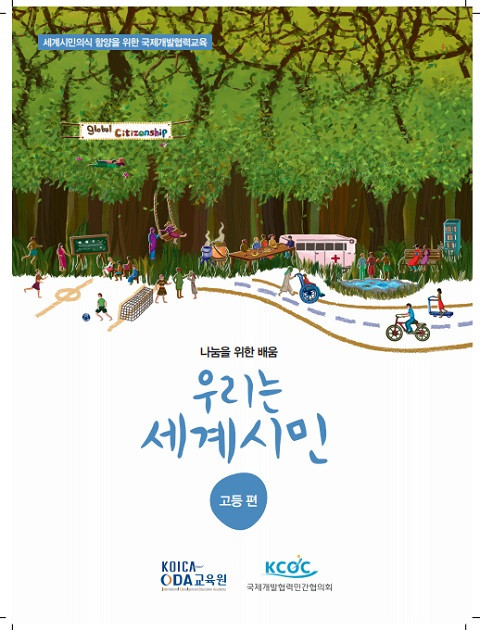 우리는 세계시민: 나눔을 위한 배움; 고등 편 Año de publicación: 2013 Autor: 고아라 | 고영주 | 김영미 | 성은경 | 홍지영 Autor corporativo: KOICA ODA 교육원 | 국제개발협력민간협의회 우리는 세계시민(고등편)은 상호연계성, 인권, 빈곤, 국제개발 진로 등을 주제로 한 세계시민교육 교사용 교수학습자료이다. 게임자료 및 선택활동이 포함되어 있다.
  (Re)penser l’accès aux espaces intimes en contexte de handicap intellectuel: Une question de droit et de participation sociale (Revue générale de droit; vol. 47) Año de publicación: 2017 Autor: Éditions Wilson & Lafleur, inc Autor corporativo: Éditions Wilson & Lafleur, inc En contexte de handicap, la question de l’accès est constituée généralement de l’éventail des aménagements individuels et collectifs nécessaires afin de faciliter l’occupation d’espaces publics. A contrario, peu de choses sont dites à propos des aménagements possibles et potentiels requis afin de sécuriser l’espace privé des personnes identifiées comme ayant un handicap intellectuel. Ce sont pourtant ces lieux intimes, au sein desquels se développent et se déploient l’identité et l’expression affectives, qui sont susceptibles de contribuer à une reconnaissance plus soutenue de l’identité affective et de la citoyenneté sexuelle de ces personnes. Inspirée par les théories d’Erving Goffman et de Michel Foucault, une analyse phénoménologique interprétative (API) fut réalisée auprès des personnes ayant un handicap intellectuel et de leurs proches aidants afin d’explorer cette situation. Nos constats préliminaires suggèrent l’existence d’un processus de négociation complexe des acteurs, des lieux et des moments nécessaires afin de favoriser le développement de la vie affective et sexuelle. De ce fait, trois modes d’existence semblent cohabiter au sein d’une matrice complexe : la dépossession, l’habitation et l’occupation des espaces de socialisation et d’expression affective. Il est proposé d’aborder cette problématique en tant que dynamique géopolitique intégrant les processus d’exclusion des pratiques sexuelles des espaces privés, leur projection dans des espaces publics et, finalement, la juxtaposition de ces deux sphères, publique et privée dans des espaces mixtes. Nous discuterons enfin des implications de cette réflexion sur la « question de l’accès» et sur les politiques publiques visant à diminuer la discrimination systémique ciblant les personnes identifiées comme ayant un handicap intellectuel.
  De la capacité, de la compétence, de l’empowerment, repenser l’anthropologie de la participation (Politique et Sociétés; vol.34, no.1) Año de publicación: 2013 Autor: Jean-Louis Genard Autor corporativo: Société québécoise de science politique Le plus souvent étudiée dans le contexte des évolutions du politique et du passage présumé d’une démocratie représentative vers une démocratie davantage participative ou délibérative, la question de la participation est abordée ici sous l’angle d’une transformation de nos coordonnées anthropologiques. Les exigences et les attentes de participation se retrouvent en effet dans de multiples domaines qui excèdent de loin la seule sphère du politique, allant du monde de l’entreprise et de ses cercles de qualité jusqu’à la production de biens en kit sollicitant les capacités de montage des acheteurs. Cette extension du domaine de la participation s’appuie en réalité sur un certain nombre de présupposés anthropologiques. Ceux-ci prêtent aux acteurs des capacités et des compétences qu’ils sont censés détenir, à moins qu’ils ne soient appelés à les enrichir par des stratégies d’empowerment si elles leur font défaut ou sont insuffisantes. Ils leur attribuent aussi un potentiel de motivation indispensable à l’actualisation de ces compétences et capacités. Le texte soutient que l’évaluation des personnes ainsi que la configuration de nombreux dispositifs sociaux récents tendent de plus en plus à s’ajuster à ce nouveau référentiel anthropologique. Il en va ainsi de la participation politique bien sûr, mais aussi des nouvelles politiques sociales, des formations au «pouvoir d’agir », des objectifs éducatifs, des politiques de développement ou de santé. Revenant plus spécifiquement sur la question de la participation politique, le texte montre comment ces nouvelles coordonnées anthropologiques reconfigurent la question de l’expertise en réorganisant les partages entre expertises ordinaire et spécialisée et, du coup, le partage entre les espaces où peut prendre place une démocratie participative et ceux qui demeurent confiés à l’expertise technocratique.