
Recursos
Exploren una amplia gama de recursos valiosos en GCED para profundizar su comprensión y promover su búsqueda, incidencia, enseñanza y aprendizaje.
3,385 resultados encontrados
 2020年可持续发展目标进度表 Año de publicación: 2020 Autor corporativo: United Nations (UN) 《2020年可持续发展目标进度表》展现了到2019年底全球和地区进展的概况。它涵盖《2030年可持续发展议程》17个目标下选定的具体目标。2020年初,联合国秘书长启动了“行动十年”,呼 吁国家和地方政府、民间社会组织和私营部门采取加速的方案,以在2030年实现可持续发展目标。进度表显示了我们在兑现承诺方面已取得的进展以及哪些领域还亟待关注。它还显示出,对于 大多数目标而言,进展速度不够,需要大幅加快。
  Migration and the 2030 Agenda: A Guide for Practitioners Año de publicación: 2018 Autor: Elisa Mosler Vidal Autor corporativo: International Organization for Migration (IOM) This guide is designed to serve government actors, both national and local, involved in any process of Sustainable Development Goal implementation, including those working specifically in migration, and those working in other sectors who are interested in integrating migration. It is also for government actors working in the migration field who wish to integrate the SDGs into their work.The focus of this guide is to help policymakers implement the migration aspects of the SDGs. Policymakers can use this guide to integrate migration into local or national development planning, by designing and implementing interventions that relate to migration in the context of the SDGs. These interventions may take the form of legislation, policies, programmes, projects or other activities, and may relate to core migration topics or integrate migration into activities in another sector. For example, policymakers may use this guide to design interventions that directly address human trafficking, as well as interventions in the health sector that help protect victims of trafficking.For actors with experience in migration mainstreaming, this guide offers a new approach that is based on the 2030 Agenda. For those with no experience in migration mainstreaming, it offers an introduction on how migration and development are linked in the context of the SDGs, and how to take action around these connections. La migración en la Agenda 2030: Guía para profesionales Año de publicación: 2018 Autor: Elisa Mosler Vidal Autor corporativo: International Organization for Migration (IOM) La presente guía va dirigida a los actores gubernamentales, tanto nacionales como locales, participantes en cualquier proceso de implementación de los ODS, incluidos aquellos que trabajan específicamente en la migración y aquellos que lo hacen en otros sectores interesados en integrar la migración. Asimismo, va dirigida a los actores gubernamentales que trabajan en el campo de la migración y que deseen integrar los ODS en su trabajo. El objetivo de esta guía es ayudar a los legisladores a implementar los aspectos de migración de los ODS. Los formuladores de políticas pueden utilizar esta guía para integrar la migración en la planificación del desarrollo local o nacional, diseñando e implementando intervenciones relacionadas con la migración en el contexto de los ODS. Estas intervenciones pueden tomar la forma de legislación, políticas, programas, proyectos u otras actividades, y pueden relacionarse con temas centrales de migración o integrar la migración en actividades en otro sector. Por ejemplo, los formuladores de políticas pueden usar esta guía para diseñar intervenciones que aborden directamente la trata de personas, así como intervenciones en el sector de la salud que ayuden a proteger a las víctimas de la trata. Para los actores con experiencia en la integración transversal de la migración de la migración, esta guía ofrece un nuevo enfoque basado en la Agenda 2030. Para quienes no tienen experiencia en dicha integración transversal de la migración, ofrece una introducción sobre cómo se vinculan la migración y el desarrollo en el contexto de los ODS, y cómo actuar en torno a estas conexiones.
  The Development Trend and Enlightenment of American National Identity Education (Modern University Education; No. 2) Año de publicación: 2020 Autor: Zhang Liguo | Guo Liqiang Autor corporativo: Hunan Higher Education Association | Central South University Influenced by globalization, informationization and cultural diversity, the risk of deconstruction and differentiation of national identity is increasing. In the process of national identity construction, national identity education undoubtedly plays a unique and important role. The United States as one of the countries which carry out education of national identity is more successful, its national identity education presents the concept of education in the process of evolution from “one yuan” to “integration” transformation, education mode transition from “forced” to “invasion”, education field from the “school” to “life” and other typical characteristics of extension, some experience for China’s national identity education has a certain reference and enlightenment. China’s national identity education should adhere to the principle of building common ground while reserving differences. While respecting the diversity of cultures, it should take the forging of common values as the spiritual bond to effectively adjust the contradiction between the unity and diversity of national identity. Adhere to the combination of knowledge and practice, continue to strengthen civic education to shape responsible and active citizens; adhere to the combination of rigor and softness, improve the effectiveness of education with diversified classroom teaching and practical reform; adhere to both internal and external cultivation, deeply understand the core attributes of national identity, and sublimate the understanding and recognition of national identity education with an open vision.
  A Case Study on Global Citizenship Education of University of South Florida (Global Studies Education; Vol. 9, No. 1) Año de publicación: 2017 Autor: Hyeyoung Lee | Hyeseung Cho | Soojung Park Autor corporativo: Global Studeis Education Association This study investigates the issues for the practice of global citizenship education in universities and analyses a case study of the university in US. The University of South Florida (USF), which defines global citizen education as one of the core strategic plans of the university, is selected. Global citizenship education at USF is aimed at strengthening students' global competencies; global awareness, responsibility and participation. The goals of the practice are globalization of the undergraduate general education curriculum, extra-curricular activities in connection with the curriculum, globalized curriculum leading to graduate courses, and enhancing global competencies of all university members. It is reported that USF dedicated special organizations and systematic operation to support these goals. Based on our investigation and analysis, a reform of the global citizen education curriculum, a global citizenship education that integrates the curriculum and the extra-curricular activities, a coherent and explicit goal setting at the university level, and an operating system structure are required for universities in Korea to promote global citizenship education. 미국 대학의 세계시민교육 사례 연구: South Florida 대학 사례를 중심으로 (글로벌교육연구; Vol. 9. No. 1) Año de publicación: 2017 Autor: 이혜영 | 조혜승 | 박수정 Autor corporativo: Global Studeis Education Association 이 연구는 미국 대학의 세계시민교육 사례를 분석하고 그 특징과 시사점을 도출하여 한국 대학의 세계시민교육의 이론적, 실천적 토대를 마련하고자 하는데 목적이 있다. 이를 위하여 대학 차원에서 세계시민교육을 핵심 가치로 설정하여 체계적으로 실천해오고 있는 University of South Florida (USF)를 분석 사례로 선정하고, 세계시민교육의 목적과 배경, 교육과정, 운영체계를 분석 영역으로 살펴보았다. 분석 결과, USF는 지적, 정의적, 행동적 영역을 모두 포괄하는 세계시민성을 추구하고 이에 따른 세부 목표를 설정하고 있었다. 또한 세계시민교육을 위하여 기존의 교과과정을 세계시민성과 연계하여 재검토하여 세계시민교육과 관련된 교과를 구성하였다. 그리고 세계시민교육을 위한 대학 차원의 운영체계가 구축되어 있었으며, 세계시민교육의 내용적 지원을 위한 전문가와 행정적 지원 체계를 겸비하고 있었다. 이러한 연구결과를 바탕으로, 한국 대학의 세계시민교육의 실천과 확산을 위한 시사점으로 세계시민교육 교육과정에 대한 재정비, 교과과정과 비교과 활동을 통합한 세계시민교육, 대학 차원의 일관적이고 명시적인 목표 설정, 운영체계 구성 등을 제안하였다.
  Global Citizenship Education in the Primary Geography Curriculum of the Republic of Korea: Content Analysis Focusing on the Semantic Structure of 2009 Revised School Curriculum (Journal of the Korean Geographical Society; Vol. 49, No. 6) Año de publicación: 2014 Autor: Dongmin Lee Autor corporativo: Korean Geographical Society The purpose of this study is to analyze the share of global citizenship education in the 2009 Revised Social Studies (geography area) School Curriculum of the Republic of Korea. I selected the achievement standards of the geography domain in the fifth and sixth grades as the subjects of analysis. The chosen subjects were examined using content analysis: I used KrKwic, a Korean language content analysis tool, to analyze the content and drew a semantic network of the analysis results using UciNet/NetDraw. I found that the geography domain of the 2009 Revised Primary School Curriculum included the concepts of and factors of global citizenship education. However, global citizenship education did not account for a major portion of the curriculum, and the curriculum achievement standards were noticeably nation-state centered. Global citizenship education factors were not closely associated with to other related factors in fact, they even revealed a isolated pattern. These findings suggest that the inclusion of global citizenship education in primary geography education is limited, because the connections between global citizenship education and related contents, such as the environment, sustainable development, conflict, and cooperation, are probably impeded. Globalization accompanies the transformation of territories, identities, and the relations between nation-states and the world, although nation-states continue to play a significant role in the globalized worlds. Therefore global citizenship education, a educational trend focusing on the global community, is particularly important and is required in the geography curriculum of the global era. I expect that the examination undertaken in this study to contribute to future curriculum revisions regarding globalizatin and global citizenship. 초등지리 교육과정에 반영된 세계시민교육 관련 요소의 구조적 특성에 관한 연구: 2009 개정 교육과정 성취기준에 대한 내용분석을 중심으로 (대한지리학회지; Vol. 49, No. 6) Año de publicación: 2014 Autor: 이동민 Autor corporativo: 대한지리학회 본 연구의 목적은 현행 2009 개정 초등사회과 지리영역 교육과정에 반영된 세계시민교육 관련 요소의 구조적 특성을 분석하는데 있다. 분석대상으로는 세계에 관한 부분을 다룬 5~6학년군 지리영역 교육과정의 성취기준을 선정하였으며, 한글 텍스트의 내용분석을 위한 소프트웨어인 KrKwic 및 의미연결망 분석도구인 UciNet/NetDraw를 활용하여 관련 개념의 출현빈도 및 의미연결망, 연결중심성을 분석하였다. 분석 결과 2009 개정 초등사회과 지리영역 교육과정은 세계시민성 함양 등 세계시민교육의 이상과 요소를 반영하고는 있지만, 교육과정상의 세계에 대한 단원들은 세계나 세계공동체 등 세계시민교육 관련 요소보다는 주로 국가를 중심으로 구성되는 특성을 보이고 있었다. 세계시민교육 관련 요소는 교육과정 성취기준상에서의 출현빈도가 낮았을 뿐만 아니라, 세계와 관련된 주요 개념들과 밀접한 관계를 맺지 못한채 사실상 고립되다시피한 특성을 나타내었다. 이로 인해 환경 및 지속가능개발, 갈등, 협력 등 세계시민교육적으로 접근할 필요성이 높은 개념들 역시 세계시민교육적인 관점과 연결될 수 있는 가능성이 제한될 수 있다는 문제점도 지적된다. 세계화 시대에는 국가도 중요한 역할을 하지만, 기존의 국가 경계가 투과적인 형태로 변화하고 국경을 넘어선 세계공동체적 관점이 중요시되는만큼 지리교육 역시 이러한 현실을 감안하여 세계시민교육적 요소를 보다 적극적으로 반영할 필요성이 제기된다. 이러한 논의를 향후 교육과정 개정에 반영함으로써, 국가뿐만 아니라 세계공동체 또한 중요시되는 세계화 시대에 보다 높은 적합성을 갖는 교육과정을 구성할 수 있으리라고 기대된다.
 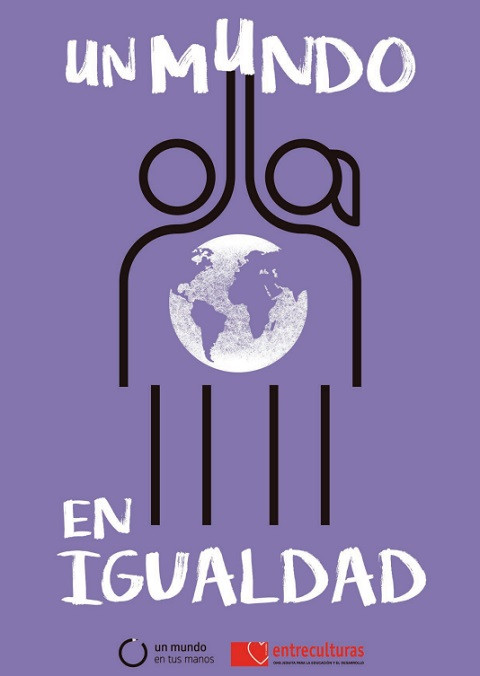 Un Mundo en Igualdad Año de publicación: 2019 Autor corporativo: Fundación Entreculturas “Un Mundo en Igualdad” es el primer ejemplar de una serie de recopilaciones de recursos educativos diseñados por Entreculturas para trabajar distintas temáticas globales con grupos de niños, niñas y jóvenes.En esta ocasión, esta publicación recoge una serie de recursos educativos para trabajar sobre la promoción de la igualdad de género, con el objetivo de desarrollar conocimientos, valores y competencias sociales y ciudadanas para promover que los grupos aprendan que la igualdad está en sus manos y que pueden ser protagonistas de los cambios necesarios para alcanzar una sociedad igualitaria.La publicación ofrece propuestas didácticas divididas en cuatro bloques de edad. Cada bloque recoge un itinerario adaptado con distintas actividades de menor a mayor grado de complejidad para trabajar con grupos de niñas, niños y jóvenes, tanto en el ámbito formal como en el no formal, de 4 a 18 años. 美国国家认同教育发展趋势与启示 (现代大学教育; No. 2) Año de publicación: 2020 Autor: Zhang Liguo | Guo Liqiang Autor corporativo: Hunan Higher Education Association | Central South University 受全球化、信息化和文化多元化等因素影响,国家认同解构和分化的风险越来越大。在国家认同建构过程中,国家认同教育无疑发挥着独特而重要的作用。美国作为开展国家认同教育较为成功的国家之一,其国家认同教育在演进过程中呈现出教育理念由 “一元”向 “一体”转化,教育模式由 “强制”向 “浸润”过渡,教育场域由 “学校” “生活”延伸等典型特点,其中一些经验对中国国家认同教育具有一定的借鉴和启示意义。中国的国家认同教育应坚持塑同存异,在尊重文化多元性的同时,以铸牢共有价值观为精神纽带,有效调适国家认同统一性与多样性间的矛盾; 坚持知行结合,持续加强公民教育以塑 造负责任的积极公民; 坚持刚柔并济,以多元化的课堂教学与实践改革提高教育的实效性; 坚持内外兼修,深刻认识国家认同的核心素养属性,以开放的视野升华对国家认同教育的理解与认识。