
Recursos
Exploren una amplia gama de recursos valiosos en GCED para profundizar su comprensión y promover su búsqueda, incidencia, enseñanza y aprendizaje.
1,725 resultados encontrados
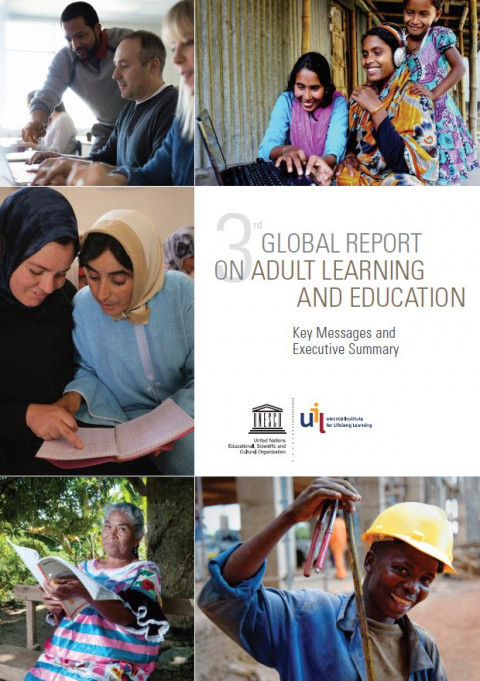 [Résumé] 3e rapport mondial sur l'apprentissage et l'éducation des adultes: l'impact de l'apprentissage et l'éducation des adultes sur la santé et le bien-être, l'emploi et le marché du travail, et la vie sociale, civique et communautaire, points à retenir et résumé exécutif Año de publicación: 2016 Autor corporativo: UNESCO Institute for Lifelong Learning (UIL) Le troisième Rapport mondial sur l’apprentissage et l’éducation des adultes (GRALE III) s’appuie sur les réponses de 139 Etats membres de l’UNESCO à l’enquête de suivi GRALE III et brosse un tableau nuancé de la situation de l’apprentissage et de l’éducation des adultes dans le monde. Le rapport évalue les progrès accomplis par les pays dans la mise en oeuvre des engagements qu’ils ont pris dans le Cadre d’action de Belém, document adopté lors de la sixième Conférence internationale sur l’éducation des adultes (CONFINTEA VI) en 2009.En outre, le rapport examine l’impact de l’apprentissage et de l’éducation des adultes sur trois domaines majeurs : la santé et le bien-être ; l’emploi et le marché du travail ; et la vie sociale, civique et communautaire. GRALE III fournit aux décideurs politiques, chercheurs et praticiens des preuves irréfutables des bénéfices élargis de l’apprentissage et l’éducation des adultes dans tous ces domaines et éclaire, de ce fait, les contributions essentielles qu’ils peuvent apporter à la réalisation du Programme de développement durable à l’horizon 2030.Ce rapport répond à trois objectifs : premièrement, analyser les résultats d’un suivi des États membres de l’UNESCO et établir si les pays remplissent les engagements pris à CONFINTEA VI ; deuxièmement, promouvoir l’apprentissage et l’éducation des adultes par des preuves de leurs effets positifs sur la santé et le bien-être, l’emploi et le marché du travail, ainsi que la vie sociale, civique et communautaire ; et troisièmement fournir une plate-forme de débat et d’action aux niveaux national, régional et international. [Resumen] 3do Informe mundial sobre el aprendizaje y la educación de adultos: el impacto del aprendizaje y la educación de adultos sobre la salud y el bienestar, el empleo y el mercado de trabajo, y la vida social, cívica y comunitaria, mensajes clave y resumen ejecutivo Año de publicación: 2016 Autor corporativo: UNESCO Institute for Lifelong Learning (UIL) El tercer Informe mundial sobre el aprendizaje y la educación de adultos (GRALE III) se funda en los estudios de monitoreo completados por 139 Estados Miembros de la UNESCO a fin de producir una visión diferenciada sobre el estado global del aprendizaje y la educación de adultos (AEA). Evalúa el progreso de los países en lo que respecta al cumplimiento de los compromisos que hicieron en el Marco de acción de Bélem, aprobado en la VI Conferencia Internacional de Educación de Adultos (CONFINTEA VI) en 2009.Además, el informe examina el impacto del AEA en tres áreas importantes: salud y bienestar; empleo y mercado de trabajo, así como vida cívica y comunitaria. El GRALE III brinda a los responsables de la formulación de política, investigadores y practicantes pruebas convincentes de los más amplios beneficio del AEA en todas estas áreas. Al hacerlo, destaca algunas de las contribuciones más importantes que el AEA puede hacer para realizar los objetivos de la Agenda 2030 para el Desarrollo Sostenible.El presente informe responde a tres objetivos: en primer lugar, analizar los resultados de una encuesta de seguimiento realizada entre los Estados Miembros de la UNESCO y determinar si los países están cumpliendo los compromisos que contrajeron en CONFINTEA VI; en segundo lugar, reforzar los argumentos en favor del aprendizaje y la educación de adultos con datos fehacientes sobre los beneficios que reportan en los ámbitos de la salud y el bienestar, el empleo y el mercado de trabajo y la vida social, cívica y comunitaria; y en tercer lugar, proporcionar un referente a partir del cual debatir y pasar a la acción a escala nacional, regional e internacional.
  Learning Cities and the SDGs: A Guide to Action Año de publicación: 2017 Autor corporativo: UNESCO Institute for Lifelong Learning (UIL) This document is a Guide to Action for mainstreaming lifelong learning as a key driver to achieve the 17 Sustainable Development Goals (SDGs). The document seeks to facilitate the process of transforming global goals into local actions by showing concrete steps, which members of the UNESCO Global Network of Learning Cities (GNLC) have taken to promote green and healthy environments, equity and inclusion as well as decent work and entrepreneurship. This Guide to Action is closely linked to the Cork Call to Action for Learning Cities, adopted by the participants of the third International Conference on Learning Cities, which took place from 18–20 September 2017 in Cork, Ireland. Обучающиеся города и ЦУР: Руководство к действию Año de publicación: 2017 Autor corporativo: UNESCO Institute for Lifelong Learning (UIL) Документ «Обучающиеся города и ЦУР» является руководством к повсеместному внедрению обучения на протяжении всей жизни в качестве одного из основных факторов достижения 17 целей в области устойчивого развития (ЦУР). Данный документ призван содействовать преобразованию этих глобальных целей в практические действия на местном уровне путем демонстрации конкретных мер, принятых членами Глобальной сети обучающихся городов ЮНЕСКО (ГСОГ) для поддержки формирования «зеленой» и здоровой среды, обеспечения равноправия и социальной интеграции, а также создания возможностей для получения достойной работы и предпринимательской деятельности. Данное руководство к действию тесно связано с Коркским призывом к действиям в интересах создания обучающихся городов, принятым участниками третьей Международной конференции по обучающимся городам, которая прошла 18-20 сентября 2017 года в Корке (Ирландия).
 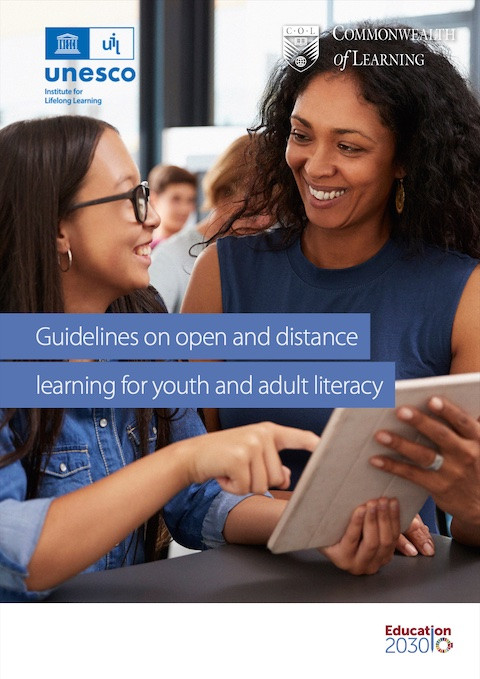 Guidelines on Open and Distance Learning for Youth and Adult Literacy Año de publicación: 2022 Autor corporativo: UNESCO Institute for Lifelong Learning (UIL) | Commonwealth of Learning Guidelines on open and distance learning for youth and adult literacy addresses a gap in literacy provision by presenting open and distance learning (ODL) principles and practices to illustrate how learning and education can be delivered at a distance.This publication is divided into two main parts. Part 1 presents practical guidance in four areas—planning, development, implementation, and monitoring and evaluation—and part 2 considers the various technologies that are used for ODL programmes and could support youth and adult literacy learning.Policy-makers, literacy providers and educators will benefit from understanding and applying the concept and principles of ODL in designing and delivering effective, inclusive and sustainable literacy programmes and learning opportunities— strengthening the resilience of their literacy programmes and expanding outreach and participation in the process. Apprentissage libre et à distance pour l’alphabétisation des jeunes et des adultes: lignes directrices Año de publicación: 2022 Autor corporativo: Institut de l’UNESCO pour l’apprentissage tout au long de la vie (UIL) | Commonwealth of Learning Les lignes directrices sur l'apprentissage ouvert et à distance pour l'alphabétisation des jeunes et des adultes comblent une lacune dans l'offre d'alphabétisation en présentant des principes et des pratiques d'apprentissage ouvert et à distance (ODL) pour illustrer comment l'apprentissage et l'éducation peuvent être dispensés à distance. Cette publication est divisée en deux parties principales. La partie 1 présente des conseils pratiques dans quatre domaines—la planification, le développement, la mise en œuvre et le suivi et l'évaluation—et la partie 2 examine les diverses technologies qui sont utilisées pour les programmes ODL et qui pourraient soutenir l'apprentissage de l'alphabétisation des jeunes et des adultes. Les décideurs politiques, les prestataires d'alphabétisation et les éducateurs bénéficieront de la compréhension et de l'application du concept et des principes de l'ODL dans la conception et la prestation de programmes d'alphabétisation et d'opportunités d'apprentissage efficaces, inclusifs et durables - renforçant la résilience de leurs programmes d'alphabétisation et élargissant la portée et la participation au processus. المبادئ اﻟﺘﻮﺟﯿﮭﯿﺔ ﻟﻠﺘﻌﻠﻢ اﻟﻤﻔﺘﻮح واﻟﺘﻌﻠﻢ ﻋﻦ ﺑﻌﺪ ﻟﻤﺤﻮ أﻣﯿﺔ اﻟﺸﺒﺎب واﻟﻜﺒﺎر Año de publicación: 2022 Autor corporativo: UNESCO Institute for Lifelong Learning (UIL) | Commonwealth of Learning تعالج المبادئ التوجيهية بشأن التعلم المفتوح والتعلم عن بعد للشباب والكبار فجوة في توفير محو الأمية من خلال تقديم مبادئ وممارسات التعلم المفتوح والتعلم عن بعد (ODL) لتوضيح كيف يمكن تقديم التعلم والتعليم عن بعد. ينقسم هذا المنشور إلى قسمين رئيسيين. يقدم الجزء الأول إرشادات عملية في أربعة مجالات - التخطيط ، والتطوير ، والتنفيذ ، والرصد والتقييم - وينظر الجزء الثاني في التقنيات المختلفة المستخدمة لبرامج ODL ويمكن أن تدعم تعلم القراءة والكتابة للشباب والكبار. سيستفيد صانعو السياسات ومقدمو محو الأمية والمعلمون من فهم وتطبيق مفهوم ومبادئ ODL في تصميم وتقديم برامج محو الأمية الفعالة والشاملة والمستدامة وفرص التعلم - تعزيز مرونة برامج محو الأمية وتوسيع نطاق التوعية والمشاركة في العملية .
 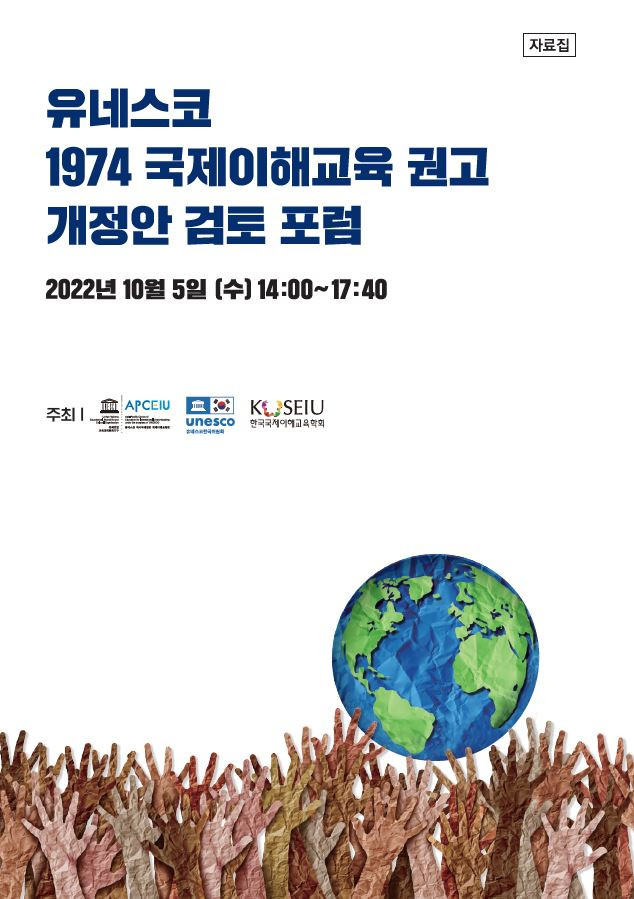 유네스코 1974 국제이해교육 권고 개정안 검토 포럼 자료집 Año de publicación: 2022 Autor corporativo: 한국국제이해교육학회 | 유네스코 아시아태평양 국제이해교육원 | 유네스코한국위원회 2022년 10월 5일 유네스코 아태교육원과 유네스코한국위원회, 한국국제이해교육학회가 공동으로 개최한 <유네스코 1974 국제이해교육 권고 개정안 검토 포럼> 자료집 입니다. 본 포럼은 유네스코의 「국제이해, 협력, 평화를 위한 교육과 인권, 기본 자유에 관한 교육 권고( 1974 국제이해교육 권고)」가 오늘날 변화된 시대 상황과 지구촌의 새로운 과제 등을 반영할 수 있도록 개정안 초안에 대한 전문적 검토 요지 발표와 토론을 실시한 후, 참가자들의 의견을 수렴하였습니다. <목차> I. 인사말 한경구 (유네스코한국위원회 사무총장) 임현묵 (유네스코 아시아태평양 국제이해교육원장) 박순용 (한국국제이해교육학회장) II. [1부] 1974 국제이해교육 권고 개정 배경 및 현황 1974 국제이해교육 권고 개요와 개정 추진 현황 - 유네스코 아시아태평양 국제이해교육원 / 유네스코한국위원회 국제전문가그룹의 주요 활동 및 1974 국제이해교육 권고 개정안 초안의 주요 내용 / 강순원 (한신대학교 교수) III. [2부] 1974 국제이해교육 권고 개정안 초안 검토 조대훈 (성신여자대학교 교수) 김병연 (양재고등학교 교사) 권혁장 (국가인권위원회 인권교육기획과장) 이선경 (청주교육대학교 교수) 변순용 (서울교육대학교 교수) 이동연 (한국예술종합학교 교수) 손동빈/장경희 (서울시교육청 민주시민생활교육과 과장/장학사) 부록 Recommendation concerning Education for International Understanding, Co-operation and Peace and Education relating to Human Rights and Fundamental Freedoms 국제이해, 협력, 평화를 위한 교육과 인권, 기본 자유에 관한 교육 권고 REVISED RECOMMENDATION CONCERNING EDUCATION FOR INTERNATIONAL UNDERSTANDING, CO-OPERATION AND PEACE AND EDUCATION RELATING TO HUMAN RIGHTS AND FUNDAMENTAL FREEDOMS (‘1974 RECOMMENDATION’)
  세계시민의식 함양을 위한 청소년활동 활성화 방안 Año de publicación: 2017 Autor: 황세영 | 최정원 | 문지혜 | 최윤 Autor corporativo: 한국청소년정책연구원 본 연구는 최근 국제사회 의제와 우리나라 교육정책에서 강조되고 있는 세계시민의식의 함양을 위하여 청소년 활동 활성화 방안을 제시하는데 목적이 있다. 이를 위해 본 연구에서는 기존 국제교류 활동 위주의 청소년 활동에서 확장된 개념으로서, 청소년 세계시민의식 함양을 목표로 하는 글로벌 청소년 활동의 필요성을 제기하였다. 연구내용으로는 먼저 세계시민의식 개념에 대한 국제사회와 학계의 논의, 인접 교육 분야와의 관련성 등을 살피고, 모든 청소년들이 지향하고 내재화할 수 있는 시민의식의 관점에서 세계시민의식에 대해 고찰하였다. 또한 전문가 델파이 조사를 통하여 세계시민의식의 정의 및 구성요소에 대한 합의를 도출하였다. 그리고 국내 세계시민교육, 국제교류, 다문화 이해교육, 국제개발협 력 등의 정책 사업과 민간 청소년 단체 및 개발 NGOs 등의 현황을 살펴보았다. 그 결과 아직까지 청소년 세계시민의식 함양을 위한 종합적인 정책체계가 미진하고, 민관 협력이 강조되고 있지만 청소년 분야에서의 지원과 협력은 미약하다는 점을 알 수 있었다. 이와 관련하여 영국의 글로벌 청소년 활동 역사와 아일랜드의 청소년 정책 사례를 살펴보았는데, 이를 통해 청소년 분야에서 국제개발협력의 접근을 모색하고, 한국형 글로벌 청소년 활동 개념 및 모델 정립의 필요성을 제기하였다. 한편 우리나라 청소년 3,000명을 대상으로 한 설문 조사를 진행하고, 세계시민 정체성과 관련 교육 경험이 전반적인 세계시민의식 형성에 영향을 미치는 주요 변수임을 밝혔으며, 관련 프로그램의 다각화와 양질의 경험 제공이 필요함을 제안하였다. 또한 다섯 가지 청소년 프로그램 사례 및 참여자 경험 분석을 통해 향후 청소년 활동 프로그램의 실행 전략 개발에 시사점을 도출하였다. 마지막으로 전문가 델파이 조사를 통하여 청소년의 세계시민의식 함양에 필요한 교사와 청소년지도자의 필수 역량을 10가지로 제안하고, 향후 전문가 양성과정에 활용할 수 있도록 하였다. 이러한 연구 결과에 따라 본 연구에서는 세계시민의식 함양을 위한 청소년 주도의 활동에 대한 높은 수요에 비해 청소년 활동정책의 추진 동력이 부족하다는 점을 지적하고, 청소년계의 역량에만 의존하기보다는 추진 주체 간 네트워크가 중요함을 강조하였다. 또한 청소년의 세계시민의식 함양을 목표로 하는 한국형 글로벌 청소년활동의 개념과 정책 영역 정립을 제안하였다. 이를 위한 정책 비전으로 “글로벌 청소년활동을 통한 청소년 세계시민의식 함양”을 제시하고, 이를 달성하기 위하여 1) 글로벌 청소년활동 기반구축, 2) 글로벌 청소년활 동 사업 추진, 3) 글로벌 협력 네트워크 구축 등의 정책과제와 17개 세부과제를 제시하였다.
  후기청소년(19-24세)의 미디어 리터러시 교육과 미디어 정책에 대한 인식 연구 Año de publicación: 2022 Autor: 강진숙 | 권오현 Autor corporativo: 한국청소년정책연구원 이 연구는 후기청소년의 미디어 리터러시 교육과 미디어 정책에 대한 인식 연구로서 후기청소년의 미디어 리터러시 교육적 쟁점과 국내외 사례를 살펴보고, 후기청소년 및 미디어 관련 전문가들의 인식을 통해 후기청소년이 미디어 리터러시 교육과 미디어 정책을 제안하는 데 목적이 있다.연구 진행을 위해 문헌연구, 전문가 자문, FGI(Focus group Interview) 및 심층인터뷰를 진행하였으며, 국내외 후기청소년의 미디어 이용 현황과 관련 정책을 문헌연구를 통해 알아보고, 함의를 도출하였다. 본 저작물은 한국청소년정책연구원에서 2022년 작성하여 공공누리 제4유형으로 개방한 ‘후기청소년(19-24세)의 미디어 리터러시 교육과 미디어 정책에 대한 인식 연구(강진숙, 권오현)’를 이용하였으며 해당 저작물은 한국청소년정책연구원 홈페이지 (https://www.nypi.re.kr)에서 무료로 다운받으실 수 있습니다.